Weekend links 425

tsuruta.jpg

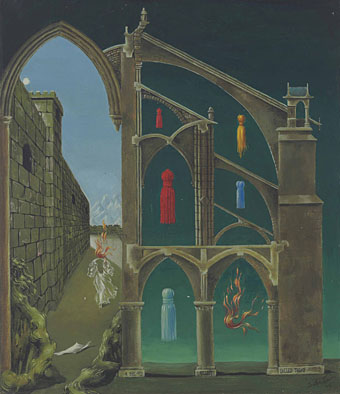
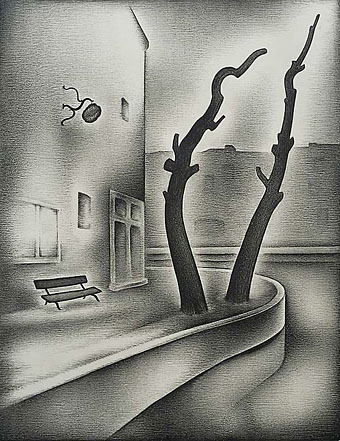
Art by Ichiro Tsuruta.

• “Writing is so much about subverting dogmatisms of all kinds, above all the ones that insist you cannot go there! You must not say that! Writers need to go anywhere, to take anything on. And the only rule is to do it well.” Rikki Ducornet in a feature at Dennis Cooper’s which has been linked here before but was previously on DC’s old (now deleted) blog.

• “This book-cover trend is turning bookstores into flower shops,” says Kenzie Bryant. “How publishing’s floral-print trend came to rule the world’s bookshelves.” (Where “the world” means the USA, as usual…)

• The third edition of Wyrd Daze—”The multimedia zine of speculative fiction + extra-ordinary music, art & writing”—is out now.

For this listener, Nardis has become a full-on musical obsession. I have more than ninety official and bootleg recordings of the tune stored in the cloud, ranked in a fluid and continually updated order of preference, so they follow me wherever I go. In my travels as a writer, I use Nardis as a litmus test of musical competence: if I see a jazz band in a bar or a busker taking requests, I inevitably suggest it. (If they’ve never heard of it, I understand that they must be new at this game.) By now I’ve heard so many different interpretations, in such a far-flung variety of settings, that a Platonic ideal of the melody resides in my mind untethered to any actual performance. It’s as if Nardis were always going on somewhere, with players dropping in and out of a musical conversation beyond space and time.

Steve Silberman on the obsession that he and pianist Bill Evans share with Nardis, a Miles Davis composition that Davis himself never recorded

• Mixes of the week: Secret Thirteen Mix 263 by Jung An Tagen, and XLR8R Podcast 554 by Tutu.

• “René Magritte still has the power to surprise,” says Sophie Haigney.

Ishmael Reed at the Brockport Writers Forum, 1st May, 1974.

• The On-U Sound label is now at Bandcamp.

Brian Eno talks music, global politics, etc.

Faded Flowers (1985) by Shriekback | Other Flowers (2003) by Harold Budd | White Flowers (2014) by Lutine

Weekend links 424

calder.jpg

Black Sun (1953) by Alexander Calder.

• “But Berlin Alexanderplatz transcends its genre elements, largely because of Döblin’s deep lack of hope about what can be expected of human beings.” Adam Kirsch on Alfred Döblin’s Berlin.

• “I occasionally dream of finding books that do not seem to exist (yet), and sometimes remember their titles,” says Mark Valentine.

• “I don’t read fiction.” He does, however, own 11,000 books. Alan Garner on writing a memoir of his wartime childhood.

What is it that I really like? I mean that’s the question that I think every musician and artists and everybody actually, is asking themselves; what they really like. And that means the emphasis is on REALLY like, meaning how do you push aside what you’ve been told, what you’ve been taught, what your friends like, and how much you like something because your friends like it or because it’s socially popular at the moment, or your girlfriend likes it or any of those ideas.

Jon Hassell (again) in an interview at Ableton

• How Alexander Calder sparked a modern fascination with mobiles (sculptures, that is, not telephones).

• Deep in Italy, one man’s Surrealist mini-city sleeps: Francky Knapp on Tomaso Buzzi’s La Scarzuola.

• “Even before electricity, robots freaked people out”: Lisa Hix on the history of clockwork automata.

Nicolas Winding Refn’s website devoted to neglected/abandoned films was launched this week.

• Mixes of the week: FACT Mix 664 by Lucy, and XLR8R Podcast 552 by Thomas Fehlmann.

Jean-Paul Goude‘s best photograph: an androgynous Grace Jones.

Marquis de Sade: 112 pages, 100 erotic illustrations.

The world’s most beautiful libraries

Sade Masoch (1968) by Bobby Callender | I’ve Seen That Face Before (Libertango) (1981) by Grace Jones | Black Sun (2011) by Demdike Stare

Weekend links 415

varo.jpg

The Creation of the Birds (1957) by Remedios Varo.

• “I think my music is very modern and very old. Together.” Sandy Robertson interviewed Popol Vuh’s Florian Fricke for Sounds in 1981. The Fricke-directed Sei Still Wisse ICH BIN referred to in the feature may be viewed here. Further Vuh-ing: Popol Vuh on Beat Club, 1971; a news clip of the group from the same year; a filmed improvisation from around the same time (Florian still had his Moog); and the group miming to recorded music from a year or two later.

• More Rammellzee (see last week): Gothic Futurism, a video collage based on Rammellzee’s treatise of the same name. Probably the only place you’ll ever see Rammellzee, the late Glenn Branca and art historian Kenneth Clark thrown together.

• After releasing 5 albums, Disjointed Oddities And Other Such Things is the first EP of “odd strange electronics, psych, Radiophonics, drone and quirky folk” by Keith Seatman.

Alina Cohen on Remedios Varo, a Spanish Surrealist painter whose work has been receiving increased attention in recent years but whose life remains under-examined.

• More German music: “I grew up in total ruins”—Irmin Schmidt of Can on LSD, mourning and musical adventures.

• Mixes of the week: FACT mix 655 by Matthewdavid, and The Monday Is Okay mix by JQ.

Olivia Laing, Sarah Wood and Philip Hoare discuss Modern Nature by Derek Jarman.

National Geographic has digitized its collection of 6,000+ vintage maps.

• At Bandcamp: The Transcendental Sound of Moroccan Gnawa Music.

Joe Fletcher on the nightmarish dream logic of Bruno Schulz.

Levi Stahl on the mind of Donald E. Westlake.

Affenstunde (1970) by Popol Vuh | Toy Planet (1981) by Irmin Schmidt & Bruno Spoerri | Adithaim (2005) by The Cracow Klezmer Band

Weekend links 402

hodgson.jpg

Cover art for the 1921 edition by W. Otway Cannell.

• “An exiled recluse, an ancient abode in the remote west of Ireland, nightly attacks by malevolent swine-things from a nearby pit, and cosmic vistas beyond time and space. The House on the Borderland has been praised by China Miéville, Terry Pratchett, and Clark Ashton Smith, while HP Lovecraft wrote, ‘Few can equal [Hodgson] in adumbrating the nearness of nameless forces and monstrous besieging entities through casual hints and significant details, or in conveying feelings of the spectral and abnormal.’

“‘Almost from the moment that you hear the title,’ observes Alan Moore, ‘you are infected by the novel’s weird charisma. Knock and enter at your own liability.’ The House on the Borderland remains one of Hodgson’s most celebrated works. This new edition features an introduction by Alan Moore, an afterword by Iain Sinclair, and illustrations by John Coulthart.” The long-gestating illustrated edition of William Hope Hodgson’s The House on the Borderland is now available for pre-order from Swan River Press. This is limited to 350 copies so I’d advise anyone interested to order as soon as they can; there’s been a lot of interest in the edition, and with the print run being a small one it’s liable to sell out quickly.

• “Art et Liberté was a movement that came into being in 1938 in Cairo. It was affiliated to Surrealism through contact with André Breton in Paris, and shared Surrealism’s spirit of rebellion and provocation, its desire for dream knowledge and penchant for manifestos.” Marina Warner on the neglected history of Egyptian Surrealism.

• Titan Comics follow their recent collection of Philippe Druillet’s first six Lone Sloane stories with Gail, a book which I don’t think has received an English translation until now.

• Mixes of the week: FACT mix 641 by Alva Noto, a mix by Chris Carter for Bleep/NTS, and Through A Landscape Of Mirrors Vol. I: Sweden by David Colohan.

• 200 years after the first publication of Frankenstein, the city of Bath is to unveil a plaque commemorating Mary Shelley‘s time spent there while writing the book.

• Southern Lord co-founder Gregg Anderson talks to Red Bull Radio about running a record label devoted to avant-garde metal.

• Twelve illustrated dust jackets from Martin Salisbury’s The Illustrated Dust Jacket: 1920–1970.

• At MetaFilter: Links to Hokusai’s drawing guides and similar books.

Canada Modern

Grief (1999) by Tactile | In The Cellar (2005) by Nostalgia | The House On The Borderland (2008) by Electric Wizard

Weekend links 401

time.jpg

TIME, June 21st 1968. Cover by Roy Lichtenstein.

• “Forget the democratic processes, the judicial system and the talent for organization that have long been the distinctive marks of the US. Forget, too, the affluence (vast, if still not general enough) and the fundamental respect for law by most Americans. Remember, instead, the Gun. That is how much of the world beyond its borders feels about the US today. All too widely, the country is regarded as a blood-drenched, continent-wide shooting range where toddlers blast off with real rifles, housewives pack pearl-handled revolvers, and political assassins stalk their victims at will.” The TIME magazine feature with the famous Roy Lichtenstein cover (prompted by the assassination of Robert Kennedy) will be fifty years old in June.

• “Where do we feel at home? What do our cities look like? How do we see? In 1908, architect and theorist August Endell set out to answer these deceptively simple questions.” Endell’s The Beauty of the Metropolis is coming from Rixdorf Editions in May.

Beardsley 120: The Death of Pierrot is a series of events in Aubrey Beardsley’s birthplace, Brighton, taking place throughout the month of March.

Like the Bloomsbury Group and the Beats, the Surrealists could be incestuous, choosing lovers from inside the circle and often remaining close to their exes. When [Max] Ernst and [Leonora] Carrington reached Paris, he introduced her to Leonor Fini, his friend and former lover. Tall, dazzling, and bejeweled, Fini cultivated a baroque theatricality; every day with her was a masked ball. Recognizing Carrington as “a revolutionary,” she claimed her as an astrological twin—a feat possible only because Fini lied about her age. “This chronological charade, combined with later cosmetic surgeries, sustained the image of youth and beauty that remained vital to Leonor’s self-image, the sexuality and her sense of her place in the world,” writes Chadwick:

Imperious and mercurial, she was also generous, loving and happy to share her rich intellectual life with the younger woman she considered her double. Like Leonora, she believed that cats possessed highly developed psychic powers, that horses had mythological powers that identified them with the feminine, and that painting was an alchemical process.

Regina Marler reviewing three new books about Leonora Carrington and the women artists of the Surrealist movement

As Serious As Your Life: Black Music and the Free Jazz Revolution, 1957–1977 by Val Wilmer receives a welcome republication next month.

• At Dangerous Minds: Occultism, cinema and architecture: How a ouija board built the Bradbury Building.

• When Books Read You, a Defence of Bibliomancy by Ed Simon.

• Ä Brïëf Hïstöry Öf Mëtäl Umläüts by Mike Rampton.

Joey Zone Illustration – Art from The joey Zone.

• At Dennis Cooper’s: Brad Dourif Day.

Alva Noto‘s favourite albums.

Eddie Campbell, Dammit!

• Metropolis (1978) by Edgar Froese | Metropolis (1979) by Motörhead | Under The Gun (Metropolis Mix) (1993) by The Sisters Of Mercy