Weekend links 540

wildboys.jpg

A century before William Burroughs: The Wild Boys of London (1866). No author credited.

• “Acid, nudity and sci-fi nightmares: why Hawkwind were the radicals of 1970s rock.” I like a headline guaranteed to upset old punks, even though many old punks had been Hawkwind fans. As noted last week, Joe Banks’ Hawkwind: Days of the Underground is now officially in print, hence this substantial Guardian feature in which the author reprises his core thesis. Mathew Lyons reviewed the book for The Quietus.

• “Roy Ayers and Fela Kuti each explored Pan-Africanism and diasporic solidarity their own way before their meeting in 1979.” John Morrison on the Roy Ayers and Fela Kuti collaboration, Music Of Many Colours.

• “In 1938, Joan Harrison read a galley of Daphne Du Maurier’s masterpiece. She wouldn’t rest until she had the rights to adapt it.” Christina Lane on Rebecca at 80, and the women behind the Hitchcock classic.

Each page features a distinct moment, seen from one perspective on the front, and from a diametrically opposed angle on the back, occasionally pivoting, for instance, between interior and exterior spaces. This organizing principle is complicated by the fact that a given image might be a depiction of the physical environment surrounding the camera or, at other times, a photograph of a photograph. Midway through, the scene is inverted such that the volume must be turned upside-down to be looked at right-side up. The result is an elegant, disorienting study in simultaneity that allows the viewer to enter the work from either end.

Cover to Cover (1975), a book by Michael Snow, has been republished by Light Industry and Primary Information

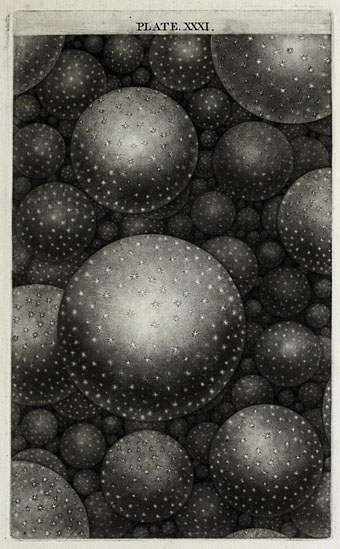
• At Public Domain Review: The Uncertain Heavens—Christiaan Huygens’ Ideas of Extraterrestrial Life by Hugh Aldersey-Williams.

• Penny Dreadfuls and Murder Broadsides: John Boardley explores the early days of pulp fiction and what he calls “murder fonts”.

• The lesbian partnership that changed literature: Emma Garman on Jane Heap, Margaret C. Anderson and The Little Review.

The 10th Tom of Finland Emerging Artist Competition is now open to entries. (Titter ye not.)

• Death Barge Life: Colin Fleming on Gericault’s grim masterpiece, The Raft of the Medusa.

• At Dennis Cooper’s: Spotlight on…The Grand Grimoire: The Red Dragon (1702).

Music To Be Murdered By (1958) Jeff Alexander With Alfred Hitchcock | Murder Boy (1991) by Rain Parade | Murder In The Red Barn (1992) by Tom Waits

The écorché saint

bartholomew1.jpg

An addendum to the previous post after Daniel in the comments reminded me of Saint Bartholomew who is often depicted in paintings and sculptures carrying his flayed skin. Having suffered considerable torture, Bartholomew spends eternity as the patron saint of tanners and leatherworkers. This sounds like a cruel joke on the part of medieval martyrologists but the history of the Christian church contains many such ironies, along with some equally surprising imagery. The luckier saints, like Lucy and Agatha of Sicily, are shown in paintings with their gouged eyes and lopped breasts restored in Heaven, the original (miraculously unbloody) articles being proffered to the viewer on plates; Peter of Verona, meanwhile, offers benedictions to the faithful with the hatchet that killed him still protruding from his head. The sculpture of Bartholomew by Marco d’Agrate in Milan Cathedral dates from 1562, and is more écorché than saint, a marvellous exercise in anatomical fidelity that just happens to double as a religious icon.

bartholomew2.jpg

Previously on { feuilleton }
Écorché
Cephalophores

Écorché

ecorche01.jpg

Engraving by Philip Galle.

Écorché, from the French verb to flay, was the traditional term applied to depictions of the skinless man found in anatomical studies, and the musculature models made for the use of artists and sculptors. This is almost always a male figure. Women tend to feature in the anatomical works of previous centuries in order to illustrate the conditions of pregnancy, the male body being considered the default for the usual sexist reasons.

I’ve been revisiting the history of these figures while working on a new book design so what follows are a few choice examples, some of which carry a pleasantly Surrealist charge. In the years that followed the pioneering studies by Vesalius and co. there was a period of playfulness in anatomical illustration during which time the figures are shown peeling away their flesh to reveal the muscles or even the organs beneath, a striptease where the substance of the body itself is removed. As William Burroughs was fond of quoting: “‘T ain’t no sin to take off your skin, and dance around in your bones.”

ecorche07.jpg

Valverde de Hamusco (1556).

ecorche06.jpg

Engraving by G. Bonasone (15–).

ecorche02.jpg

Engraving by Philip Galle.

Continue reading “Écorché”

Weekend links 539

earle.jpg

Fire, Red and Gold (1990) by Eyvind Earle.

Roger Penrose won a Nobel Prize recently for his work in physics. I read one of his books a few years ago, and was intimidated by the “simple” equations, but I always like to hear his ideas. This 2017 article by Philip Ball is an illuminating overview of Penrose’s life and work.

• At Dangerous Minds: Joe Banks on the incidents that led to Lemmy’s dismissal from Hawkwind in 1975, an extract from Hawkwind: Days of the Underground. The book is available from Strange Attractor in Europe and via MIT Press in the USA.

• “Not married but willing to be!”: men in love (with each other) from the 1850s on. It’s always advisable to take photos like these with a pinch of salt but several of the examples are unavoidably what they appear to be.

Most of all, this resolutely collaborative production stood against the vanity and careerism of individual authorship; Breton called it the first attempt to “adapt a moral attitude, and the only one possible, to a writing process.” The text itself is peppered with readymade phrases, advertising slogans, twisted proverbs, and pastiches of such admired predecessors as Rimbaud, Apollinaire, and Lautréamont, whose pluralistic credo, “Poetry must be made by all. Not by one,” anticipates the sampling aesthetic by a century. But the intensity was draining, and as the book moves toward its final pages and the writing becomes increasingly frenetic, you can almost feel the burnout taking hold. After eight days, fearing for his and Soupault’s sanity, Breton terminated the experiment.

Mark Polizzotti reviews a new translation by Charlotte Mandell of The Magnetic Fields by André Breton and Philippe Soupault

• The hide that binds: Mike Jay reviews Dark Archives: A Librarian’s Investigation into the Science and History of Books Bound in Human Skin by Megan Rosenbloom.

• “A photographer ventures deeper into Chernobyl than any before him.” Pictures from Chernobyl: A Stalker’s Guide by Darmon Richter.

John Van Stan’s reading of Frankenstein by Mary Shelley uses my illustrations (with my permission) for each of its chapters.

Susan Jamison, one of the artists in The Art of the Occult by S. Elizabeth, talks to the latter about her work.

William Hope Hodgson: The Secret Index. A collection of Hodgson-related posts at Greydogtales.

Gee Vaucher talks to Savage Pencil about her cover art for anarchist punk band, Crass.

Weird, wacky and utterly wonderful: the world’s greatest unsung museums.

Tom Cardamone chooses the best books about Oscar Wilde.

• At Dennis Cooper’s: Jean-Pierre Melville Day.

You by The Bug ft. Dis Fig.

Magnetic Dwarf Reptile (1978) by Chrome | Magnetic Fields, Part 1 (1981) by Jean-Michel Jarre | Magnetic North (1998) by Skyray

Hardy art

hardy1.jpg

Hawkwind continue to be the overwhelming topic of the moment while I’m reading Joe Banks’ marvellously detailed account of the group’s first decade. One of the many attractions of Hawkwind for this listener was their intersection with other areas of interest: Moorcock and New Worlds, obviously (two of Robert Calvert’s poems appeared in New Worlds Quarterly), but also SF and fantasy in general. The alien planet on the back cover of the Hall of the Mountain Grill album was immediately recognisable as the work of British space artist David A. Hardy thanks to a feature in Visions of the Future (1976) a collection of artwork reprints from the art and fiction magazine Science Fiction Monthly. Hardy had a long association with astronomer Patrick Moore, illustrating the covers of Moore’s novels and later collaborating on a speculative science book, Challenge of the Stars (1972). A few of the latter paintings were reprinted in Visions of the Future, including one with the title Alien Life Forms that depicted amoeboid creatures on a remote planet. The painting would have become the back cover of the Hawkwind album if Hardy hadn’t insisted on creating a new work in a more suitable ratio.

Hardy’s association with Hawkwind extended to their stage shows, with a series of circular paintings used by “Liquid Len” (Jonathan Smeeton) on a rotating projector that covered the band in moving panoramas of ancient monuments, dinosaurs, alien landscapes and exploding worlds. Two of the paintings appear as the endpapers in Joe’s book; the dinosaurs and the monuments may be seen here.

hardy2.jpg

Cover design by Bryan Cholfin.

My own Hawkwind covers make very poor comparisons to Hardy’s meticulous renderings but we do have a further connection via The Very Best of Fantasy and Science Fiction, a collection of stories from the long-running magazine edited by Gordon Van Gelder. I designed the book’s interiors and Hardy contributed the cover art. Hardy painted many covers for F&SF throughout the 1970s and 80s, this shining rocket being a reworking of a cover he produced for the magazine’s 60th anniversary issue. The archetypal spacecraft of classic science fiction, and almost a definitive example. You might even call it a silver machine…

Previously on { feuilleton }
Silver machines
Notes from the Underground
Hawkwind: Days of the Underground
The artists of Future Life
Science Fiction Monthly
The Chronicle of the Cursed Sleeve
Rock shirts
The Cosmic Grill
Void City
Hawk things
The Sonic Assassins
New things for July
Barney Bubbles: artist and designer