Weekend links 201

kettelwell.jpg

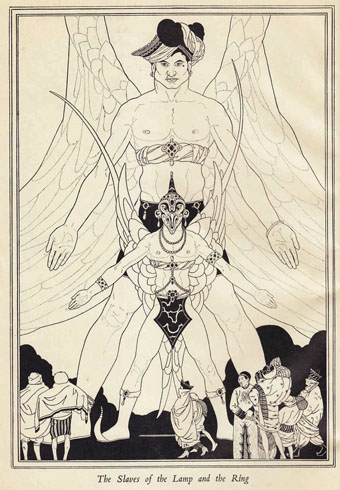
An illustration by John Kettelwell for The Story of Aladdin and the Wonderful Lamp (1928).

• “The strain in everything I write, of not being taken with the bounteousness of humankind, was also the attitude of both my parents.” Jonathan Meades talking to James Kidd about his forthcoming memoirs.

• 7 Trumps From the Tarot Cards and Pinions (1969), and album of electronic music by Ruth White, is being given a limited vinyl reissue. Related: Ruth White—An American Composer.

• 82 minutes of Michael Moorcock talking in 1972 to Jean-Pierre Turmel, co-founder of the Sordide Sentimental record label.

If Verne’s protagonists often seem to stop short of revelation, it’s because the revelation is not meant to be known. Revelation has a way of putting man back at the front of the evolution chart, moving neatly toward a happily progressing future, out of the darkness and into the light. The characters who embark upon the Voyages Extraordinares move backward and forward and all about, spun around like blindfolded children trying to pin the tail on the donkey. The point of the adventure, after all, is not to have a conclusion; it is to get knocked off your feet.

Stefany Anne Golberg on Journey to the Center of the Earth at 150.

• Photographs of pre-Haussmann Paris by Charles Marville, and photographs by Amy Heiden of industrial ruins.

• Mixes of the week: FACT Mix 427 by Wild Beasts, and Secret Thirteen Mix 108 by Kangding Ray.

• Hear Italo Calvino read selections from Invisible Cities, Mr Palomar and others.

William S. Burroughs in Dub conducted by Dub Spencer & Trance Hill.

• Cycles, Returns & Rebirth: Alexander Tucker on Derek Jarman.

Harold Budd: the composer with no urge to make music.

The Museum of Imaginary Musical Instruments.

• 80 minutes of Monolake playing live in 1999.

• At 50 Watts: Dyl’s Dance.

Owls And Flowers (2006) by Belbury Poly | Learning Owl Reappears (2011) by The Advisory Circle | The Owls (2013) by Félicia Atkinson

Morning of the Magicians book covers

motm01.jpg

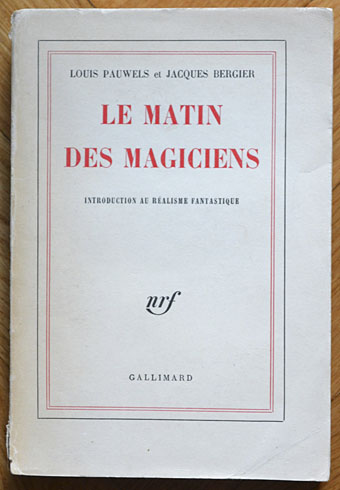
Éditions Gallimard, France, 1960.

Yesterday’s post proved popular so it seemed worthwhile taking another look at the book that birthed Planète magazine. The main problem The Morning of the Magicians presents for an art director is how to encapsulate such wildly diverse contents in a cover design. To judge from the examples here, most people seem to have either given up or gone for vaguely symbolic designs which at the most correspond to the contents in a minor way. The biggest surprise for me was seeing the cover of the first edition above, one of those typically sober French titles which gives away nothing of the intellectual fireworks within. Few of these designs have any credits, and this is nothing like a complete list (more editions may be seen at Goodreads). More recent editions have been avoided altogether since they’re pretty terrible.

motm10.jpg

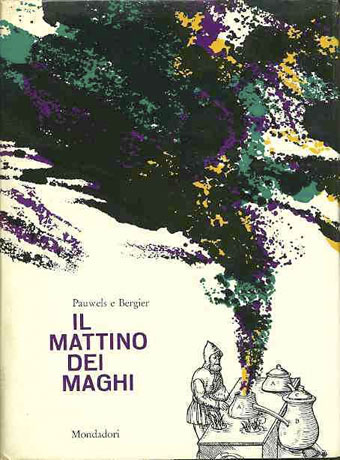
Arnoldo Mondadori Editore, Italy, 1963. This edition, which runs to 476 pages, includes three translated stories inserted into the text: The Nine Billions Name of God by Arthur C. Clarke, A Canticle for Leibowitz by Walter M. Miller Jr, and The White People by Arthur Machen.

A hardback edition showing an alchemist at work.

motm03.jpg

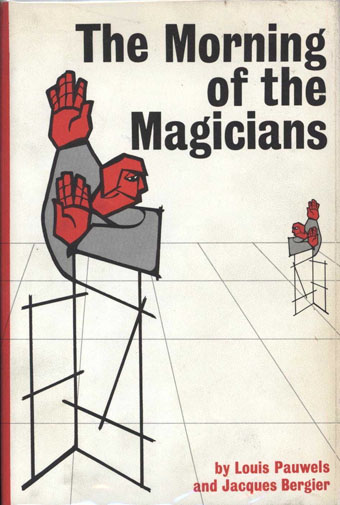
Stein and Day, USA, 1964.

You know a cover is failing when it could easily be applied to any number of other titles.

Continue reading “Morning of the Magicians book covers”

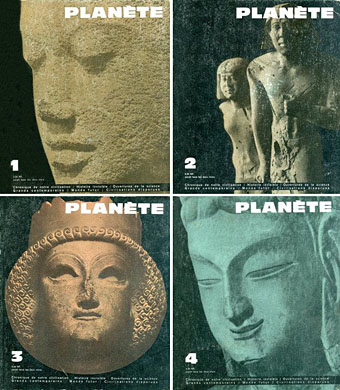
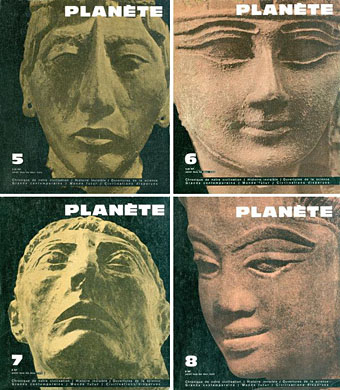
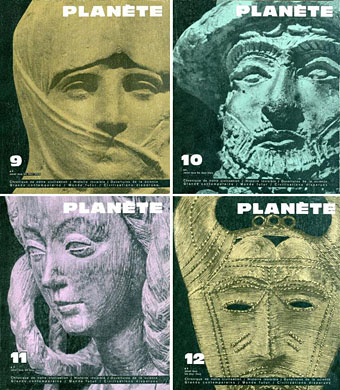
Planète magazine covers

planete01.jpg

Planète was a French magazine of “Fantastic realism” which ran throughout the 1960s. I’ve never seen a copy but sight of the immediately recognisable covers has always fascinated because this was the magazine established in the wake of the huge success of The Morning of the Magicians (1960), a unique “Introduction to Fantastic Realism” by Louis Pauwels and Jacques Bergier. Rather than enthuse at length about The Morning of the Magicians I’ll simply point you to this piece by the late RT Gault from his now-defunct website.

Pauwels and Bergier’s book was oft-imitated but never equalled during the 1970s. Where later authors such as Erich von Däniken tended to plough a single, narrow furrow, Pauwels and Bergier leapt breathlessly from one subject to another: alchemy in the 20th century, Forteana, a lengthy examination of the occult preoccupations of the Third Reich, speculations about nuclear physics, speculations about biological mutation, Hollow Earth theories, etc, etc, all the time dropping quotes from HP Lovecraft, Arthur Machen and Albert Einstein. It’s a very heady mix which is great fun to read even though there’s nothing like a solid argument that comes out of it all.

planete02.jpg

Planète continued the blend of Futurology and fringe philosophy while using the magazine format to print translations of science fiction and fantasy stories; among other things it was notable for bringing the stories of Jorge Luis Borges to a wider audience in France. The magazine’s name may have been science fictional but the magazine as a whole is closer to the kind of borderline sf/art magazine that New Worlds became under Michael Moorcock’s editorship in the late 1960s. I’ve never seen Moorcock or anyone connected with New Worlds mention Planète but the covers at least pre-empt the style adopted by New Worlds during its large-format run: consistently bold typography and imagery that only obliquely relates to the contents.

planete03.jpg

All these covers are from Noosfere where the story contents for each issue are also listed. No credits for the designer, unfortunately. If anyone knows who was responsible for the magazine design then please leave a comment.

Continue reading “Planète magazine covers”

Seward/Howard

burroughssphinx.jpg

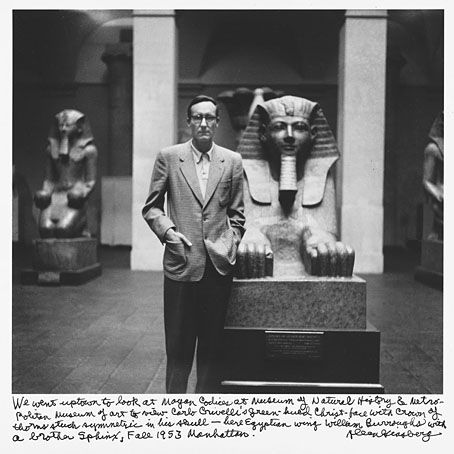
William Burroughs, New York, 1953. Photo by Allen Ginsberg.

Lonely lemur calls whispered in the walls of silent obsidian temples in a land of black lagoons, the ancient rotting kingdom of Jupiter – smelling the black berry smoke drifting through huge spiderwebs in ruined courtyards under eternal moonlight – ghost hands at the paneless windows weaving memories of blood and war in stone shapes – A host of dead warriors stand at petrified statues in vast charred black plains – Silent ebony eyes turned toward a horizon of always, waiting with a patience born of a million years, for the dawn that never rises – Thousands of voices muttered the beating of his heart – gurgling sounds from soaring lungs trailing the neon ghost writing – Lykin lay gasping in the embrace can only be reached through channels running to naked photographic process – molded by absent memory, by vibrating focus scalpel of the fishboy gently in a series of positions running delicious cold fingers “Stand here – Turn around – Bend”

The Ticket that Exploded (1962)

William Burroughs always talked favourably of Ernest Hemingway, and the famously spare style of Hemingway’s prose is evidently a style he sought himself, especially in the later works where there’s less of an emphasis on linguistic pyrotechnics. Something that always strikes me when I return to Burroughs’s earlier novels is the quality of passages like the one above which is a long way from the Hemingway style. What’s even more noticeable—and this is something which attracted me to Burroughs’s work from the outset—is the degree to which some of these passages are reminiscent of HP Lovecraft. In the case of the example above, taken from The Black Meat chapter of The Ticket that Exploded, some of this may be the work of Michael Portman who Burroughs credits as co-writer. What Portman contributed to The Black Meat and another chapter of that novel I’ve never discovered but there are plenty of other examples by Burroughs alone to show that he wasn’t incapable of this himself. The Ticket that Exploded was the first Burroughs book I read, and part of the shock and fascination came from encountering a recognisable Weird Tales-style atmosphere wrenched into inexplicable and thoroughly alien territory.
hpl.jpg

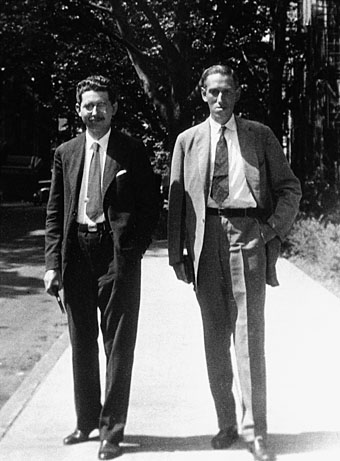
Frank Belknap Long and HP Lovecraft, New York, 1931. Photo by WB Talman.

There are others connections beyond literary style. When the Simon Necronomicon was published in 1977 Burroughs was asked to provide a blurb for the book. He wasn’t as effusive as the publishers might have hoped but the dubious volume was still advertised with his recommendation:

Let the secrets of the ages be revealed. The publication of the Necronomicon may well be a landmark in the liberation of the human spirit.

If it wasn’t for this then the extraordinary Invocation which opens Cities of the Red Night (1981) would have been diminished. Among the other “gods of dispersal and emptiness” whose names are called, Burroughs mentions “Kutulu, the Sleeping Serpent who cannot be summoned”, and “the Great Old One”, among a number of the usual Mayan gods, and several Sumerian deities whose descriptions (as with Kutulu) are taken from the pages of the Simon Necronomicon. It’s impossible to imagine Saul Bellow or John Updike opening a novel this way, just as it’s impossible to imagine many genre writers wandering into the areas that Burroughs explores elsewhere in that novel. This is one reason why Burroughs (and JG Ballard) were included in DM Mitchell’s The Starry Wisdom anthology in 1994, an attempt to expand the acceptable boundaries of Lovecraftian fiction, and also wilfully trample the fences that separate the genre and literary camps. I campaigned at the time for The Black Meat chapter to be included but Dave was set on Wind Die, You Die, We Die from Exterminator! (1973), a lesser piece although in the end it didn’t seem out of place in the book as a whole.

Elsewhere on { feuilleton }
The Lovecraft archive
The William Burroughs archive
Weekend links 198

boty.jpg

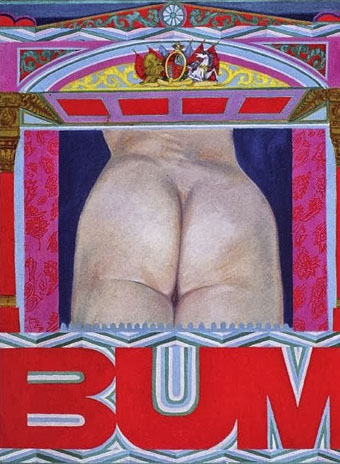
Bum (1966) by Pauline Boty.

Eleanor Birne on Pauline Boty, “the only prominent female Pop artist among a generation of famous men”. Ken Russell’s Pop Art documentary, Pop Goes the Easel (1962), which features Boty, may be seen here. Two years later Boty was back with Ken Russell playing the part of the prostitute from The Miraculous Mandarin in a film about Béla Bartók. That’s something I’d love to see. There’s more about her painting, and the work of other female Pop artists, here.

• Why Are We Sleeping? Mark Pilkington on the music world’s recurrent interest in the philosophy of GI Gurdjieff. Pilkington’s most recent Raagnagrok release with Zali Krishna, Man Woman Birth Death Infinity, was reviewed by Peter Bebergal.

• Cinematic details: Frames-within-frames in The Ipcress File (1966), and the typography of 2001: A Space Odyssey (1968).

highrise.jpg

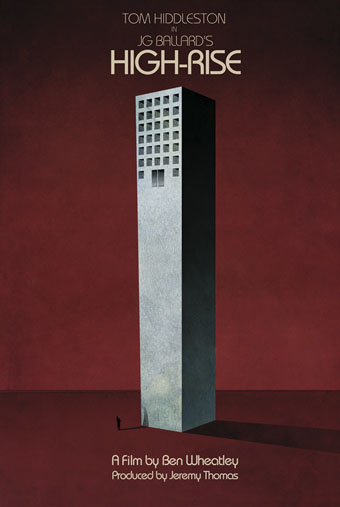
A Jay Shaw poster for Ben Wheatley’s forthcoming film of High-Rise.

• “…a large cavity must be dug in the bird’s shoulder and filled with ball bearings.” Christine Baumgarthuber on the dubious delights of The Futurist Cookbook.

• Why Tatlin Can Never Go Home Again: Rick Poynor on the difficulties of finding a definitive representation of an artwork online.

Jay Parini reviews Inside a Pearl: My Years in Paris by Edmund White. At AnOther Donatien Grau talks to White about fashion.

• At Bajo el Signo de Libra (in Spanish): the homoerotic and occasionally Surrealist art of Pavel Tchelitchew.

• At 50 Watts: Kling Klang Gloria: Vintage Children’s Books from Austria.

• The motorbike girl gangs of Morocco photographed by Hassan Hajjaj.

Geoff Manaugh on how LED streetlights will change cinema.

Stylus “is an experiment in sound, music and listening”.

• Mix of the week: Secret Thirteen mix 106 by Senking.

• At Pinterest: JG Ballard

This Is Pop? (1978) by XTC | Pop Muzik (1979) by M | Pop Quiz (1995) by Stereolab