Weekend links 253

mackey.jpg

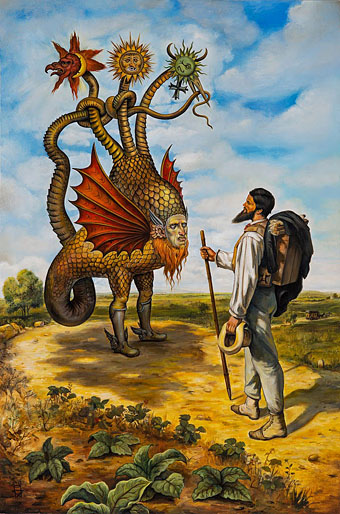
A painting by Stephen Mackey.

• “Creativity is visual, not informed thought. Creativity is not polite. It barges in uninvited, unannounced—confusing, chaotic, demanding, deaf to reason or to common sense—and leaves the intellect to clear up the mess. Above all else, creativity is risk; heedful risk, but risk entire. Without risk we have the ability only to keep things ticking over the way they are.” Revelations from a life of storytelling by Alan Garner. Related: Tygertale on Garner’s Elidor (1965), “the anti-Tolkien”. The BBC’s 1995 adaptation of Elidor remains unavailable on DVD but may be watched on YouTube.

• “One of my revelations was to reverse everything I’d been taught. Making lettering as illegible as possible falls into that way of thinking.” Psychedelic artist and underground cartoonist Victor Moscoso talks to Nicole Rudick about a life in art and design. Related: “I’ve gotten a lot of bad write-ups in newspapers over the years and they like to refer to my stuff as ‘kitsch’…Well, my stuff is way fuckin’ kitsch. It’s kitsch to an abstract level, you understand. It’s fuckin’ meretricious.” I love it when Robert Williams kicks the art world.

• “…a cerebral, challenging, visually stunning piece of 1970s American science fiction that enweirds the human perspective by challenging it with a nonhuman one.” Adam Mills on the inhuman geometries of Saul Bass’s Phase IV.

• “[Delia Derbyshire] taught me everything I knew about electronic music.” David Vorhaus talks to David Stubbs about White Noise and why he prefers the latest technology to old synthesizers.

• Costumes from Alla Nazimova’s film of Salomé (1923) have been discovered in a trunk in Columbus, Georgia.

• Mix of the week: The Ivy-Strangled Path Vol. I, “music for a residual haunting” by David Colohan.

• At Dangerous Minds: Queer, boho or just plain gorgeous: photographs by Poem Baker.

Grimm City, a speculative architectural project by Flea Folly Architects.

Mad Max: “Punk’s Sistine Chapel” – A Ballardian Primer.

In Search of Sleep: photographs by Emma Powell.

Drains of Manchester

Road Warrior (1985) by The Dave Howard Singers | Warriors Of The Wasteland (Original 12″ mix, 1986) by Frankie Goes To Hollywood | Drive It Mad Max (Super Flu Remix, 2009) by Marcus Meinhardt
Dune designs

dune01.jpg

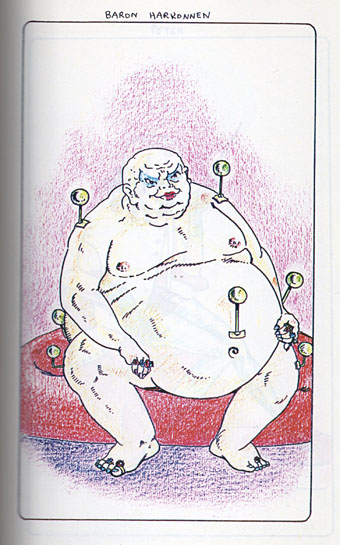
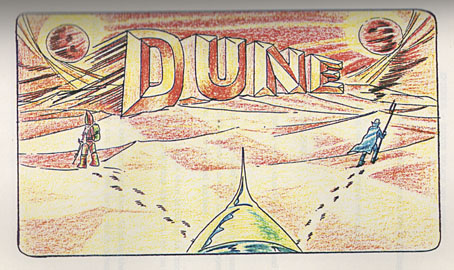
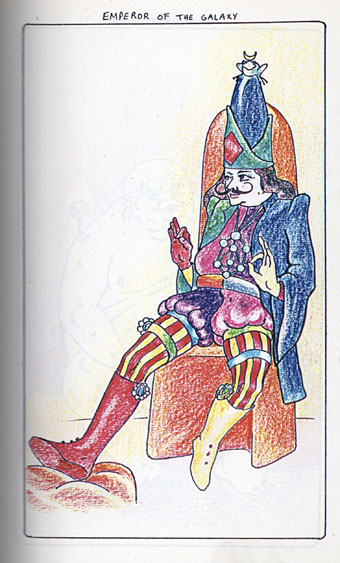
Currently racking up the bids at eBay (again) is an early draft of Alejandro Jodorowsky’s script for his ill-fated film of Dune. Aside from some diverting glimpses of dialogue and plot elaboration, what’s most interesting about the draft is the character and scene sketches, some of which are sampled below. I’ve still not seen the documentary about the unmade film so I can’t say whether any of these have appeared in public before but if they have they’re new to me. No artist is credited but the naive style rules out both Moebius and HR Giger (who arrived late to the project in any case). Best bet is either Jodorowsky himself—in 1967 he was writing and illustrating a comic strip, Fabulas Panicas—or Jodorowsky’s colleague from the Panic Movement days, Roland Topor. In the early 70s Topor was working with René Laloux on the animated SF film Fantastic Planet.

dune02.jpg

Many of the conceptions differ radically from the more graceful designs that Moebius produced later on. Also of note are details such as the anal entrance to the Emperor’s throne room, a Harkonnen orgy and an insemination scene viewed from inside Jessica’s vagina. By the time Giger joined the production team the instruction was not to create anything too erotic or adult since the film needed to reach a large audience.

There’s more from the Dune script (and larger copies of these images) here. (Thanks to Jay for the tip!)

dune03.jpg

Continue reading “Dune designs”

Weekend links 252

brizzi.jpg

Waiting by Liz Brizzi.

• “Music, politics, sex, and art were also widely represented by Evergreen. Gerald Ford famously maligned the magazine on the floor of Congress for printing the likeness of Richard Nixon next to a nude photo.” Jonathon Sturgeon on the return of an avant-garde institution.

• “The hallucinogenic properties of language are widely recognized by all repressive societies…which treat words like other tightly controlled substances.” Askold Melnyczuk reviews Where the Bird Sings Best, a novel by Alejandro Jodorowsky.

• Mixes of the week: A Mix For Thomas Carnacki by Jon Brooks whose Music for Thomas Carnacki has been reissued on vinyl; Solid Steel Radio Show 27/3/2015 by DJ Food.

One of the few vice-friendly cities left in the US, New Orleans remains his spiritual home, or whatever the atheist equivalent is. Waters’ supposed favourite bar in the world is here in the historic French Quarter. The Corner Pocket is a gay dive bar with tattooed strippers—filthy in exactly the way Waters likes.

“Trash and camp just don’t cut it any more,” he told a rapt audience at his interview panel on Friday. “Filth still has a punch to it. The right kind of people understand it and it frightens away the timid.”

John Waters growing older disgracefully

Songs of a Dead Dreamer and Grimscribe by Thomas Ligotti are being republished in a single edition by Penguin. Jeff VanderMeer wrote the foreword.

• “The film is brimming with Bacchanalian revelry, arcane mystery and mortal dread.” Robert Bright on The Saragossa Manuscript by Wojciech Has.

Alistair Livingston has posted page scans from When Darkness Dawns, volume two of his zine from the early 80s, The Encyclopedia of Ecstasy.

• “Without first understanding the flâneur we cannot understand the development of arcades,” says Aaron Coté.

• At A Journey Round My Skull: Jo Daemen cover designs; at 50 Watts: the art of Manuel Bujados.

• Vast spacecraft and megastructures: Jeff Love on the science-fiction art of Chris Foss.

• At Dangerous Minds: RE/Search’s Vale on JG Ballard and William Burroughs.

• RIP John Renbourn

Pentangling (1968) by Pentangle | Lyke-Wake Dirge (1969) by Pentangle | Lord Franklin (1970) by Pentangle

Haunted Corridors: The Temporal Enigmas of Sapphire and Steel

sands01.jpg

All irregularities will be handled by the forces controlling each dimension. Transuranic, heavy elements may not be used where there is life. Medium atomic weights are available: Gold, Lead, Copper, Jet, Diamond, Radium, Sapphire, Silver and Steel.

Sapphire and Steel have been assigned.

Voiceover at the beginning of each episode

Having revisited a fair amount of old television in the past few years I thought I was past being surprised, but this came as a revelation. Sapphire and Steel appeared at exactly the wrong moment for me to fully appreciate it the first time round. The six storylines ran on the ITV network from 1979 to 1982, a period when my home and personal life was so chaotic that I saw little television at all. At any other time a series featuring a pair of cosmic investigators immersed in mysteries involving haunted railway stations and people escaping from photographs would have been essential viewing. Sapphire and Steel was never repeated after those original screenings so watching the entire run recently has been like seeing it for the first time. In recent years the series has been included in discussion of the weirder British television of past decades; China Miéville in his interview in The Twilight Language of Nigel Kneale describes Sapphire and Steel as the strangest thing ever screened on British TV. After reading that, and a couple of other appraisals, I felt obliged to refresh my vague memories.

sands02.jpg

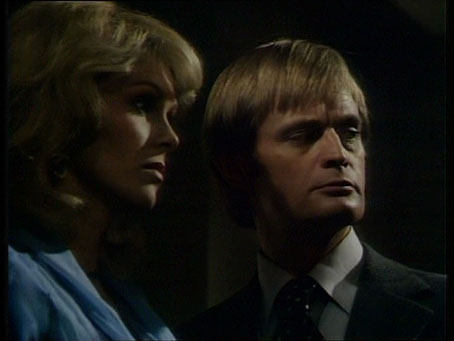
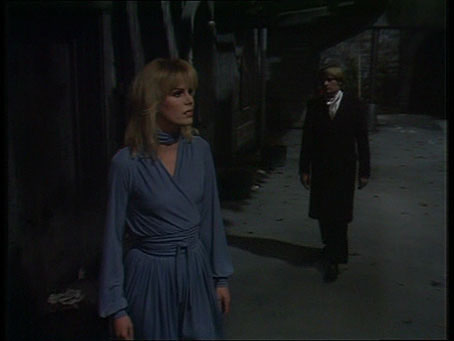
Assignment One: Sapphire (Joanna Lumley) and Steel (David McCallum).

Superficially, Sapphire and Steel belongs to the occult-detective subgenre, a minor category of weird fiction that in its early days included characters such as Sheridan Le Fanu’s Dr Martin Hesselius, Algernon Blackwood’s John Silence, William Hope Hodgson’s Thomas Carnacki and others. But several factors set Sapphire and Steel apart from their more staid predecessors: occult detectives are generally solitary figures whereas Sapphire and Steel operate as a pair; Sapphire is a woman in a field more commonly occupied by middle-aged men; and most striking of all, both Sapphire and Steel are supernatural beings themselves, dispatched to Earth by agencies we never see and learn nothing about, in order to mend ruptures in the flow of Time. Supernatural detectives had appeared in comic books before this but there’s no evidence that series creator PJ Hammond was considering such antecedents when he wrote The Time-Menders (as Sapphire and Steel was originally known). A few years earlier Hammond had been writing for Ace of Wands (1970–72), a mildly hippyish children’s TV series whose hero, Tarot, was a youthful stage magician with genuine occult powers. Between stage shows, Tarot and friends investigated supernatural events. Sapphire and Steel had originally been planned as a series for children but before the first script was finished it was moved to an early evening slot, thus allowing for darker and more adult-oriented material.

sands03.jpg

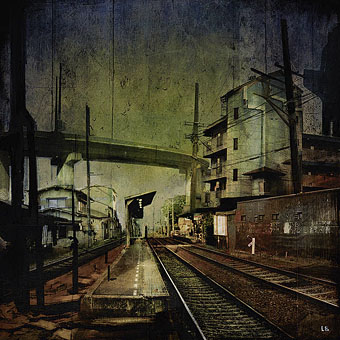
Assignment Two: the haunted railway station. The clothing worn by the pair changes with each assignment; on this occasion they’re in evening dress.

One of the attractions of Sapphire and Steel in a genre replete with origins and canonical histories is how little is explained about the two main characters, the source of their assignments, or even the true nature of the malevolent forces they have to face. Sapphire (Joanna Lumley) and Steel (David McCallum) embody the materials after which they’re named, the pair being part of a team of elemental operatives some of whose names are listed in the voiceover that introduces each episode. We only encounter two others: Lead (Val Pringle), a huge African-American man with superior strength; and Silver (David Collings), an effete and dandyish Englishman with the ability to mould metals, fix machines and replicate objects. Sapphire’s abilities are mainly psychometric—she reads the history and condition of people and places—but she can also rewind time for short periods; Steel is as cold and unyielding as his name; he’s fiercely analytical, often bad-tempered and also strong enough to tie a knot in a lift cable.

Continue reading “Haunted Corridors: The Temporal Enigmas of Sapphire and Steel”

Weekend links 249

ulrich.jpg

The Philosophers (Homage to Courbet) by Christopher Ulrich. Another great tip from Full Fathom Five.

• “Mushrooms are the only psychedelic drugs that I take, and I don’t take them very often. But I would trust them. Once you’ve done them a few times it’s very easy to feel a sense of entity. You can feel that there is a characteristic in this level of consciousness which almost seems…playful? Or aware, or sometimes a bit spooky.” Alan Moore discussing art and psychedelics in Mustard magazine. Related: “Psychedelics not linked to mental health problems or suicidal behavior: A population study.”

• “Leonora Carrington transcended her stolid background to become an avant-garde star,” says Boyd Tonkin. At the BBC Chris Long looks at Leonora Carrington’s journey from Lancashire to Mexico. The Carrington exhibition at Tate Liverpool opened on Friday.

A Savoyard’s First Brush with Censorship, Clara Casian’s proposed documentary film about Savoy Books, is looking for Kickstarter funding.

Warner suggests that there are four characteristics that define a veritable fairy tale: first, it should be short; second, it should be (or seem) familiar; third, it should suggest ‘the necessary presence of the past’ through well-known plots and characters; fourth, since fairy tales are told in what Warner aptly calls ‘a symbolic Esperanto’, it should allow horrid deeds and truculent events to be read as matter-of-fact. If, as Warner says, ‘the scope of a fairy tale is made by language’, it is through language that our unconscious world, with its dreams and half-grasped intuitions, comes into being and its phantoms are transformed into comprehensible figures like cannibal giants, wicked parents or friendly beasts.

Alberto Manguel reviewing Once Upon a Time: A Short History of Fairy Tale by Marina Warner

De Natura Sonorum (1976) by Bernard Parmegiani: a free download at AGP of the original vinyl recording, something I overlooked several years ago.

• At Dangerous Minds: Real Horrorshow!: Malcolm McDowell and Anthony Burgess discuss Kubrick and A Clockwork Orange.

Meeting Bernard Szajner, a short film about the French electronic musician by Tom Colvile, Nathan Gibson & Abdullah Al-wali.

• Dismembrance of the Thing’s Past: Dave Tompkins on John Carpenter’s The Thing.

That Battle Is Over, a new song by Jenny Hval.

Mushroom (1971) by Can | The Mushroom Family (2010) by The Time And Space Machine | Growing Mushrooms Of Potency (2012) by Expo ’70