Weekend links 284

molinier.jpg

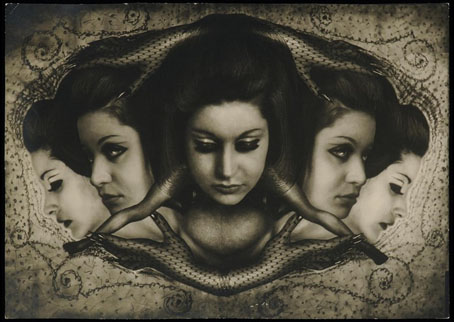
Les Hanel I by Pierre Molinier. There’s more at The Forbidden Photo-Collages of Pierre Molinier.

• Western anti-hero Josiah Hedges, better known as Edge, was the creation of prolific British author Terry Harknett. The famously violent Edge novels, credited to “George G. Gilman”, were ubiquitous on bookstalls in the 1970s. They were Harknett’s most successful works, and are still collectible today; if you’re interested there are 61 of them to search for. Amazon Originals have just launched Edge as a new TV series although anything for a mass audience is unlikely to retain the exploitative qualities of novels that often sound like pulp precursors of Blood Meridian.

Related: Terry Harknett discusses the creation of the Edge series at Drifter’s Wind; Ben Bridges on Harknett’s career, including a look at the writer’s many other Western and thriller novels; Bill Crider on Edge, Harknett and the British group of Western novelists known as “The Piccadilly Cowboys”.

• Boyd McDonald’s queer-eye film guide, Cruising the Movies: A Sexual Guide to Oldies on TV (1985), has been republished by Semiotext(e) in an expanded edition. Related: True Homosexual Experiences: Boyd McDonald and Straight to Hell by William E. Jones.

• “…a film that plumbs the dark recesses of all our imaginations: dangerous, glorious, absurd, vivid and terrifying by turns.” Charlotte Higgins on her favourite film, The Red Shoes (1948).

Art Forms from the Abyss, a new collection of illustrations by Ernst Haeckel for the report of the HMS Challenger expedition (1872–76). Related: Silentplankton.com

• “The biggest kick I ever get is to find myself pursuing some group of images without knowing why,” says M. John Harrison in conversation with Tim Franklin.

• “Plots didn’t interest him much. They were just pegs on which to hang characters and language.” Barry Day on Raymond Chandler.

• “Zdeněk Liška’s music thrived in unrealities,” says David Herter in a lengthy appraisal of the great Czech film composer.

• At Dirge Magazine: S. Elizabeth delights in the dark decor of Dellamorte & Co.

• Nabokov scholar Brian Boyd selects his ten favourite Nabokov books.

• Mix of the week: The Ivy-Strangled Path Vol. XIII by David Colohan.

Take me to the cosmic vagina: inside Tibet’s secret tantric temple.

• Pour Un Pianiste (1974) by Michèle Bokanowski | 13’05” (1976) by Michèle Bokanowski | Tabou (1992) by Michèle Bokanowski

Graft by Matt Hill

graft1.jpg

UK edition.

This latest cover design has been made public much sooner than some of the other things I’ve been working on this year. Graft is another cover for Angry Robot, a novel set in near-future Manchester by local author Matt Hill. The title plays on the multiple meanings of the word “graft”, not only the colloquial term for work (honest or otherwise) but also the sense of a medical graft. Once again, Barnes & Noble have provided a convenient précis:

Manchester, 2025. Local mechanic Sol steals old vehicles to meet the demand for spares. But when Sol’s partner impulsively jacks a luxury model, Sol finds himself caught up in a nightmarish trans-dimensional human trafficking conspiracy.

Hidden in the stolen car is a voiceless, three-armed woman called Y. She’s had her memory removed and undertaken a harrowing journey into a world she only vaguely recognises. And someone waiting in the UK expects her delivery at all costs.

Now Sol and Y are on the run from both Y’s traffickers and the organization’s faithful products. With the help of a dangerous triggerman and Sol’s ex, they must uncover the true, terrifying extent of the trafficking operation, or it’s all over.

Not that there was much hope to start with.

A novel about the horror of exploitation and the weight of love, Graft imagines a country in which too many people are only worth what’s on their price tag.

graft2.jpg

US edition.

The challenge with this one was to create something that might be read as futuristic yet also included elements of the real Manchester. All the buildings are worked up from photos of my own, many of them taken during a long day out spent wandering around the Cornbrook area and Salford Quays. The latter has been extensively redeveloped in recent years so there’s a lot of new architecture out there, including the new BBC headquarters. The elegant pylons are the supports of the Lowry Bridge which can be raised to allow ships into the docks.

I couldn’t settle on a final colour scheme for this one so I made a number of variations then let author and publisher decide. This resulted in three covers: the UK edition, US edition and e-book. It took a while but I think I’m happiest now with the blue-and-purple version. Matt Hill talks about Graft here.

graft3.jpg

E-book.

Weekend links 283

wassmann.jpg

Behind by Lisa Wassmann.

• “Without space art, nobody would know what Mars would look like.” Artist David A. Hardy talking to Nadja Sayej about a life spent painting the cosmos and—briefly—working for Hawkwind. Visions of Space, an exhibition of astronomical art, is at the Wells & Mendip Museum throughout November.

• Mixes of the week: Something Beautiful Happened by Cafe Kaput; Autumn Vybes: Mist, Mystery and Motion by Abigail Ward; and Secret Thirteen Mix 166 by Ron Morelli.

• More Ghost Box: Two new singles in the Other Voices series will be released next month. And the label is profiled in the latest issue of Electronic Sound magazine.

It breaks my heart when one writer tells another what she can or cannot do. I once knew a woman, a professor of literature, who said that Flaubert had no right to write Madame Bovary because he was a man. Such dangerous foolishness! This is just another form that dogmatic thinking takes. And it seems to me that the imagining mind—which is also a profoundly human mind—must be unfettered, boundless. To write from the perspective of another’s world demands a generous and a rigorous leap of the spirit; it demands empathy and mindfulness. Writing is so much about subverting dogmatisms of all kinds, above all the ones that insist you cannot go there! You must not say that! Writers need to go anywhere, to take anything on. And the only rule is to do it well.

Rikki Ducornet in a retrospective feature at Dennis Cooper’s blog

• “Horror at its best has always existed outside the mainstream,” says Brian Ennis in another celebratory piece about Thomas Ligotti.

• Alan Clarke & David Rudkin’s Penda’s Fen receives another cinema screening next week at the Sallis Benney Theatre, Brighton.

• “[David] Lynch’s films abound with gnomic pronouncements and incantations,” says Dennis Lim.

Stars of the Lid play a tremendous hour-long set at St. Agnes Church in Brooklyn.

Drawn in Stereo: a book of music-related art and illustration by Michael Gillette.

• At Dangerous Minds: Only the coolest people get to sit in the wicker peacock chair.

Everything Is Erotic Therefore Everything Is Exhausting by Johanna Hedva.

Moon Mist (1961) by The Out-Islanders | River Mist (1989) by Brian Eno | Black Mist (Long Version) (2013) by Pye Corner Audio

Weekend links 282

ligotti.jpg

Thomas Ligotti photographed by Jennifer Gariepy.

• More Thomas Ligotti (he’s been marginalised for decades, the attention is overdue): “Songs of a Dead Dreamer and Grimscribe are fugues of the creeping unknown,” says Peter Bebergal who profiles Ligotti for The New Yorker, and gets him to talk about the impulses that produce his fiction; at the Lovecraft eZine eleven writers and editors ask Ligotti a question related to his work.

• As usual, Halloween brings out the mixes. This year there’s a choice of The Ivy-Strangled Path Vol. XII by David Colohan, Samhain Séance 4 : The Masks of Ashor by The_Ephemeral_Man, The Voluptuous Doom of Bava Yaga by SeraphicManta, Spool’s Out Radio #27 with Joseph Curwen, and The Edge Of The Holloween Oven – 10/26/15 by The Edge Of The Ape Oven.

Broadcast’s James Cargill has provided a soundtrack for Peter Strickland’s radio adaptation of The Stone Tape by Nigel Kneale. John Doran and Richard Augood review the new and old versions for The Quietus. Related: Peter Strickland’s favourite horror soundtracks.

My mission was to make sounds that didn’t exist in reality, whether it’s a star ship or a laser or a monster or an exploding planet. You started with basic sounds that were acoustic and then you manipulated them. There’s a scene in Raiders of the Lost Ark, when he falls into the well of souls and pushes over that statue and there are all those snakes? The sound of the snakes was made by pulling masking tape off glass. When the statue falls over and breaks the wall there’s the noise of lots of big rocks breaking. We just took some bricks and smashed them up and then slowed the tape recording down. I remember doing a lot of great scary effects using dry ice and a bunch of pots and pans out of the kitchen. You heat them up really hot and then you drop a load of dry ice into the hot pan so the rapid thermal change would make it scream.

Composer and sound designer Alan Howarth talks to Mat Colegate about working for films

Jordan Hoffman reviews Jacques Rivette’s legendary 13-hour feature film Out 1: Noli Me Tangere (1971). The film will be in cinemas next month, and available on DVD/BR in January.

The Stone Tape was originally a one-off TV drama shown at Christmas in 1972. Michael Newton looks at the BBC’s habit in the 1970s of screening ghost stories at Christmas.

Steven Arnold’s Epiphanies: A look back at some of the artist’s surrealist photographs.

Greydogtales just concluded a month of posts dedicated to William Hope Hodgson.

• At Dirge Magazine: Tenebrous Kate on seven songs based on dark literary classics.

Phil Legard opens some grimoires for a short history of signs and seals.

Micah Nathan on Tuesday’s Child, “LA’s best Satanist magazine”.

• “The Occult was a kind of awakening,” says Colin Wilson.

Shagfoal: witchcraft and horror-blues by Dante.

Jenny Hval‘s favourite albums.

The Attic Tapes (1975) by Cabaret Voltaire | Those Tapes Are Dangerous (1997) by The Bug | The Black Mill Video Tape (2012) by Pye Corner Audio

Cabaret des Truands

truands1.jpg

Up until 1950 Montmartre retained an aura of evil for provincials and foreign visitors, and did its best to satisfy them with a tawdry kind of satanism. The most famous of these places, in the Boulevard de Clichy, was called L’Enfer.

Philippe Jullian, Montmartre (1977)

L’Enfer is still the most famous of these vanished Parisian establishments thanks to photos by Eugène Atget and others of its hell-mouth entrance. Among the other novelty cabarets on the Boulevard de Clichy there was Le Ciel (Heaven) next door to L’Enfer, and the death-themed Cabaret du Néant (Cabaret of Nothingness, or Limbo as Jullian has it). The exterior of the latter was suitably funereal but otherwise mundane, although once inside you were in crypt-like surroundings.

truands2.jpg

Another cabaret with a striking exterior that I hadn’t come across before was at no. 100 Boulevard de Clichy. The Cabaret des Truands (Cabaret of Truants) had a generally medieval interior with staff dressed like serving wenches and troubadours, but the exterior could almost be that of a fairground haunted house, replete with spider webs and plaster grotesques. Descriptions in English are unclear but the spiders seem to relate to a shared establishment, L’Araignée. It’s surprising to think of all these extravagant façades standing in a single (long) street in the heart of Paris, but then Montmartre in the late 19th century was the wild nighttown. Searching for photos of the Cabaret des Truands reveals an exterior changing by degrees with the passing years.

truands3.jpg

Previously on { feuilleton }
Infernal entrances