Weekend links 503

kausch.jpg

Rabbit Man with Skull Lady (1998) by Allan Kausch.

• “They were the first generation that said, ‘Fuck it, we’re not going to be intimidated.’ They weren’t going to make specifically pro-gay statements, but they were the first generation to really live that out. If you look at the Alternative Miss World, it’s a kind of gender-fuck, it’s almost like the English version of the Cockettes.” Jon Savage speaking in a piece by Alex Petridis about “Them” (Kevin Whitney, Luciana Martinez de la Rosa, Duggie Fields, Derek Jarman, Zandra Rhodes, Andrew Logan et al). Related: Andrew Logan in Andrew’s Adventures in Loganland.

• Sex, Satanism, Manson, Murder, and LSD: Kenneth Anger tells his tale. “Anger rarely if ever veers from the script as he is a man who has carefully controlled his myth and reputation for decades,” says Paul Gallagher.

• “Don’t even think about operating heavy machinery while listening to this mix.” The latest Dave Maier collection of recent ambient drift, drone-works and beatless atmospherics.

It is by no means easy to track or trace relationships between women, past or present. Women’s relationships with other women are often disguised: by well-documented marriages to men, by a cultural refusal to see what is in full view or even to believe such relationships exist. In a world built by and for men and their pursuits, a woman who loves women does not register—and is not registered, i.e., written down. Reasons for this layer one upon the other: A lesbian purposely hides her identity and remains closeted. A lesbian refuses to call herself a lesbian, disidentifying from the term and its associations for reasons personal or political. A woman does not know she is a lesbian—because she does not ever have a relationship with another woman, or because she is not aware that the relationships she engages in could be called lesbian. I didn’t call myself one for several years. Or, as in Carson’s case, her own self-understanding and identification are difficult to determine because of the efforts of those who outlived her and pushed her into the closet.

Jenn Shapland on the closeting of Carson McCullers

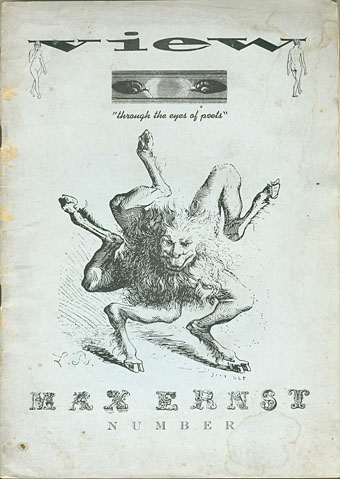
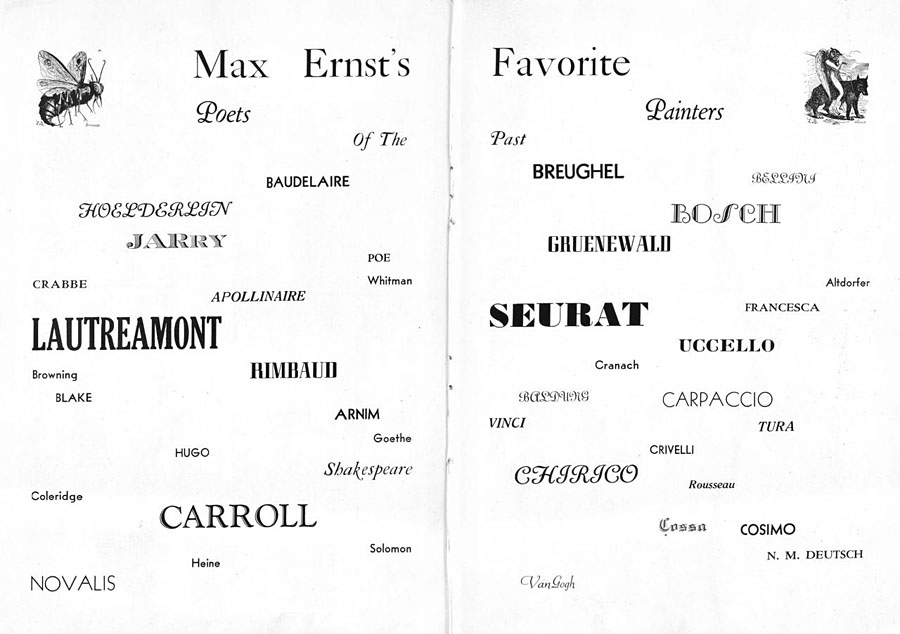
• At The Paris Review: The Collages of Max Ernst. Related: Kolaj: A directory of collage books.

Adam Scovell on the deathly hinterlands of Georges Franju’s Eyes without a Face.

• When Dorothy Parker got fired from Vanity Fair, by Jonathan Goldman.

• At Dennis Cooper’s: The Proto-Psychedelic Art of CG Jung’s Red Book.

• The abstract, single-stroke paintings of Daigoro Yonekura.

Adam Gopnik on the seriousness of George Steiner.

Caligula MMXX

The Ballad Of Dorothy Parker (1987) by Prince | Lotus Collage (1979) by Laraaji | Death Collage (1992) by Snakefinger & The Residents

The Last Ritual

sidor.jpg

Starting the new year with a new cover, and another from the plethora I was working on last year. Art Deco occultism is the theme this time, a satisfying combination since the rectilinear Deco style is a good match for the sigils and thaumaturgic diagrams you find in grimoires. The publisher is Aconyte Books, a new imprint launched a year ago to produce novels that complement the games created by parent company, Asmodee UK. Arkham Horror is an Asmodee game with a Lovecraftian theme, and S.A. Sidor’s novel is set in the game’s world:

Aspiring painter Alden Oakes is invited to join a mysterious art commune in Arkham: the New Colony. When celebrated Spanish surrealist Juan Hugo Balthazarr visits the colony, Alden and the other artists quickly fall under his charismatic spell. Balthazarr throws a string of decadent parties for Arkham’s social elite, conjuring arcane illusions which blur the boundaries between nightmare and reality. Only slowly does Alden come to suspect that Balthazarr’s mock rituals are intended to break through those walls and free what lies beyond. Alden must act, but it might already be too late to save himself, let alone Arkham (more).

The design of the cover combines the look of much Art Deco metalwork, especially bronze door and grille designs, with the kind of inlay you see on Deco furniture and the more lavish leatherbound books of the period. Part of the brief was to show a magic ritual taking place but I thought it wouldn’t do to make the figures look too realistic, hence the stylised poses; George Barbier rather than Weird Tales. Another request in the brief was to incorporate the Yog-Sothoth sigil from the Simon Necronomicon (the bronze circle under the title). I think I’ve said before that the symbols in the Simon Necronomicon tend to be used a lot today as though they’re the only ones available, even though the book is only one of several unofficial attempts to imagine the contents of Lovecraft’s notorious grimoire. I’ve always favoured the George Hay-edited Necronomicon so the symbol at the top of the cover is the Yog-Sothoth sigil from the Hay volume.

The Last Ritual will be published in August 2020.

Elsewhere on { feuilleton }
The Lovecraft archive

Weekend links 493

gaycomix.jpg

Art by Rand Holmes for Gay Comix No. 1, September 1980.

• In the universe next door, Los Angeles in November, 2019 looks like the drawings in the Blade Runner Sketchbook (1982). The book has been out of print for many years but available online for a while, although seldom in a downloadable form. A recent upload at the Internet Archive remedies this. In addition to the familiar Syd Mead designs for flying cars and street furniture there are some Moebius-like doodles by Ridley Scott, and Mead’s design for Tyrell’s cryogenic crypt, a detail that would have formed part of an unfilmed sub-plot.

• RIP Howard Cruse, comic artist and pioneering editor of the first few issues of Gay Comix in the 1980s. Cruse produced work outside the gay sphere (I first encountered his strips in Heavy Metal) but the stories that he and other artists created for Gay Comix (later Gay Comics) were some of the first by lesbians and gay men chronicling their own lives, as opposed to porn fantasies or the more recent trend of bolting a token sexuality to a superhero. John Seven talked to Cruse about his career in 2007.

• “On the eve of the First World War Stefan George had started recruiting his own twink army…” Well, if you really must have an army… Strange Flowers presents part one of a guide to the city of Vienna.

In Wild Air, 2016–2018: all 72 of Heath Killen’s requests for a list of six interesting things from artists, writers, scientists, ecologists, musicians, historians and others. My answers are at number 55.

• “Satan is a friend of mine”: Sander Bink on a forgotten occult novel, Goetia (1893) by Frits Lapidoth.

• Picturing a voice: Rob Mullender-Ross on Margaret Watts-Hughes and the Eidophone.

• “They broke the rules”: Killian Fox on the film posters of the French New Wave.

• At Dennis Cooper’s: Jan Švankmajer Day.

Ogi No Mato (1976) by Ensemble Nipponia | Rêve (1979) by Vangelis | Blade Runner Esper “Retirement” Edition, Part III (1982)

Weekend links 490

stoer.jpg

An engraving from The Geometric Landscapes of Lorenz Stoer (1567).

• Curtis Harrington’s cult horror film, Night Tide (1961), receives a lavish blu-ray reissue from Powerhouse in January. The limited edition will include an extra disc of Harrington’s early short films which encompass Poe adaptations and also Wormwood Star, his portrait of occult artist (and actor in Night Tide) Marjorie Cameron.

• “He was the first American representative of an electronic sound that was largely coming from Europe, from bands like Kraftwerk, or producers like Giorgio Moroder and Pete Bellotte…” Jude Rogers on Patrick Cowley.

Clive Hicks-Jenkins examines Hans Poelzig’s and Marlene Moeschke’s work on Paul Wegener’s 1920 film of The Golem. Wegener’s film is released this month in a restored blu-ray edition by Eureka.

• “Conrad was uncompromising in his beliefs until the end, sticking to his ideals with tenacious fervor.” Geeta Dayal on Tony Conrad: Writings, edited by Constance DeJong and
Andrew Lampert.

• At Dennis Cooper’s: 47 dead films. One of the films, Hu-Man (1975), a French science-fiction drama starring Terence Stamp, isn’t as dead as was assumed.

• The Danske Filminstitut has made a collection of Danish silent films available to watch for free online.

• The Last Time I Saw John Giorno, an Extraordinary Performance Poet by Mark Dery.

• “Like looking through butterfly wings”: Ira Cohen’s Mylar chamber—in pictures.

Callum James reviews the Early Poetical Works of Aleister Crowley.

• Drawing the Gaze: Revisiting Don’t Look Now by Jesse Miksic.

• Mix of the week: FACT Mix 745 by Visible Cloaks.

Mind Warp (1982) by Patrick Cowley | Go-Go Golem (1986) by Golem Orchestra | Night Tide (1995) by Scorn

Weekend links 489

wyrding.jpg

Typhonic Neural Tantra by The Wyrding Module.

• November 2019, as many people have been noting, is the month in which Ridley Scott’s Blade Runner takes place. At Dangerous Minds Paul Gallagher writes about the unrelated William Burroughs script whose title was borrowed for Scott’s film.

• More Ridley Scott (sort of): disco was still a big thing when Alien was in the cinemas 40 years ago, so Kenny Denton reworked Jerry Goldsmith’s Alien score into a disco single which he released under the name Nostromo.

• “The Count of Monte Cristo is one of the most exciting novels ever written and on the other hand is one of the most badly written novels of all time and in any literature.” Umberto Eco on the cult of the imperfect.

• Jonathan Glazer has made a short film, The Fall, for the BBC but the corporation’s restrictions mean that (for the moment) it’s difficult to see if you live outside the UK.

• New albums at Bandcamp: Typhonic Neural Tantra by The Wyrding Module, and Emotional Freedom Techniques by Jon Brooks (aka The Advisory Circle).

• Hawkwind dancer Miss Stacia and the Barney Bubbles estate have made a line of T-shirts based on Barney Bubbles’ Space Ritual design.

Walter Murch and Midge Costin on the art of cinematic sound design.

Ivana Sekularac on the former Yugoslavia’s brutalist beauty.

• Congratulations to Strange Flowers on its 10th anniversary.

Geoff Manaugh on the witch houses of the Hudson Valley.

• At Dennis Cooper’s: 19 experimental horror films.

Fall (1968) by Miles Davis | The Fall (2011) by The Haxan Cloak | Fall (2014) by The Bug (feat. Copeland)