Gekko Hayashi: homoerotics and monsters

gekko1

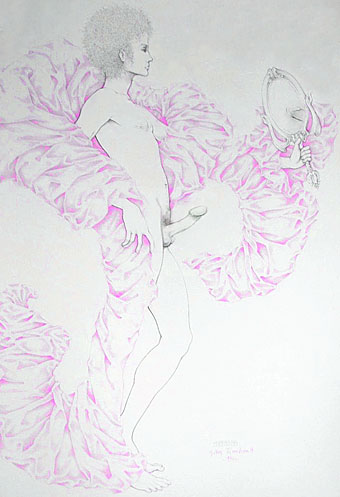
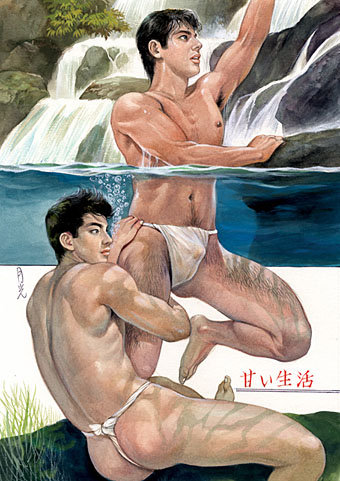
Needless to say, it’s primarily the homoerotics which concern us here. Gekko Hayashi is the name under which Japanese artist Goji Ishihara (1923–1997) produced his gay erotica, and these examples are among a small handful to be found on the web. Far more common is his Ishihara work which included some spectacular grotesqueries for the Illustrated Book of Japanese Monsters (1972) and the Illustrated Book of Hell (1975). Sate your appetite for the monstrous at Pink Tentacle.
gekko2

Hayashi/Ishihara’s work may be scarce but you can read about both his personas thanks to ComiPress, who posted an overview of the artist’s career, and Comics212, who examined the gay side of his output. There is a book collection of Hayashi’s gay art but that appears to be out-of-print. This Japanese page has many samples from the Ishihara work.

The dual career of Hayashi/Ishihara brings to mind another artist equally adept at commercial illustration and gay art, Oliver Frey. As “Zack”, Frey gained an enthusiastic audience in UK gay mags while he was also popular with quite a different audience for his illustrations in computer game magazines throughout the 1980s. He was also no slouch at painting monsters as I recall. A collection of Zack comic strips, Bike Boy, is published this month by Bruno Gmünder.
Continue reading “Gekko Hayashi: homoerotics and monsters”

The Golden Book

golden-book.jpg

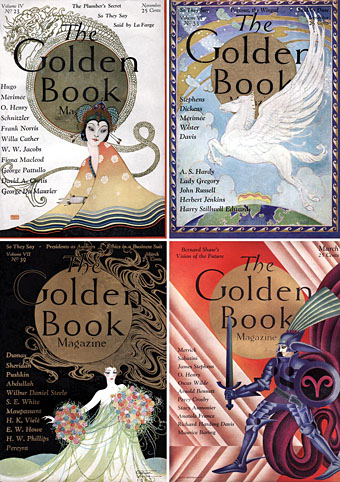
top left: Gordon Ertz; top right: George M Richards.
bottom left: Constance Wheeler; bottom right: Boris Artzybasheff.

Covers from an American adventure story magazine which ran from 1925–1935. Very lavish designs compared to the pulps it was competing against. From the excellent selection at MagazineArt.org.

Elsewhere on { feuilleton }
• The illustrators archive

Previously on { feuilleton }
• The art of Boris Artzybasheff, 1899–1965

The art of Gilles Rimbault

rimbault5.jpg

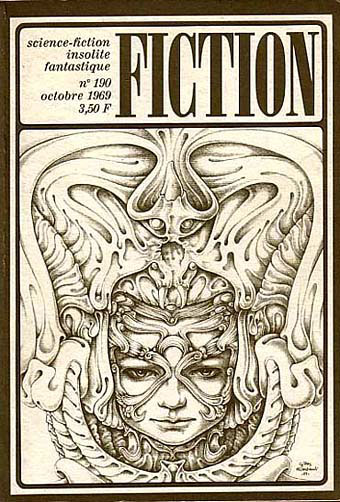
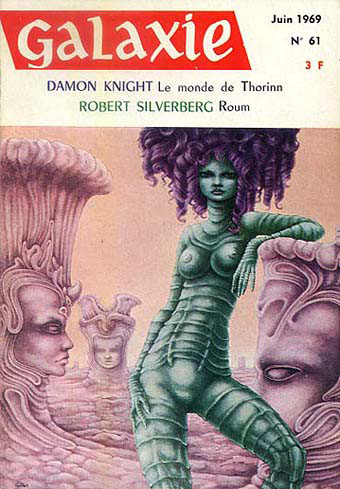
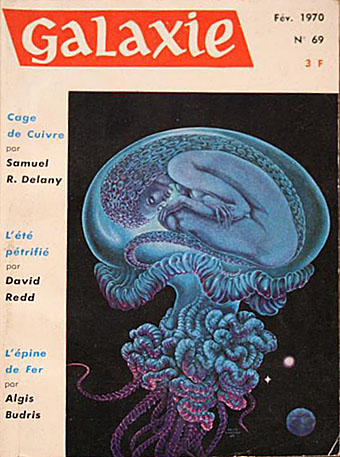
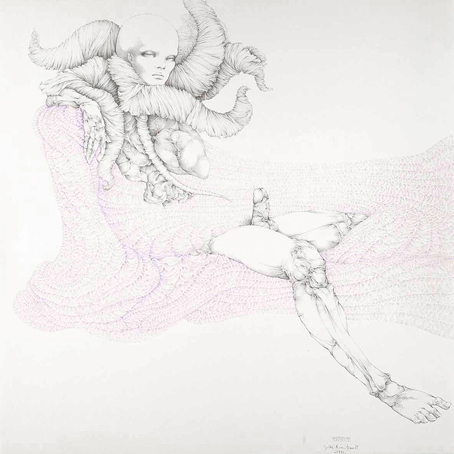
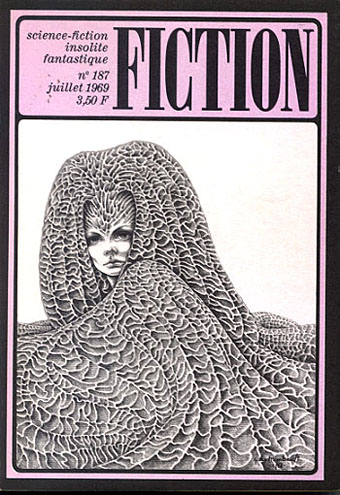
The relaxing of constraints in the 1960s produced a breed of artist which hardly seems to exist any more, invariably male and equally at home illustrating generic fantasy as producing delicately-rendered and frequently weird erotica. French artist Gilles Rimbault is one such, as was British underground artist Jim Leon, and another Frenchman, Raymond Bertrand. Unlike Leon and Bertrand, Rimbault’s work and information about the artist is frustratingly scarce. The first examples here are from covers of French science fiction magazines—also a source of work for Bertrand—while the samples below are a pair of intriguingly androgynous pieces of erotica from this page which gathers a number of similar Hans Bellmer-like works. If anyone turns up more of Rimbault’s drawings, please leave a comment.

rimbault4.jpg

rimbault6.jpg

rimbault7.jpg

rimbault2.jpg

rimbault3.jpg

Elsewhere on { feuilleton }
• The fantastic art archive

Previously on { feuilleton }
• The art of Jim Leon, 1938–2002
• The art of Sibylle Ruppert
• The art of Bertrand

Weekend links 21

nagai.jpg

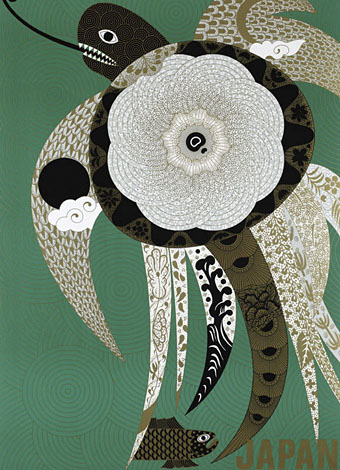
A poster by Kazumasa Nagai.

• Franco Maria Ricci creates the world’s largest maze. “The former publisher said he first confided his ambition to Jorge Luis Borges, who characteristically told him the world’s largest maze already existed and was called a desert.” Related: Mirror, Mask, Labyrinth, a review of two new collections of Borges’ poetry.

• FACT mix 164 is a dubstep collection by Pinch and a promotion for the Dark Matter compilation which I designed earlier this year.

• One of the monuments of 20th century music, Bitches Brew by Miles Davis, is released in another new (and expensive) edition next month by Sony. Nice packaging, and there’s a vinyl edition included, but these things always come across as a cyncial attempt to milk the hardcore fans one more time. And have you noticed how all vinyl releases are now described as “audiophile”? If the big record companies had shown this much dedication to quality in the 1980s when they were jobbing out sub-standard vinyl pressings their reputation might be slightly higher today.

• More Gysin: Brion Gysin, William Burroughs, and the secret life of a building on the Bowery. And Ubuweb’s page of Gysin sound works and recordings.

• Michael Moorcock: “I think I preferred my own imagination”. A two-part interview about the cover designs for Moorcock books.

• The Pansy Project: “Artist Paul Harfleet plants pansies at the site of homophobic abuse, he finds the nearest source of soil to where the incident occurred and generally without civic permission plants one unmarked pansy. The flower is then photographed in its location and posted on his website, the image is entitled after the abuse … The Pansy Project also marks locations where people have been killed as a result of homophobic attack”

• This Gaming Life: Travels in Three Cities. Jim Rossignol’s book is available as a free download.

• Lost London. Also, the Victorian Catacombs of South London.

• Dedalus Books had its Arts Council grant reinstated.

• ’Zine Lutefisk: fashion/art/escape.

• Time Will Show The Wiser (1968) by Fairport Convention | She Moves Through The Fair (1969) by Fairport Convention | She Moved Through The Fair (1994) by Jam Nation.

Julius Klinger’s Salomé

klinger1.jpg

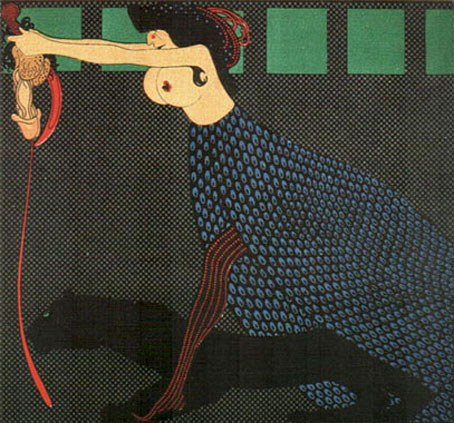
Salomé (1909).

I thought this current thread was finished yesterday but it seems not. Julius Klinger (1876–1942) was an Austrian artist and designer whose early work can be found in the first numbers of Jugend magazine. Subsequent work includes a number of erotic illustrations such as top-heavy Salomé here, a depiction which startles when you notice she’s carrying a set of severed genitals in place of the more usual human head. Given that many feminist and Freudian art critics tend to see the Salomé story as an emasculation metaphor this is perhaps appropriate.

klinger2.jpg

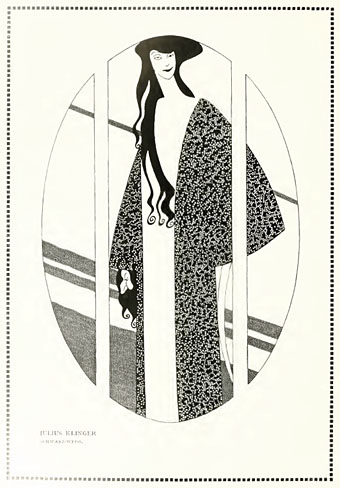
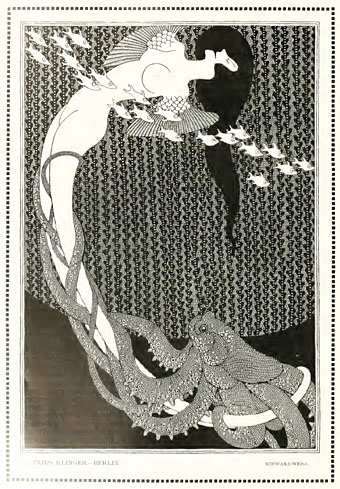
This pair of untitled pieces are from a feature on Klinger’s black-and-white work in #21 of Deutsche Kunst und Dekoration (1907), the entire edition of which can be downloaded here. The picture above may be another Salomé but is more likely that other decapitating heroine, Judith, with the head of Holofernes. The picture below, meanwhile, is entirely mysterious, and another fine addition to the artistic sub-genre of human/cephalopod encounters. Thanks to billy for pointing the way to all of these.

klinger3.jpg

Elsewhere on { feuilleton }
• The illustrators archive
• The Salomé archive