The recurrent pose 44

flandrin.jpg

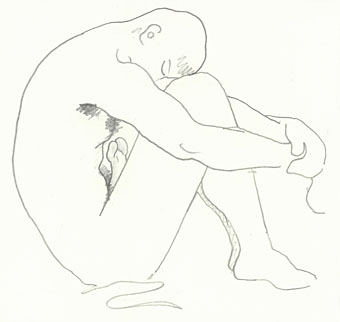
An item found in a collection of erotic drawings of dubious provenance, this piece is credited to Jean Cocteau. While I can’t be 100% certain it is Cocteau’s work it does closely resemble his other erotic drawings, and the rendering of the ear and hands is typical. Cocteau (or whoever) here does the obvious jokey thing with the Flandrin pose, something I’m surprised I haven’t seen already.

Elsewhere, Nathalie spotted a feature about the photography of Yannis Bournias which features another close variation as well as being gorgeous pictures in their own right.

Elsewhere on { feuilleton }
The recurrent pose archive

Previously on { feuilleton }
The writhing on the wall
Le livre blanc by Jean Cocteau
Cocteau’s sword
Cristalophonics: searching for the Cocteau sound
Cocteau at the Louvre des Antiquaires
La Villa Santo Sospir by Jean Cocteau

Weekend links 77

farmer.jpg

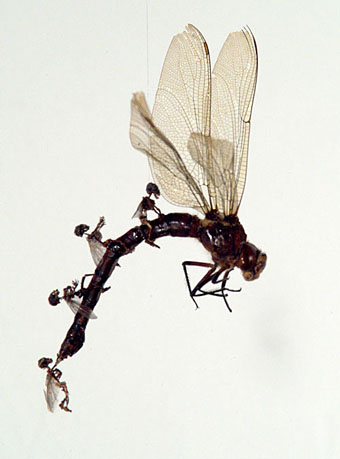
Art by Tessa Farmer.

• An exhibition of Tessa Farmer’s art is running at Viktor Wynd Fine Art, London, until October 30th. On Saturday, October 1st, Strange Attractor hosts Good Neighbours: Faeries, Folklore and the Art of Tessa Farmer also at Viktor Wynd.

Unearthing The Psychedelic Harp: “David Moats talks to harpist and songwriter Serafina Steer about her work with John Foxx and Patrick Wolf, being classically trained, the difficulties of doing live soundtracks and psychedelia.”

• And speaking of psychedelia, Arkhonia is still blogging up a storm here, here and here about the lost Beach Boys album, Smile, the farthest Brian and co. ventured into the tripped-out weirdness of 1967. The complete original recordings will finally be released in November.

• “‘We’ve arrived at a level of commodification that may have negated the concept of counterculture,’ Gibson says in the Paris Review.” William Gibson profiled by Thomas Jones.

One of the qualities I always stress when talking about this design work influenced by Surrealism is its enormous boldness and creative freedom, which is something of a paradox in many cases, since the Czech and Polish designs were created under communist regimes. So, while Uncanny documents a significant current in the history of 20th-century visual culture, the show also has a polemical intention aimed, quite deliberately, at our circumstances now. Students who encounter these images in lectures sometimes feel constrained by their conception of what they — or their teachers — regard as acceptable in today’s marketplace. At times, this has struck me as being a form of insidious self-censorship. (more)

Rick Poynor: Jan Švankmajer and the Graphic Uncanny.

• The exhibition curated by Mr Poynor last year, Uncanny: Surrealism and Graphic Design, is now showing at the Kunsthal in Rotterdam until early December. Related: MizEnScen’s somber, surrealist collages.

Howard Pyle’s Book of Pirates (1921) at Golden Age Comic Book Stories, the Urtext of buccaneer imagery.
bonnat.jpg

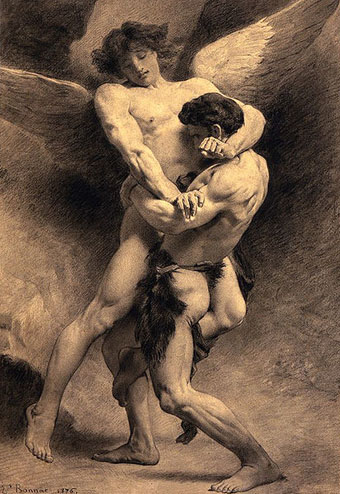
Another of those homoerotic religious pictures: Jacob Wrestling with the Angel (1876) by Léon Bonnat. Via Babylon Baroque.

• Celebrating the 250th anniversary of Laurence Sterne’s marbled page: Emblem of My Work.

John Martin’s Pompeii painting finally restored after 1928 Tate flood damage.

The Spectral Dimension: “where the paranormal and popular culture collide”.

The Writing of Stones (1970) by Roger Caillois at 50 Watts.

Mercury Arc Rectifiers.

• When silliness was an avant garde strategy: video from 1974 of Brian Eno performing China My China and (in better quality) The Seven Deadly Finns. (Go here for lyrics of the latter.)
Weekend links 76

aftertime.jpg

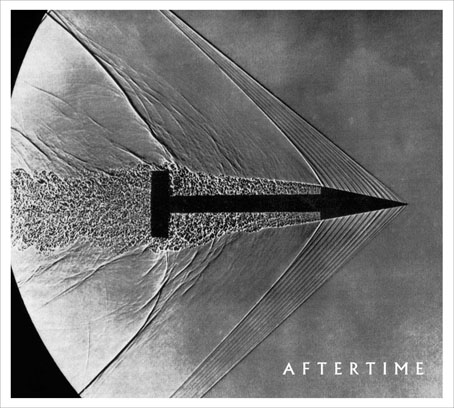
Despite appearances I’m still doing bits of design and layout work for various musicians. In the past week I’ve been trying to reorganise this sprawling website a little so it’s easier to add new work quickly and easily. One recent job was more layout than design, a CD and vinyl package for a Roly Porter collection of instrumentals entitled Aftertime. Each track on the album is named after a different planet from Frank Herbert’s Dune books although the music isn’t as illustrative as that implies. Porter’s use of an Ondes Martenot and various acoustic instruments which he subjects to degrees of distortion is just the kind of thing I like hearing. One track can be heard at FACT where Porter is interviewed about his work. Aftertime is released this month on the Subtext label.

It is a rollicking saga that involves all sorts of things not normally associated with think tanks – chickens, pirate radio, retired colonels, Jean-Paul Sartre, Screaming Lord Sutch, and at its heart is a dramatic and brutal killing committed by one of the very men who helped bring about the resurgence of the free market in Britain.

Adam Curtis on the strange history of Britain’s think tanks and their hidden agendas.

• Other assorted music business: Getting down to the Cabinessence: “This is the first of what may become an intermittent series of observations about Smile, and how Brian Wilson tried to put his dream on this planet.” | After The Flood: Talk Talk’s Laughing Stock 20-Years On: a lengthy and detailed Quietus piece on one of the best albums of the 1990s. | Jonathan Barnbrook uses an old analogue video synth to create a visual accompaniment for Interplay by John Foxx & The Maths. The HD version is an eye-searing delight.

Meredith Yayanos favours the sister instrument of the Ondes Martenot, the theremin, which she uses to provide a spooky score for a new film, Empty Rooms. There’s more spectral ambience at her SoundCloud page.

giovani.jpg

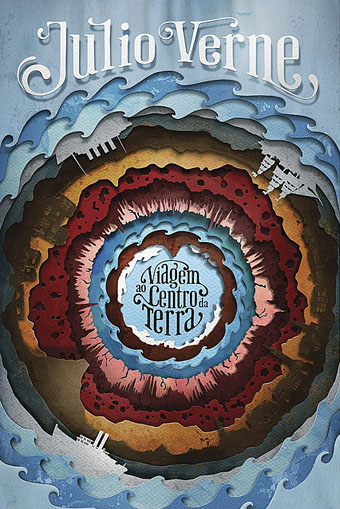
A Jules Verne cover by Carlo Giovani for Editora Ática.

• Sculptor and writer Josiah McElheny transforms the Whitechapel Gallery into a hall of mirrors.

Jacob’s Lament, an animated collaboration between illustrator Ian Miller and Stijn Windig.

Pornographic Poem (1967) by John Giorno.

Oscar Wilde grandson scorns “new” play.

• Manhattan in marble by Yutaka Sone.

Paul Atreides pt. 1 (1978) by Richard Pinhas | Harkonnen (1979) by Zed (Bernard Szajner) | Prophecy Theme (1984) by Brian Eno.

Dirty Comics

dirty1.jpg

Dirty Comics, subtitled An Exhibition of Erotic Comic Art, opens at the Center for Sex and Culture in San Francisco next month, and I’m very pleased to say that I’ll have a piece of new work in the show. Jon Macy has been mentioned here a couple of times for his comic strip adaptation of Teleny, the notorious (and very erotic) gay porn novel attributed to Oscar Wilde, so he’s the ideal person to curate the exhibition. With Dame Darcy and Patrick Fillion among the contributors there promises to be a high standard of work. I’m looking forward to seeing what everyone else has done. My contribution is a standalone piece rather than a comic page which I’ll unveil here closer to the opening day.

dirty2.jpg

Weekend links 75

darde.jpg

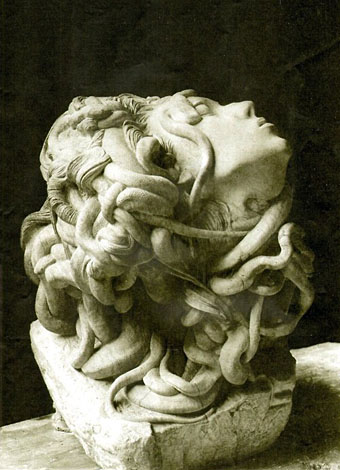
Eternal Pain (1913) by Paul Dardé. (And also here)

Rain Taxi caused a stir this week with its savaging of Hamlet’s Father by science fiction writer Orson Scott Card. The book is another of Card’s blatherings about the hell of being homosexual dressed in garments stolen from the unfortunate William Shakespeare. Rain Taxi made the obvious point about many of Shakespeare’s sonnets being homoerotic. For my part I was more appalled by the quoted extract which reduced one of the greatest plays in the language to that lifeless, cardboard-character-speak which is endemic in bad genre writing. News of the travesty quickly spread to gay news blogs, The Outer Alliance and elsewhere, ensuring that what’s left of Card’s reputation continues to spiral down a Mel Gibson-shaped black hole.

• “Sounds only like itself, like no one before or after.” Julian Cope on Tago Mago by Can which will be reissued in a new edition in November. Nice to see the return of the original sleeve design, something I saw once in a record shop then didn’t see again for years. For a long time I thought I’d imagined it. Related: two German art exhibitions inspired by the group.

The Responsive Eye (1965), a catalogue for the MoMA exhibition that launched Op Art. Also at Ubuweb: La femme 100 têtes, a film by Eric Duvivier based on the collage work by Max Ernst.

• More apocalyptic art: William Feaver on John Martin whose exhibition will be opening at Tate Britain later this month. There’s a trailer here.

Borges and I, an essay by Nandini Ramachandran. Related: Buenos Aires: Las Calles de Borges, a short film by Ian Ruschel.

• “Who was JG Ballard? Don’t ask his first biographer,” says Robert McCrum.

Biologically-inspired fabric and material design by Neri Oxman.

• Cross-pollinating subgenres: “Steampunk ambient” at Disquiet.

In the Shadow of Saturn, a photo by the Cassini spacecraft.

• The art and fashion designs of Alia Penner.

Fleet of hybrid airships to conquer Arctic.

• RIP Jordan Belson, filmmaker.

• Ten years of Ladytron whose new album is released on the 12th of September: Playgirl (2001), Seventeen (2002), Destroy Everything You Touch (2005), Sugar (2005), Ghosts (2008), Ace Of Hz (2011).