The art of Alia Penner

penner1.jpg

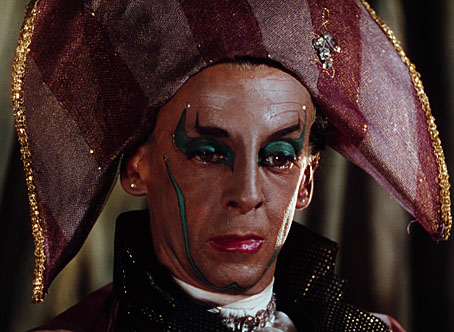
Kenneth Anger poster (2009).

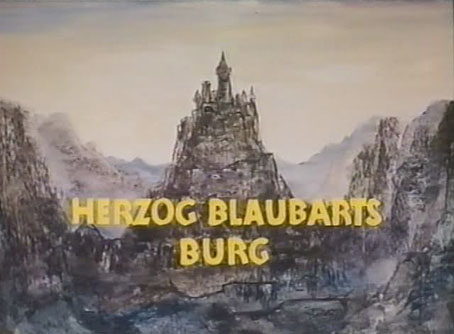
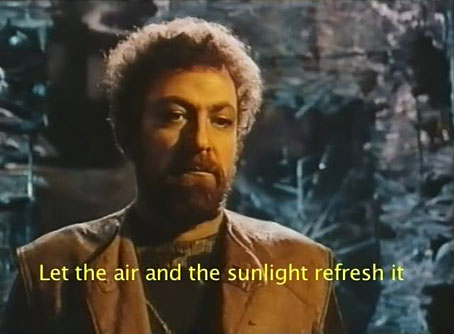
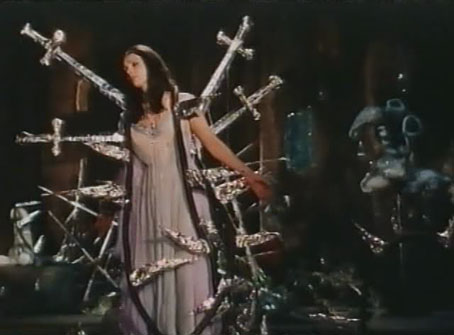
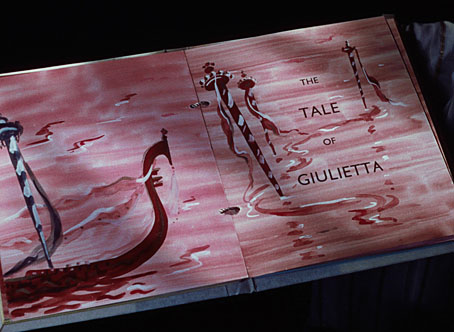
Alia Penner, like Arik Roper, is another talented member of the omniversal Arthur posse as well as being an illustrator, designer and photographer in her own right. Her title designs opened the Missoni promotional film which Kenneth Anger directed earlier this year, and her work on paper follows a distinctly psychedelic path. The new piece below reminds me a little of Wilfried Sätty’s colour collages with its spots and eggs and butterflies. There’s more gorgeous work to be seen here.

penner2.jpg

Somewhere (2010).

Previously on { feuilleton }
Arik Roper relaunched
Wilfried Sätty: Artist of the occult
Missoni by Kenneth Anger

Jabberwocky

jabberwock.jpg

The Jabberwock (2010).

’Twas brillig, and the slithy toves
Did gyre and gimble in the wabe;
All mimsy were the borogoves,
And the mome raths outgrabe.

“Beware the Jabberwock, my son!
The jaws that bite, the claws that catch!
Beware the Jubjub bird, and shun
The frumious Bandersnatch!”

He took his vorpal sword in hand:
Long time the manxome foe he sought—
So rested he by the Tumtum tree,
And stood awhile in thought.

And as in uffish thought he stood,
The Jabberwock, with eyes of flame,
Came whiffling through the tulgey wood,
And burbled as it came!

One, two! One, two! And through and through
The vorpal blade went snicker-snack!
He left it dead, and with its head
He went galumphing back.

“And hast thou slain the Jabberwock?
Come to my arms, my beamish boy!
O frabjous day! Callooh! Callay!”
He chortled in his joy.

’Twas brillig, and the slithy toves
Did gyre and gimble in the wabe;
All mimsy were the borogoves,
And the mome raths outgrabe.

The past month has been inordinately busy which has meant all the fine plans for a 2011 Coulthart calendar have been set back further than intended. No prizes for guessing the theme this year. This picture made its web debut last weekend at Alicenations, a Brazilian site devoted to all things Carrollian. Lots of splendid artwork on the rest of their page, including some of Jan Švankmajer’s Alice collages and some familiar bestiary hybrids. As to the calendar, I’m pleased to say the series of pictures is starting to feel halfway finished so I may have the whole thing completed and uploaded to CafePress sometime next week. Keep your vorpal blades crossed. In the meantime, here’s a picture detail, and while we’re on the subject, let’s not forget Terry Gilliam’s first feature film or the 1968 single from Boeing Duveen & The Beautiful Soup. (Given a choice I prefer the B-side, Which Dreamed It?)

jabberwock2.jpg

Previously on { feuilleton }
Alice in Acidland
Return to Wonderland
Dalí in Wonderland
Virtual Alice
Psychedelic Wonderland: the 2010 calendar
Charles Robinson’s Alice’s Adventures in Wonderland
Humpty Dumpty variations
Alice in Wonderland by Jonathan Miller
The Illustrators of Alice

Weekend links: the Halloween edition

goddem.jpg

Goddem with Attendants (1924) by Harry Clarke.

• Some of Harry Clarke’s extraordinary illustrations from Goethe’s Faust can be seen at A Journey Round My Skull. And a reminder for anyone who missed them, Clarke’s Poe illustrations at Golden Age Comic Book Stories.

HP Lovecraft – Audio Books, Radio Plays, & Audio Documentaries. Out-of-print recordings and (no doubt) pirate copies of more recent things. I found this page by accident so it was a surprise to see my 1999 Lovecraft portrait used there. I used to own the David McCallum Dunwich Horror, an album with a singularly appalling sleeve illustration.

• Better album sleeves can be found here: Prospective 21e Siècle, a collection of foil designs from 1967. Some of the very challenging music within can be downloaded at the Avant Garde Project archive. Related: Have an electroacoustic Halloween with İlhan Mimaroğlu’s Le Tombeau d’Edgar Poe (1964) and Wings of the Delirious Demon (1969).

startrails.jpg

Star Trails and the Captain’s Ghost, a photo by Chris Kotsiopoulos at Astronomy Picture of the Day.

• “The horror industry is totally male dominated from its directors to its slashers, and even its bloggers…and I think that needs to change.” Day of the Woman, a blog for the feminine side of fear.

6 of the Scariest Queer Horror Books Ever. I think I’d agree with the commenter in picking The Haunting of Hill House by Shirley Jackson.

• Designer Jonathan Barnbrook (pictured in a graveyard by the looks of things) is interviewed at MyFonts.

A Weird and Scratching Beauty: The Art of John Coulthart and Call of Cthulhu.

Is the Royal Masonic School for Boys the scariest building in Britain?

50-million-year-old insect trove found in Indian amber.

The Café Kaput Samhain 2010 mixtape.

The Groovy Age of Horror.

Monster Mash (1962) by Bobby “Boris” Pickett & The Crypt-Kickers.

A playlist for Halloween: Drones and atmospheres

zeit.jpg

Cover painting by Edgar Froese.

I have seen the dark universe yawning
Where the black planets roll without aim,
Where they roll in their horror unheeded,
Without knowledge or lustre or name.

HP Lovecraft, The Haunter of the Dark, 1935.

It’s become traditional to do this each Halloween so here we go again with another music list, ten releases to soundtrack your way into another world. Should you be curious, a number of these works are probably difficult to find but a couple of the Discogs links have YouTube clips on the pages. Some of the selections were featured on an earlier list but this time they’re grouped with similar recordings.

Zeit (1972) by Tangerine Dream
All you need is Zeit. I was tempted to write an entire post extolling the virtues of my favourite Tangerine Dream album, to note how I’ve been listening to it for thirty years and will never tire of it, to mention how much I love Edgar Froese’s Black Sun cover painting (which ties it to another pet obsession of mine), how much I relish its pretentious subtitle “A largo in four movements” and the cello drones which open Birth Of Liquid Plejades then grade to Moog doodles by Popol Vuh’s Florian Fricke; the endless rumbling, howling minimalism of the whole enterprise… This was an enormously audacious album for its time which predicts many of the subsequent recordings on this list. One of the Kosmische masterworks, and so far out there that every move made by the group thereafter could only be a retreat.

Nature Unveiled (1984) by Current 93
Much as I respect David Tibet for his championing of esoteric culture I’ve never much liked the music he produces. The first Current 93 album was an interesting collage work, however, created by a kind of supergroup from the Industrial music scene of the time which included members of Coil, Nurse With Wound and 23 Skidoo. The second side provides an ideal Halloween piece with The Mystical Body of Christ in Chorazaim, a blending of Gregorian loops and guitar feedback over which Annie Anxiety rants in Spanish about…penises? I still don’t know. The whole thing sounds like something you’d expect to be playing over the landscapes in Wayne Barlowe’s Inferno.

Soliloquy For Lilith (1988) by Nurse With Wound
As for Nurse With Wound, this collection of eight electronic (?) drones achieves the typical NWW state of being simultaneously fascinating and irritating in equal measure.

Nunatak Gongamur (1990) by Thomas Köner
The master of what he calls “grey noise” made his first album by “miking-up gongs, then rubbing, scraping and electronically treating the sounds to the point where their origin is unrecognisable.” (More.) The result very effectively conjures the icy wastes alluded to by its title, and would make a perfect soundtrack for reading Lovecraft’s At the Mountains of Madness or The Terror by Dan Simmons.

angels.jpg

How To Destroy Angels. Cover painting by Derek Jarman.

How To Destroy Angels (Remixes and Re-Recordings) (1992) by Coil
Coil created a similar effect to Köner by treating the sounds of their first 12″ release from 1984 to electronic processing, stretching metallic noises into reverberant shudders. One of the remixes is by Steven Stapleton of Nurse With Wound, while track title Dismal Orb will always make me think of the cover of Zeit.

The Monstrous Soul (1992) by Lustmord
Almost everything released by Lustmord could be labelled “drones and atmospheres” and choosing one doom-laden work over another is a difficult matter. I opted for this one on account of its occult track titles and the well-chosen dialogue samples from The Night of the Demon.

Treetop Drive (1994) by Deathprod
One from the 2006 list. I couldn’t say it any better than I did four years ago: Helge Sten is a Norwegian electronic experimentalist whose solo work is released under the Deathprod name. “Electronic” these days often means using laptops and the latest keyboard and sampling equipment. Deathprod music is created on old equipment which renders its provenance opaque leaving the listener to concentrate on the sounds rather than be troubled by how they might have been created. The noises on the deceptively-titled Treetop Drive are a disturbing series of slow loops with squalling chords, anguished shrieks and some massive foghorn rumble that seems to emanate from the depths of Davy Jones’ Locker. Play it in the dark and feel the world ending.

Night Passage (1998) by Alan Lamb
Not music at all but treated sounds made from recordings of a length of telegraph wire vibrated by the wind somewhere in Western Australia. Night Passage Demixed was a collection of remixes by artists including Thomas Köner and Lustmord’s Brian Williams.

ouroborindra.jpg

Design by Julian House.

Ouroborindra (2006) by Eric Zann
Another from the 2006 list and the most deliberately horror-oriented work on the Ghost Box label. An artist name borrowed from HP Lovecraft and track titles from Arthur Machen.

The Air Is On Fire (2007) by David Lynch
David Lynch’s friend and genius of a sound designer Alan Splet created the template for many of the works listed here with his groundbreaking soundtrack for Eraserhead in 1976. Following his death in 1994 Lynch’s films have never had quite the same feel of visceral menace despite their considerable qualities in other areas. This CD was created by Lynch himself for an exhibition of his paintings and other artwork, and if it doesn’t possess the uncanny otherness of Splet’s rumblings it still makes for some very disturbing listening. Far better than recent Lynchian musical excursions like the Blue Bob album, and well worth seeking out.

Previously on { feuilleton }
A playlist for Halloween: Voodoo!
Dead on the Dancefloor
Another playlist for Halloween
White Noise: Electric Storms, Radiophonics and the Delian Mode
The Séance at Hobs Lane
Thomas Köner
A playlist for Halloween
Ghost Box

Illustrating Poe #3: Harry Clarke

hc_poe1.jpg

And so to the master. Harry Clarke’s illustrated edition of Tales of Mystery and Imagination was published by Harrap in 1919, with a new edition following in 1923 that featured an additional series of colour plates. I can’t imagine anyone ever producing a better illustrated version of Poe than Clarke managed, the morbid quality which some complain about in his work is perfectly suited to that most morbid of writers. So too are Clarke’s haunted and neurasthenic figures, and the many decorative details which provide an analogue to the author’s distinctive prose style. The first four drawings which follow repeat the earlier order of the Beardsley illustrations; an unfair comparison, perhaps, since the subject matter didn’t suit Aubrey’s temperament, but a comparison shows how differently the same stories might be illustrated, and how much Clarke brings the macabre elements to the fore.

There’s no need to post a large selection this time when quality scans have already appeared at A Journey Round My Skull and Golden Age Comic Book Stories. These drawings really do need to be seen showing all their fine detail.

hc_poe2.jpg

The Black Cat: “I had walled the monster up within the tomb!”

hc_poe3.jpg

The Murders in the Rue Morgue: “Gnashing its teeth, and flashing fire from its eyes, it flew upon the body of the girl.”

Continue reading “Illustrating Poe #3: Harry Clarke”