Weekend links 438

awazu.jpg

Seishu Hanaoka’s Wife (1970) by Awazu Kiyoshi.

Hoodoo, Conjuration, Witchcraft & Rootwork: a colossal new addition to the Internet Archive, being a 5-volume, 4766-page collection of folkloric material gathered by Harry Middleton Hyatt in Alabama, Arkansas, Florida, Georgia, Illinois, Louisiana, Maryland, Mississippi, North Carolina, South Carolina, Tennessee, and Virginia between 1936 and 1940.

• Edward Gorey is the theme du jour, so here’s some more: Gorey’s 1977 appearance on The Dick Cavett Show is revelatory, especially if you’ve never seen him talking before. Meanwhile, Laughing Squid has a previously unpublished interview in which Gorey discusses his love for his disruptive cats.

• Jeff Nuttall’s mid-century survey of the aesthetic underground, Bomb Culture, receives a fiftieth anniversary republication by Strange Attractor. The new edition is edited by Douglas Field and Jay Jeff Jones, with a foreword by Iain Sinclair and an afterword by Maria Fusco.

I have always questioned identity politics with my work. I often have characters that engage in homosexual sex but do not identify as gay (hustlers, neo-Nazi skinheads, extreme left wing revolutionaries, gerontophiles, etc.). But my films have also always been inclusive in terms of race, class, and gender. I find that the new emphasis on identity politics has really narrowed creative expression. It demonstrates a profound ignorance about sexuality, history, and human experience.

My sexual identity is pretty much fixed—I’m a Kinsey 6, if not a 7—but I acknowledge that this means I’m sexually repressed. I believe, after Freud, that everyone has some bisexual potential, and the tendency to increasingly entrench gender identity as innate and immutable is really preposterous. It also leads to strict rules about sexual representation—how gays, lesbians and transgender people “must” be portrayed, the policing of representation, a kind of proprietary stance about who is allowed to portray these characters.

It really boils down to a naivety about sexuality, and a complete failure of the imagination. It discourages people who may have the potential for some kind of sexual fluidity to express themselves. I’ve always been a “bad gay,” but now this political correctness has made me feel even more alienated from the notion of “gay identity”—particularly since the new assimilationist model is so conservative and dull.

Filmmaker Bruce LaBruce discussing art, porn and politics with Hoçâ Cové Mbede

• “Who is Barbara Baranowska? Despite the so-called Polish Poster School’s fame, certain people were seemingly forgotten. Perhaps they even wanted it that way…” Daniel Bird on an elusive artist. Related: Selected works by Barbara Baranowska.

• “I don’t think I’m ever mean-spirited and I try to understand human behaviour even though it’s impossible,” says John Waters.

Nine Dimensional Synod Of Oblique Pleasures is a very welcome new release by The Wyrding Module.

Galerie Dennis Cooper presents…The Resplendent Illegibility of Extreme Metal Logos.

Apocalypse Burlesque — Tales of Doomsday Eros: a new book by Supervert.

Rare booksellers rallied against an Amazon-owned company and won.

B. Alexandra Szerlip on the 80-year history of the ballpoint pen.

Anjelica Huston: how we made The Addams Family.

• Mix of the week: Secret Thirteen Mix 270 by Okkre.

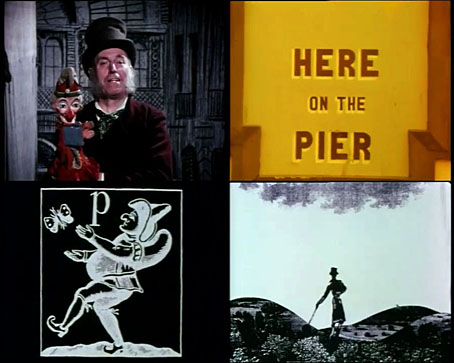
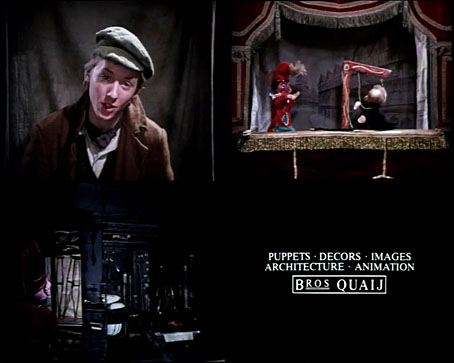
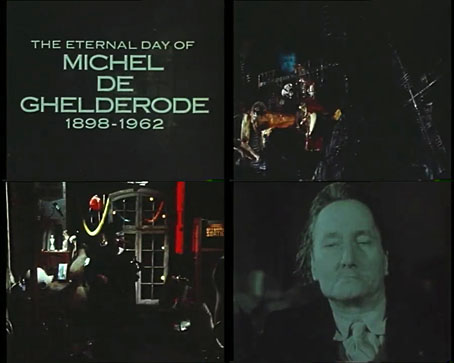
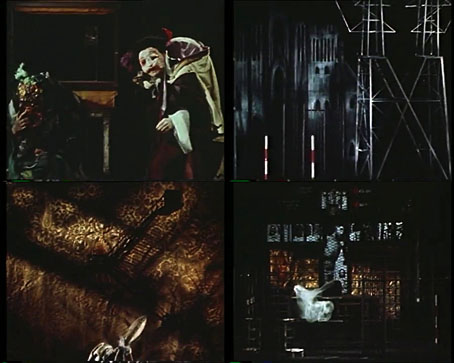
The Cabinet of the Quay Brothers

Hoodoo Man Blues (1965) by Junior Wells’ Chicago Blues Band | Evil Hoodoo (1966) by The Seeds | I Been Hoodood (1973) by Dr John

Weekend links 436

cthulhusex.jpg

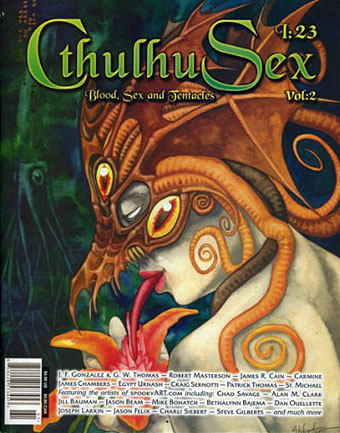
Cover for the now-defunct Cthulhu Sex magazine, volume 2, no. 23. Art by Chad Savage.

• Revising Lovecraft: The Mutant Mythos by Paul StJohn Mackintosh. Mackintosh was interviewed at Greydogtales in 2016 where he made a point that certainly chimes with my experience: “…the English-speaking genre community seems to have far more trouble with certain sexual themes than the mainstream literary community does, especially in Europe. […] A pity, because, for example, if H P Lovecraft’s worldview did owe much to sexual repression, then more mature engagement with that could really benefit the whole cosmic horror genre.”

• At Expanding Mind: Occultist and Aleister Crowley biographer Richard Kaczynski talks with Erik Davis about Jack Parsons, the “method of science,” the Agape Lodge, the women of Thelema, and the pluses and minuses of the Strange Angel TV series.

The Tell-Tale Heart (1953) is a short adaptation of the Poe story directed by JB Williams, and featuring Stanley Baker as the author. The film had been lost for 50 years but may now be seen on the BFI website.

• From July but more suited to the end of October: Paul Karasik on The Addams Family Secret: how a massive painting by Charles Addams wound up hidden away in a university library.

• Mixes of the week: Samhain Séance Seven: A Very Dark Place by The Ephemeral Man, Big Strings Attached, Oct. 2018 by Abigail Ward, and XLR8R Podcast 564 by Niagara.

• At Haute Macabre: Conjured from obscurity: lost, neglected and forgotten literature from Valancourt Books.

The Feathered Bough, a large-format collection of new fiction and art by Stephen J. Clark.

William Doyle on Music For Algorithms: in search of Eno’s ambient vision in a spotify era.

• The devils of our better nature: Daniel Felsenthal on Dennis Cooper and his new film.

Bone Mother, a short animated film by Dale Hayward & Sylvie Trouvé.

• “In Japan, the Kit Kat Isn’t Just a Chocolate. It’s an Obsession.”

Leigh Singer chooses 10 great films about the afterlife.

• “I am a haunted house,” says Sarah Chavez.

Psychedelitypes

Sex Voodoo Venus (1985) by Helios Creed | Sexy Boy (1998) by Air | Sex Magick (2002) by John Zorn

Weekend links 420

nighttide.jpg

• I’ve wondered for years why there was such a difference in quality between Plight & Premonition (1988) and Flux + Mutability (1989), a pair of instrumental albums by David Sylvian and Holger Czukay. The former warrants repeated listening while the latter…doesn’t. David Sylvian‘s reminiscences about the recording sessions are enlightening.

• “There’s something evil and dangerous that is too old to comprehend.” Justin Benson and Aaron Moorhead, directors of The Endless, talk to Virginie Sélavy about the creepiness of recorded media, the science of the supernatural and their belated readings of HP Lovecraft.

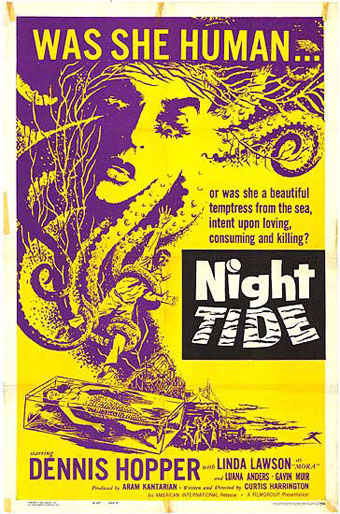
• “I hope my site will inspire people to see the world a different way,” says Nicolas Winding Refn, writing about the forthcoming launch of byNWR.com, a home for his collection of restored cult films. Good to see Night Tide (1961) by Curtis Harrington among the titles.

Dennis Cooper‘s favourite fiction, poetry, non-fiction, film, art, and internet of 2018 so far. Thanks again for the link here! Also: Laura Dern Day.

• Mixes of the week: FACT Mix 660 by 7FO, and Light Entertainment Programme: PRExotica 1914–1952 by Jesús Bacalão.

David Bennun on thirty years of the animated masterpiece that is Katsuhiro Otomo’s Akira.

Diane Mehta on the rare women in the rare book trade. Related: Pyewacket Books.

• At Greydogtales: One hundred years of Philip José Farmer.

• In Paris, an omnivorous Asian phantasmagoria.

• The Strange World of…Jon Hassell.

Night Tide (1994) by Scorn | Dark Noontide (2002) by Six Organs Of Admittance | Flowery Noontide (2004) by Espers

Weekend links 411

crowley.jpg

The Temple of Love (1911–24) by Herbert E. Crowley.

• My film viewing in the 1980s involved a considerable amount of backtracking: watching any film noir that turned up on the TV while chasing the early works of David Cronenberg, and various “New Hollywood” classics on television or at repertory cinemas (when such things were still plentiful). Contemporary fare by comparison was often a lot less attractive, although I’d be waiting for new work from David Lynch and Nicolas Roeg while pursuing obscurities (usually the banned or censored) on videotape. Popular films seldom generated actual loathing but throughout the decade I nurtured a persistent hatred for the works of John Hughes, an animus that can still return today when I read yet another nostalgic article about his oeuvre.

The monoculture of the 1980s was writ large on American cinema of the decade. From Arnold Schwarzenegger’s muscle-rippling actioners to John Hughes’s adolescent confections, bombastic, generally upbeat films characterised the decade of the yuppie.

Christina Newland offers a welcome riposte to the pastel-hued retrospectives in a piece entitled “Reagan’s bastard children: the lost teens of 1980s American indie films”. While not exclusively teen pictures, I’d have mentioned three low-budget films written by Eric Red: The Hitcher (1986), Near Dark (1987) and Cohen and Tate (1989).

The Temple of Silence: Forgotten Works & Worlds of Herbert Crowley is a lavish (and costly) study of the strange comic strips and incredibly detailed drawings of Herbert E. Crowley (1873–1937). Mark Newgarden interviewed Justin Duerr about rescuing Crowley’s art from undeserved neglect. I missed an earlier interview by Steven Heller with Temple of Silence publisher Josh O’Neill. There’s more: The Wiggle Much a Tumblr devoted to Crowley’s comic strips and other artwork. (Ta to Jay for the tip!)

Pandemic is an interactive film by John Bradburn for The Science Museum. “A pandemic is causing heart failure–how far will you go to create a pig/human hybrid to provide donor organs?” The multiple choice begins at YouTube; there’s also a behind the scenes feature at the Museum blog, and a trailer. Anyone who remembers a certain scene in Lindsay Anderson’s O Lucky Man! may hesitate before playing.

Given the plain palette of so much 1969–70 rock—jammed-out bluesy boogie in the Canned Heat and Allman Brothers mode, nasal pseudo-country harmony singing à la CSN&Y and their afterbirth—it is tempting to imagine an entirely alternative history for rock. It’s a parallel world where Fifty Foot Hose’s Cauldron, United States of America’s self-titled album and synthedelic oddities from Syrinx, Silver Apples, Beaver & Krause and Tonto’s Expanding Head Band were just the run-up to a giant leap into the electronic future.

Simon Reynolds in an excellent piece on one of my favourite musical sub-genres, electronic psychedelia

• The week in animated film: Emerald Rush, a video for an extract from Jon Hopkins’ new album, Singularity; Awaken Akira, a short homage to Katsuhiro Otomo’s graphic novel/film by Ash Thorp and Zaoeyo; Extra (1996), a video by one of the Akira animators, Koji Morimoto, for music by Ken Ishii.

Tenebrous Kate on The Powers of Darkness & The Powers of the Mind: The Legacy of Jacques Tourneur’s Night of the Demon. Related: a look at the film’s shooting script and pressbook.

• At Dangerous Minds: John Gray, the pre-Bosie lover of Oscar Wilde, and the man whose surname is memorialised in Wilde’s most famous creation, Dorian Gray.

• Skewing the Picture: China Miéville posts the full text of an essay from 2016 about the rural weird.

• Share a pastrami sandwich with TED Klein in Episode 65 of Eating the Fantastic.

• More Hodgsoniana: The Land of Lonesomeness, a short story by Sam Gafford.

• At The Quietus: Barry Miles on William Burroughs’ years in London.

• At Dennis Cooper’s: Curtis Harrington Day.

Night Of The Assassins (1977?) by Les Rallizes Dénudés | Night Of The Earth (1980) by Chrome | Night Of The Swallow (1982) by Kate Bush

Weekend links 408

sasada.jpg

Kujaku (2018) by Yasuto Sasada.

• “The Ernst picture [Of This Men Shall Know Nothing] has also been interpreted as depicting sexual alchemy, which also ties in with much of Peter Grey’s writing on Babalon and the goddess’ connection to sexual magic and the three ‘Fs’: f(e)asting, flagellation and fucking!” Hawthonn’s Phil & Layla Legard talk to Folk Horror Revival about their superb new album, Red Goddess (of this men shall know nothing).

• South London “Psychic Circuit”: A walk with London writer Iain Sinclair inspired by cult writer Steve Moore—from Shooter’s Hill and the Shrewsbury burial mound to Charlton House then Maryon Park and the locations used in Antonioni’s Blow Up.

• Czech filmmaker Juraj Herz, director of The Cremator (1969) and Morgiana (1972), died last week. One of his later films, The Ninth Heart (1978), featured an animated title sequence by Jan Švankmajer and Eva Švankmajerova.

• The week in psychedelic visuals: Ben Marks on Bill Ham’s San Francisco light shows (a piece from 2016), and Dangerous Minds on Astralvision’s Electric Light Voyage (1979), a light show on Betamax tape.

• “From glaciers to nuclear bunkers, photographer Chloe Dewe Mathews descends into the dark heart of the Swiss mountains that inspired Mary Shelley.”

• Mix of the week: Secret Thirteen Mix 250 by Sote, and XLR8R Podcast 537 by SNTS.

When The Horses Were Shorn Of Their Hooves, new music by Dylan Carlson.

Emily Temple on Edward Gorey’s illustrated covers for literary classics.

Hidden Hydrology: Coil’s Lost Rivers studio sessions.

Tube: Minimalist YouTube search

Sukhdev Sandhu is In Wild Air

• Lost Roads (1988) by Bill Laswell | Lost Sanctum (1994) by Lull | Lost Ways (2016) by Pye Corner Audio