Weekend links 221

cornell.jpg

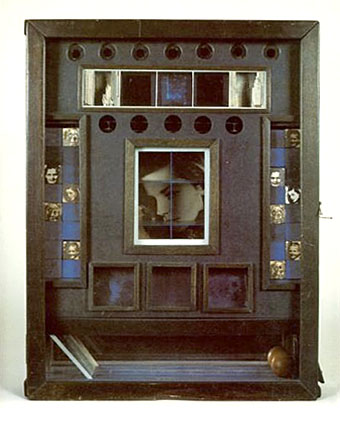
Untitled (Penny Arcade Portrait of Lauren Bacall) (1946) by Joseph Cornell.

• Having been a Bernard Szajner enthusiast for many years it’s good to see his music receiving some belated reappraisal. David McKenna talked to Szajner about his Visions Of Dune album (which is being reissued by InFiné next month), laser harps, The (Hypothetical) Prophets, and working with Howard Devoto.

• Priscilla Frank posts some big views of Marjorie Cameron’s occult paintings as a preview of the forthcoming exhibition at MOCA Pacific Design Center, Los Angeles.

• Fascinating reading in light of the recent kerfuffle over True Detective, Christopher Loring Knowles on the possible sources of HP Lovecraft’s Cthulhu Mythos.

Those who set up oppositions between the electronic technology and that of the printing press perpetuate Frollo’s fallacy. They want us to believe that the book—an instrument as perfect as the wheel or the knife, capable of holding memory and experience, an instrument that is truly interactive, allowing us to begin and end a text wherever we choose, to annotate in the margins, to give its reading a rhythm at will—should be discarded in favor of a newer tool. Such intransigent choices result in technocratic extremism. In an intelligent world, electronic devices and printed books share the space of our work desks and offer each of us different qualities and reading possibilities. Context, whether intellectual or material, matters, as most readers know.

Alberto Manguel, lucid as always, on the act and import of reading.

• “It’s time to give prog rock’s artist-in-residence Roger Dean his due,” says Amber Frost. No argument there, I did my bit in 2010.

• “Why do the covers of so many self-published books look like shit?” asks B. David Zarley.

• Mixes of the week: FACT mix 455 by Airhead, and Secret Thirteen mix 225 by Clock DVA.

• At Core77: Rain Noe chooses favourite skyscraper photos by Russian urban explorers.

• “O, Excellent Air Bag”: Mike Jay on the nitrous oxide fad of the early 19th century.

Nick Carr goes in search of Manhattan’s last remaining skybridges.

Lauren Bacall at Pinterest.

• Shaï Hulud (1979) by Zed (Bernard Szajner) | Welcome (To Death Row) (1980) by Bernard Szajner | Person To Person (1982) by The (Hypothetical) Prophets
Weekend links 218

white.jpg

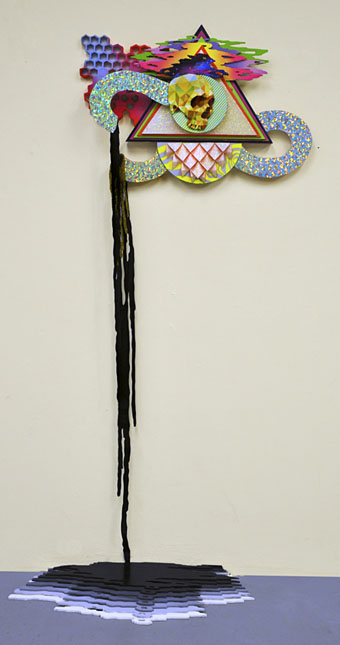
The End of a Thousand Years (2014) by Hilary White. Via Phantasmaphile.

• It’s taken a while to shamble into the world but A Mountain Walked, an anthology of Cthulhu Mythos stories edited by leading Lovecraft scholar ST Joshi, will be published by Centipede Press next month. The publisher’s page for the book shows that my contribution will be facing Joshi’s introduction which is something I wasn’t aware of until this week. It also says the 692-page limited edition is sold out, although book dealers often buy collectible volumes such as this to sell on after adding their own markup. Be warned that it was listed on Amazon at $160 so if there are copies available anywhere they won’t be cheap.

• It’s not such a surprise to hear that magic mushrooms were an inspiration for Frank Herbert’s Dune. David Lynch’s film of Dune receives passing mention in this profile by Jeremy Kay of Lynch and the Twin Peaks film/TV series.

• “Whitechapel station is one of Giambattista Piranesi’s imaginary prisons, colonised by frantic electrical engineers and watched over by CCTV.” Will Wiles on the chaos and tangled energy of modern cities.

The word perfume comes from the French root “fume”—smoke—and where there’s smoke, there’s fire! I think most people are turned on sexually by scents and smells. Certain body odours can be very sexually stimulating. We purposefully chose certain ingredients for my Obscenity perfume that are associated with occult or religious rituals, including vetiver, labdanum, and oud, and others that are considered aphrodisiacal, including patchouli and sandalwood. The point of Obscenity is that there is no conflict between the religious and the sexual, and in fact they should be completely complimentary. The fragrance is meant to stimulate you sexually, but it also literally contains water from Lourdes, so it also has religious notes and perhaps even healing properties!

Bruce LaBruce talks to Kathy Grayson about his new fragrance, Obscenity

The Baffler, “a journal of iconoclastic wit and cultural analysis” relaunches with full access to its archives from 1988 to the present.

Pineal, the new album by Othon, is dark and “properly, brilliantly queer,” says David Peschek.

• At Core77: How to improve the audio quality of vinyl records with wood glue.

• P. Adams Sitney interviews Kenneth Anger on WNYC’s Arts Forum (1972).

• At BibliOdyssey: Le Bestiaire Fabuleux by Jean Lurçat.

• Mix of the week: Secret Thirteen mix 123 by Evol.

Meawbin the Creepy Cat

Perfumed Metal (1981) by Chrome | Fragrance (Ode To Perfume) (1982) by Holger Czukay | The Perfume (2006) by Johnny Klimek, Reinhold Heil, Tom Tykwer

Weekend links 215

calibair.jpg

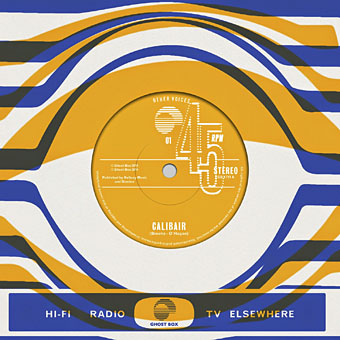
Julian House artwork for Other Voices, a new singles series on the Ghost Box label. Other Voices 01 is a collaboration between Sean O’Hagan of the High Llamas and Jon Brooks of The Advisory Circle.

Last week I linked to a copy Zadie Smith’s new introduction for Crash by JG Ballard. That piece could only be read in full by NYRB subscribers but this week the Guardian has the full text:

I was in college when the Daily Mail went to war with [David Cronenberg’s] movie, and found myself unpleasantly aligned with the censors, my own faux-feminism existing in a Venn diagram with their righteous indignation. We were both wrong: Crash is not about humiliating the disabled or debasing women, and in fact the Mail‘s campaign is a chilling lesson in how a superficial manipulation of liberal identity politics can be used to silence a genuinely protesting voice, one that is trying to speak for us all.

Related: Thomas Jones in 2008 reviewing Miracles of Life:

Despite all the bodily fluids spurted and smeared onto wrecked dashboards, the problem isn’t that it’s too pornographic but that it isn’t pornographic enough: the novel is too conscious of the deeper meaning of the sex and violence for the sex and violence to work as elements in themselves.

The fetishisation of Ballard’s novel (and Ballard’s fetishes) show no signs of abating: B-Movie (Ballardian Video Neuronica), is a short film by John Foxx, Karborn and Jonathan Barnbrook.

• Last Thursday I was watching a live performance by Pye Corner Audio and Not Waving, so it’s good to find this mix by the pair surfacing in the same week. Kudos to the latter for choosing something by Chrome. More mixes: FACT mix 468 by Throwing Snow, and Secret Thirteen mix 120 by Drøp.

• Ellen Datlow’s horror anthology, Lovecraft’s Monsters, continues to gather plaudits. Among recent reviews there’s Matt Barone at Complex who included the book in his Year’s Best Genre Fiction Books (So Far) list, and also praised my illustrations.

In recent years, many of the people on book covers have been women without faces. So prevalent is this visual cliché that the publishing industry has cycled through at least two well-documented iterations. The first, the Headless Woman, features some poor thing cut off above the neck, like the swimsuit-clad beachgoer on Alice Munro’s story collection “The View from Castle Rock.” The website Goodreads’s Headless Women page has 416 entries. Last year, the Headless Woman was supplanted by the Sexy Back, in which a woman is shown from behind, often gazing out over a vista.

Eugenia Williamson on the packaging of books for a female readership.

• The latest Taschen volume from Dian Hanson, editor of (among other titles) The Big Penis Book, is My Buddy. World War II Laid Bare, featuring photos from the archives of Michael Stokes. World of Wonder has pages from the interior.

I Have Walked This Body by Jenny Hval and Susanna is a track from a forthcoming album inspired by Maya Deren and Alexander Hammid’s Meshes of the Afternoon. It sounds fantastic so I’m looking forward to hearing more.

• If you have a spare half-million dollars, and don’t mind the possibility of possession by murderous supernatural entities, the Palmer house from Twin Peaks is for sale.

• Read an extract from Season of the Witch: How the Occult Saved Rock and Roll by Peter Bebergal.

The Stars and Their Courses: over six hours of the Nevada night sky in 4k definition.

Lee Siegel on the fraught friendship of TS Eliot and Groucho Marx.

Harmony Korine talked to Kenneth Anger for Interview Magazine.

New Scientist: How magic mushrooms induce a dream-like state.

• 3D-print your own Marcel Duchamp chess set.

Scott O)))

Crash (1980) by Tuxedomoon | Burning Car (1980) by John Foxx | A Crash At Every Speed (1994) by Disco Inferno | Burning Car (Dubterror Remix, 2008) by John Foxx

Trip texts

trip1.jpg

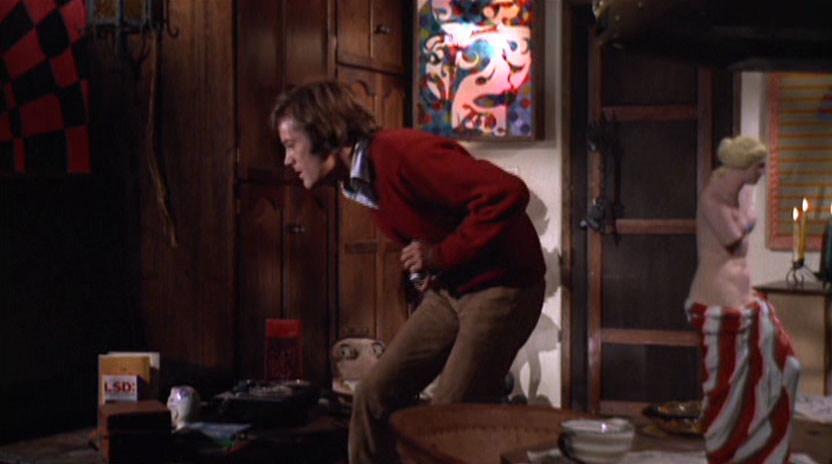
I would have changed the subject today if it wasn’t for spotting a copy of David Solomon’s LSD: The Consciousness-Expanding Drug (1964) in Roger Corman’s notorious and rather creditable stab at psychedelia, The Trip (1967). Corman’s film is an oddity in his run of AIP exploitation films in being far less condemnatory than you’d expect (although Peter Fonda’s character isn’t always enjoying his experience), and must also be the only film in the whole AIP canon with signifying texts.

trip2.jpg

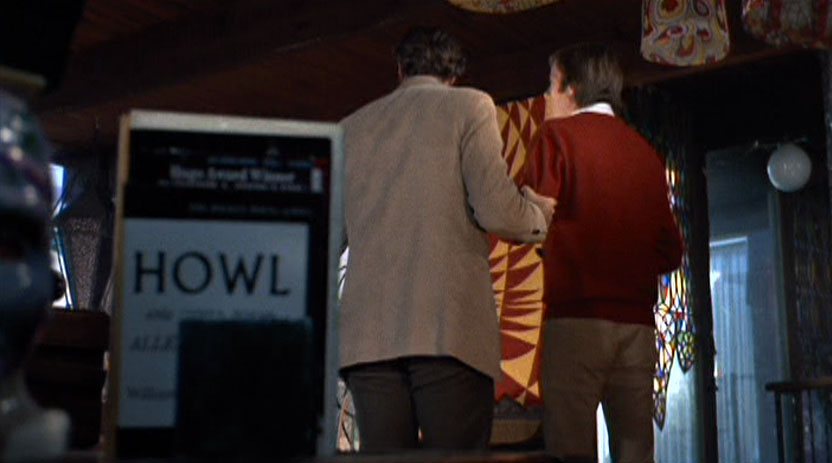
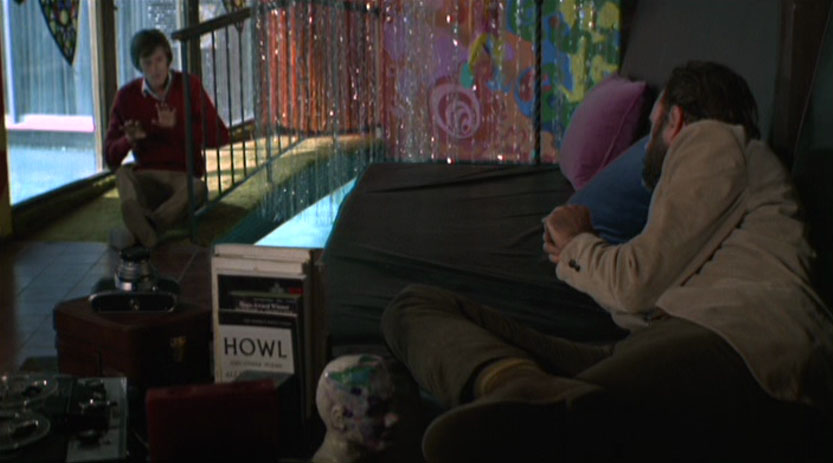
By the time Solomon’s book makes an appearance, Fonda’s character, Paul, has started freaking out but earlier on, during his conversations with John (Bruce Dern), we have Allen Ginsberg’s Howl and Other Poems (1956) shouting out of the frame. “I saw the best minds of my generation destroyed by madness…” Okay Rog, we get it.

trip3.jpg

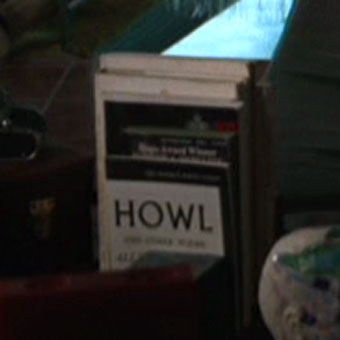
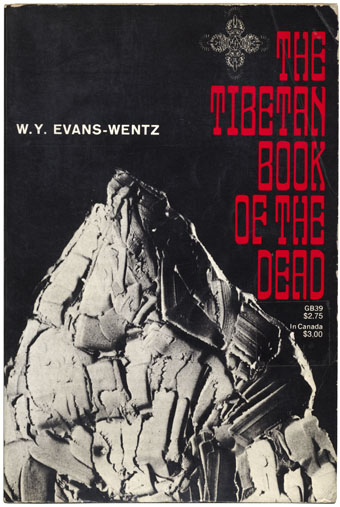
There’s more, however. Behind Howl there’s another book whose identity eludes me, while behind that you can make out the red typography and white dorje symbol from the 1960 OUP edition of The Tibetan Book of the Dead. The only reason I recognised this is because I own that edition so the cover is very familiar. This would be a popular text in an acid-tripper’s apartment; John tells Paul to “Relax and float down stream”, a line that recapitulates the advice given in Leary, Metzner and Alpert’s The Psychedelic Experience: A Manual Based on The Tibetan Book of the Dead (1964). Most surprising for me about this inclusion is that The Tibetan Book of the Dead features a lot more prominently in that other major film about psychedelic experience, Enter the Void (2009). Am I the only person to have made this material connection? Probably. Does anyone care? Probably not, but I do like recording these associations.

trip4.jpg

tbotd.jpg

Cover design by Lawrence Ratzkin.

Previously on { feuilleton }
Acid albums
Acid covers
Lyrical Substance Deliberated
The Art of Tripping, a documentary by Storm Thorgerson
Enter the Void
In the Land of Retinal Delights
The art of LSD
Hep cats

Acid albums

acid1.jpg

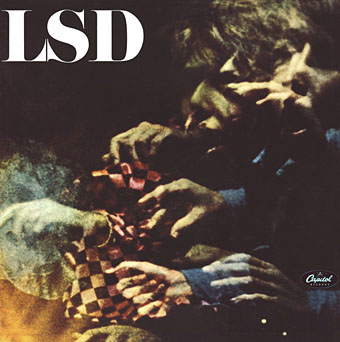
LSD (1966).

A handful of album covers, all for the vinyl equivalents of the books and magazines in the Acid covers post. The album-as-documentary/essay is one of those curiosities that no one would ever produce today but in the 1960s there were still many of them around. All of these albums have been plundered for samples in recent times.

Capitol Records’ LSD is in two parts: The Scene, examining the attitudes of the youthful acid trippers, and The Trip, which looks at the acid experience itself. Allen Ginsberg, Timothy Leary and Sidney Cohen offer expert testimony. Side two apparently features a 5-minute recording of a bad trip to balance the proselytising elsewhere. Discogs shows the interior art which typically depicts the trippers as looking far more freaked out than people usually do on these occasions. The drug that regularly turns people into mewling, puking, unhinged maniacs is called alcohol.

acid2.jpg

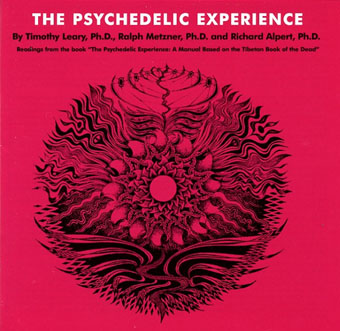
The Psychedelic Experience (1966) by Dr. Timothy Leary, Ralph Metzner & Richard Alpert.

The album of the book of the same name from which John Lennon borrowed some lines for Tomorrow Never Knows. The cover shown here is from the CD which slightly altered the typography. Neither CD or vinyl have a credit for that nice piece of art. Side one is Going Out, side two is Coming Back.

acid3.jpg

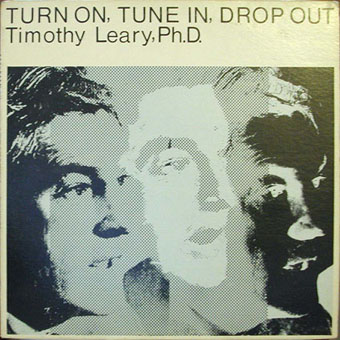
Turn On, Tune In, Drop Out (1966) by Dr. Timothy Leary.

Timothy Leary’s doctor status was very much to the fore until possession of LSD was made illegal and he became public enemy no. 1. Here he talks for two sides about the drug. Typical ESP Disk cover art which tends to the cheap and perfunctory.

acid4.jpg

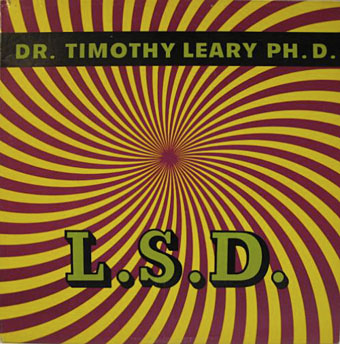
LSD (1966) by Dr. Timothy Leary.

And Leary again on the same subject. It’s hard to believe there might have been enough of a market for four spoken-word albums on the subject of LSD in one year alone but that’s what we have here. After 1966 there was no further need to instruct the public, acid was out in the culture at large, and no longer required support or qualification from voices of authority.

Elsewhere on { feuilleton }
The album covers archive

Previously on { feuilleton }
Acid covers
Lyrical Substance Deliberated
The Art of Tripping, a documentary by Storm Thorgerson
Enter the Void
In the Land of Retinal Delights
The art of LSD
Hep cats