The Egyptian Tarot

tarot01.jpg

I: The Magus

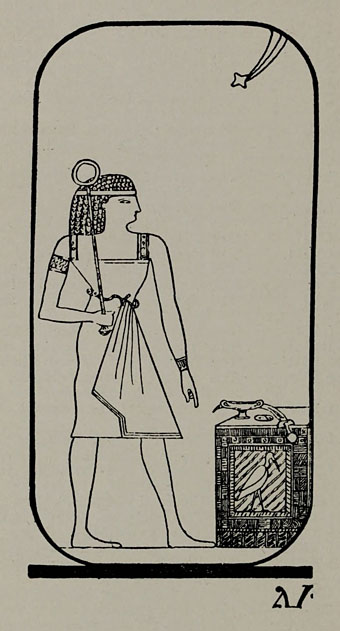
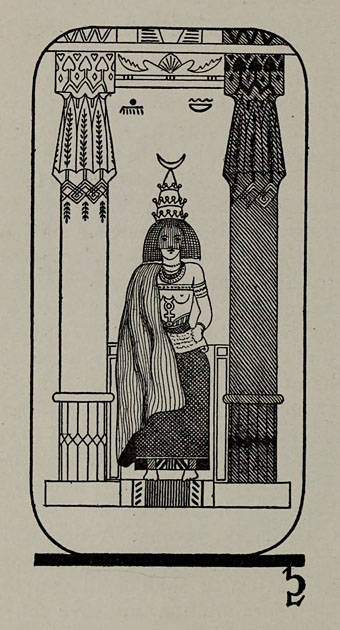
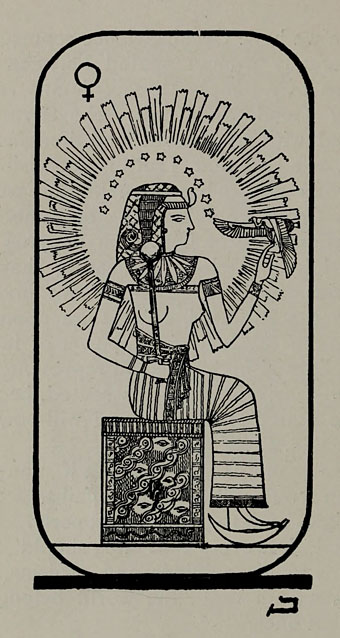
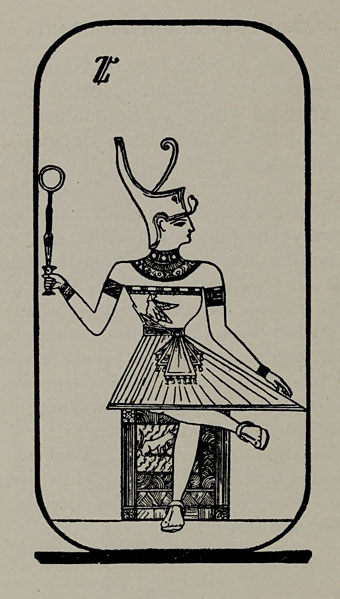
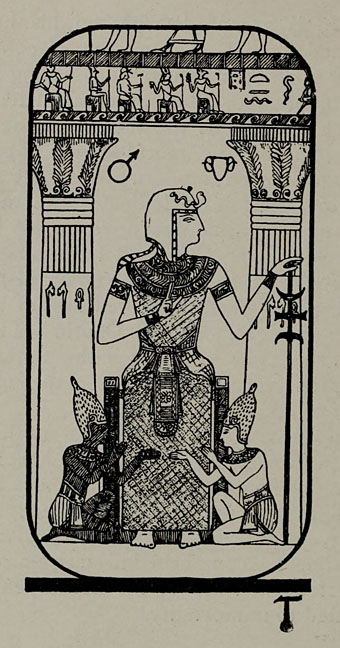
While looking at Tarot designs for work purposes (again) I remembered a book I used to own that demonstrated the symbolism of the Major Arcana by using side-by-side comparisons of cards from the more well-known decks: the Tarot de Marseille, Aleister Crowley’s Thoth deck, the Rider-Waite-Smith cards, and so on. One of the decks shown wasn’t so familiar, a 19th-century design that purported to depict the Ancient Egyptian figures from which the modern Tarot is derived. Like much occult history, this is an invention but I liked the look of the cards with their simple line drawings and clever matching of Egyptian motifs with the traditional symbols. My book was borrowed years ago and never returned (the second Tarot book I’ve had this happen to; don’t lend people your Tarot books!), so I couldn’t look for a reference, but this account of the history of the so-called Egyptian Tarot supplies all the relevant details and more.

tarot02.jpg

II: The Gate of the Sanctuary

The examples shown here are from Practical Astrology (1901), a book by Edgar de Valcourt-Vermont writing under the preposterous pseudonym “Comte C. de Saint Germain” (a real person, albeit dead by 1901, with a long history of appropriation by writers and charlatans). The drawings are reworkings of the first appearance of the Egyptian designs in an earlier book, Les XXII Lames Hermètiques du Tarot Divinatoire (1896) by R. Falconnier, the drawings there being the work of one M.O. Wegener. In addition to copying the designs Valcourt-Vermont filled out the set with a Minor Arcana of his own devising that looks distinctly amateurish next to the Wegener set. Since then the cards have continued to evolve, a more recent version being the Ibis Tarot which colours the drawings in a manner that doesn’t really suit this type of art. The cards shown in my errant book were memorable in part because they stood out from their vividly-coloured counterparts.

tarot03.jpg

III: Isis-Urania

It’s good to see these again, and also surprising to discover a further detail, that the Wegener drawings had been based on descriptions by Paul Christian in another occult study, Histoire de la Magie (1870). Christian’s book was the subject of a previous post for also being the source of an illustration of a witches’ sabbat that turns up all over the place, usually without credit. Not for the first time, the occult world is smaller than it seems.

tarot04.jpg

IV: The Cubic Stone

Wikipedia has copies of the drawings from the Falconnier book which may also be seen at Gallica, although the copy I found there was incomplete. The Valcourt-Vermont designs were published as a complete deck, The Egyptian Tarot, by Müller in 1978.

tarot05.jpg

V: Master of the Arcanes

Continue reading “The Egyptian Tarot”

Weekend links 530

yoshino.jpg

Kami #58 -bloom- (2019) by Momo Yoshino.

• “Set amid the countryside and the beaches of coastal Sussex, They depicts a world in which plundering bands of philistines prowl England destroying art, books, sculpture, musical instruments and scores, punishing those artistically and intellectually inclined outliers who refuse to abide by this new mob rule.” Lucy Scholes on They: A Sequence of Unease (1977) by Kay Dick, which she calls “a lost dystopian masterpiece”. This is revelatory in a minor way since for years I’ve remembered seeing a slim volume with the title They in a bookshop, and which I later thought might have been a Rudyard Kipling book (there’s a Kipling story with the same title). The timing is right, the sighting would have been in 1977 or 78. The combination of that short, one-word title with a stark cover image and a sinister description on the rear was hard to forget but I didn’t take note of the author’s name. (I also didn’t buy the book, opting instead for some inferior work.) A shame that it seems to be resolutely out of print.

• “The threat to civil liberties goes way beyond ‘cancel culture’,” says Leigh Phillips. It makes a change seeing this coming from Jacobin when so much of the left today can find nothing wrong with censorship so long as it’s in a good cause. (Every censor that ever lived believed they were acting in a good cause, were on “the right side of history”, etc, etc.) The piece includes a dismissal of the increasingly common riposte that “only the state can censor”: this would be news to my colleagues at Savoy Books who endured years of police harassment including the seizure and destruction of printed material; the same with the long history of police action against UK rap artists. Related: “Work that’s cancelled for being ‘of its time’ was probably objected to, at the time.” Dorian Lynskey on chronocentrism and “the narcissism of the present”.

• “Cruising baths, bars, and subway toilets, snorting poppers and ‘fist fucking with 40 guys for 14 hours’ (as he recalled in You Got to Burn to Shine, his 1993 collection of prose and poems), he found meaning in a religion of radical eros whose sacrament was anonymous sex.” Mark Dery reviewing Great Demon Kings: A Memoir of Poetry, Sex, Art, Death, and Enlightenment by John Giorno.

Aubrey Powell says his best photograph is the burning man from the cover of Wish You Were Here by Pink Floyd.

• Mixes of the week: Fact mix 770 by Lyra Pramuk, and mr.K’s Kooky Kuts Vol.4 by radioShirley & mr.K.

• The Alchemical Brothers: Brian Eno & Roger Eno interviewed by Wyndham Wallace.

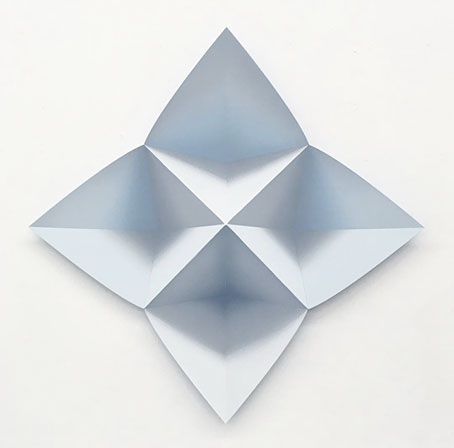
• Origami-inspired optical illusion oil paintings by Momo Yoshino.

Alexander Larman on the demise of the second-hand bookshop.

• New music: Follow The Road by Yumah, and Röschen by Pole.

• At Dennis Cooper’s: Lighting.

• RIP Linda Manz.

My Boyfriend’s Back (1963) by The Angels | Carnival of the Animals, R. 125: VII. The Aquarium (Camille Saint-Saëns) (1975) by the Württemberg Chamber Orchestra, Heilbronn with Marylene Dosse & Anne Petit, conducted by Jörg Faerber | Kill All Hippies (2000) by Primal Scream

Jean Alessandrini book covers

alessandrini05.jpg

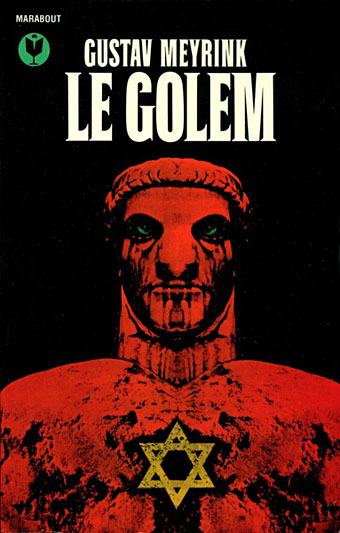
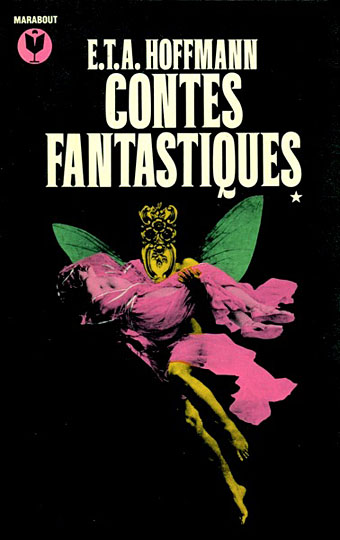
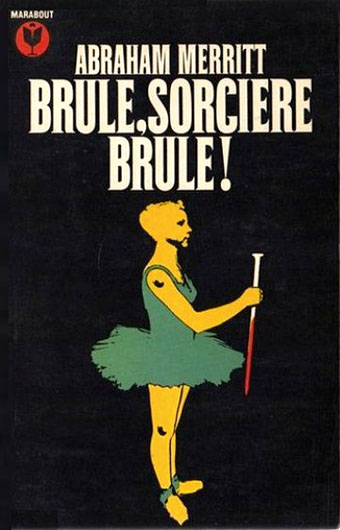
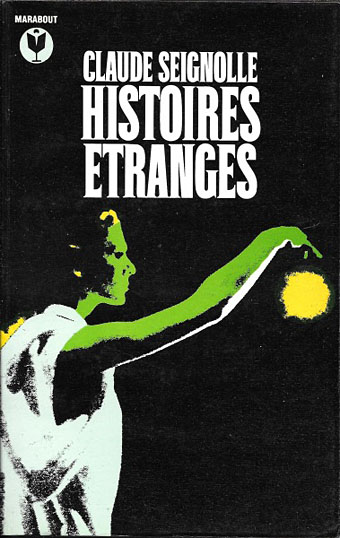
It’s that Golem again, depicted in 1979 by Jean Alessandrini. The publisher was Bibliothèque Marabout, a French fantasy/horror imprint active from the 1960s to the 1990s that was the genre division of Éditions Marabout, itself a division of publishing behemoth Hachette. Bibliothèque Marabout published a wide range of titles, with many familiar names in addition to writers such as Jean Ray, Thomas Owen and Paul Féval whose work receives little attention in the Anglophone sphere. By 1970, many of these covers had a uniform appearance, predominantly painted illustrations on black backgrounds with the titles set in Roberta, one of the Art Nouveau-styled typefaces of the occult revival. All the Alessandrini covers date from the late 70s and early 80s, and show an evolution of the imprint’s style, with the same black livery but a different typeface that I can’t identify (Coliseum is the closest digital equivalent), together with artwork that’s more of a design rather than an illustration of the book’s contents.

alessandrini02.jpg

Jean Alessandrini is a French artist, designer, typographer and author, also the creator of Typomanie, a book of type designs that I’d like to see. He provided cover drawings in the late 1960s for French SF magazine, Fiction, and later worked for the popular comics magazine Pilote, but his Marabout covers look like collage works, with the grainy appearance of photocopied photos that Neville Brody also favoured for his album cover designs. The combination of a simple symbolic graphic in bright colours on a black background is very reminiscent of David Pelham’s designs for Penguin, some of which also used collage elements. French genre titles seldom seem to follow design trends exterior to France so if there was a Penguin influence at work it’s an unusual case.

Jean Alessandrini has a small but well-designed website here.

alessandrini01.jpg

alessandrini03.jpg

Continue reading “Jean Alessandrini book covers”

Silver Machines

silver1.jpg

1: How to Construct a Time Machine, 1899

III: Description of the Machine

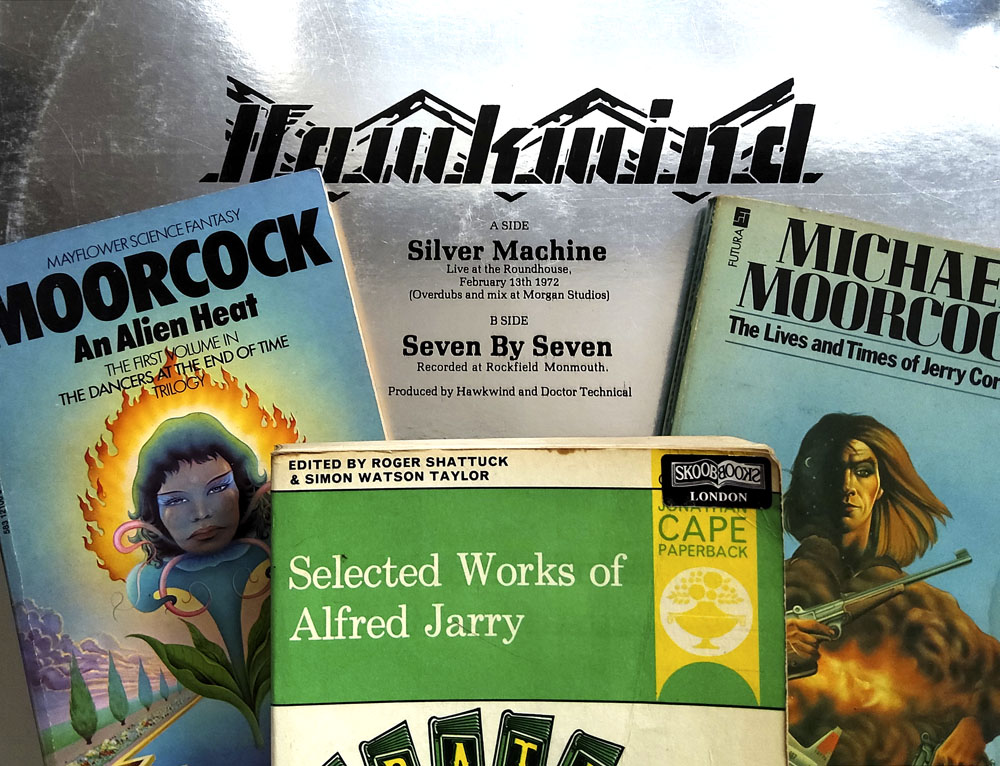
The Machine consists of an ebony frame, similar to the steel frame of a bicycle. The ebony members are assembled with soldered copper mountings.

The gyrostats’ three tori (or flywheels), in the three perpendicular planes of Euclidean space, are made of ebony cased in copper, mounted on rods of tightly rolled quartz ribbons (quartz ribbons are made in the same way as quartz wire), and set in quartz sockets.
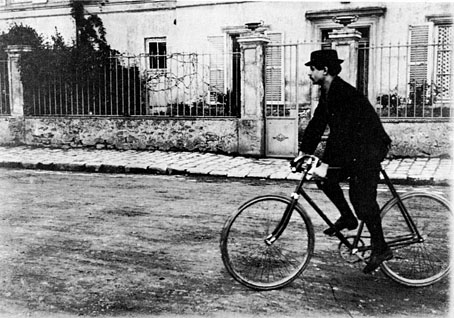
jarry.jpg

Alfred Jarry testing a time machine, 1898

The circular frames or the semicircular forks of the gyro stats are made of nickel. Under the seat and a little forward are located the batteries for the electric motor. There is no iron in the Machine other than the soft iron of the electromagnets.

Motion is transmitted to the three flywheels by ratchet-boxes and chain-drives of quartz wire, engaged in three cogwheels, each of which lies on the same plane as its corresponding fly wheel. The chain-drives are connected to the motor and to each other through bevel gears and driveshafts. A triple brake controls all three shafts simultaneously…

Alfred Jarry


2: Dead Singers (aka All the Dead Singers), 1971

ink.jpg

“That’s all in the past now.” Beesley waddled to the other the side of the tiled room and wheeled the black Royal Albert gent’s roadster across the clean floor. He paused to flip a switch on the wall. Belly Button Window flooded through the sound system. They were turning his own rituals against him. Now the devil had all the songs.

“All aboard, Mr C.” Reluctantly, Jerry mounted the bike. He was getting a bit too old for this sort of thing.

[…]

In London he slowed down, but by that time he’d blown it completely. Still, he’d got what Beesley wanted. Nothing stayed the same. Tiny snatches of music came from all sides, trying to take hold. Marie Lloyd. Harry Champion, George Formby, Noël Coward, Cole Porter, Billie Holliday, MJQ, Buddy Holly, The Beatles, Jimi Hendrix and Hawkwind. He hung on to Hawkwind, turning the car back and forth to try to home in, but then it was Gertrude Lawrence and then it was Tom Jones and then it was Cliff Richard and he knew he was absolutely lost. Buildings rose and fell like waves. Horses, trams and buses faded through each other. People grew and decayed. There were too many ghosts in the future. In Piccadilly Circus he brought the Mercedes to a bumping stop at the base of the Eros statue and, grabbing the Royal Albert, threw himself clear. He was screaming for help. They’d been fools to fuck about with Time again. Yet they’d known what they were getting him into.

Michael Moorcock, Ink Magazine


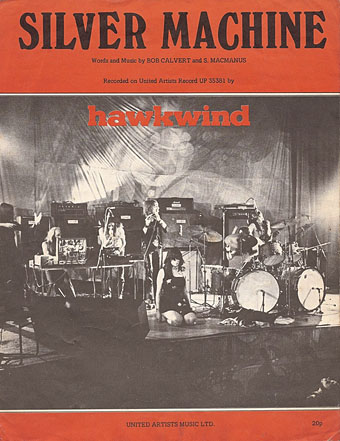
3: Silver Machine, 1972
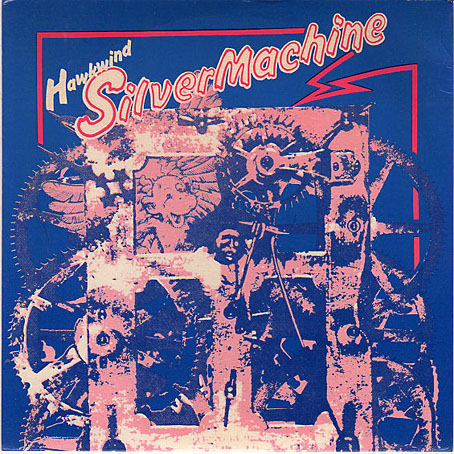
silver2.jpg

Cover design by Tony Vesely with Pennie Smith (not the work of Barney Bubbles as stated elsewhere).

lemmy.jpg

A dead singer.


4: The Dancers at the End of Time, 1974
dedication.jpg

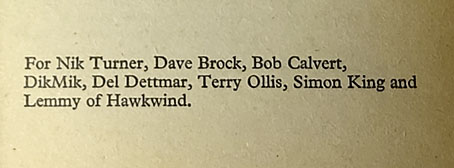
Dedication by Michael Moorcock in the 1974 Mayflower paperback of An Alien Heat—The First Volume in the Dancers at the End of Time Trilogy.

Outside the station they found themselves in the Strand and now Jherek saw something leaning against a wall on the corner of Villiers Street.

“Look!, Mrs Underwood—we are saved. A time machine!”

“That, Mr Carnelian, is a tandem bicycle.”

He already had his hands on it and was trying to straddle it as he had seen the others do.

“We would do better to hail a cab,” she said.

“Get aboard quickly. Can you see any controls?”

With a sigh, she took the remaining saddle, in the front. “We had best head for Regent Street. It is not far, happily. The other side of Piccadilly. At least this will prove to you, once and for all, that…”

Her voice was lost as they hurtled into the press of the traffic, weaving between trams and omnibuses, between horses and motor cars and causing both to come to sudden stops and stand stock still in the middle of the road, panting and shuddering.

Jherek, expecting to see the scene vanish at any moment, paid little attention to the confusion happening around them. He was having a great deal of trouble keeping his balance upon the time machine.

“It will be soon!” he cried into her ear, “it must be soon!” And he pedalled harder. All that happened was that the machine lurched onto the pavement, shot across Trafalgar Square at considerable speed, up the Haymarket, and was in Leicester Square almost before they had realized it. Here Jherek fell off the tandem, to the vast entertainment of a crowd of street urchins hanging about outside the doors of the Empire Theatre of Varieties.

“It doesn’t seem to work,” he said.

Michael Moorcock, The Hollow Lands—The Second Volume in the Dancers at the End of Time Trilogy


5: Machine music

sheet1.jpg

sheet2.jpg


6: “’Pataphysics is the science”, 1981
calvert.jpg

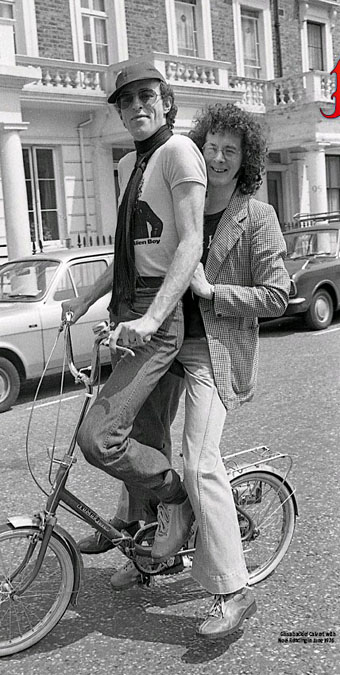
Robert Calvert and Noel Redding testing a time machine, 1976.

I read this essay by Alfred Jarry called, “How to Construct a Time Machine”, and I noticed something which I don’t think anyone else has thought of because I’ve never seen any criticism of the piece to suggest this. I seemed to suss out immediately that what he was describing was his bicycle. He did have that turn of mind. He was the kind of bloke who’d think it was a good joke to write this very informed sounding piece, full of really good physics (and it has got some proper physics in it), describing how to build a time machine, which is actually about how to build a bicycle, buried under this smoke-screen of physics that sounds authentic.

Jarry got into doing this thing called “’Pataphysics”, which is a sort of French joke science. A lot of notable French intellectuals formed an academy around the basic idea of coming up with theories to explain the exceptions to the Laws of the Universe, people like Ionesco the playwright.

The College of metaphysics. I thought it was a great idea for a song. At that time there were a lot of songs about space travel, and it was the time when NASA was actually, really doing it. They’d put a man on the moon and were planning to put parking lots and hamburger stalls and everything up there. I thought that it was about time to come up with a song that actually sent this all up, which was Silver Machine.

Silver Machine was just to say, I’ve got a silver bicycle, and nobody got it. I didn’t think they would. I thought that what they would think we were singing about some sort of cosmic space travel machine. I did actually have a silver racing bike when I was a boy. I’ve got one now, in fact.

Robert Calvert, Cheesecake fanzine no. 5

• Related: Marcus O’Dair on ’Pataphysics: Your Favourite Cult Artist’s Favourite Pseudoscience.

Previously on { feuilleton }
Notes from the Underground
Hawkwind: Days of the Underground
The Chronicle of the Cursed Sleeve
Rock shirts
The Cosmic Grill
Void City
Hawk things
The Sonic Assassins
New things for July
Barney Bubbles: artist and designer