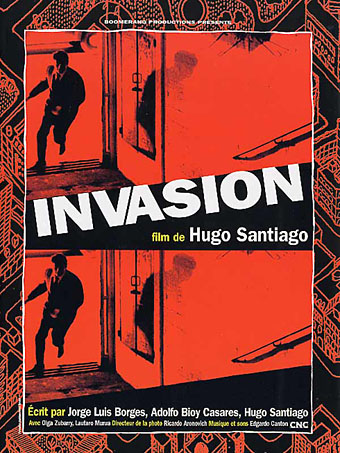
Invasion revisited

invasion1.jpg

More Borges. Recent posts about the Venerable Jorge had me searching again for a subtitled copy of Hugo Santiago’s Invasion, the feature film he made in Argentina in 1969 from a script co-written with Borges and the latter’s friend and frequent collaborator Adolfo Bioy Casares. Subtitled copies of Invasion are now easier to find than they were when I wrote about the film back in 2014; there’s one here although this wasn’t the copy I was watching at the weekend so I can’t vouch for the quality of the subtitles. As before, this is the précis:

In 1957, a small group of middle-aged men fight a clandestine battle against forces quietly invading and taking control of their city, Aquilea. Enigmatic in its story-telling, Hugo Santiago’s once-lost film obscures the motivations of either side, leaving only a series of moves and counter-moves that evokes past dictatorial oppression and those still to come.
invasion2.jpg

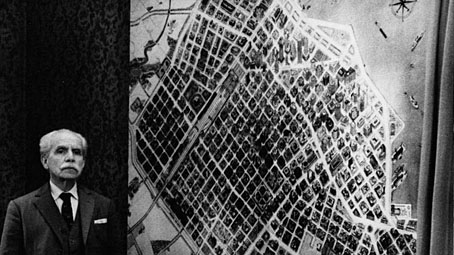
Don Porfirio (Juan Carlos Paz).

“Aquilea” is Buenos Aires masquerading as a fictional city, with a name borrowed from Roman history. For Borges readers the views of the city are fascinating in themselves since they show us the streets and café interiors which are settings for many of the writer’s stories; we also see one of his books, El Hacedor, prominently situated on a shelf. Beyond this, the fictionalising of the city pushes the story away from Argentina’s turbulent political history towards the fantastic and the mythic, as does the lack of any background information about the life-and-death struggle we’re witnessing.
invasion3.jpg

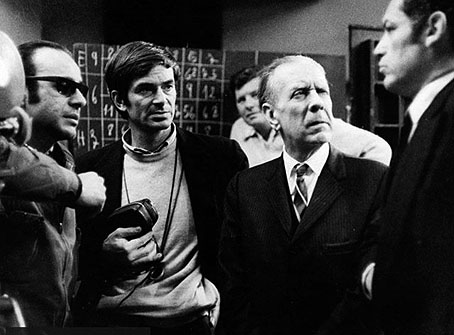
The writer visits the set. Left to right: Hugo Santiago, Ricardo Aronovich, Jorge Luis Borges and Lautaro Murúa.

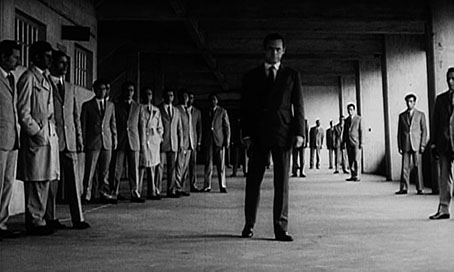
This was Hugo Santiago’s debut feature, made after several years working in France as an assistant to Robert Bresson. For a debut it’s an impressively assured piece of work, a fast-moving thriller of a type you wouldn’t expect Bioy Casares and Borges to be involved with; less time is devoted to dialogue than there is to gunfights and assassinations. Reviewers tend to compare Invasion to Alphaville but this is misleading; Aquilea may be an invented setting but there’s nothing about the place that’s futuristic or unreal beyond the surreptitious invasion which is being staged and resisted in the midst of an oblivious citizenry. A direct influence was a long-running and very popular Argentine comic strip, Héctor Germán Oesterheld’s The Eternaut, in which the surviving inhabitants of Buenos Aires fight against alien invaders; but this is a typical science-fiction scenario, with most of the human beings wiped out and the survivors battling a variety of monsters. Santiago’s film is more elusive than this, although Lautaro Murúa as Herrera, the leader of the resistance, physically resembles the stern protagonist from the comic. Invasion is deadly serious in a way that Alphaville never is, free of the quotation marks that frame all of Godard’s fictional excursions. The photography by Ricardo Aronovich is the high-contrast chiaroscuro of a late film noir like Kiss Me Deadly, as is the atmosphere of doom, paranoia and escalating urgency; characters are shown continually marching or running towards their destinations. Murúa strides through his scenes with the grim determination of Lee Marvin in Point Blank; in fact Boorman’s film is a better comparison than Alphaville, a spare and elliptical neo-noir that was one of the first Hollywood features to embrace the innovations of the Nouvelle Vague.
invasion4.jpg

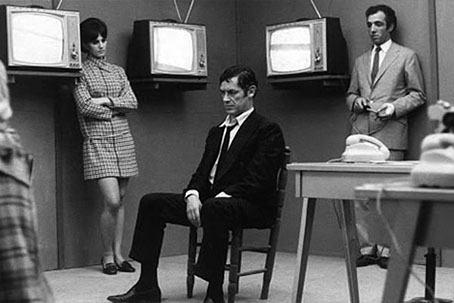
The harsh separation between black and white extends to the white raincoats of the invaders and the black suits of the resistance, the latter being directed by Don Porfirio (Juan Carlos Paz), an elderly man who spends most of the film in his apartment where he plans operations while talking to his black cat and drinking maté tea (a South American habit frequently referred to in Borges’ stories that you seldom see on screen). Most surprising of all is the soundtrack by Edgardo Cantón, a musique-concrète assemblage of animal cries, metallic shrieks and electronic tones. The inexplicable presence of these sounds complements the inexplicable nature of the scenario while resisting easy interpretation.
invasion5.jpg

Invasion‘s ambiguities may help the film sidestep an overtly political reading but they were deemed threatening enough by the Argentine dictatorship of the 1970s for the negative to be seized and kept from circulation for many years. (Parts of the film are also disturbingly prophetic: the invaders base their operations—which extend to torture and murder—in the city’s athletic stadium; a few years later similar South American stadia were being repurposed as venues for mass execution.) Restoration work on the film in 1999 led to the copies that circulate today. Borges wouldn’t have seen anything of this during his lifetime, his blindness was almost total by 1969, but we’re more fortunate. If you enjoy unusual thrillers this is one I recommend.

Previously on { feuilleton }
Goodfellow and Borges
The Rejected Sorcerer
The Immortal by Jorge Luis Borges
Borges on Ulysses
Borges in the firing line
La Bibliothèque de Babel
Borges and the cats
Invasion, a film by Hugo Santiago
Spiderweb, a film by Paul Miller
The Library of Babel by Érik Desmazières
Books Borges never wrote
Borges and I
Borges documentary
Borges in Performance

Ghost Power

ghostpower.jpg

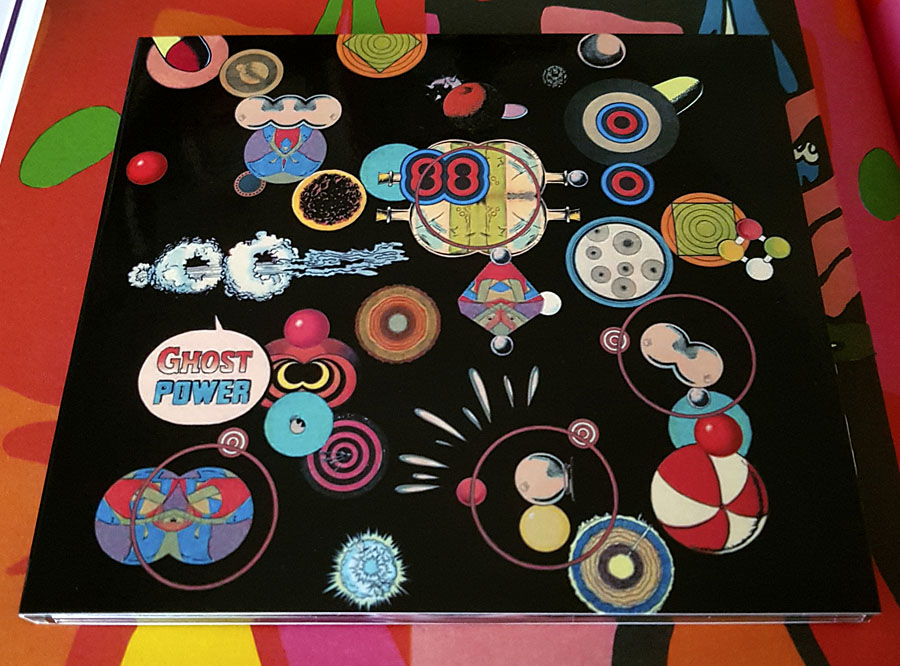
This week I’ve been enjoying the Ghost Power album, a collection of groovy instrumentals from Tim Gane and Jeremy Novak. A heavier use of synthesizers and samples than you usually hear from Gane, together with trace elements of his previous project, Cavern Of Anti-Matter. The highlight is the final track, Astral Melancholy Suite, a 15-minute synth odyssey that includes an extended sequencer run of a kind usually associated with the Berlin School.

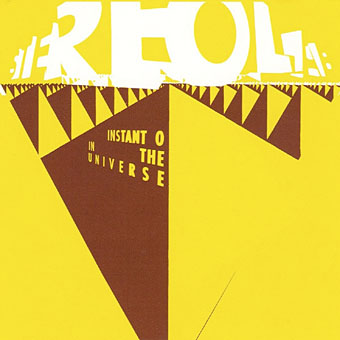
The comic-book details that decorate the packaging are credited to Samplerman, whoever they are. There’s further continuity here with Stereolab who borrowed graphics from French comics for the artwork on some of their singles and EPs. I’ve never been a fervent collector of Duophonic releases so it was years before I realised that the graphic on this cover for Instant 0 In The Universe

stereolab.jpg

…was swiped from this page in the fabulously rare Saga de Xam.

saga.jpg

Update: Samplerman is here. Thanks, Dave C!

Weekend links 617

parent.jpg

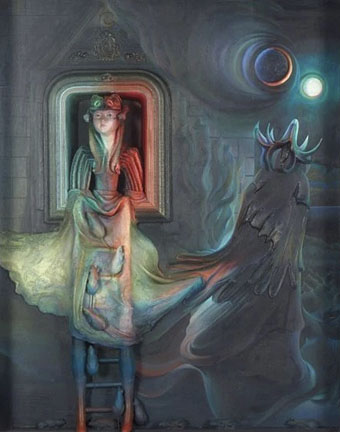
Diane (1977) by Mimi Parent.

Richard Pinhas expounds upon his favourite musical choices for Warren Hatter. The influence of Robert Fripp has always been to the fore in the Pinhas oeuvre—an early track by Heldon is titled In The Wake Of King Fripp—so there was bound to be a King Crimson album on the list. But which one? Click through the selections to find out.

• Vinyl is the product of a toxic manufacturing process, as well as being difficult to recycle without releasing yet more toxins, but you seldom see these issues discussed by today’s quality-conscious vinyl fetishists. Jono Podmore talks to some of the people trying to create an eco-friendly disc.

• “…these Renaissance images shock us because they are so frequently ithyphallic: Christ has risen, but not in the way we have come to expect.” Hunter Dukes on ostentatio genitalium in Renaissance art.

• At Wormwoodiana: Mark Valentine on those music projects that used to be described as “hauntological”, with an emphasis on The Machinery of the Moment, a new release from The British Space Group.

• “Like Delia Derbyshire jamming with This Heat.” Jesse Locke tours the Broadcast discography.

• 50 Watts announces the birth of 50 Watts Books, a publisher of strange and/or unusual art books.

• “Black lights turn this North Carolina mine into a psychedelic wonderland.”

• At Dennis Cooper’s: Bill Morrison Day.

Black Lightening Light (1968) by The Shy Guys | Black Light (1994) by Material | Transmission Nine: Black Light (2013) by Pye Corner Audio

Weekend links 610

durer.jpg

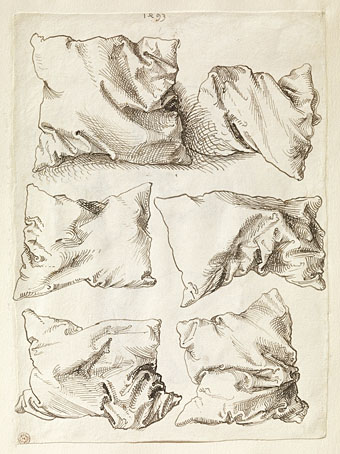
Pillow Studies (1493) by Albrecht Dürer.

• “Without ever writing a song, without ever fronting a group, Khan changed the face of British music.” Michael Hann talks to Morgan Khan about bringing New York Electro to the UK with his Streets Sounds label.

James Balmont offers “an introduction to Japan’s visceral cyberpunk cinema in five cult films”. This reminds me that I’ve not seen Shinya Tsukamoto’s Tetsuo films for years. Time to reacquaint myself.

• At Aquarium Drunkard: 15-minutes of Alice Coltrane from 1970, talking about her music and performing with Pharoah Sanders et al. Amazing.

Clive Hicks-Jenkins presents Beauty & Beast, an animated fairy tale made to showcase his toy theatre design.

• Carl Dreyer’s horror masterpiece, Vampyr (1932), is released on blu-ray by Eureka in May.

• At Wormwoodiana: Mark Valentine explores the mysteries of the Egg Language.

• DJ Food unearths paintings by Syd Mead for a Celcon Steel brochure, 1965.

• Jamie Sutcliffe enters The Strange World of Junji Ito.

• Mix of the week: Isolatedmix 117 by Refracted.

Keeley Forsyth‘s favourite music.

Electrocharge (1980) by Blackbeard | Electrodub1 (1980) by Chris Carter | Ano Electro (Andante) (1993) by The Sabres Of Paradise

Weekend links 609

tv1.jpg

Cover of Tom Veitch Magazine #1 (1970).

• RIP Tom Veitch, a writer with whom I almost created a comic-book series in the 1990s. Things didn’t work out for a variety of reasons but we had some good conversations. All the news notices focus on his writing for comics, a career which ranged from angry, political strips with Greg Irons to typical franchise fare. But he had short stories published in New Worlds magazine when it was at its peak under Michael Moorcock’s editorship, and in Quark, a short-lived paperback magazine edited by Samuel Delany & Marilyn Hacker. Veitch was also among the first 35 contributors to John Giorno’s Dial-a-Poem service when it launched in 1968, part of a select group that included John Ashbery, William Burroughs and Allen Ginsberg. Related: An interview with Tom Veitch on William Burroughs at Reality Studio.

• “I won’t deny that I thought very much about a post punk influence on it. Everybody knows that I love post punk, but I didn’t want to copy anybody.” Robert Hampson talking to Jonathan Selzer about the return of Loop.

• “What Joyce and Eliot, Ulysses and The Waste Land, had in common was a showiness, an overt ambition as well as a magpie approach to literature as assemblage.” John Self on the year 1922, “literature’s year zero”.

• At Spoon & Tamago: All of Japan’s 47 prefectures captured in expressive typography.

• At Public Domain Review: Composition (1905) by Arthur Wesley Dow, a book for art students influenced by the example of Japanese prints.

• At Wormwoodiana: Mark Valentine on the unending attempts to solve The Mystery of Edwin Drood.

• Mixes of the week: Fact Mix 846 by Ehua, and Soylent Green – No Escape by The Ephemeral Man.

• At Dennis Cooper’s: Matthew Suss presents…Joseph Cornell Day.

• At Bandcamp: A guide to Alvin Lucier.

Loop The Loop (1980) by Young Marble Giants | Q-Loop (1995) by Basic Channel | Loop-Loop (1996) by Michael Rother