Weekend links 249

ulrich.jpg

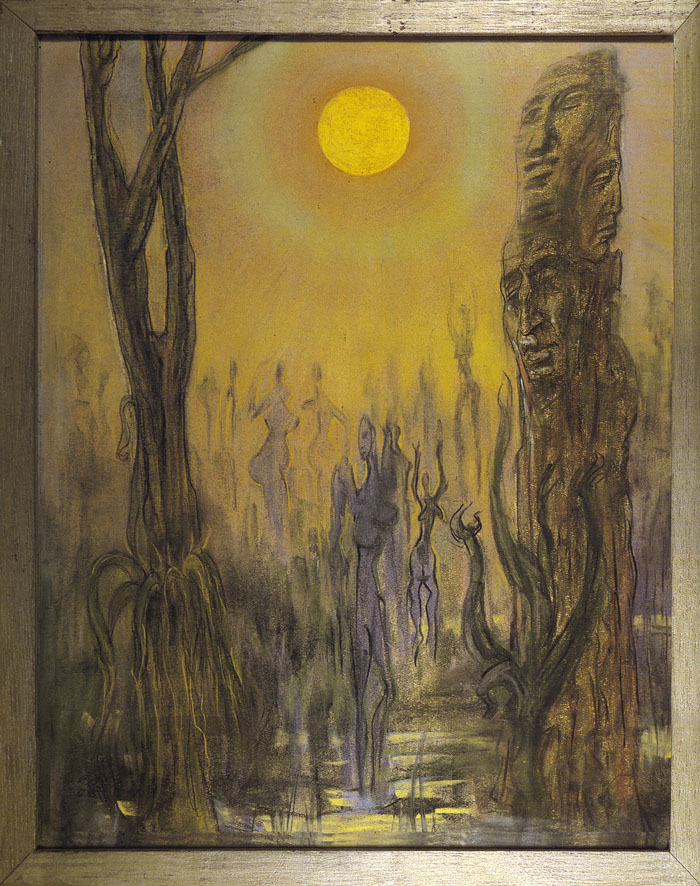
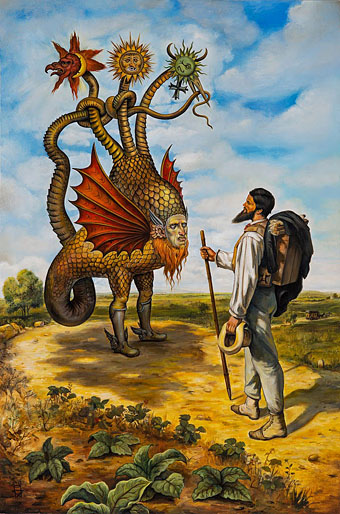
The Philosophers (Homage to Courbet) by Christopher Ulrich. Another great tip from Full Fathom Five.

• “Mushrooms are the only psychedelic drugs that I take, and I don’t take them very often. But I would trust them. Once you’ve done them a few times it’s very easy to feel a sense of entity. You can feel that there is a characteristic in this level of consciousness which almost seems…playful? Or aware, or sometimes a bit spooky.” Alan Moore discussing art and psychedelics in Mustard magazine. Related: “Psychedelics not linked to mental health problems or suicidal behavior: A population study.”

• “Leonora Carrington transcended her stolid background to become an avant-garde star,” says Boyd Tonkin. At the BBC Chris Long looks at Leonora Carrington’s journey from Lancashire to Mexico. The Carrington exhibition at Tate Liverpool opened on Friday.

A Savoyard’s First Brush with Censorship, Clara Casian’s proposed documentary film about Savoy Books, is looking for Kickstarter funding.

Warner suggests that there are four characteristics that define a veritable fairy tale: first, it should be short; second, it should be (or seem) familiar; third, it should suggest ‘the necessary presence of the past’ through well-known plots and characters; fourth, since fairy tales are told in what Warner aptly calls ‘a symbolic Esperanto’, it should allow horrid deeds and truculent events to be read as matter-of-fact. If, as Warner says, ‘the scope of a fairy tale is made by language’, it is through language that our unconscious world, with its dreams and half-grasped intuitions, comes into being and its phantoms are transformed into comprehensible figures like cannibal giants, wicked parents or friendly beasts.

Alberto Manguel reviewing Once Upon a Time: A Short History of Fairy Tale by Marina Warner

De Natura Sonorum (1976) by Bernard Parmegiani: a free download at AGP of the original vinyl recording, something I overlooked several years ago.

• At Dangerous Minds: Real Horrorshow!: Malcolm McDowell and Anthony Burgess discuss Kubrick and A Clockwork Orange.

Meeting Bernard Szajner, a short film about the French electronic musician by Tom Colvile, Nathan Gibson & Abdullah Al-wali.

• Dismembrance of the Thing’s Past: Dave Tompkins on John Carpenter’s The Thing.

That Battle Is Over, a new song by Jenny Hval.

Mushroom (1971) by Can | The Mushroom Family (2010) by The Time And Space Machine | Growing Mushrooms Of Potency (2012) by Expo ’70

Saga de Xam revisited

saga01.jpg

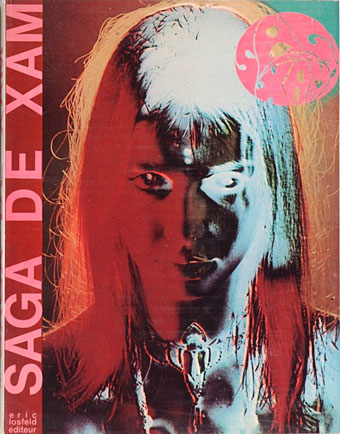
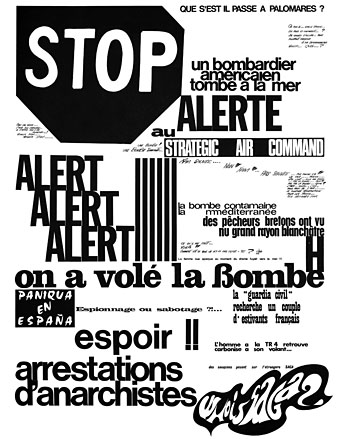
Back in December I was thrilled to discover that Nicolas Devil’s large-format psychedelic/erotic comic book, Saga de Xam, had been scanned and uploaded to Scribd. The book was published by Éric Losfeld in 1967 in an edition of 5000 which quickly sold out, and has remained out of print ever since. Losfeld died in 1979 but it was always his intention that the book would remain scarce (although a second edition did appear after his death) with the result that copies today command high prices.

saga01.jpg

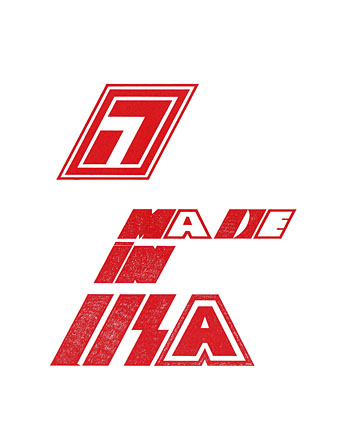
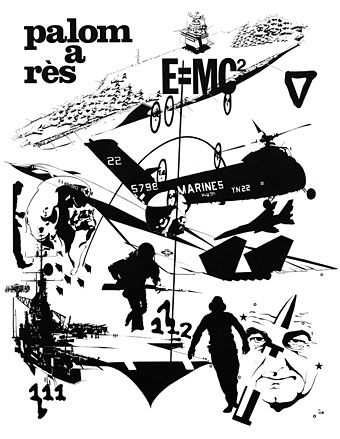
Six of the seven chapters had been uploaded to Scribd in December but the seventh and final episode of the time-travelling Saga’s adventures was frustratingly absent. So I’m pleased to report that the final chapter is now available for reading or downloading, prompted in part by the interest my earlier post generated. The seventh chapter sees Saga arrive in the present day (ie: 1967) where she encounters more human conflict in the form of the US military and marauding Hells Angels. The chapter ends with several Exquisite Corpse pages which had Philippe Druillet among their contributors; it was the appearance of three of these pages in the Musée d’Orsay’s Art Nouveau Revival catalogue in 2010 that first brought the book to my attention. The very end of the book has a key to the alphabets used on some of the pages. I’d love to see Fantagraphics reprint this volume in a translated edition but those alphabets would create some difficulties. For the moment the PDFs at Scribd are the only place you can read this unique publication.

saga02.jpg

saga03.jpg

Continue reading “Saga de Xam revisited”

Dissent

pen.jpg

If you believe in freedom of speech, you believe in freedom of speech for views you don’t like. Goebbels was in favour of freedom of speech for views he liked. So was Stalin. If you’re in favour of freedom of speech, that means you’re in favour of freedom of speech precisely for views you despise.

Noam Chomsky in Manufacturing Consent: Noam Chomsky and the Media (1992)

Terrorists don’t care about rights or laws so any debate about freedom of speech isn’t directed at them. I’d be more encouraged by the show of solidarity for dead cartoonists if I didn’t believe that many of those currently declaring their support will continue burning up social media in the next few months with demands that something be banned or stopped. We live in censorious times. Censorship (or the urge to see it enforced) never disappears, it migrates along with whatever happens to be taboo to current generations. In the 1970s much of the heat was around sexual content; today it’s predominantly about identity politics. Whatever the provocation, the results are the same: angry people step forward with a demand that something be forbidden. Last September a showing at the Barbican in London of Brett Bailey’s Exhibit B was cancelled after a petition and a demonstration outside the venue. Bonnie Greer wanted to make up her own mind but she didn’t get the opportunity:

These people largely reacted from hearsay, ideology, photos and the reactions of others who had seen it—not their own experience. I’ve seen people like this before, self-appointed judges, roaming the internet in search of what displeases and offends them. One protester went so far as to issue an absurd analysis of the possible psychological damage Exhibit B could cause the actors involved. It was ignorant and insulting psychobabble.

I don’t want to be stopped from seeing a work because, in their opinion, it’s “inappropriate”, “incorrect” or “racist”—words which are, at best, moveable feasts. I want to think for myself.

You’ll be seeing more movable feasts in the next few days when Anglophone commenters begin to discover that Charlie Hebdo was a full-spectrum offender rather like my colleagues at Savoy Books. When David Britton’s novel Lord Horror was being subject to Crown Court disapproval in 1992 The Independent wrote a prissy editorial complaining that the novel and a death metal album by Dismember were hardly worth the trouble of defending. These things weren’t art, they were trash, something that one of the UK comics mags (I forget which one) also complained about when discussing the Meng & Ecker prosecution. You can defend the principle of freedom of speech (or art) without agreeing with anything that’s being said, but for some people this often seems to be a step too far. Lord Horror escaped the obscenity charge thanks to Geoffrey Robertson QC but Meng & Ecker didn’t (comics being deemed trashier than novels by the court); my artwork for Hard Core Horror #5 was deemed obscene three years later in a separate trial in which Savoy were also declared to be unworthy of trial by jury because they were “not a bona fide publisher”. We don’t have a freedom of speech defence in Britain which is why history continues to repeat itself.

In the end all discussion about censorship comes down to this: who decides what is art and what is trash, what should be defended and what should be thrown to the dogs (or the gunmen)? You? Me? The Pope? Some guy in a ski-mask? Is freedom of speech only for the responsible people, for you and your friends? Or does it also apply to the irresponsible, the contentious, the trashy and the downright offensive? If freedom isn’t for everyone then someone, somewhere is willing to decide it’s not for you.

Oskar Schlemmer’s Triadic Ballet

schlemmer.jpg

Oskar Schlemmer’s Triadic Ballet of the 1920s is one of the more famous products of the Bauhaus movement, a radical reinvention of the medium which encased the dancers in cumbersome costumes. The outfits and stage designs are familiar from Bauhaus histories but you’re less likely to see an actual performance, something that’s possible with this 30-minute film made in 1970. The ballet is in three acts: yellow, pink and black. Erich Ferstl wrote the music for the filmed reconstruction by Margarete Hasting, the original score by Paul Hindemith being lost.

The ballet has additional interest for me in having influenced part of the Reverbstorm book. Oskar Schlemmer’s Bauhaus logo is reworked in the opening and closing pages together with other Bauhaus-derived graphics, but I also looked at Schlemmer’s ballet costumes when I was planning the final section which required a stylised transformation of Lord Horror. In the end I used a sketch by one of Schlemmer’s pupils, Klaus Barthelmess, for the Horror figure but the Barthelmess drawing was also of a dancer, and is very similar to some of Schlemmer’s designs, especially the silver-headed robot-like figures that appear in the black section of the ballet.

Previously on { feuilleton }
Reverbstorm: Bauhaus Horror

Weekend links 240

wiley.jpg

The Death of Chatterton (2014) by Kehinde Wiley.

• Mixes of the week (and the week before that): The Conjurer’s Hexmas: Second Rite by SeraphicManta; Secret Thirteen Mix 140 by Deaf Center; Best of 2014: A Highly Opinionated Mix by Robin The Fog.

• Never mind Music for Airports, how about Music for Neurosurgery? The Tegos Tapes Edits are extracts from “12 hours of unheard Vangelis music soundtracking films of various surgical operations”.

• “It was one of the first magazines that, with science-fiction and comics together, proposed comics for adults.” Aug Stone on 40 years of publisher Les Humanoïdes Associés and Métal Hurlant.

• Zinesters Do It on the Photocopier: Stephanie Schroeder on the Queer Zine Archive Project. Related: Holy Titclamps by Larry-bob Roberts.

A Year In The Country reached the end of its 365 posts. The archive is well worth a browse.

• “These people love to collect radioactive glass. Are they nuts?” asks Ben Marks.

• Think before you share: 86 viral images from 2014 that were totally fake.

• The Anti-Tolkien: Peter Bebergal on Michael Moorcock.

• Extracts from Alan Bennett‘s diary for 2014.

John Cage 4’33” Autotune

Alpha (1976) by Vangelis | Reve (1979) by Vangelis | L’Enfant (1979) by Vangelis