Valette’s steam and smoke

valette1.jpg

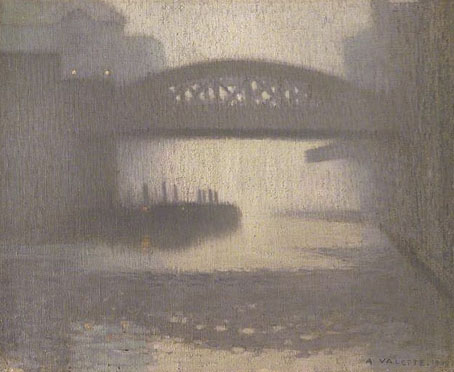
Windsor Bridge on the Irwell (1909).

Adolphe Valette (1876–1942) was a contemporary of Lionel Walden, and where Walden was an American who spent some time painting views of Cardiff, Valette moved to Manchester in 1905 where he painted a series of celebrated views of the city. If it’s a commonplace that foreign eyes often see what locals ignore, this has certainly been the case in Manchester. Friedrich Engels catalogued the lethal living and working conditions of the city’s labourers in The Condition of the Working Class in England in 1845, and it took Valette to find a subject for his art in the city’s smogs and polluted atmospheres at a time when many British artists were still painting scenes from Tennyson or the tales of King Arthur.
valette2.jpg

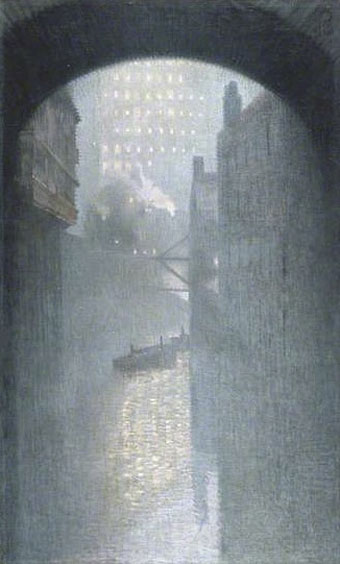
India House, Manchester (1912).

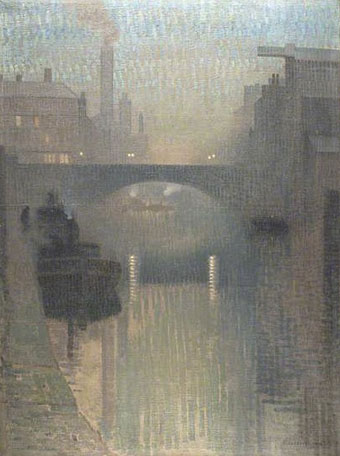
Valette’s Manchester paintings now reside in the Manchester Art Gallery whose curators have always made much of his being “the Manchester Impressionist”. The term isn’t unjustified even though Impressionism was long gone by the time he began these paintings; there is something Monet-like to a few of them. The gallery contains a large amount of fairly typical Victorian art, including a couple of well-known Pre-Raphaelite pieces, so Valette’s work has always stood apart not only for its urban theme but for its looser technique. My favourite is the view of India House from the banks of the River Medlock. Many of the bridges and buildings in these paintings can be seen today, albeit cleaned and (in the case of India House) gentrified. Valette captures the final years of unrestrained industrial pollution when the air in Manchester, London and other cities was often as bad as it is in some parts of China today.
valette3.jpg

Bailey Bridge, Manchester (1912).
Continue reading “Valette’s steam and smoke”

Weekend links 218

white.jpg

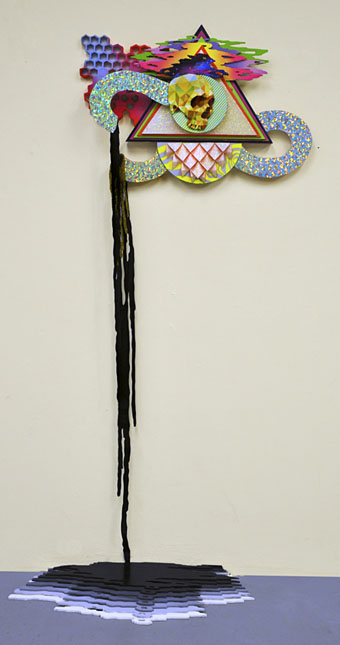
The End of a Thousand Years (2014) by Hilary White. Via Phantasmaphile.

• It’s taken a while to shamble into the world but A Mountain Walked, an anthology of Cthulhu Mythos stories edited by leading Lovecraft scholar ST Joshi, will be published by Centipede Press next month. The publisher’s page for the book shows that my contribution will be facing Joshi’s introduction which is something I wasn’t aware of until this week. It also says the 692-page limited edition is sold out, although book dealers often buy collectible volumes such as this to sell on after adding their own markup. Be warned that it was listed on Amazon at $160 so if there are copies available anywhere they won’t be cheap.

• It’s not such a surprise to hear that magic mushrooms were an inspiration for Frank Herbert’s Dune. David Lynch’s film of Dune receives passing mention in this profile by Jeremy Kay of Lynch and the Twin Peaks film/TV series.

• “Whitechapel station is one of Giambattista Piranesi’s imaginary prisons, colonised by frantic electrical engineers and watched over by CCTV.” Will Wiles on the chaos and tangled energy of modern cities.

The word perfume comes from the French root “fume”—smoke—and where there’s smoke, there’s fire! I think most people are turned on sexually by scents and smells. Certain body odours can be very sexually stimulating. We purposefully chose certain ingredients for my Obscenity perfume that are associated with occult or religious rituals, including vetiver, labdanum, and oud, and others that are considered aphrodisiacal, including patchouli and sandalwood. The point of Obscenity is that there is no conflict between the religious and the sexual, and in fact they should be completely complimentary. The fragrance is meant to stimulate you sexually, but it also literally contains water from Lourdes, so it also has religious notes and perhaps even healing properties!

Bruce LaBruce talks to Kathy Grayson about his new fragrance, Obscenity

• The Baffler, “a journal of iconoclastic wit and cultural analysis” relaunches with full access to its archives from 1988 to the present.

• Pineal, the new album by Othon, is dark and “properly, brilliantly queer,” says David Peschek.

• At Core77: How to improve the audio quality of vinyl records with wood glue.

• P. Adams Sitney interviews Kenneth Anger on WNYC’s Arts Forum (1972).

• At BibliOdyssey: Le Bestiaire Fabuleux by Jean Lurçat.

• Mix of the week: Secret Thirteen mix 123 by Evol.

• Meawbin the Creepy Cat

• Perfumed Metal (1981) by Chrome | Fragrance (Ode To Perfume) (1982) by Holger Czukay | The Perfume (2006) by Johnny Klimek, Reinhold Heil, Tom Tykwer

Weekend links 213

munro.jpg

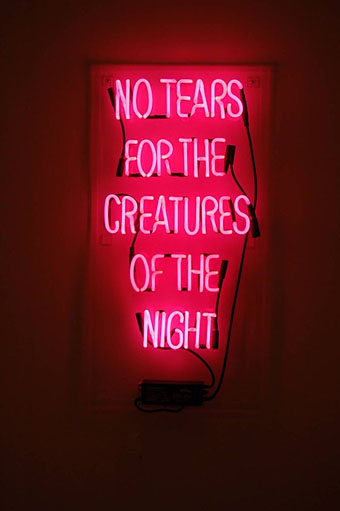
No Tears for the Creatures of the Night (2005) by Will Munro.

• Steve Barker’s On The Wire show on BBC Radio Lancashire is one of the longest-running music shows on British radio but it’s not broadcast in London so you seldom hear it mentioned at all. (It’s also the only radio show I’ve appeared on, oddly enough.) Some of Barker’s shows, which predominantly feature dub and reggae artists, can now be heard at Mixcloud.

• “As protagonist after protagonist is undone by temptation and lust, one can’t help but divine a sinister double entendre in the book’s title – something nocturnal and obscene.” James Lovegrove on the reissue of Robert Aickman’s 1964 collection of “strange stories”, Dark Entries.

• Coil vs. Kenny Loggins sounds like no contest, and so it proved in 1988 at the Mike Tyson/Michael Spinks fight. There’s another surprising connection between Tyson and Industrial culture with the poster that Neville Brody designed for the boxer’s Tokyo bout.

• Ventriloquism: Unheimlich manoeuvres: Sarah Angliss (who performs as Spacedog) on the history of ventriloquist dummies. With a bonus appearance from the great Ray Alan and Lord Charles. Related: the Vent Haven Museum.

• I’ve been wanting to read Proust’s À la recherche du temps perdu for years but always hesitate over which translation to choose. As Leland de la Durantaye shows, the arguments about translating Proust into English are still unresolved.

• Music For A Good Home 3: a collection of 31 rare or unique tracks by a variety of artists including Belbury Poly, Pye Corner Audio, and Grumbling Fur. All proceeds go to Shelter.

• David Cronenberg – The Exhibition is running throughout the summer at the EYE Film Institute in Amsterdam showing props and other materials from the director’s films.

• “’I’m in pictures,’ John Wayne explained when Nabokov cordially inquired about his line of work.” Blake Bailey on Vladimir Nabokov’s unpublished Lolita screenplay notes.

• Original artwork for the Linweave Tarot (1967) at Sweet Jane’s Pop Boutique. As noted before, the full set of cards is probably the grooviest ever created.

• Mixes of the week: Secret Thirteen Mix 118 by Ensemble Economique, and a Wyrd Daze Solstice mix from The Ephemeral Man.

• At One With Chaos & Abandonment: The Irrepressibles’ Jamie McDermott talks to Joseph Burnett about his music.

• From the Zodiacal Light, a new track from Earth with vocals by Rabia Shaheen Qazi.

• The Ultimate Chinatown Filming Location Map of Los Angeles.

• Tuxedomoon at Pinterest.

• Dark Companion (1980) by Tuxedomoon | Dark River (1990) by Coil | Dark Turn Of Mind (2011) by Gillian Welch

The art of Jean-Michel Mathieux-Marie

mathieux-marie1.jpg

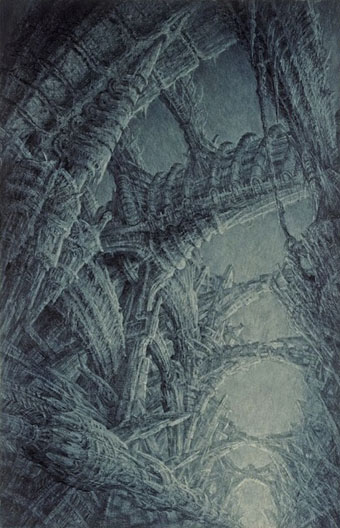
Limbroglio (URBS V).

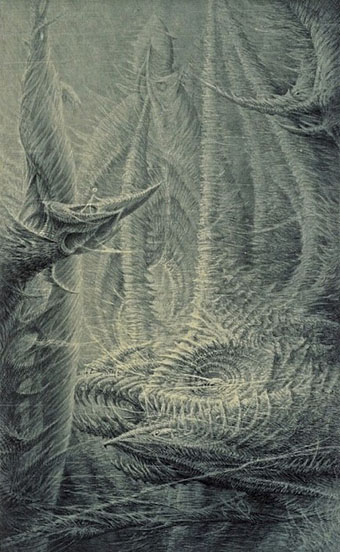
Drypoint prints by a French artist who also has a nice line in moody renderings of European cities—Paris, Venice, Rome—which occasionally stray into architectural speculation. Outright fantasia is more evident in these mysterious views more of which may be seen at the Velly gallery.

mathieux-marie2.jpg

Les grandes Manoeuvres.

mathieux-marie3.jpg

Paysage aux mollusques.

Elsewhere on { feuilleton }
• The fantastic art archive

Two covers

patel1.jpg

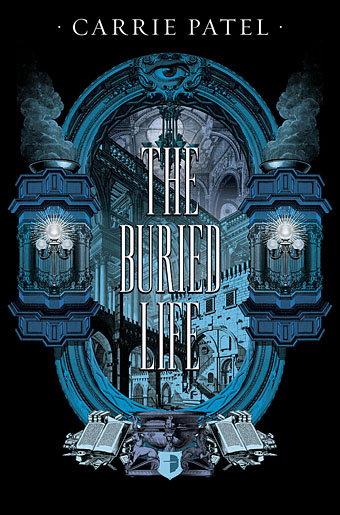
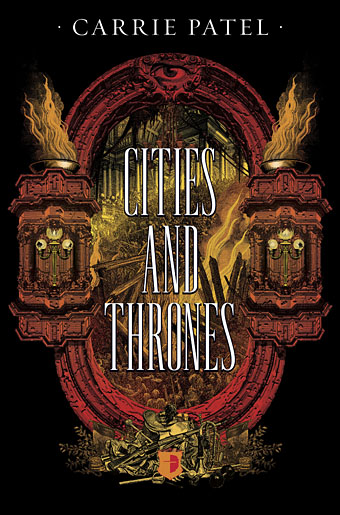
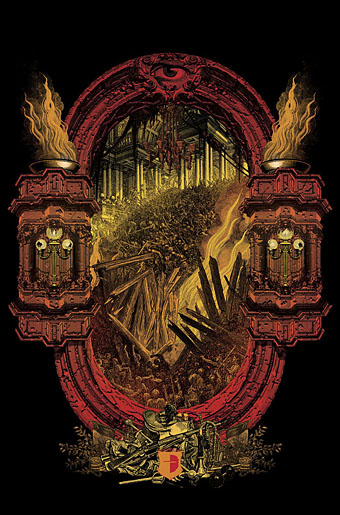
More new work of mine has been unveiled in the past few days so I can show these here. The Buried Life and Cities and Thrones are a pair of fantasy novels by new author Carrie Patel being published by Angry Robot. I was asked to provide something in an engraved style set against a black background, with imagery that reflected themes of vast, underground architecture and armed conflict.

patel2.jpg

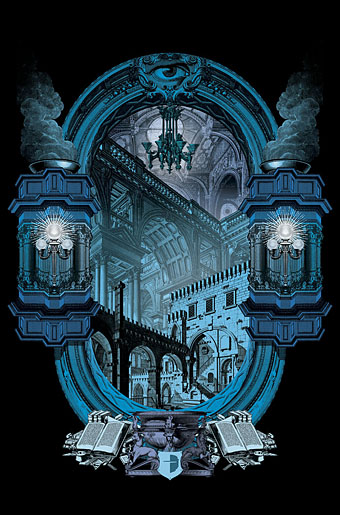
Vast architecture of any description is something I’ve always enjoyed, the main challenge with each book came in trying to imply the architecture and events without the pictorial content becoming incoherent. Marc at Angry Robot asked for something Piranesian where the architecture was concerned. Looking over Piranesi’s non-Carceri designs didn’t turn up anything with a suitably dramatic perspective, however, so most of what you see in the first cover comes from Giuseppe Galli Bibiena’s Architetture e Prospettive (1740). The Bibienas were a family of architects and theatrical engineers who specialised in dizzying perspective views for their stage designs; Bibiena’s book was produced to preserve some of his more celebrated designs, the originals of which are now lost. I’ve had a book of these drawings for years but this is the first opportunity I’ve had to make use of them in any kind of collage.

patel3.jpg

This style of Baroque architecture doesn’t suit steampunk imagery which tends towards 19th-century urban/industrial; the plates are also rather staid scenes without the graphic flare that Piranesi gave to everything he rendered, real or imagined. But I do like those plunging perspectives, and pieces from two of the plates turned out to share both the same perspective and the same lighting direction. It’s easy to collage things into a flat view but creating a realistic sense of depth from bits and pieces can be tricky.

patel4.jpg

The frame for the second cover has more of a Piranesian quality being chipped and eroded. The typography for the titles went through several changes, the versions here show a late suggestion of mine with lettering that’s probably too thin to read well at a distance (or a small size on a web page). SF Signal has a post showing the Angry Robot versions which will probably be the final ones, together with a preview of the first book.

Previously on { feuilleton }
• Aldous Huxley on Piranesi’s Prisons