Weekend links 142

bowie.jpg

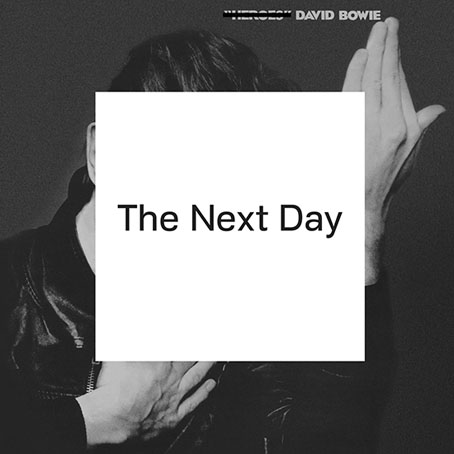
Gratifying this week to see album cover art under discussion even if the heat-to-light ratio was as unbalanced as it usually is when pop culture is the subject. Jonathan Barnbrook, who also designed the Heathen (2002) and Reality (2003) packaging for David Bowie, wrote about the thinking behind the new cover on his blog. (And for the time being let’s note that this is still only a cover design, we don’t know what else is on its way.)

For my part I’ll point out that the artist-as-cover-image is the great cliché of album design, and the bigger the name the more the rule applies; Neville Brody complains about this in the first book of his work, as does Storm Thorgerson in the Hipgnosis books. In Bowie’s case the rule has been applied almost universally since his debut album in 1967, the only variations being illustrational ones or slight dodges like having his feet appear on the front of Lodger and his back facing the viewer on Earthling. Consequently the new design is a radical gesture from an artist who could have got away with a photo of himself du jour. By way of contrast, consider that Rod Stewart is a year older than David Bowie and presented the world with this artefact in October 2012.

Related: Hard Format responds to the cover, Chris Roberts on “Picasso resurrected in a Rolf Harris era“, and Alexis Petridis on The inside story of how David Bowie made The Next Day.

The Quicksilver typeface, designed by Dean Morris when he was only 16, bought by Letraset and now an indelible feature of pop design from the 1970s. Morris describes his experience here (“they shunned rapidographs!”) and collects examples of the print history here.

When the days are short, we are closest to the medieval world. To the avoidance of mirrors where death improves our portraits every morning with a few more lines and shadows. What would once have been a sermon, a conjuring of hellfire, a phantom slide show, is now an entertainment. But before we can begin again, we have to kick free of the embrace of our inconvenient predecessors, that compost legion of the anonymous dead. They come uninvited, requiring us to sign up for what the late Derek Raymond called the general contract: a brief turn in the light, then extinction. Eternal darkness. How to live with such knowledge? William Burroughs admired the unswerving bleakness of Beckett’s gaze, the way he reduced compensatory illusions to zero. Nowhere left to crawl. And nothing to crawl on. Last breath is last breath. Stare into the abyss and the abyss will stare right back.

Iain Sinclair reviews The Undiscovered Country: Journeys Among the Dead by Carl Watkins

Broadcast’s James Cargill on Morricone, Minidiscs and Scoring Berberian Sound Studio. Related: Melmoth the Wanderer posts a new mix, The Curious Episode of the Wizard’s Skull, and more spooky sounds are on their way from The Haxan Cloak.

• A Firm Turn Toward the Objective: Joanne Meister on meeting the great Swiss designer Josef Müller-Brockmann.
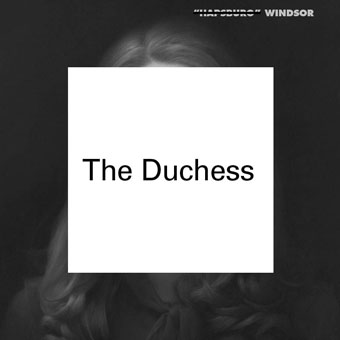
duchess.jpg

Twitter user @thisnorthernboy reworked Paul Emsley’s portrait of Kate Middleton. @barnbrook approved.

• The Beatles of Comedy: David Free on the Monty Python team.

• The history of the London Underground poster.

Impossible Architecture by Filip Dujardin.

• At Pinterest: Art Dolls & Sculpture

• Grace Jones’ Nightclubbing album has been on repeat play this week: Warm Leatherette/Walking In The Rain | I’ve Seen That Face Before (Libertango) | Demolition Man
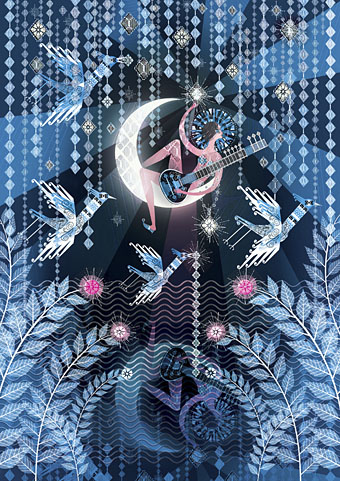

The weekend artists, 2012

barnes.jpg

Lucy in the Sky with Diamonds (2012) by Lesley Barnes. She also has peacock wrapping paper.

The most popular post of the year was one I made last December featuring all the artists whose work had appeared throughout 2011 in the weekend links posts. (The surge of views occurred early in January when it was linked on Stumbleupon.) Since I’ve been away this week there aren’t any links so here’s a retrospective of things that caught my eye in 2012.

durette.jpg

Heartsick (2011) by Kelly Durette.

jacobsen.jpg

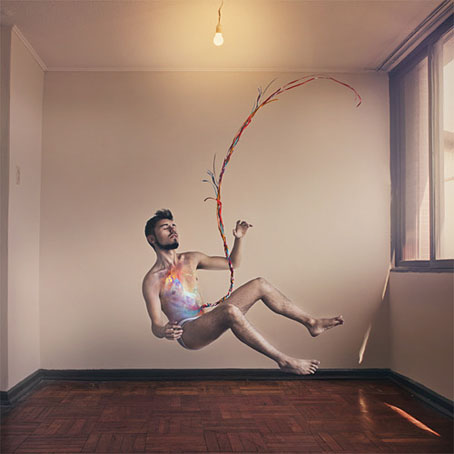
Self-portrait by Jon Jacobsen from his Home series.

tintenfisches.jpg

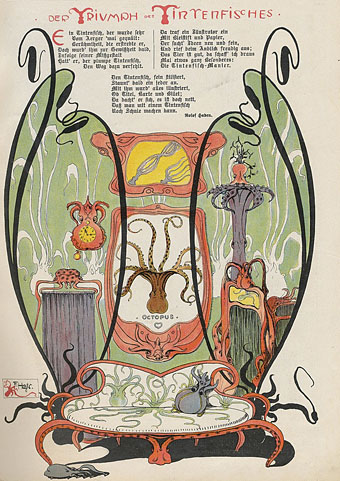
Der Triumph des Tintenfisches from Meggendorfer-Blätter (c. 1900). Via Beautiful Century.

kuhlman.jpg

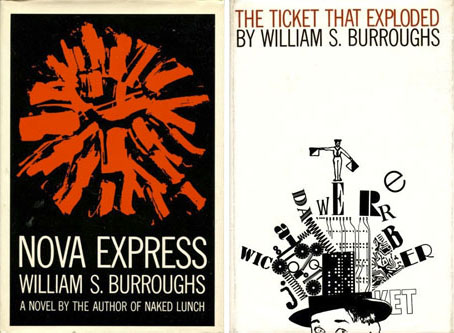
Two Grove Press covers by Roy Kuhlman. From Arden Kuhlman Riordan’s Pinterest page collecting her father’s cover designs.

ulian.jpg

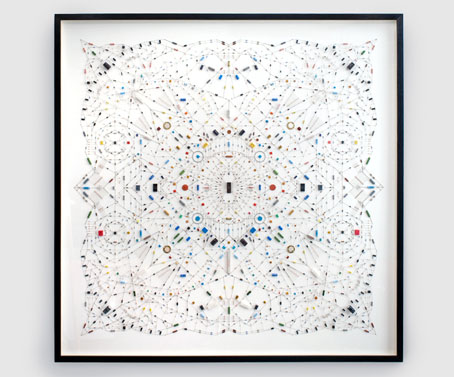
Technological mandala 02 (The beginning) (2012) by Leonardo Ulian.

Continue reading “The weekend artists, 2012”

Joseph Cornell: Worlds in a Box

cornell1.jpg

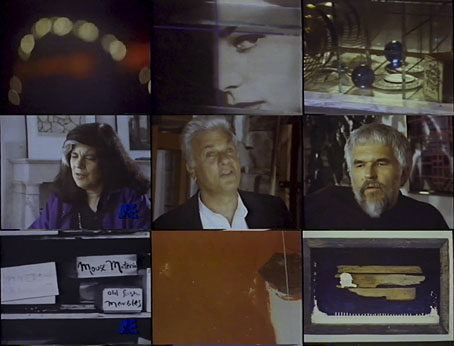
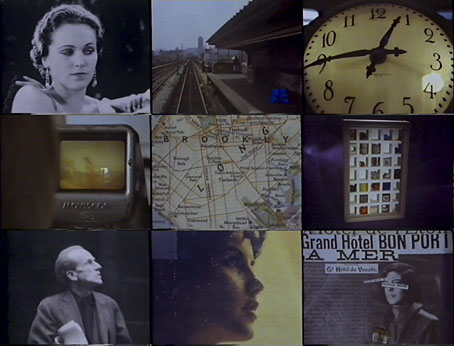
Susan Sontag, Tony Curtis and Stan Brakhage all shared an appreciation for the work of American artist Joseph Cornell (1903–1972), and all appear in a 51-minute documentary Joseph Cornell: Worlds in a Box directed by Mark Stokes for the BBC in 1991. Susan Sontag was also the subject of one of Cornell’s collages, something she discusses here. Tony Curtis collected many of Cornell’s boxes and used to visit the artist when he was in New York; in Stokes’s film he discusses their relationship and reads from Cornell’s writings.

cornell2.jpg

I’ve had a tape of this for years courtesy of Kerri Sharp who worked on the film (hi Kerri!) but it’s taken a while to turn up on YouTube. The value of films such as this isn’t so much the view they give of the works themselves—all of which are better judged in books or museums—but the way they function as mini-biographies which give a sense of the environment from which the art emerged. You can read in detail about Cornell’s life in Deborah Solomon’s Utopia Parkway: The Life and Work of Joseph Cornell (1997) but a text description of his home lacks the immediacy of the views Stokes gives us of the Cornell house, and the room where he created so much of his work. The film also follows Cornell’s train journeys into New York City, and visits the locations of his short films. Extracts of the latter appear throughout the documentary but you can see them in full at Ubuweb.

If you’re looking for an arty (and costly) Christmas present this year, Thames & Hudson have just published Joseph Cornell’s Manual of Marvels: How Joseph Cornell reinvented a French Agricultural Manual to create an American Masterpiece; two books in a box with a CD, edited by Analisa Leppanen-Guerra and Dickran Tashjian. The NYT reviews it here.

Previously on { feuilleton }
Joseph Cornell, 1967
Rose Hobart by Joseph Cornell
View: The Modern Magazine

Weekend links 136

tintenfisches.jpg

Der Triumph des Tintenfisches from Meggendorfer-Blätter (c. 1900). Via Beautiful Century.

Much dismay this week at the news that Coilhouse—the web and print magazine founded in 2008 by Nadya Lev, Meredith Yayanos and Zoetica Ebb—was closing its doors for the foreseeable future. I always loved what they were doing, and was delighted when S. Elizabeth interviewed me for the website two years ago. Looking at the list of their featured articles is like seeing the contents of my head laid bare. Have a browse and see what you may have missed. And fingers crossed they return soon.

• “I think we are just used to seeing naked women because they are used as objects of desire in advertisements and TV. Naked men are not that common—we are not used to seeing a penis. I think that is the main problem for people.” The shock of the (male) nude.

Michael Clarke asks “What Can Publishers Learn from Indie Rock?” Also: Michelle Dean on the value of used books.

Queers find themselves on both sides of the free speech question. Those of us who are writers want the freedom to write and say what we want. I know I do. Yet a preponderance of LGBT people have become part of the larger wave of those who would limit free speech. Because while we want to be able to say whatever we want about “them,” we do not want “them” to say whatever they want about us.

Victoria Brownworth on The Case Against Censorship

• Caspar Henderson re-reads The Book of Imaginary Beings by Jorge Luis Borges.

One hundred classic minimalism, electronic, ambient and drone recordings.

• BLDGBLOG visits the Chand Baori stepwell in Abhaneri, India.

Brion Gysin’s Dreamachine is launched in the UK.

Ken Hollings visits Ludwig II’s Venus Grotto.

• A guide to Meredith Monk‘s music.

• RIP Boris Strugatsky.

Maldorora: a Tumblr.

Stalker: Meditation (1979) by Edward Artemiev | Undulating Terrain (1995) by Robert Rich & B. Lustmord | Stalker (2004) by Shackleton.

Weekend links 134

ulian.jpg

Technological mandala 02 (The beginning) (2012) by Leonardo Ulian.

• The Yellow Magic Orchestra really were the Japanese equivalent of Kraftwerk in 1978. I’d not seen this video for Firecracker before. Same goes for the Technopolis and Rydeen videos. Related: YMO’s synth programmer, Hideki Matsutake, showing off his modular Moog on a Japanese TV show.

Sra is the final book in the Aedena Cycle by Moebius. It’s never been translated into English but Quenched Consciousness has just finished posting the entire book in an unofficial translation.

• “It’s better to have a small amount of good comics, than a big amount of mediocre comics.” Dutch comic artist Joost Swarte interviewed.

• From 2007: The Strange Lovecraftian Statuary of Puerto Vallarta (Thanks, Ian.) Related: More art by Alejandro Colunga.

steam.jpg

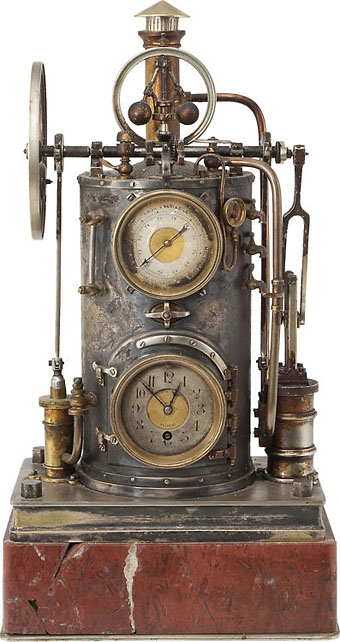
A novelty mechanical clock barometer in the form of a steam engine (c. 1885).

The MR-808: a room-size TR-808 drum machine by Moritz Simon Geist with real instruments played by robot hands.

• “Shoot us and dig the grave; otherwise we’re staying.” The women living in Chernobyl’s toxic wasteland.

Hotel Room Portraits 1999–2012 by Richard Renaldi, a new photo exhibition at Wessel + O’Connor.

Lane’s Telescopic View of the Opening of the Great Exhibition, 1851.

• “I’m the target market, and I don’t like it!” A Creative Catharsis.

Brian Eno’s new ambient album, Lux, is released on Monday.

Collages by Sergei Parajanov.

Techno City (1984) by Cybotron | Techno Primitiv (1985) by Chris & Cosey | Techno Dread (2008) by 2562.