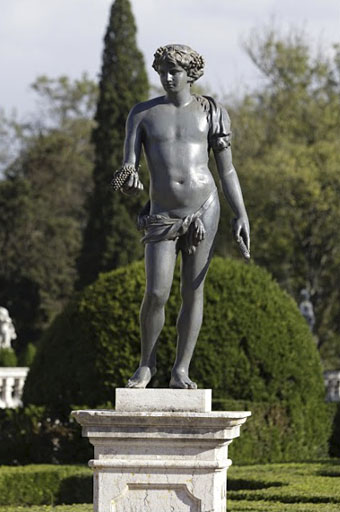
Autumn (1755) by John Cheere.
The season of mists in a variety of media at the Google Art Project.
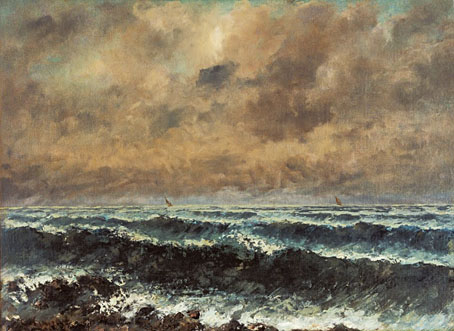
Autumn Sea (1867) by Gustave Courbet.
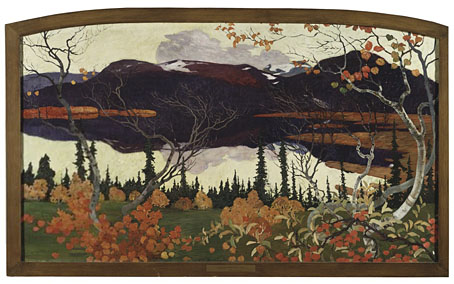
Autumn (1907) by Helmer Osslund.
A journal by artist and designer John Coulthart.
Sculpture
Autumn (1755) by John Cheere.
The season of mists in a variety of media at the Google Art Project.
Autumn Sea (1867) by Gustave Courbet.
Autumn (1907) by Helmer Osslund.
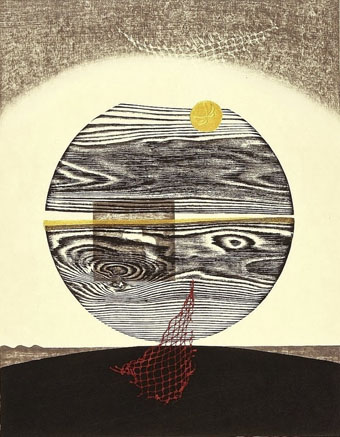
Mirror of Water (1981) by Reika Iwami.
• The week in comics: Paul Gravett interviews Enki Bilal. | Paul Kirchner’s wordless and inventively surreal strip, The Bus, was republished in France last year but it’s been out-of-print for years everywhere else. Read it online here. | Bill Watterson has made the entire run of Calvin and Hobbes available for free.
• “…seek and learn to recognize who and what, in the midst of the inferno, are not inferno, then make them endure, give them space.” Leland de la Durantaye reviews Italo Calvino: Letters 1941–1985.
• Artist Charles Ross says “My interest in science is related to how mysterious it is.” Ross Andersen visited Ross’s Star Axis, “a masterpiece forty years in the making”.
There is a satirical intent at work here, as well as mordant humour, a potent mix that reminds one more of the absurdist fictions of the French jazz musician Boris Vian than of anything in the SF canon. Science fiction is not central in Harrison’s work – not even as a target of his sharp wit – and it is a mistake to regard him as being chiefly interested in demolishing a genre that is only one of several he has mastered.
John Gray on M. John Harrison’s Kefahuchi Tract trilogy. This week Harrison posted a new piece of fiction on his blog.
• Mixes of the week: Secret Thirteen Mix 091 by Sugai Ken, and Bride of the Abominable Marshman, an early Halloween mix by Hackneymarshman.
• Clive Hicks-Jenkins on Schandmasken (masks of shame), and the clay visage of Paul Wegener’s Golem.
• A version of Kraftwerk’s Trans Europe Express by Chicago band Disappears.
• Postcards to the Curious: MR James-themed artwork by Alisdair Wood.
• Clive Barker: Why I Once Gave Up Horror Movies Entirely.
• Artist Melinda Gebbie at Phantasmaphile.
• Fragment, a new video from Emptyset.
• 38 photos of airships through the ages.
• This Much I Know: Kenneth Anger.
• Trans Europe Express (2000) by Señor Coconut Y Su Conjunto | Trans Europe Express (2007) by Receptors | Trans Europe Express (2012) by Daniel Mantey
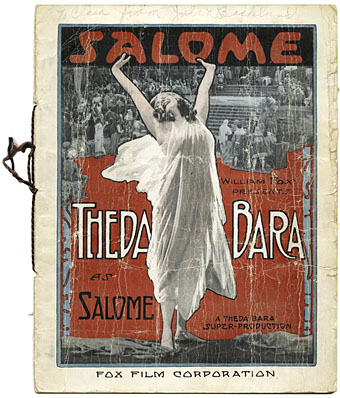
Salome (1918) souvenir book.
A few of the Salomés recently added to the Google Art Project. The painting by Andrea Ansaldo shows a head that looks distinctly unwell, something that’s not so common in the world of glow-in-the-dark saints. Ansaldo’s Salomé, meanwhile, is so young and diminutive that she hardly seems capable of holding the platter. One way in which this particular theme has survived for so long is that the narrative thread is the sole thing that connects the many variations, all other details are open to interpretation.
Below there’s a more recent painting by Izabella Gustowska that makes the inevitable connection between Salomé and her Biblical sister, Judith.
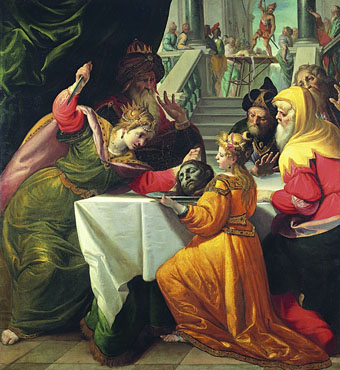
Herodias Presented with the Head of the Baptist by Salomé (c. 1630) by Andrea Ansaldo.
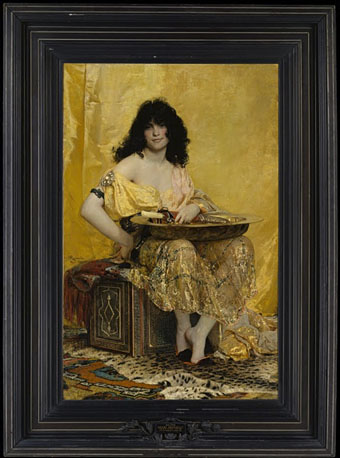
Salomé (1870) by Henri Regnault.
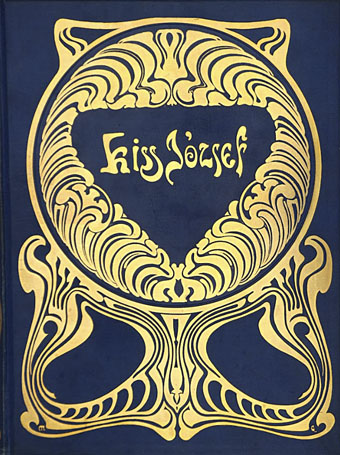
The Poetry of József Kiss (1897), design by Nándor Gottermayer.
There’s always more Art Nouveau. Searching for term at the Google Art Project turns up a surprising number of paintings, drawings and other objects which are nothing of the sort, as well as many things which are, of course. These are a selection of the latter (mostly), and a reminder that it’s worth returning to the site every so often to look for new additions. Nándor Gottermayer’s book cover is a gorgeous design I’ve never seen before.
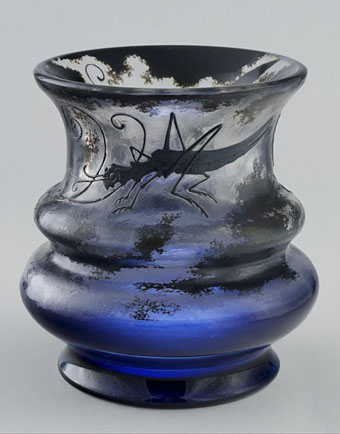
Vase (before 1890) by Émile Gallé.
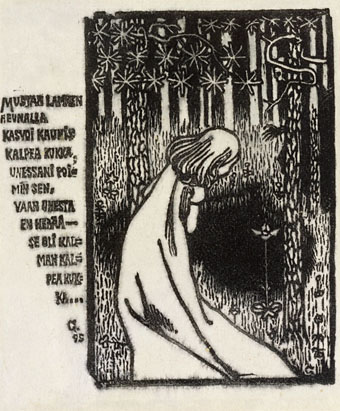
Flower of Death (1895) by Akseli Gallen-Kallela.
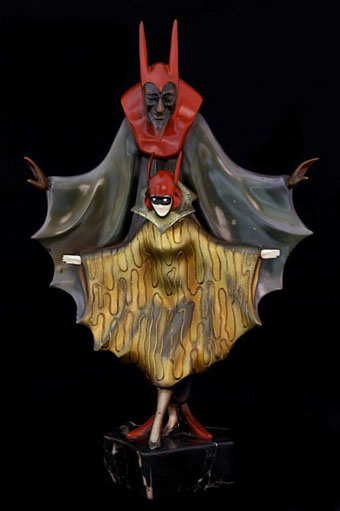
The Offering of Mephistopheles (c.1930) by Roland Paris.
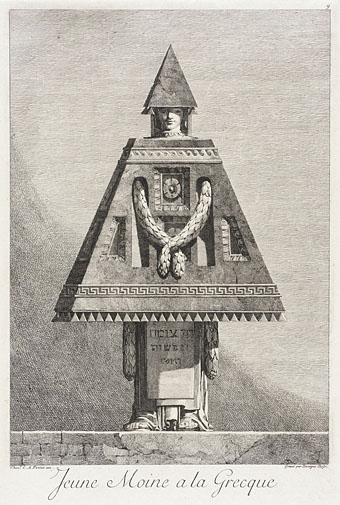
Jeune moine à la Grecque (1771) by Benigno Bossi. Via Monsieur Thombeau.
• Victoriana: The Art of Revival is an exhibition which will run throughout the autumn at the Guildhall Art Gallery, London. Some of my steampunk work will be included. Related: Rick Poynor on Soft Machine’s Dysfunctional Mechanism.
• “The egg glows and hovers in the middle of a field of mesmerizing color. The spell is broken when the guard finally says, “Everybody up off the floor.'” Morgan Meis on Aten Reign by the amazing James Turrell.
• Mix of the week: a “heatwave mix” of psychedelic songs compiled by Jaime Williams. Anything that includes Vacuum Cleaner by Tintern Abbey gets my vote.
Because sex is so compartmentalized — it’s often considered separate from the rest of life and hidden away — porn performers, who have sex publicly, are in a unique position to consider and talk about integrating private and public aspects of life.
Writer and porn performer Conner Habib on the issue of nomenclature in the porn business.
• Still Hopscotching: Peter Mendelsund posts some unused cover designs for Julio Cortázar.
• A Hymn For Megatron, an hour-long drone work, and a free download, by The Black Dog.
• Vagrancy and drift: Sukhdev Sandhu on the rise of the roaming essay film.
• A Flickr set of Peter “Sleazy” Christopherson’s musical instruments.
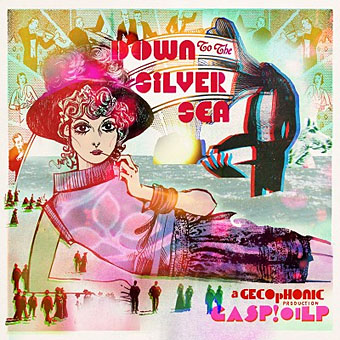
“Whether flower-pressing in the garden, hallucinating in the summerhouse, fainting inside stifling sites of historical interest, pirouetting along the promenade, or even sea-cruise thalassophobia complications, barely a moment will pass that isn’t made all the sweeter by obsessively listening to Down to the Silver Sea.”
• The TM Research Archive: sate yourself on Swiss graphic design.
• A Lecture on Johnson and Boswell by Jorge Luis Borges.
• Words, sounds and robots from Sarah Angliss.
• Nautilus (2012) by Anna Meredith | Nature Of Light (2012) by Isnaj Dui | Popcorn (Ealing Feeder Mix) (2012) by SpacedogUK (Sarah Angliss)