Turn, Turn, Turn, a film by Jud Yalkut

yalkut.jpg

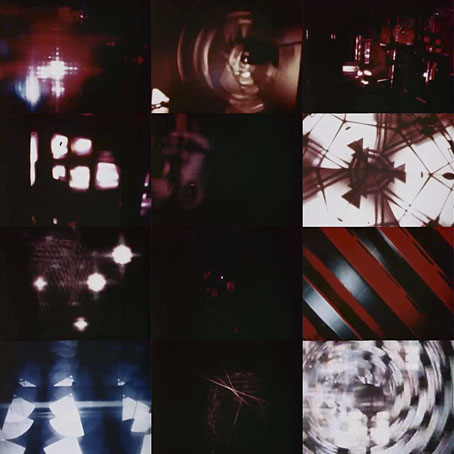
I’m currently reading my way through Rob Chapman’s lysergic doorstop Psychedelia and Other Colours, a comprehensive study of a cultural phenomenon that’s well-represented on these pages. So expect more posts like this one which concerns another gem of abstract/psychedelic cinema. Turn, Turn, Turn (1966) is a collaboration between Jud Yalkut (visuals) and the Us Company aka USCO (sound). The latter receive several mentions in Chapman’s detailing of the early psych scene in San Francisco in the mid-60s; here they put a Byrds song through the mangler while Yalkut’s mechanical and other effects flicker and gyrate. The visuals are reminiscent in places of the film made by László Moholy-Nagy of his Light-Space Modulator, fittingly so when Chapman credits Moholy-Nagy’s machine with being one of the many forerunners of psychedelia in the art movements of the early 20th century.

The YouTube copy linked here has a bonus at the end with a truncated version of a later Yalkut collaboration with Nam June Paik, Beatles Electronique.

Elsewhere on { feuilleton }
The abstract cinema archive

Weekend links 276

hope.jpg

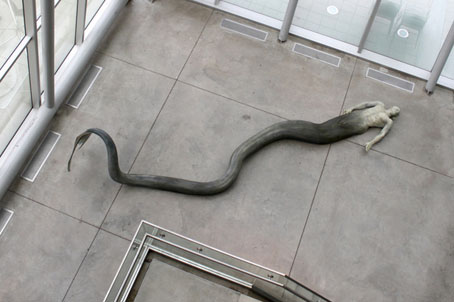
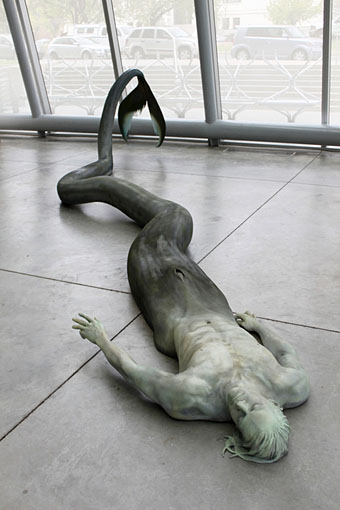
Beautiful Void: Holy Void II (2015) by Andy Diaz Hope.

• “Feeling like a woman. Looking like a man.” Rick Poynor on the cover art for Nightclubbing by Grace Jones. Related: A One Man Show, Jean-Paul Goude’s essential film of Jones’ 1982 tour where many of the songs are better than their album versions.

• Crammed Discs’ revival of the Made To Measure series continues with the release in October of Blue Velvet Revisited by Tuxedomoon & Cult With No Name, a soundtrack from the Peter Braatz documentary about David Lynch’s film.

• “We were learning from point zero; we created something that wasn’t around before…” Hans-Joachim Roedelius talking to Bruce Tantum about his work with Cluster and Harmonia.

• “In the Shangri-La pool there are no floating impurities. Apart from myself.” Iain Sinclair swims in “the highest pool in Europe” on the 52nd floor of The Shard, London.

• From 2012: “Possible Bubbles of Spacetime Curvature in the South Pacific” by Benjamin K. Tippett.

• After 23 years of delays and bootleg versions, Backwards by Coil is being given an official release.

• “Relaxed terror”, “perky dismay” and “unspecified uncertainty”: library music at Scarfolk.

• Mix of the week: a 4-hour collection of favourite music compiled by Autechre.

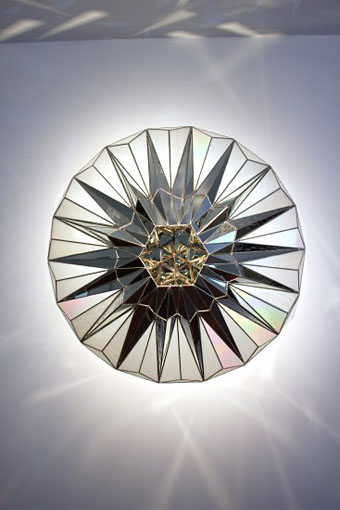
Masakazu Shirane and Reuben Young make a human-size kaleidoscope.

• “I always was a weird child,” says John Waters.

• A new version of Argent by Jane Weaver.

Chaos Magic (sic): The Fashion Trend

Void (2009) by Monolake | Void (2011) by Emptyset | Void (2014) by The Bug feat. Liz Harris

Dark arts

pvd05.jpg

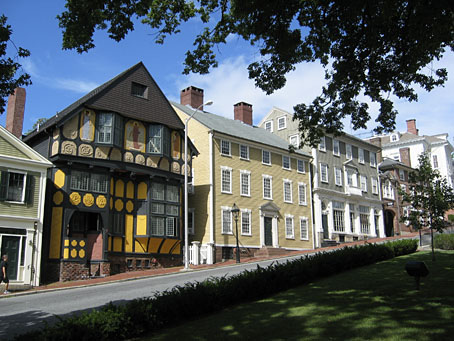
Thomas Street, Providence: on the left is the Fleur-de-Lys Studios; two doors along is the Dodge House Gallery which housed an additional part of the art exhibition; the Providence Art Club is the red-brick building next door.

I’m back from Providence, returned early on Tuesday but took the day off to recover from jet lag. The city was hot and humid for much of the time but I didn’t mind that, it was good to be able to walk around in the evening without a jacket, something that seldom happens here. I don’t go to many conventions so although NecronomiCon was the best I’ve been to, there isn’t a great deal of competition. I always enjoy meeting and talking to creators of any stripe—writers, artists, filmmakers, editors, etc—and it’s a pleasure to meet readers face to face, but conventions in general aren’t always attractive in themselves. NecronomiCon was inviting for being relatively small and with a strong focus not just on Lovecraft but on weird fiction as a whole: there were panels on Clark Ashton Smith, Lord Dunsany, Robert Chambers, and one on the legacy of what M. John Harrison designated “the New Weird”. I’ve been told that if there’s a NecronomiCon in 2017 the intention is to develop this area of discussion.
pvd07.jpg

And then there’s Providence itself: Lovecraft’s stories will read in a very different light now I’ve visited the city that inspired so much of his work. The one walking excursion I took to College Hill was curtailed by an afternoon of 30-degree temperatures but I did get to see a small part of Angell Street where Lovecraft lived for many years, and I also walked down Benefit Street as far as house number 135, familiar to readers as The Shunned House. The architecture of Providence is a delight, not only the Colonial buildings but the also the more recent vernacular styles of the Downtown area. Even the heat seemed connected to Lovecraft and his abhorrence of cold weather; in later years he took sightseeing trips down to Florida so I’m sure he wouldn’t have complained about the hot sun or the swampy air.
pvd06.jpg

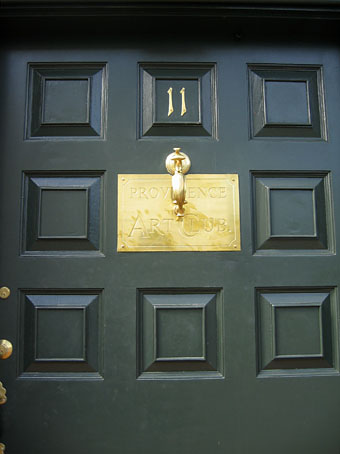
The massive and weighty door of the Art Club.

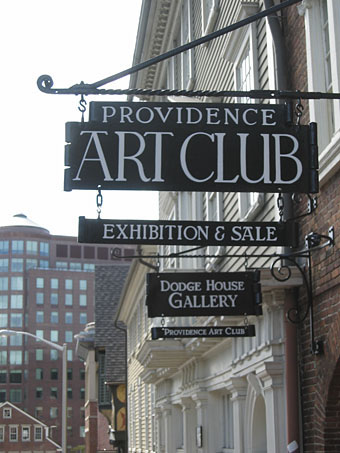
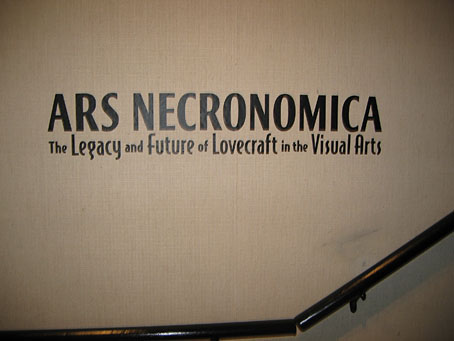
The main reason to be there was for the art exhibition, of course, and for that the venue couldn’t have been better. The Providence Art Club is mentioned in The Call of Cthulhu as a rather staid organisation that disapproves of Henry Anthony Wilcox who works down the street at the Fleur-de-Lys Studios; I spoke to a couple of current Art Club members, and was amused to hear that the establishment still maintains a somewhat conservative position. But the presence of so much bizarre and grotesque art in the gallery was evidence of a loosening of attitudes that Wilcox and Pickman couldn’t have managed in their day. A selection of my photographs follows below; I took over 250 photos but really should have taken more, especially of the buildings. The Providence Art Club has a good collection of photos from the opening night, some of which include me caught uncomfortably in front of a camera lens.
pvd18.jpg

Some acknowledgements: I’ve already thanked Niels-Viggo Hobbs and The joey Zone for inviting me there but I’ll do so again. Big thanks also to Carmen Marusich who spent most of her time behind the counter at Lovecraft Arts & Sciences in the Arcade; to print-wrangler Brian Mullen who very generously spent an afternoon ferrying me around various stores in search of a phone charger before smartly suggesting I try the USB port in the TV at the hotel (something I should have thought of); and to Michael Rose and company at the Providence Art Club for allowing us into their beautiful building. Shouts and thanks to: Sara Bardi, Michael Bukowski, Syl Disjonk, Jason C. Eckhardt, Bob Eggleton, Dave Felton, Stephen Gervais, Mike Knives, Robert H. Knox, Allen Koszowski, Henrik Möller, Mallory O’Meara, Gage Prentiss, Skinner, Jason Thompson, Frank H. Woodward (at last!), Josh Yelle, and all those who bought artwork, offered compliments or came to see the art and the panel discussions.

Finally…Earth! I’ve been listening to the band a great deal this year so I’m predisposed to enjoy any live event, but their performance in the gilded splendour of the Columbia Theatre on Federal Hill really knocked me out. An outstanding set with great sound and great support acts too, especially Elder. All this taking place a couple of streets away from the location of Lovecraft’s Starry Wisdom church; I was in seventh heaven.

And now the photos…
pvd16.jpg

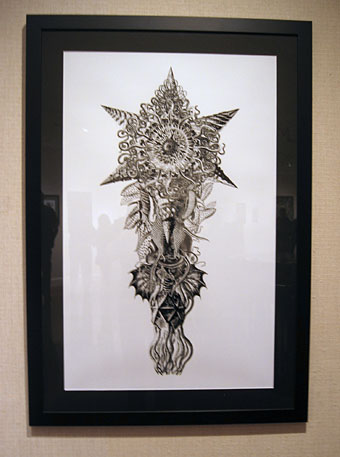
The title page entity from Lovecraft’s Monsters which was named Tentacles for the exhibition.
pvd17.jpg

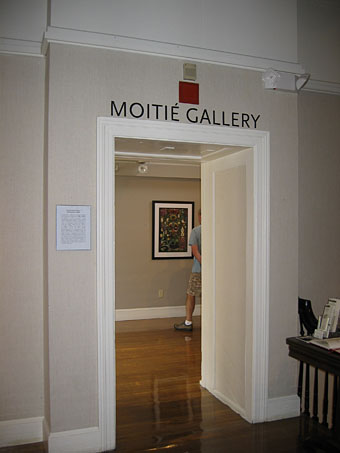
My works were in a gallery room on their own, guarded by the title page thing from Lovecraft’s Monsters.

Continue reading “Dark arts”

Weekend links 267

morgan.jpg

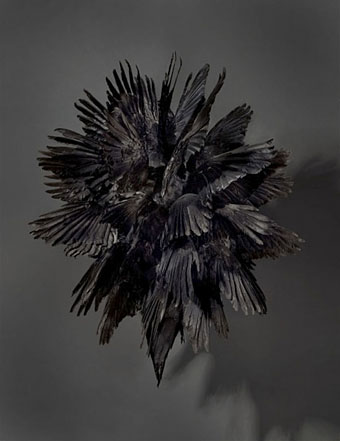
Black Fever (2010) by Polly Morgan.

• “She was something of an Auntie Mame figure for me. We spent years haunting secondhand bookstores in Berkeley, Los Angeles, and New York, talking for hours over ever more bizarre dishes of Chinese Hakka cuisine in a hole-in-the-wall eatery at Stockton and Broadway in San Francisco, watching Kenneth Anger flicks and the surrealistic stop-motion puppet masterpieces of Ladislas Starevich, which Tom Luddy would screen for us at the Pacific Film Archive, over and over again until our eyeballs nearly fell out.” Steve Wasserman remembers Susan Sontag.

California Dreams is “the first career-spanning compendium of Mouse’s work; it includes his recent landscapes and figurative paintings. Taken as a whole, the work is a weird, gilded, space-age, flame-licked way to chart the rise of late-twentieth-century youth culture”. Jeffery Gleaves on the psychedelic art of Stanley Mouse.

• “Not only does moral preoccupation corrupt the artfulness of fiction, but fiction is an inefficient and insincere vehicle for moralizing,” says Alice Gregory, joining Pankaj Mishra to address the question: “Do Moralists Make Bad Novelists?”

Nabokov’s posthumously published Lectures on Literature reprints a corny magazine ad that Nabokov liked to show to his students at Cornell, as an example of a certain kind of sunny American materialism and kitsch (or poshlost, in Russian): it’s an ad for flatware featuring a young housewife, hands clasped, eyes brimming as she contemplates a place setting. Nabokov titled it “Adoration of Spoons,” and it undoubtedly played a significant role in his creation of the suburban widow Charlotte Haze. From such strangely endearing trash was a masterpiece born.

John Colapinto reviewing Nabokov in America by Robert Roper

• “How many typefaces is too many typefaces?” asks Adrian Shaughnessy. “What happens to our ability to discriminate and exercise good judgment when we have a near-infinite number of possibilities?”

• At BUTT: a clip from one of the more dreamlike scenes in Wakefield Poole’s gay porn film, Bijou (1972). Poole’s “sensual memoir”, Dirty Poole, is published by Lethe Press.

John Banville reviews The Prince of Minor Writers, selected essays of Max Beerbohm edited by Phillip Lopate.

• My thanks once again to Dennis Cooper for featuring this blog on his list of cultural favourites.

• More Moogery: Sarah Angliss, Gazelle Twin and Free School in the Moog Sound Lab.

• Mix of the week: XLR8R Podcast 394 by Francesca Lombardo.

Atlas Obscura gets to grips with the enormous Devil’s Bible.

Feel You, a new song by Julia Holter.

Spoonful (1960) by Howlin’ Wolf | Spoon (1972) by Can | Spoon (2013) by Mazzy Star

Weekend links 266

dune.jpg

Spine and cover art by John Schoenherr for the first American edition of Dune, 1965.

• “[Herbert] had also taken peyote and read Jung. In 1960, a sailing buddy introduced him to the Zen thinker Alan Watts, who was living on a houseboat in Sausalito. Long conversations with Watts, the main conduit by which Zen was permeating the west-coast counterculture, helped turn Herbert’s pacy adventure story into an exploration of temporality, the limits of personal identity and the mind’s relationship to the body.” Hari Kunzru on Frank Herbert and Dune, 50 years on. Related: “To save California, read Dune,” says Andrew Leonard. There’s a lot more Dune cover art at ISFDB.

• “Embedded in Adam’s footage were several dark forms, human-ish in outline, unidentifiable but unmistakable, visible within the leaves or the shadows.” Holloway is a short film by Adam Scovell based on the book by Robert Macfarlane, Dan Richards and Stanley Donwood.

The Library of the Lost: In Search of Forgotten Authors by Roger Dobson; edited and with an introduction by Mark Valentine. Roger and Mark were my first publishers in 1988 when their Caermaen Books imprint produced the large-format edition of The Haunter of the Dark.

• “…over the years he created a series of ‘Pharmacies’: rows of glass bottles filled not with medicines to cure the body…but objects to stimulate the mind.” Clare Walters reviews Joseph Cornell: Wanderlust, an exhibition at the Royal Academy, London.

• “The sound machines we build today are invariably one-offs, made from salvaged parts, with all the precariousness of a prototype.” Sarah Angliss on the art of making music machines.

Mission Desire is a new single by Jane Weaver whose video is “set to scenes from Marie Mathématique – the French 1960s mini-series about Barbarella’s younger sister”.

• Ghost signs, ginnels and hidden details: an alternative guide to Manchester by Hayley Flynn aka Skyliner.

• “I want to be despised,” says John Waters who has a new art exhibition at Sprüth Magers, London.

Sonic Praise, an album of “Krautprogbikermetal” by Ecstatic Vision.

• The Evolution of the Great Gay Novel: an overview by Rebecca Brill.

• At Bibliothèque Gay: more homoerotic drawings by Jean Cocteau.

Wyrd Daze Lvl2 Issue 3 is a free download.

Nicolas Winding Refn: vinyl collector.

Art With Naked Guys In It

Caladan (2011) by Roly Porter | Giedi Prime (2011) by Roly Porter | Arrakis (2011) by Roly Porter