Weekend links 525

mademoiselle.jpg

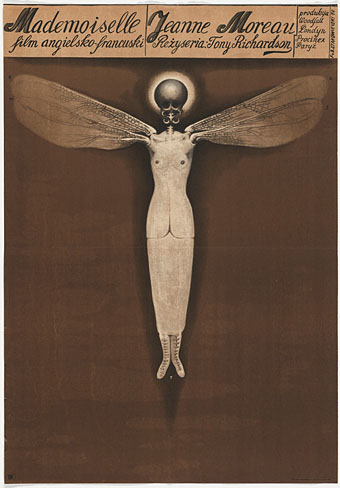
Polish poster by Franciszek Starowieyski, 1970.

• Tony Richardson’s Mademoiselle (1966) is one of those cult films that’s more written about than seen, despite having Jeanne Moreau in the lead role as a sociopathic schoolteacher, together with a screenplay by Marguerite Duras and Jean Genet, plus uncredited script-doctoring by David Rudkin. John Waters listed the film as a “guilty pleasure” in Crackpot but it’s been unavailable on disc for over a decade. The BFI will be releasing a restored print on blu-ray in September.

“While the hurdy-gurdy’s capacity to fill space with its unrelenting multi-tonal dirge is for some the absolute sonic dream, for others it is the stuff of nightmares.” Jennifer Lucy Allan on the pleasures and pains of a medieval musical instrument.

• “I truly believed”: Vicki Pollack of the San Francisco Diggers talking to Jay Babcock for the fifth installment of Jay’s verbal history of the hippie anarchists.

• “If you want to call yourself a composer, you follow every step of the instrumentation.” Ennio Morricone talking to Guido Bonsaver in 2006.

Dutchsteammachine converts jerky 12fps film from the NASA archive to 24fps. Here’s the Apollo 14 lunar mission: landing, EVA and liftoff.

• New music: Suddenly the World Had Dropped Away by David Toop; Skeleton and Unclean Spirit by John Carpenter; An Ascent by Scanner.

Peter Hujar’s illicit photographs of New York’s cruising utopia. Not to be confused with Alvin Batrop‘s photos of gay New York.

• Mixes of the week: XLR8R Podcast 651 by Dave Harrington, and Mr.K’s Side 1, Track 1’s #1 by radioShirley & Mr.K.

Simon Reynolds on the many electronic surprises to be found in the Smithsonian Folkways music archive.

The Gone Away by Belbury Poly will be the next release on the Ghost Box label.

• At Dennis Cooper’s: Ed Emshwiller Day.

Shirley Collins’ favourite music.

Mademoiselle Mabry (1969) by Miles Davis | Hurdy Gurdy Man (1970) by Eartha Kitt | Danger Cruising (1979) by Pyrolator
Weekend links 521

parent.jpg

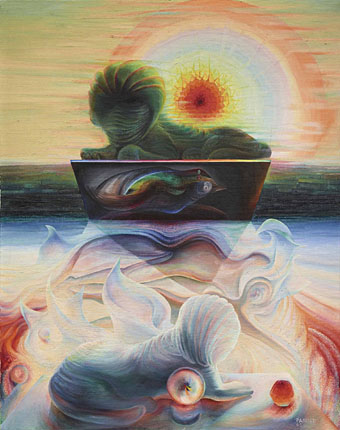
Au Lion d’or (1965) by Mimi Parent.

• After the recent announcement of Jon Hassell’s health issues it’s good to see he has a new album on the way at the end of July. Seeing Through Sound (Pentimento Volume Two) follows the form of the first volume, Seeing Through Pictures (2018), in reworking elements of earlier recordings into new forms. Not remixes, more reimaginings, and a process that Hassell has been applying to his own work for many years, most notably on his collaboration with Peter Freeman, The Vertical Collection (1997). The latter is an album which is impossible to find today and really ought to be reissued, together with more scarcities from the Hassell catalogue.

• Death of a typeface: John Boardley on Robert Granjon’s Civilité, a type design intended to be the national typeface of France but which fell out of favour. It wasn’t completely forgotten however; I was re-reading Huysmans’ À Rebours a couple of weeks ago, and Civilité is mentioned there as being a type that Des Esseintes chooses for some of his privately-printed books.

• At Plutonium Shores: Kurosawa versus Leone in A Fistful of Yojimbo. Christopher Frayling makes a similar analysis in his landmark study, Spaghetti Westerns (1981), but I didn’t realise that Leone had based so many of his shots on Kurosawa’s film.

• More lockdown art: Seen from Here: Writing in the Lockdown is a collection of new writing edited by Tim Etchells and Vlatka Horvat. A PDF book whose sales will go to support the Trussell Trust, a UK food bank charity.

• The week’s culture guides: Ben Cardew on where to start with the back catalogue of Miles Davis, and Hayley Scanlon on where to begin with the films of Yasujiro Ozu.

• “We can no longer ignore the potential of psychedelic drugs to treat depression,” says Robin Carhart-Harris.

• At Dangerous Minds: Laraaji returns with a new album, Sun Piano, and a preview of the same, This Too Shall Pass.

• Mixes of the week: The Ivy-Strangled Path Vol. XXI by David Colohan, and XLR8R Podcast 647 by The Orb.

Penelope Rosemont on the humorous Surrealism of Mimi Parent.

• At Dennis Cooper’s: Jeff Jackson presents Free Jazz Day.

The Golden Lion (1967) by Lomax Alliance | Dread Lion (1976) by The Upsetters | Gehenna Lion (1982) by Chrome

Weekend links 506

caligari.jpg

• The late David Roback was a musician who would have been called “enigmatic” for his refusal of the interview treadmill, preferring instead to let his music speak for itself. I wouldn’t label myself a “fan” (a word I dislike at the best of times) but over the years I’ve collected just about everything that Roback was involved in, from the early Rain Parade albums (he co-wrote my favourite song of theirs, No Easy Way Down), to Opal (his collaboration with Kendra Smith and others), and Mazzy Star (with Hope Sandoval), the group whose songs perfected the somnolent blend of blues, country and rock that Roback had been aiming at all along. Some concerts:

Mazzy Star, The Black Sessions, Maison De La Radio, Paris, October 25, 1993
Mazzy Star at the The Metro, Chicago, November 12, 1994
Mazzy Star, KROQ Radio, Los Angeles, December 10, 1994

• “Like other early-modern architects, Lequeu’s drawings explore analogies between bodies and buildings and the erotic, multisensory dimensions of architectural design. In his annotations, he often describes in compulsive detail not only how buildings look but also how they feel, smell, and even taste.” Meredith Martin on the architecture of Jean-Jacques Lequeu.

• “She talks avidly about using pigs’ heads, plastic doll parts, fake blood, and real blood, recollecting with relish a performance where she transformed into a Statue of Liberty that projectile-vomited gore onto the audience…” Geeta Dayal on the performance art of Johanna Went.

Schütte teases out the many ambiguities in these concepts: trains, autobahns, radioactivity, men-machines. All have distinct negative connotations within Germany in particular. Yet Kraftwerk proposed a positive view. Their rigorous determination to deny autobiography forced listeners to focus on the ideas and the music, where apparent contradictions—local/global,  human/machine, past/future—were resolved in a sparkling, crystal-clear sound-world. This was not submission but interaction: as they said, “we are playing the machines, the machines play us”.

Jon Savage reviews Kraftwerk by Uwe Schütte

• “…it was clear that Miles wasn’t sure what he wanted…but he knew what he didn’t want. He didn’t want anything like what he had done before.” John McLaughlin on the recording of Bitches Brew by Miles Davis.

• “His panels are littered with figures standing on the edge of crowds, watching.” Toby Ferris on the paintings of Pieter Bruegel.

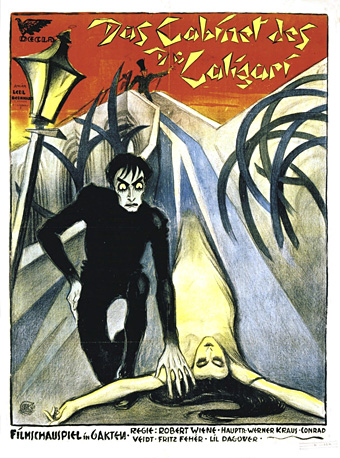
Alex Barrett on 100 years of The Cabinet of Dr. Caligari.

A Boy Called Conjuror by Teleplasmiste.

• At Dennis Cooper’s: Fires.

Smithsonian Open Access

• Picture P. Brueghel “Winter” / Solaris (1972) by Edward Artemyev | The Dream Dance Of Jane And The Somnambulist (1981) by Bill Nelson | St. Elmo’s Fire (1998) by Uilab

Weekend links 489

wyrding.jpg

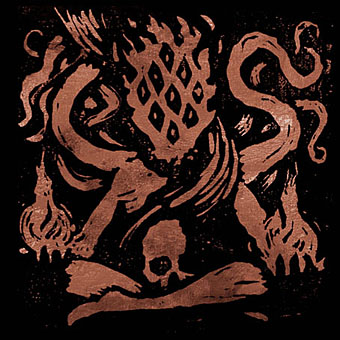
Typhonic Neural Tantra by The Wyrding Module.

• November 2019, as many people have been noting, is the month in which Ridley Scott’s Blade Runner takes place. At Dangerous Minds Paul Gallagher writes about the unrelated William Burroughs script whose title was borrowed for Scott’s film.

• More Ridley Scott (sort of): disco was still a big thing when Alien was in the cinemas 40 years ago, so Kenny Denton reworked Jerry Goldsmith’s Alien score into a disco single which he released under the name Nostromo.

• “The Count of Monte Cristo is one of the most exciting novels ever written and on the other hand is one of the most badly written novels of all time and in any literature.” Umberto Eco on the cult of the imperfect.

• Jonathan Glazer has made a short film, The Fall, for the BBC but the corporation’s restrictions mean that (for the moment) it’s difficult to see if you live outside the UK.

• New albums at Bandcamp: Typhonic Neural Tantra by The Wyrding Module, and Emotional Freedom Techniques by Jon Brooks (aka The Advisory Circle).

• Hawkwind dancer Miss Stacia and the Barney Bubbles estate have made a line of T-shirts based on Barney Bubbles’ Space Ritual design.

Walter Murch and Midge Costin on the art of cinematic sound design.

Ivana Sekularac on the former Yugoslavia’s brutalist beauty.

• Congratulations to Strange Flowers on its 10th anniversary.

Geoff Manaugh on the witch houses of the Hudson Valley.

• At Dennis Cooper’s: 19 experimental horror films.

Fall (1968) by Miles Davis | The Fall (2011) by The Haxan Cloak | Fall (2014) by The Bug (feat. Copeland)

Weekend links 425

tsuruta.jpg

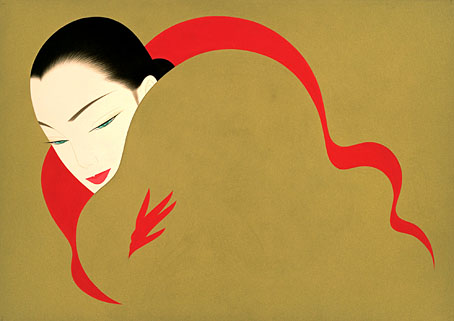
Art by Ichiro Tsuruta.

• “Writing is so much about subverting dogmatisms of all kinds, above all the ones that insist you cannot go there! You must not say that! Writers need to go anywhere, to take anything on. And the only rule is to do it well.” Rikki Ducornet in a feature at Dennis Cooper’s which has been linked here before but was previously on DC’s old (now deleted) blog.

• “This book-cover trend is turning bookstores into flower shops,” says Kenzie Bryant. “How publishing’s floral-print trend came to rule the world’s bookshelves.” (Where “the world” means the USA, as usual…)

• The third edition of Wyrd Daze—”The multimedia zine of speculative fiction + extra-ordinary music, art & writing”—is out now.

For this listener, Nardis has become a full-on musical obsession. I have more than ninety official and bootleg recordings of the tune stored in the cloud, ranked in a fluid and continually updated order of preference, so they follow me wherever I go. In my travels as a writer, I use Nardis as a litmus test of musical competence: if I see a jazz band in a bar or a busker taking requests, I inevitably suggest it. (If they’ve never heard of it, I understand that they must be new at this game.) By now I’ve heard so many different interpretations, in such a far-flung variety of settings, that a Platonic ideal of the melody resides in my mind untethered to any actual performance. It’s as if Nardis were always going on somewhere, with players dropping in and out of a musical conversation beyond space and time.

Steve Silberman on the obsession that he and pianist Bill Evans share with Nardis, a Miles Davis composition that Davis himself never recorded

• Mixes of the week: Secret Thirteen Mix 263 by Jung An Tagen, and XLR8R Podcast 554 by Tutu.

• “René Magritte still has the power to surprise,” says Sophie Haigney.

Ishmael Reed at the Brockport Writers Forum, 1st May, 1974.

• The On-U Sound label is now at Bandcamp.

Brian Eno talks music, global politics, etc.

Faded Flowers (1985) by Shriekback | Other Flowers (2003) by Harold Budd | White Flowers (2014) by Lutine