Zeuhl Ẁortz!

magma-single.jpg

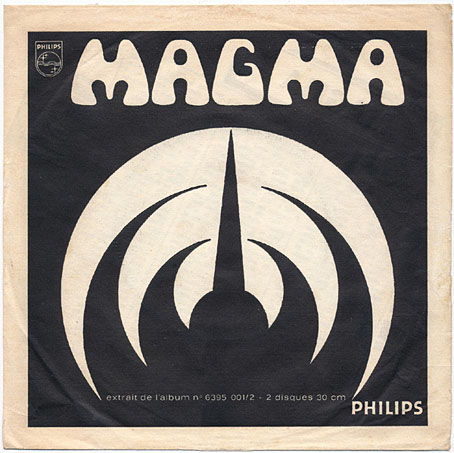
Kobaïa / Müh (1970), a single by Magma.

1: Zeuhl definitions

Zeuhl is an adjective in Kobaïan, the language written by Christian Vander, drummer and founder of the French band Magma.

Pronunciation: zEU(h)l, while the EU are like a French E with a slight U, and the (h) is a semi-silent letter which is an integrated part of the EU, totalling in a “syllable and a half”. (Prog Archives)

Zeuhl (pronounced [zœl]; lit. ’celestial’) is a music genre that is a hybrid of jazz fusion, symphonic rock and neoclassical music, established in 1969 by the French band Magma. The term comes from Kobaïan, the fictional language created by Magma’s Christian Vander and Klaus Blasquiz for Magma, in which Zeuhl Ẁortz means approximately ‘celestial force’.
[…]
Zeuhl is determined by several characteristic elements. Especially important are dominant rhythm fractions, usually in the form of a pumping bass guitar and sometimes sluggish or flexibly playing drum kits. Slow repetitive structures that serve to build a hypnotic atmosphere are just as prominent as solo passages of high technical finesse. Vocals are often widely present and can consist of polyphonic choral movements, such as Carl Orff’s Carmina Burana, or soloistically performed passages with shrill intonation. Zeuhl bands also often have solo guitarists or pianists that usually have a more than accompanying function, especially to emphasize the repetitive patterns. (Wikipedia)


2: The Birth of the Zeuhl

“1967,” he says. “The year John Coltrane died. It seemed to me that afterwards, it was as though music had to try to start all over again. Someone had to pick up the pieces, go on searching in the way that he had. Nobody could match him, but people could pick up the flame. It was almost impossible for anyone to do anything new after Coltrane, but you had to try, try to find other new directions. So that’s what I tried to do with Magma. I was a bit young at the time, but…”

Christian Vander describing the birth of Magma to Paul Stump, The Wire, July 1995


3: Zeuhl lists
weidorje.jpg

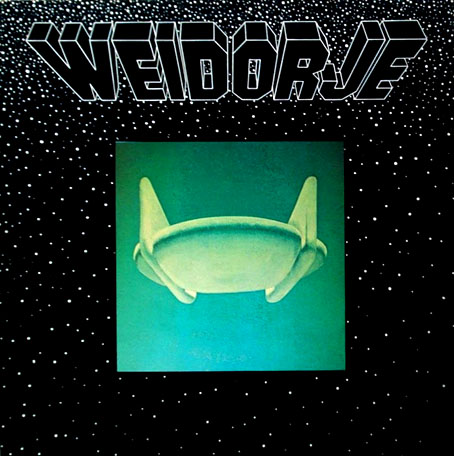
Weidorje (1978) by Weidorje. Cover art by Klaus Blasquiz.

Shindig! Magazine: Magma in seven records, and Deeper Underground: the best albums by the Magma family by Warren Hatter.

• Prog Is Alive and Well in the 21st Century: My Favourite Zeuhl Albums of All-Time by Drew Fisher.

• Bandcamp: There is No Prog, Only Zeuhl: A Guide to One of Rock’s Most Imaginative Subgenres by Jim Allen.

• Discogs: Zeuhl lists by Neit and ultimathulerecords.

• Prog Archives: Top 100 Zeuhl.


4: Live Zeuhl

magma-poster.jpg

A poster by Jofre Conjota for a concert in Chile demonstrating that Zeuhl can exist without electricity.

Magma, Hippodrome du Pantin, Paris, 1977 (46 mins; a French TV film that captures one of the 70s lineups in peak form. Includes an almost complete performance of Mekanïk Destruktïẁ Kommandöh.)

Weidorje, French TV, 1979 (11 mins; Magma offshoot Weidorje were only active for a couple of years, this may be their only TV appearance.)

Magma, Théâtre Bobino, Paris, 1981 (A complete concert—1 hr 53 mins—from the group’s weird-funk period: Christian Vander leaves his drumkit to sing and rant at the audience, everyone is dressed in spacey glitter outfits, and some of the songs from the Merci album can’t be classed as Zeuhl at all. The musicians are all first rate, however.)

Magma play Köhntarkösz, 2005 (A fantastic 32-minute performance in a very cramped venue.)

Collectif PTÄH interprète Magma (12 mins; a Magma covers band playing in a village square.)


5: Cinematic Zeuhl
tristan.jpg

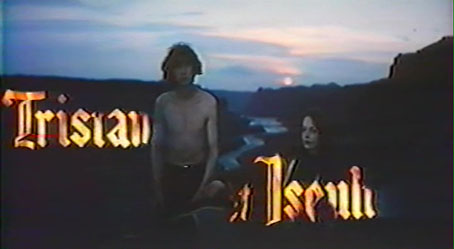
Tristan et Iseult (1972): a French feature film with a score by Christian Vander and three members of Magma. The soundtrack album was later incorporated into the Magma official discography as Ẁurdah Ïtah.

Moi y’en a vouloir des sous (1973): a French satire in which Magma make a brief appearance as a way-out rock group.


6: Lovecraftian Zeuhl
shub-niggurath.jpg

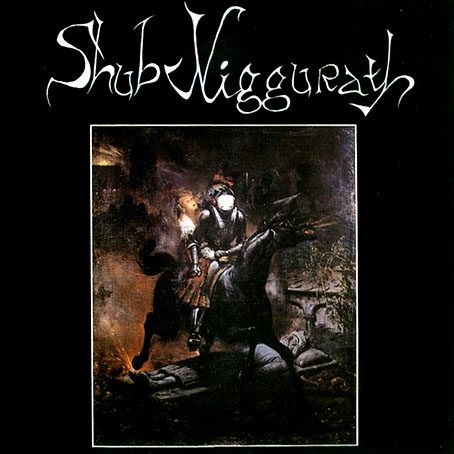
Les Morts Vont Vite (1986) by Shub Niggurath. Cover art: La Ballade de Lénore (1839) by Horace Vernet.

Liriïk Necronomicus Kanht (1978) by Magma.

Dagon (1980) by Eskaton.

La musique d’Erich Zann (1981) by Univers Zero (a Belgian group, originally named Necronomicon, which included former members of an earlier group named Arkham).

Yog-Sothoth (1986) by Shub Niggurath.


7: Comic Zeuhl

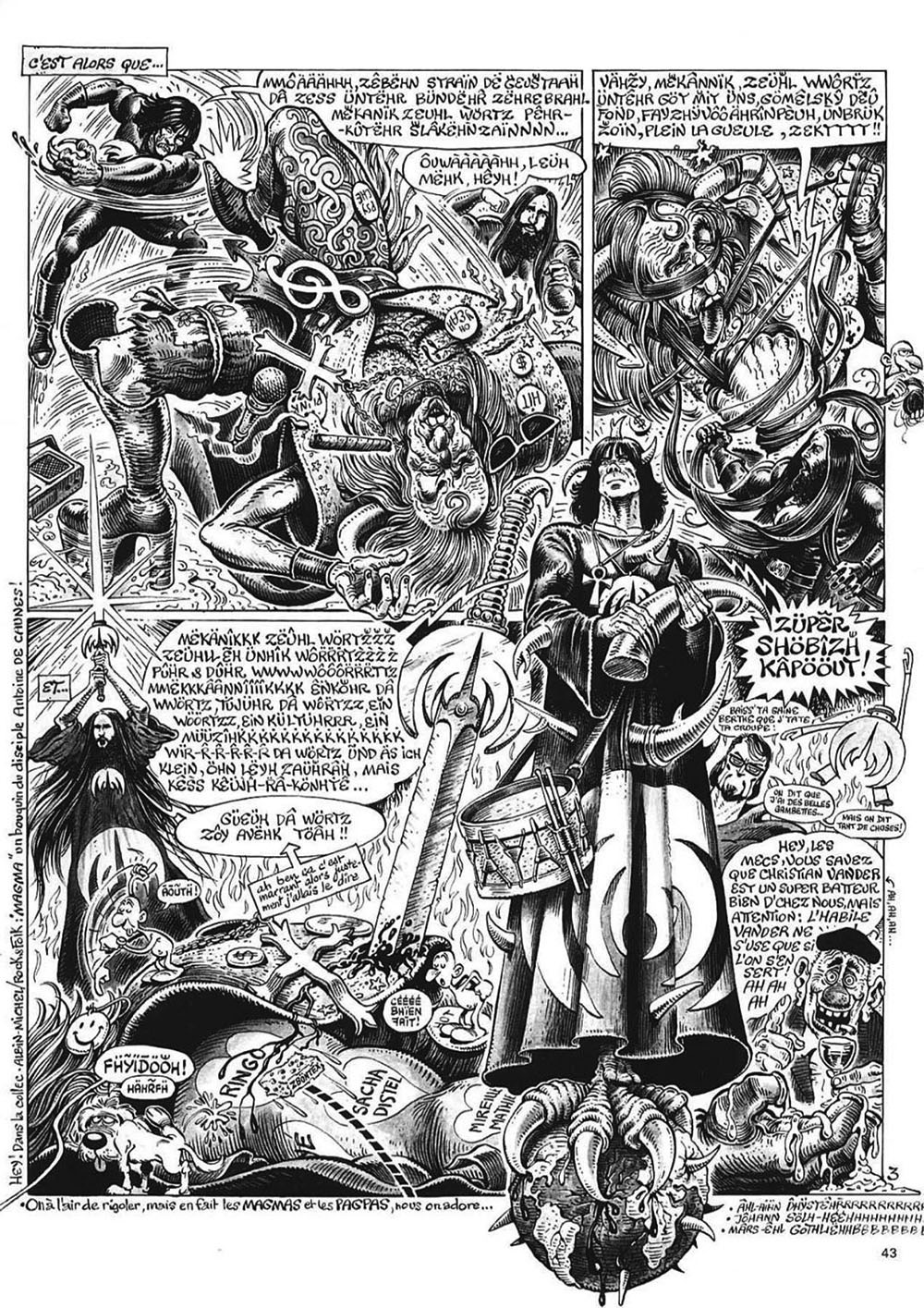
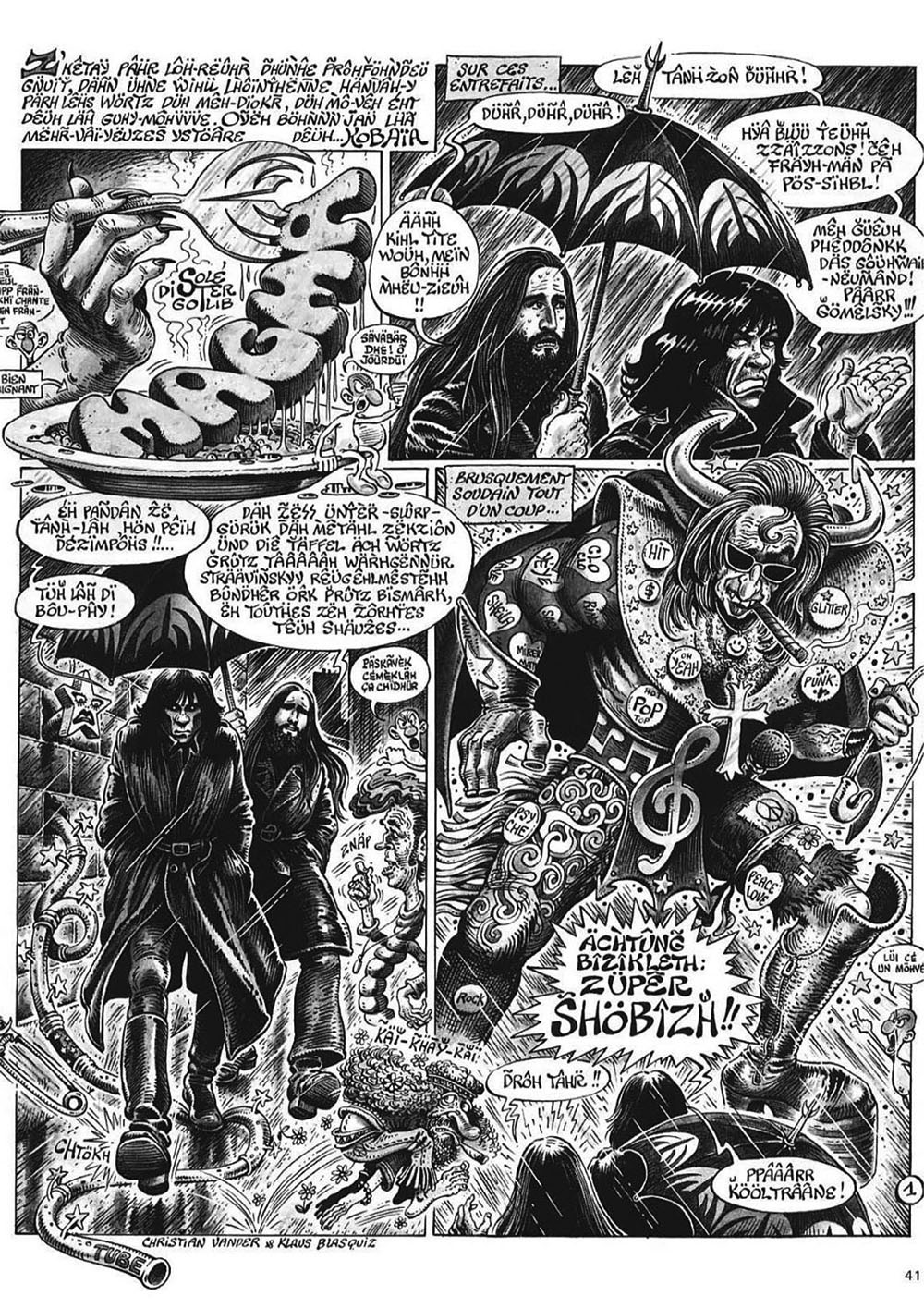
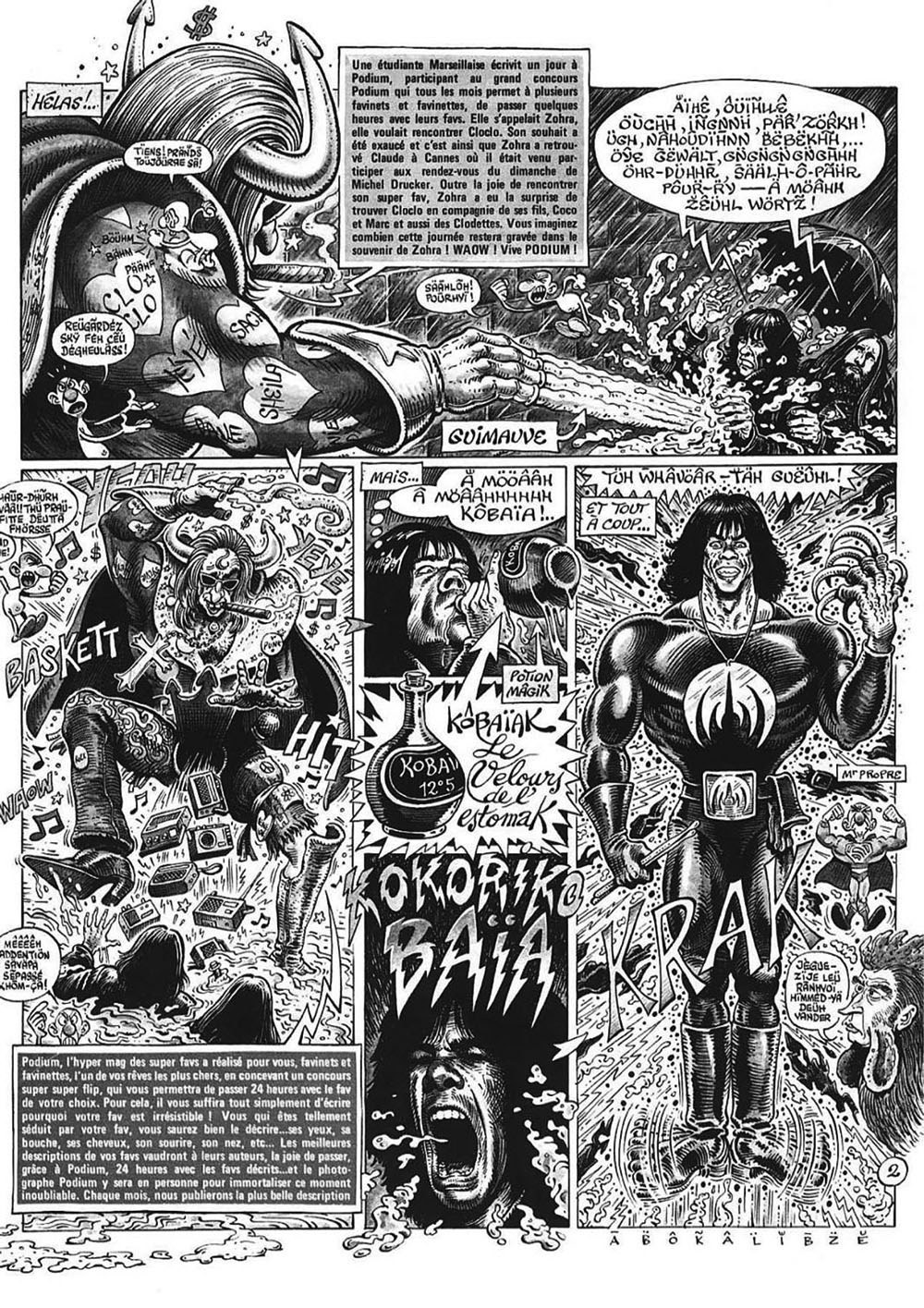
Magma’s Christian Vander and Klaus Blasquiz in a three-page comic strip from Pop & Rock & Colégram (1978), a collection of satirical music-themed pieces by Jean Solé, Alain Dister & Marcel Gotlib.
magma-comic1.jpg

magma-comic2.jpg

magma-comic3.jpg

Previously on { feuilleton }
Dune: some French connections
HR Giger album covers

Weekend links 584

crowley.jpg

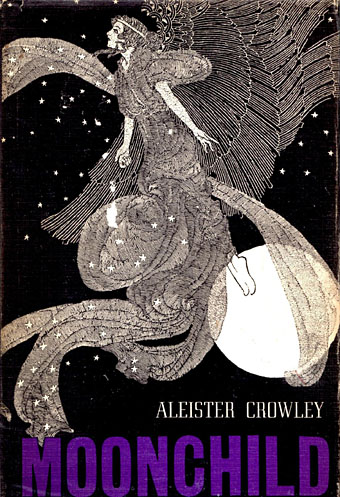
Cover for the 1970 US edition of Moonchild by Aleister Crowley. No artist credited (unless you know better…). Update: The artist is Dugald Stewart Walker, and the drawing is from a 1914 edition of Hans Christian Andersen’s fairy tales. Thanks to Mr TjZ!

• “…a very mid-Seventies cauldron of Cold War technology, ESP, sociology, black magic and white magic, experimental science and standing stones, secret radar and satanic rituals, whirring aerials and wild moors: a seething potion of Wyndham and Wheatley.” Mark Valentine on The Twelve Maidens, a novel by Stewart Farrar.

• “The line in the song ‘feed your head’ is both about reading and psychedelics. I was talking about feeding your head by paying attention: read some books, pay attention.” Grace Slick explains why those three little words have been attached to these pages since 2006.

Freddie deBoer reposted his “Planet of Cops” polemic, a piece I linked to when it first appeared in 2017, and which used to come to mind all the time before I absented myself from the poisonous sump of negativity that we call social media.

• RIP Charlie Watts. The Rolling Stones’ last moment of psychedelic strangeness is Child Of The Moon, a promo film by Michael Lindsay-Hogg featuring an uncredited Eileen Atkins and Sylvia Coleridge.

• Old music: A live performance by John Coltrane and ensemble of A Love Supreme from Seattle in 1965 that’s somehow managed to remain unreleased until now.

• A short film about Suzanne Cianni which sees her creating electronic sounds and music for the Xenon pinball machine in the early 1980s.

• “I’ll be in another world”: A rediscovered interview with Jorge Luis Borges.

Steven Heller explains why Magnat is his font of the month.

Clive Hicks-Jenkins on the allure of toy theatre.

• New music: Vexed by The Bug ft. Moor Mother.

• At Dennis Cooper’s: Nikola Tesla Festschrift.

Moon Child (1964) by The Ventures | Moonchild (1969) by King Crimson | Moonchild (1992) by Shakespears Sister

The Art and Music Collection, 1976–77

am01.jpg

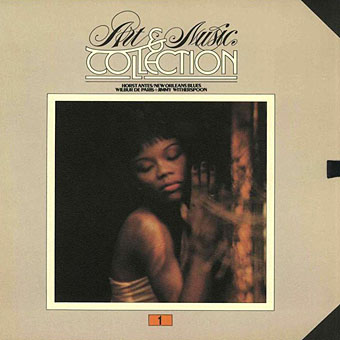
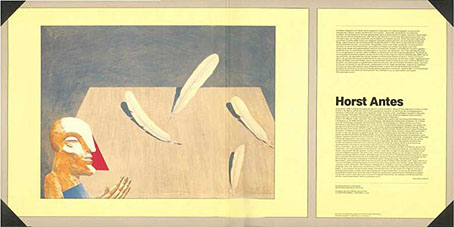
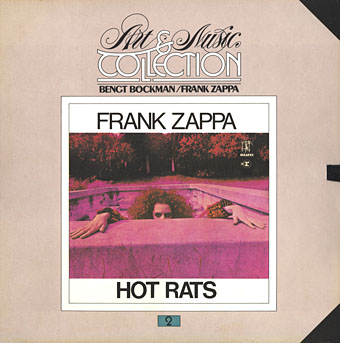
In the mid-1970s Dieter Brusberg and Siegfried E. Loch packaged a series of albums for the German division of Atlantic Records under the title The Art and Music Collection, a reissue scheme which paired each album with a print by a contemporary artist. This is an odd collection which I imagine was aimed at people like the father of one of my friends at school, the first person I met who owned a proper hi-fi system rather than a cheap stereogram. He liked to listen to progressive rock and jazz, and had a shelf of jazz records packaged in boxed editions that looked like they were ordered from an ad in a Sunday magazine.

am02.jpg

New Orleans Blues by Wilbur De Paris & Jimmy Witherspoon. Art by Horst Antes.

am03.jpg

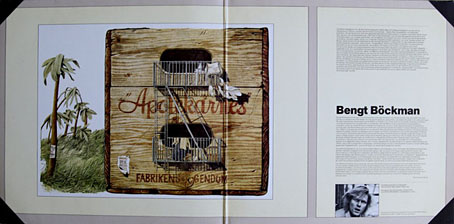
The Art and Music Collection had lower production values than the boxed records but each album was housed in a heavy gatefold sleeve, some of which came with ribbons attached to the front and back covers. Inside the gatefold there was a picture of the piece of art chosen to complement the release, together with a note about the artist and a paragraph of text which I’m guessing attempted to draw a parallel between the picture and the music. With the exception of a lone Briton, Joe Tilson, all the artists were German or Austrian. The series managed eight numbered releases—collect the set!—with albums that might have been chosen at random from the Atlantic back catalogue, a curious mix of jazz, rock and blues. Each artist shares billing with the musicians (the artist names are also on the disc labels), which makes me wonder if the series troubled any musical egos. After album no. 6 someone at the record company must have realised they were giving the wrong impression by listing the artists first so they revised the name of the series to The Music and Art Collection. The artworks seem as randomly chosen as the music, unless the sleeve notes have convincing explanations for their selection. The paintings of Rudolf Hausner—an artist I’d never think to connect with The Doors—became a lot more visible a couple of years later when OMNI magazine used his art for a cover and a number of interior illustrations.

am04.jpg

Hot Rats by Frank Zappa. Art by Bengt Böckman.

am05.jpg

Continue reading “The Art and Music Collection, 1976–77”

Weekend links 476

kimura.jpg

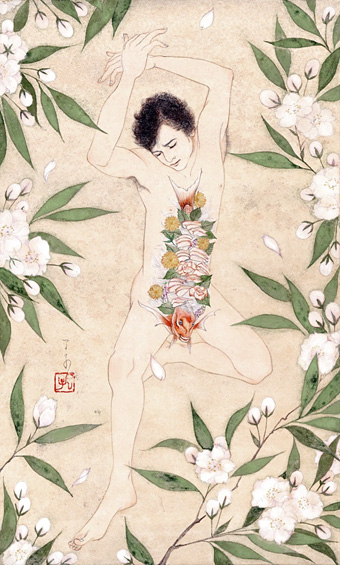
Man’s body dish for Sashimi under the cherry blossom (2005) by Ryoko Kimura.

• Godley & Creme’s Consequences (1977) is reissued this month on CD and vinyl. Originally a three-disc concept album with a theme of climate disaster and the natural world’s revenge on humanity, Consequences was released at a time when punk and prog rock were fighting for the attention of music listeners. 1977 wasn’t the end of prog by any means (many of the vilified bands had some of their greatest successes at this time) but Godley & Creme’s transition from the smart pop songs of 10cc to extended instrumental suites was abrupt, and their concept, such as it was, lacked the drama and accessibility of Jeff Wayne’s The War of the Worlds, even with the addition of Peter Cook providing a multi-voice comic narrative between the musical pieces. (Kevin Godley ruefully referred to the album in later years as Con Sequences.) The album flopped, and has been a cult item ever since.

• “A word of caution, though. Once you do read it, it’s hard to let it go.” Philip Hoare on Herman Melville and Moby-Dick. Related: William T. Vollmann on how a voyage to French Polynesia set Herman Melville on the course to write Moby-Dick.

Samm Deighan on The “Faraway Forest” in Peter Strickland’s Katalin Varga, The Duke of Burgundy, and The Cobbler’s Lot.

Brian Eno, Roger Eno, and Daniel Lanois discuss the recording of Apollo: Atmospheres & Soundtracks.

John Boardley on the first fashion books, Renaissance pixel fonts and the invention of graph paper.

Melanie Xulu looks back at a time where major labels were releasing witchcraft rituals.

• “Tom Phillips’ A Humument is a completely novel project,” says Rachel Hawley.

John Foster on the evolution of Stereolab’s analogue-inspired record sleeves.

• At Dennis Cooper’s: a history of le Grand Guignol by Agnes Peirron.

Casey Rae on William S. Burroughs and the cult of rock’n’roll.

• An Austin Osman Spare image archive.

Consequences (1965) by John Coltrane | Moby Dick (1969) by Led Zeppelin | Consequence (1995) by Paul Schütze

Weekend links 419

ellison.jpg

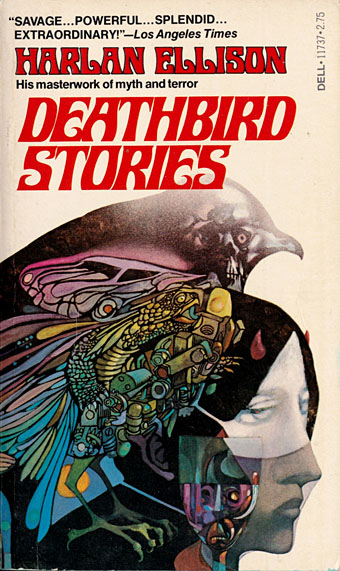
Cover art by Leo & Diane Dillon, 1975.

Art is not supposed to be easier! There are a lot of things in life that are supposed to be easier. Ridding the world of heart attacks, making the roads smoother, making old people more comfortable in the winter, but not Art. Art should always be tough. Art should demand something of you. Art should involve foot-pounds of energy being expended. It’s not supposed to be easier, and those who want it easier should not be artists. They should be out selling public relations copy.

Typical of the late Harlan Ellison to describe his vocation in terms of difficulty and struggle even when his prolific output made writing seem effortless. When my colleagues at Savoy Books published a Savoy issue of New Worlds magazine in 1979 one of the features they ran was an introduction by Michael Moorcock to an Ellison story collection. (They also published two books of Ellison’s around this time.) A copy of the magazine was duly sent to the subject of the essay since Ellison always liked to keep track of his print appearances. The back page of that particular issue is blank but for a few words in bold type from singer PJ Proby: “I am an artist; and should be exempt from shit.” Ellison cut this slogan from the magazine then glued it to his typewriter, no doubt transferring it to later models since it was still visible in the 2008 Ellison documentary, Dreams With Sharp Teeth.

My first encounter with Ellison’s work was also my first encounter with what became labelled the new wave of science fiction, via a reprint of I Have No Mouth, and I Must Scream in a book in the school library. I was only about 12 or 13 at the time, and found Ellison’s story so shocking and disturbing that it overpowered everything else in the collection. The only other story that made an equivalent impression at the time was The Colour Out of Space by HP Lovecraft, so it’s perhaps fitting that Ellison gave my work a favourable mention in his introduction to the huge Centipede Press collection of Lovecraft artwork, A Lovecraft Retrospective: Artists Inspired by HP Lovecraft. I still haven’t got over that one. After the initial encounter, the Ellison-edited Dangerous Visions and Again, Dangerous Visions were just as important for me as the paperback reprints of stories from the Moorcock-edited New Worlds: a handful of books that showed science fiction to be a literary form of limitless possibilities, as opposed to the stereotype of space adventure and future technology. The Ellison and Moorcock anthologies led me to William Burroughs, James Joyce and all points beyond; they also soured for me the preoccupation with space adventure and future technology which persists today.

My final connection with Ellison replayed his compliment in a small way, when editor Jill Roberts and I took extra care with the typesetting of Jeffty is Five for The Very Best of Fantasy & Science Fiction, Volume 2. Ellison was the only author I’ve encountered in the digital age whose corrections were still handwritten comments on printed sheets; these had to be faxed to San Francisco then scanned and emailed to me (to this day I still don’t know why the oft-reprinted story required so many adjustments). It was awkward but amusingly so, a benign taste of a legendary bloody-mindedness and insistence on precision.

• “Laughing about an acid trip with members of Can and opening up about some of the ‘scars’ left from his association with Brian Eno and David Byrne’s My Life In the Bush of Ghosts, [Jon] Hassell is candid in a way that comes naturally to those who’ve lived life on their own terms.”

• Drone Metal Mysticism: Erik Davis talks with music scholar and ethnographer Owen Coggins about amplifier worship, sonic pilgrimage, “as if” listening, metal humour, and his new book Mysticism, Ritual and Religion in Drone Metal.

Psychedelic Prophets: The Letters of Aldous Huxley and Humphry Osmond; “Letters between the men who coined the term ‘psychedelic’ and opened doors to a different way of thinking about human consciousness.”

Artaud 1937 Apocalypse: Letters from Ireland by Antonin Artaud; translated and edited by Stephen Barber.

• “I thought female sexuality was an OK thing?” says writer and porn performer, Stoya.

• “How did a major label manage to lose a John Coltrane record?” asks Ted Gioia.

• Welcome to the dollhouse: Alex Denney on a century of cinematic cutaways.

• The trailer for Mandy, a new (and much-awaited) film by Panos Cosmatos.

• Rest in Anger, Harlan Ellison (1934–2018) by Nick Mamatas.

• Mix of the week: FACT Mix 659 by BD1982.

Emily Gosling on library music design.

Record Label Logos

The Deathbird Song (1997) by The Forbidden Dimension | Eidolons (2017) by Deathbird Stories | Deathbird (2017) by Tempos De Morte