Clearlight: Symphonies

clearlight1.jpg

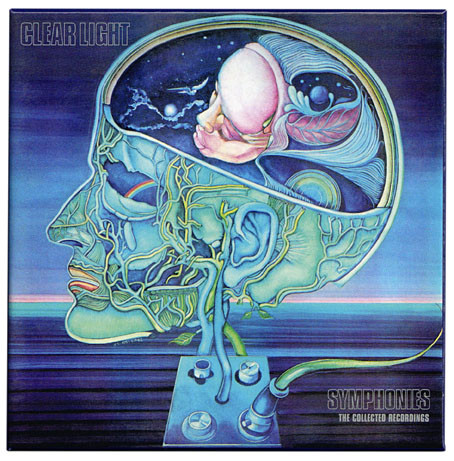
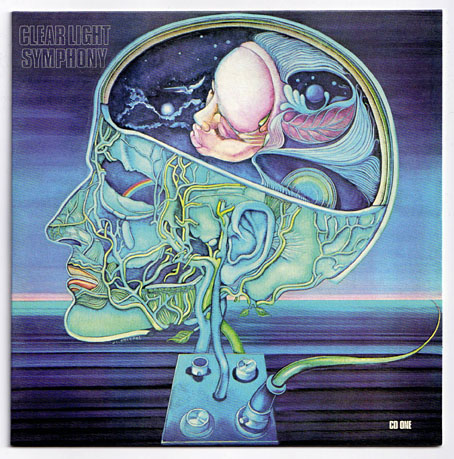
The Clearlight that concerns us here is a French musical ensemble with a shifting line-up, formed by and oriented around the activities of its keyboard-playing composer Cyrille Verdeaux. Clearlight, in other words, shouldn’t be confused with the short-lived American psychedelic band known as Clear Light. Cherry Red have just released five Clearlight albums in one of their well-produced CD boxes: Clear Light Symphony (1975), Forever Blowing Bubbles (1975), Les Contes Du Singe Fou (1977), Visions (1978), and Impressionist Symphony (2014). The box bears the subtitle “The Collected Recordings” but these albums comprise only one half of the Clearlight discography. I doubt there’s much demand for anything more substantial than this, at least in Britain where the group have been chiefly known for their first album, Clear Light Symphony. Cyrille Verdeaux’s booklet notes describe how he secured a deal with Virgin Records thanks to the success of Mike Oldfield’s early albums. Verdeaux’s demo tape was aiming for a similar blend of rock music with classical structures, with one long “symphony” divided into two parts. When the album was being recorded Virgin persuaded him to flesh out his composition with three musicians who were signed to the label via Gong—Steve Hillage, Tim Blake and Didier Malherbe—all of whom play on the second part. Or what should have been the second part… Virgin switched the two playing sides of the recording around in order to give the Gong artists greater prominence. The switch has been reversed for this latest release.
clearlight2.jpg

Cover art by Jean-Claude Michel.

I’ve not heard everything in Cyrille Verdeaux’s discography but the Clearlight albums that follow the debut are further excursions into quasi-classical prog-rock composition. There was a lot of this around in the 1970s, especially from keyboard players like Rick Wakeman, Vangelis, Bo Hansson and others. Verdeaux isn’t as much of a Liberace show-off as Wakeman, and he’s not as original as Vangelis, but in Clearlight his piano and keyboard flourishes benefit from the other musicians assembled on each release. Tim Blake had settled in France in the late 1970s, and turns up on several of the albums that follow Clear Light Symphony. The presence of Blake’s burbling synthesizers and Christian Boulé’s Hillage-like guitar lead the music out of the concert hall and into the cosmos. I have to admit to being pleasantly surprised by this collection of albums. I bought the set mainly to restore Clear Light Symphony to my record collection, an album I used to own on vinyl then sold following a shelf purge in the early 2000s. (One thing you’ll never get on a CD reissue is the locked groove that ends side two of the vinyl release.) My worries about the other albums being severely unpalatable haven’t been realised.
clearlight3.jpg

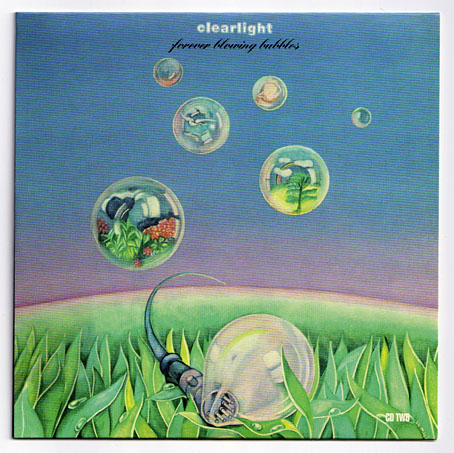
Cover art by Jean-Claude Michel.

Forever Blowing Bubbles was another Virgin release, this time with shorter pieces separated by electronic bubbling noises that posit each composition as one of a number of musical “bubbles” that we’re visiting in turn. A couple of these are songs which I was less keen on but the music is just as good as on the debut album. This is also the first album in the box featuring bonus tracks, a common feature of album reissues which often prove to be superfluous. Not so here, where the additions sound like a continuation of the album as a whole. King Crimson enthusiasts may like to know that David Cross plays violin on this album.
clearlight4.jpg

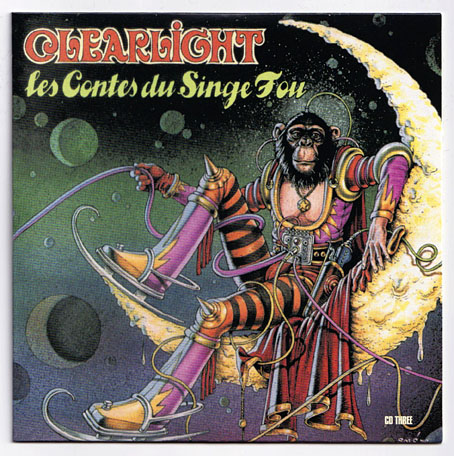
Cover art by Jean Solé.

Les Contes Du Singe Fou continues the formula, with more short compositions and a couple more songs, one of which is so close to the beginning of Supper’s Ready by Genesis as to be almost plagiaristic. In place of David Cross on violin there’s a recent exile from Magma, Didier Lockwood, whose fiery contributions are especially welcome. I didn’t expect there to be a tangible link with the Zeuhl artists when Verdeaux’s compositions are generally more palatable than Magma and co. Christian Boulé was touring in Steve Hillage’s band in 1977 so Yves Chouard takes over on the guitar. I ought to note that this album and the one that follow have been mastered from vinyl sources.
Continue reading “Clearlight: Symphonies”

Zeuhl Ẁortz!

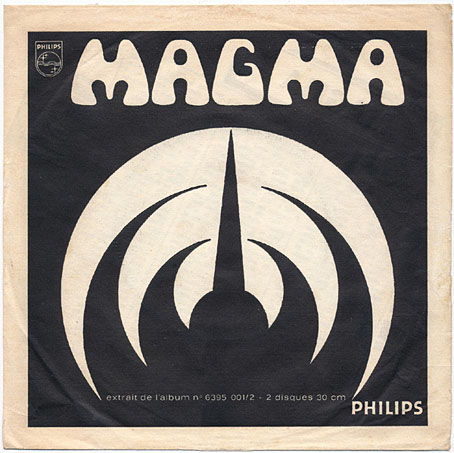
magma-single.jpg

Kobaïa / Müh (1970), a single by Magma.

1: Zeuhl definitions

Zeuhl is an adjective in Kobaïan, the language written by Christian Vander, drummer and founder of the French band Magma.

Pronunciation: zEU(h)l, while the EU are like a French E with a slight U, and the (h) is a semi-silent letter which is an integrated part of the EU, totalling in a “syllable and a half”. (Prog Archives)

Zeuhl (pronounced [zœl]; lit. ’celestial’) is a music genre that is a hybrid of jazz fusion, symphonic rock and neoclassical music, established in 1969 by the French band Magma. The term comes from Kobaïan, the fictional language created by Magma’s Christian Vander and Klaus Blasquiz for Magma, in which Zeuhl Ẁortz means approximately ‘celestial force’.
[…]
Zeuhl is determined by several characteristic elements. Especially important are dominant rhythm fractions, usually in the form of a pumping bass guitar and sometimes sluggish or flexibly playing drum kits. Slow repetitive structures that serve to build a hypnotic atmosphere are just as prominent as solo passages of high technical finesse. Vocals are often widely present and can consist of polyphonic choral movements, such as Carl Orff’s Carmina Burana, or soloistically performed passages with shrill intonation. Zeuhl bands also often have solo guitarists or pianists that usually have a more than accompanying function, especially to emphasize the repetitive patterns. (Wikipedia)


2: The Birth of the Zeuhl

“1967,” he says. “The year John Coltrane died. It seemed to me that afterwards, it was as though music had to try to start all over again. Someone had to pick up the pieces, go on searching in the way that he had. Nobody could match him, but people could pick up the flame. It was almost impossible for anyone to do anything new after Coltrane, but you had to try, try to find other new directions. So that’s what I tried to do with Magma. I was a bit young at the time, but…”

Christian Vander describing the birth of Magma to Paul Stump, The Wire, July 1995


3: Zeuhl lists

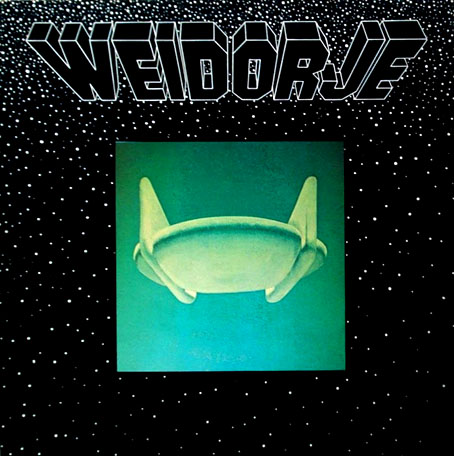
weidorje.jpg

Weidorje (1978) by Weidorje. Cover art by Klaus Blasquiz.

Shindig! Magazine: Magma in seven records, and Deeper Underground: the best albums by the Magma family by Warren Hatter.

• Prog Is Alive and Well in the 21st Century: My Favourite Zeuhl Albums of All-Time by Drew Fisher.

• Bandcamp: There is No Prog, Only Zeuhl: A Guide to One of Rock’s Most Imaginative Subgenres by Jim Allen.

• Discogs: Zeuhl lists by Neit and ultimathulerecords.

• Prog Archives: Top 100 Zeuhl.


4: Live Zeuhl

magma-poster.jpg

A poster by Jofre Conjota for a concert in Chile demonstrating that Zeuhl can exist without electricity.

Magma, Hippodrome du Pantin, Paris, 1977 (46 mins; a French TV film that captures one of the 70s lineups in peak form. Includes an almost complete performance of Mekanïk Destruktïẁ Kommandöh.)

Weidorje, French TV, 1979 (11 mins; Magma offshoot Weidorje were only active for a couple of years, this may be their only TV appearance.)

Magma, Théâtre Bobino, Paris, 1981 (A complete concert—1 hr 53 mins—from the group’s weird-funk period: Christian Vander leaves his drumkit to sing and rant at the audience, everyone is dressed in spacey glitter outfits, and some of the songs from the Merci album can’t be classed as Zeuhl at all. The musicians are all first rate, however.)

Magma play Köhntarkösz, 2005 (A fantastic 32-minute performance in a very cramped venue.)

Collectif PTÄH interprète Magma (12 mins; a Magma covers band playing in a village square.)


5: Cinematic Zeuhl

tristan.jpg

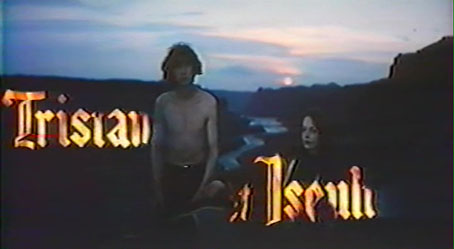
Tristan et Iseult (1972): a French feature film with a score by Christian Vander and three members of Magma. The soundtrack album was later incorporated into the Magma official discography as Ẁurdah Ïtah.

Moi y’en a vouloir des sous (1973): a French satire in which Magma make a brief appearance as a way-out rock group.


6: Lovecraftian Zeuhl

shub-niggurath.jpg

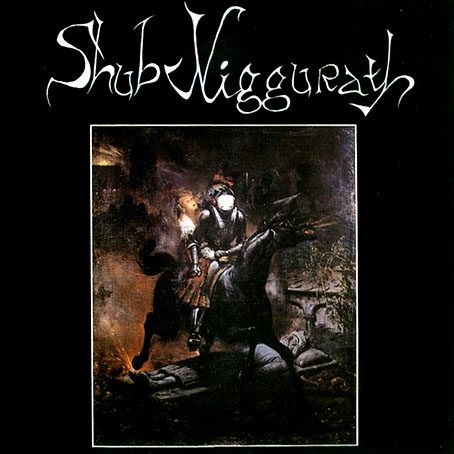
Les Morts Vont Vite (1986) by Shub Niggurath. Cover art: La Ballade de Lénore (1839) by Horace Vernet.

Liriïk Necronomicus Kanht (1978) by Magma.

Dagon (1980) by Eskaton.

La musique d’Erich Zann (1981) by Univers Zero (a Belgian group, originally named Necronomicon, which included former members of an earlier group named Arkham).

Yog-Sothoth (1986) by Shub Niggurath.


7: Comic Zeuhl

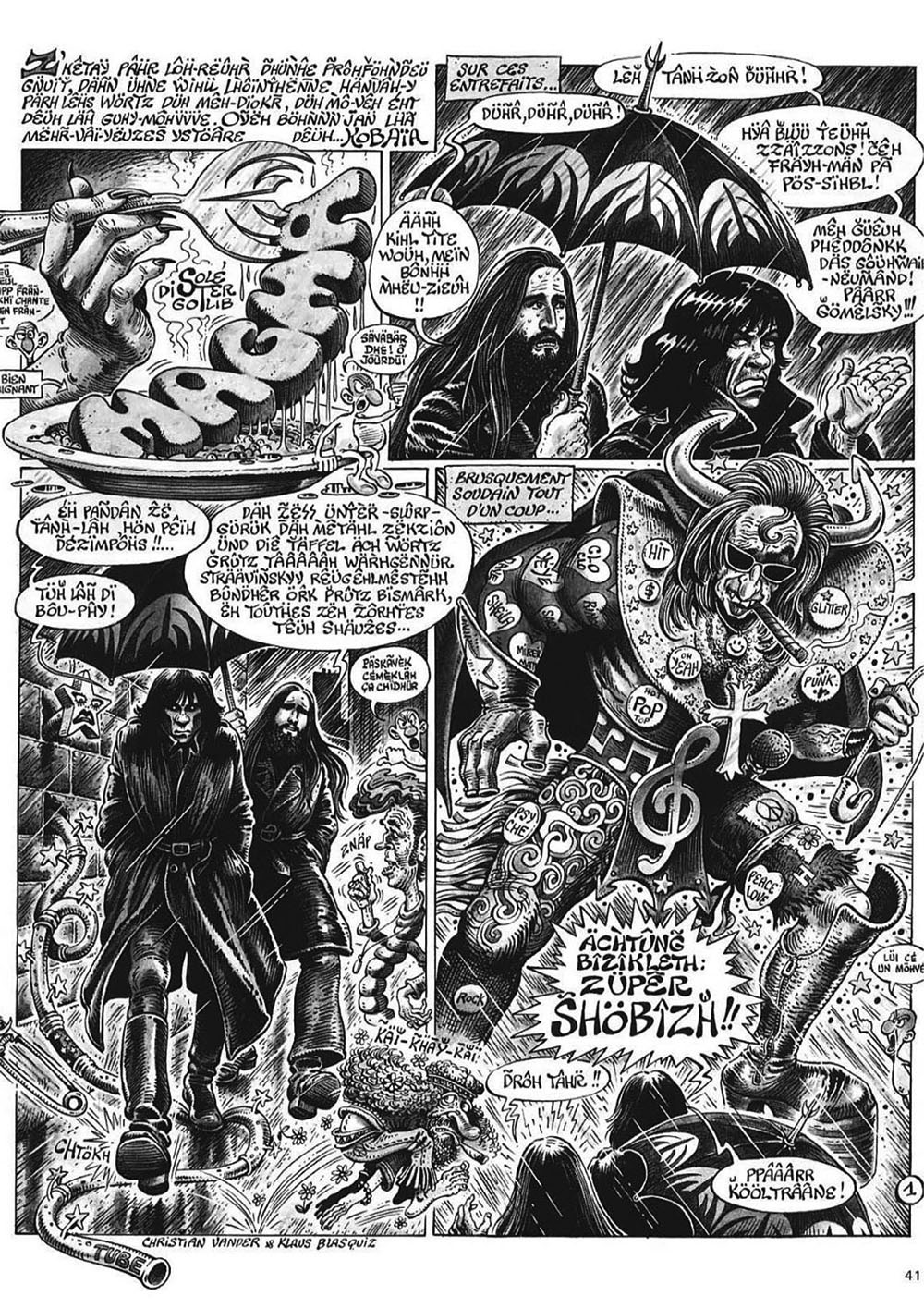
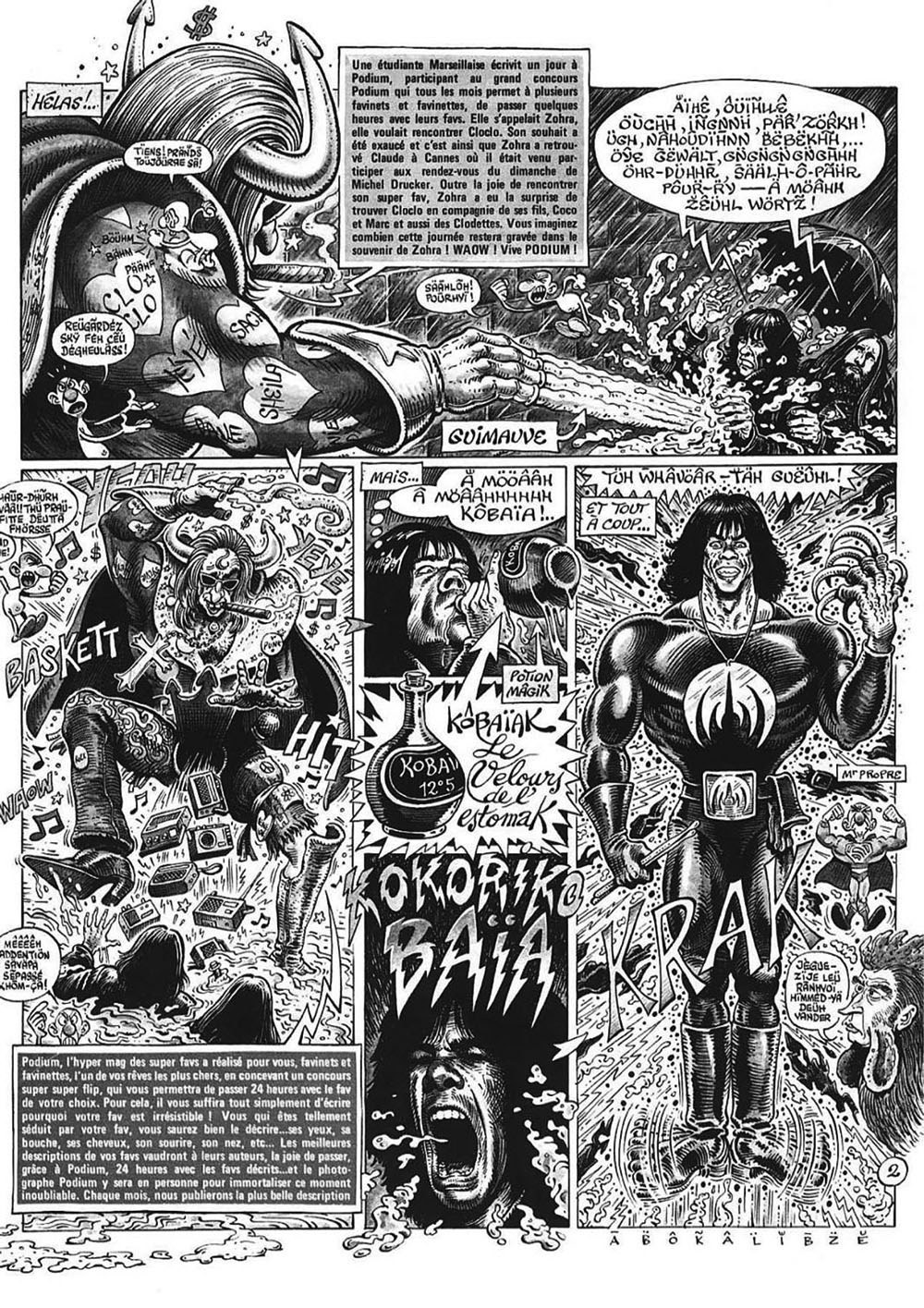
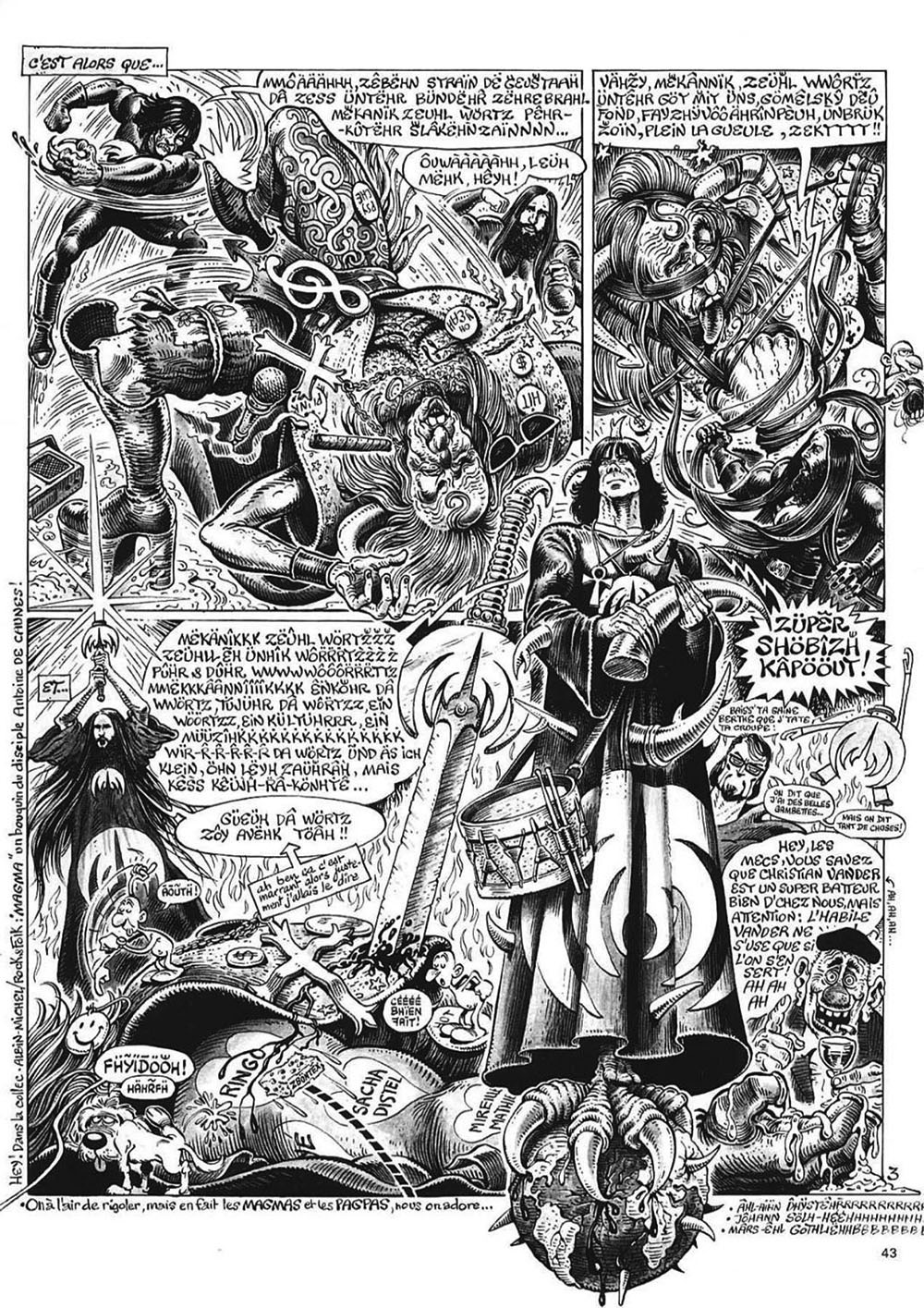
Magma’s Christian Vander and Klaus Blasquiz in a three-page comic strip from Pop & Rock & Colégram (1978), a collection of satirical music-themed pieces by Jean Solé, Alain Dister & Marcel Gotlib.

magma-comic1.jpg

magma-comic2.jpg

magma-comic3.jpg

Previously on { feuilleton }
Dune: some French connections
HR Giger album covers

Jean Giraud record covers

moebius17.jpg

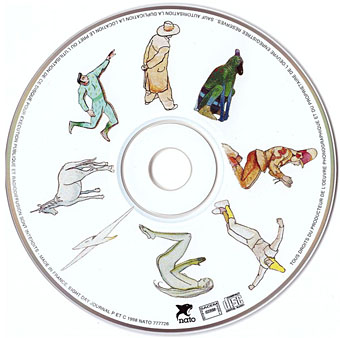
Disc design for Eight Day Journal (1998) by Sam Rivers / Tony Hymas.

Continuing an occasional series about artists or designers whose work has appeared on record sleeves. I’ve used the artist’s full name (or his Earth name, if you prefer) in the title of this one to distinguish Moebius the comic artist and illustrator from Dieter Moebius of Cluster, Harmonia, et al. As with Harry Clarke, it’s taken a long time for Discogs to compile a substantial collection of these covers, and the catalogue there is still incomplete thanks to a lack of credits on some of the sleeves. Unlike other artists whose cover work tends to be a repurposing of existing art many of the Giraud/Moebius covers were created for the albums on which they appear.

moebius01.jpg

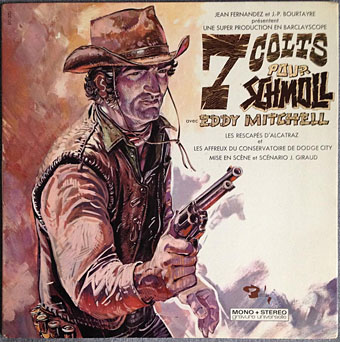
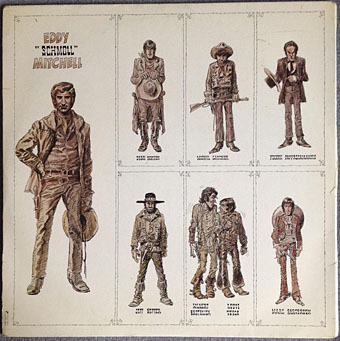
7 Colts Pour Schmoll (1968) by Eddy Mitchell.

moebius02.jpg

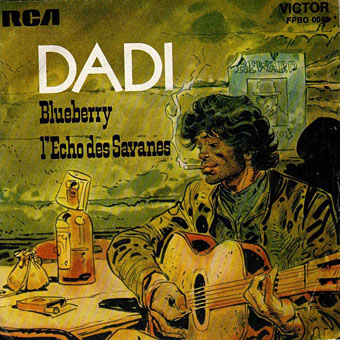
An album by a prolific French rock’n’roller. Giraud (as he was credited here) was no doubt hired on the strength of his Blueberry strips.

moebius03.jpg

Blueberry (1973) by Dadi.

And speaking of Blueberry… Jean Giraud drew the adventures of Jean-Michel Charlier’s Western anti-hero for 15 years under the name “Gir”. The character was very popular in France, hence this spin-off single by Marcel Dadi.

moebius04.jpg

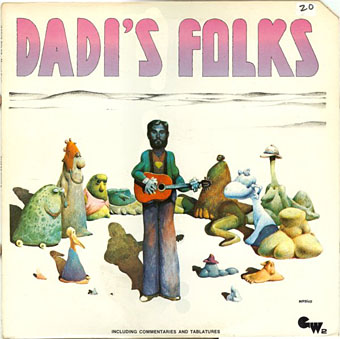
Dadi’s Folks (1973) by Marcel Dadi.

moebius05.jpg

Jazz Septet (1973) by Ogoun Ferraille.

moebius06.jpg

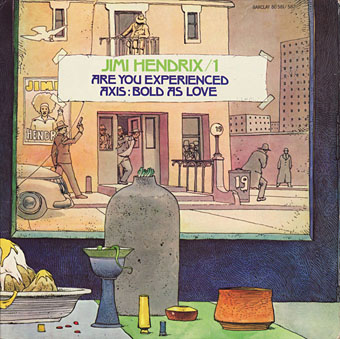
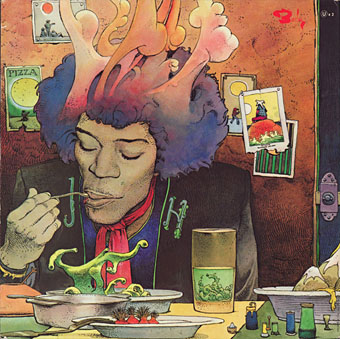
Are You Experienced / Axis: Bold As Love (1975) by Jimi Hendrix.

moebius07.jpg

A gatefold sleeve for a series of four reissues of the Hendrix catalogue on the Barclay label. The other covers were by Philippe Druillet, Jean Solé and an artist unidentified on the link above but it looks to me like the work of Philippe Caza. I’ve got most of the music but I’d buy these for the covers alone.

Continue reading “Jean Giraud record covers”

Philippe Druillet album covers

druillet1.jpg

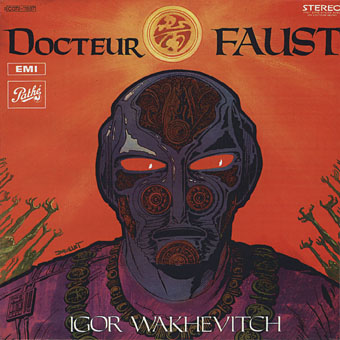
Docteur Faust (1971) by Igor Wakhévitch.

Philippe Druillet: album cover artist. As with John Martin, I’m surprised there aren’t more examples. Once again, Discogs.com proves incomplete so I’ve added a couple more including the first on this list, Docteur Faust. If you know of any others, please leave a comment.

Igor Wakhévitch’s berserk masterpiece is a cult item in this house, and something I’ve written about already. The cover art is the icing on an unclassifiable cake.

druillet10.jpg

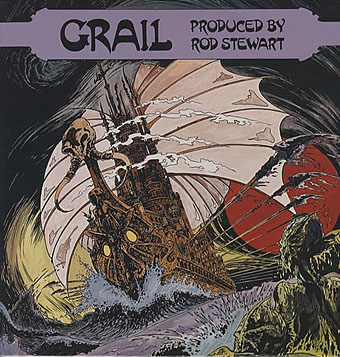
Grail (1970) by Grail.

The cover is the opening page of The Wild Wind Isles, one of Druillet’s Lone Sloane stories. Produced by Rod Stewart; did you notice? “We are sailing…”

druillet4.jpg

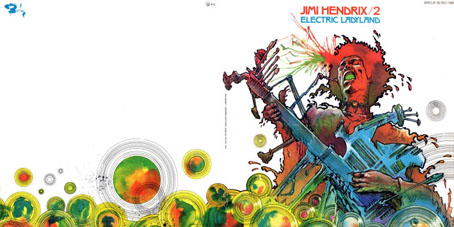
Electric Ladyland (1975) by The Jimi Hendrix Experience.

A gatefold sleeve for a series of four Hendrix reissues on the Barclay label. The other covers were provided by Moebius, Jean Solé and an artist unidentified on the link above but it looks to me like the work of Philippe Caza.

druillet3.jpg

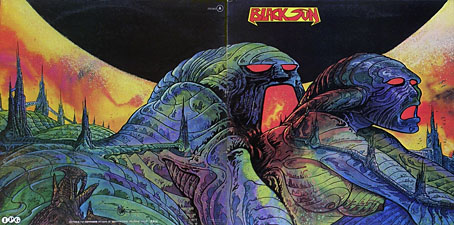
Black Sun (1978) by Black Sun.

Black suns are a regular feature of Druillet’s work (and mine, ahem) so the artist at least suits the title. The debut album of a short-lived French funk/soul group.

East/West (1980) by Richard Pinhas.

The French equivalent of Krautrock doesn’t have a name but Richard Pinhas is one of its leading practitioners. This is still my favourite among his solo works, not least because it’s more successfully musical than other albums which feature great slabs of guitar or synth doodling. In addition to a cover of David Bowie’s Sense Of Doubt there’s also science fiction author Norman Spinrad ranting through a vocoder on the opening and closing tracks. The great cover art is a page from Druillet’s 1980 adaptation of Flaubert’s Salammbô.

Continue reading “Philippe Druillet album covers”