Visa de censure numéro X

visa1.jpg

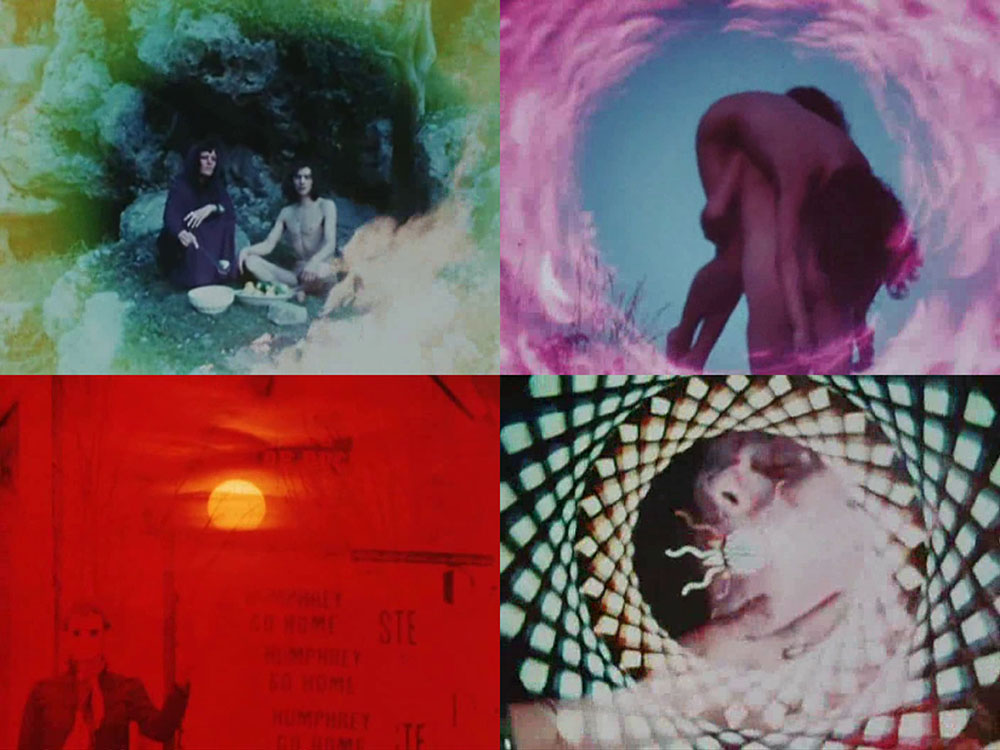
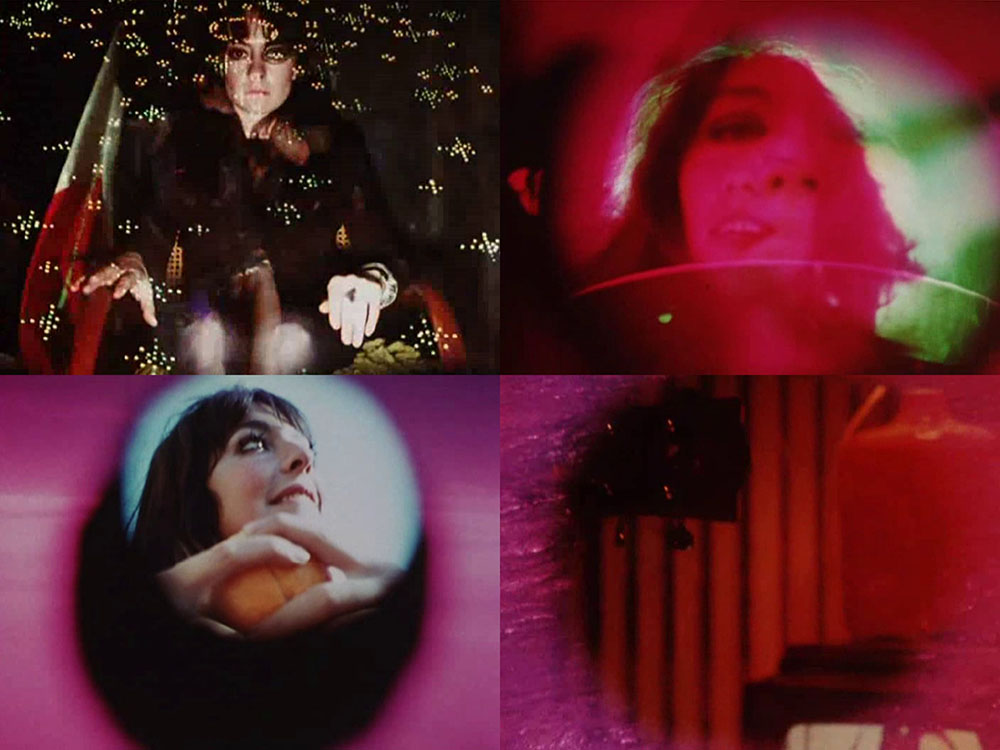
Synopsis: This flamboyantly poetic film includes two works of art: Livret De Famille and Carte De Vœux. A hallucinogenic voyage, psychedelic images float across the screen, of family and friends (Jean-Pierre Kalfon, Yves Beneyton, Valérie Lagrange…) as they share their adventures.

A slight return to Cyrille Verdeaux via actor Pierre Clémenti. If you watch enough European art cinema from the 1960s and 70s you’ll eventually run across Clémenti in films by Visconti, Pasolini, Buñuel, Bertolucci and others. His roles were often minor ones but his fashion-model looks made him stand out wherever he appeared. Clémenti also had a side career as a director, producing a number of mostly short films from the late 60s on. Visa de censure numéro X appears to be a product of his earliest experiments with a camera, being a collage of silent home-movie fragments which have been chopped up, filtered and overlaid to create a French hippy equivalent of Kenneth Anger’s Invocation of My Demon Brother; or maybe Derek Jarman’s early Super-8 films, although Jarman’s painterly approach to cinema tends to be more sedate.
visa2.jpg

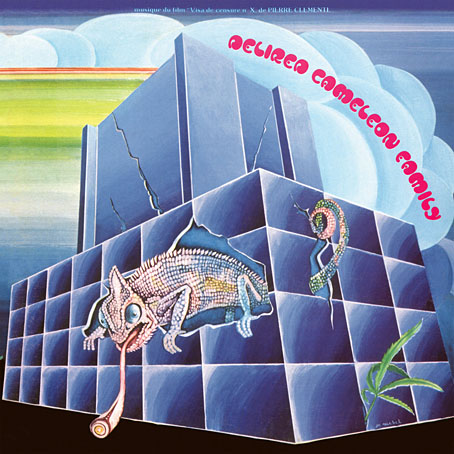
Where Anger had his film soundtracked with an irritating Moog score from Mick Jagger, Clémenti had the good sense to ask Cyrille Verdeaux and Ivan Coaquett to write some original music when the film was being prepared for release in 1975. Visa de censure numéro X runs for 42 minutes which is longer than most people want to spend watching a group of hippies partying, running around naked or cavorting in the woods. But this does give us a whole album of music in which Verdeaux and company—Christian Boulé and Tim Blake among them—go all-out for psychedelic rock; Boulé is credited with “cosmic guitar”. The improvisations were released under the name Delired Cameleon Family, an ensemble whose sole release sounds like Clearlight if they’d been liberated from the necessity of following Verdeaux’s compositions. As Clémenti’s film demonstrates, France had embraced the psychedelia of the 1960s as much as other European countries but French psychedelic rock wasn’t so common. The Delired Cameleon Family album is a notable exception, albeit one that arrived several years too late.
dcf.jpg

Cover art by Jean-Claude Michel.

All the online copies of Visa de censure numéro X that I’ve seen are horizontally stretched: the film should be viewed in 4:3, not 16:9. This copy at the Internet Archive may be downloaded then viewed in any application that allows you to change aspect ratios.

Previously on { feuilleton }
Clearlight: Symphonies
Into the Midnight Underground
Us Down By The Riverside, a film by Jud Yalkut
Kusama’s Self-Obliteration, a film by Jud Yalkut
Clearlight: Symphonies

clearlight1.jpg

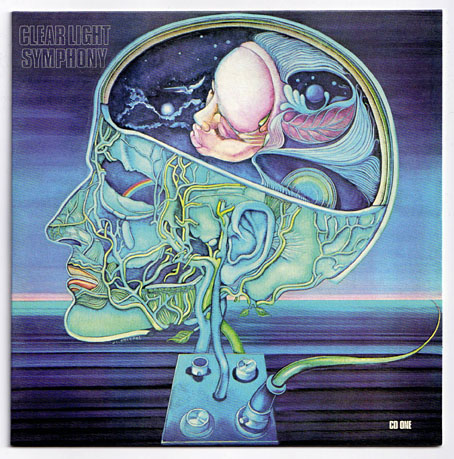
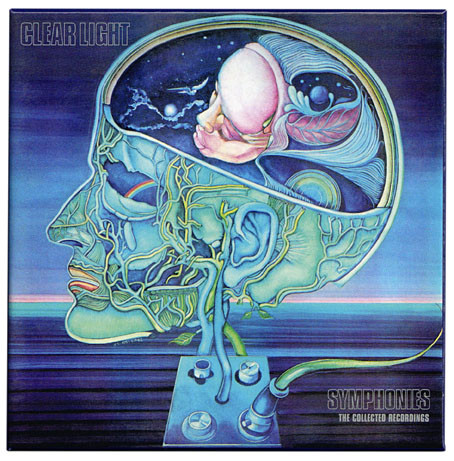
The Clearlight that concerns us here is a French musical ensemble with a shifting line-up, formed by and oriented around the activities of its keyboard-playing composer Cyrille Verdeaux. Clearlight, in other words, shouldn’t be confused with the short-lived American psychedelic band known as Clear Light. Cherry Red have just released five Clearlight albums in one of their well-produced CD boxes: Clear Light Symphony (1975), Forever Blowing Bubbles (1975), Les Contes Du Singe Fou (1977), Visions (1978), and Impressionist Symphony (2014). The box bears the subtitle “The Collected Recordings” but these albums comprise only one half of the Clearlight discography. I doubt there’s much demand for anything more substantial than this, at least in Britain where the group have been chiefly known for their first album, Clear Light Symphony. Cyrille Verdeaux’s booklet notes describe how he secured a deal with Virgin Records thanks to the success of Mike Oldfield’s early albums. Verdeaux’s demo tape was aiming for a similar blend of rock music with classical structures, with one long “symphony” divided into two parts. When the album was being recorded Virgin persuaded him to flesh out his composition with three musicians who were signed to the label via Gong—Steve Hillage, Tim Blake and Didier Malherbe—all of whom play on the second part. Or what should have been the second part… Virgin switched the two playing sides of the recording around in order to give the Gong artists greater prominence. The switch has been reversed for this latest release.

clearlight2.jpg

Cover art by Jean-Claude Michel.

I’ve not heard everything in Cyrille Verdeaux’s discography but the Clearlight albums that follow the debut are further excursions into quasi-classical prog-rock composition. There was a lot of this around in the 1970s, especially from keyboard players like Rick Wakeman, Vangelis, Bo Hansson and others. Verdeaux isn’t as much of a Liberace show-off as Wakeman, and he’s not as original as Vangelis, but in Clearlight his piano and keyboard flourishes benefit from the other musicians assembled on each release. Tim Blake had settled in France in the late 1970s, and turns up on several of the albums that follow Clear Light Symphony. The presence of Blake’s burbling synthesizers and Christian Boulé’s Hillage-like guitar lead the music out of the concert hall and into the cosmos. I have to admit to being pleasantly surprised by this collection of albums. I bought the set mainly to restore Clear Light Symphony to my record collection, an album I used to own on vinyl then sold following a shelf purge in the early 2000s. (One thing you’ll never get on a CD reissue is the locked groove that ends side two of the vinyl release.) My worries about the other albums being severely unpalatable haven’t been realised.

clearlight3.jpg

Cover art by Jean-Claude Michel.

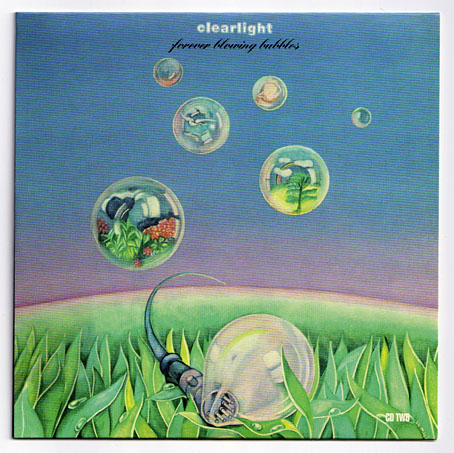
Forever Blowing Bubbles was another Virgin release, this time with shorter pieces separated by electronic bubbling noises that posit each composition as one of a number of musical “bubbles” that we’re visiting in turn. A couple of these are songs which I was less keen on but the music is just as good as on the debut album. This is also the first album in the box featuring bonus tracks, a common feature of album reissues which often prove to be superfluous. Not so here, where the additions sound like a continuation of the album as a whole. King Crimson enthusiasts may like to know that David Cross plays violin on this album.

clearlight4.jpg

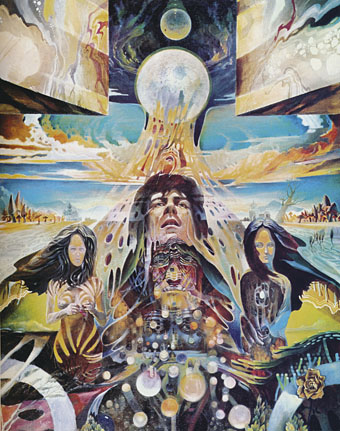
Cover art by Jean Solé.

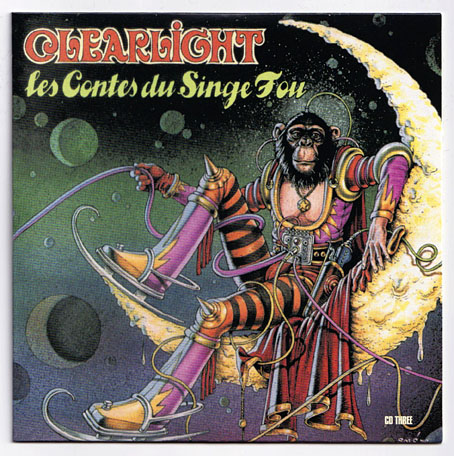
Les Contes Du Singe Fou continues the formula, with more short compositions and a couple more songs, one of which is so close to the beginning of Supper’s Ready by Genesis as to be almost plagiaristic. In place of David Cross on violin there’s a recent exile from Magma, Didier Lockwood, whose fiery contributions are especially welcome. I didn’t expect there to be a tangible link with the Zeuhl artists when Verdeaux’s compositions are generally more palatable than Magma and co. Christian Boulé was touring in Steve Hillage’s band in 1977 so Yves Chouard takes over on the guitar. I ought to note that this album and the one that follow have been mastered from vinyl sources.

Continue reading “Clearlight: Symphonies”

Weekend links 579

kresek.jpg

Untitled painting by Larry Kresek.

• “A good comparison might be Broken English-era Marianne Faithfull, Appalachian folk singer Hedy West, or the early-70s home recordings of German actress Sibylle Baier; spellbound female voices possessed of an uncanny emotional honesty.” Andrew Male on the songs of Karen Black. In 1989, the first issue of Psychotronic Video profiled Black’s remarkable acting career which was cultish enough for the magazine to give her the “psychotronic” label.

• Coming soon from Strange Attractor Press, In A Sound World by Victor Segalen, “a work of fantasy concerning an inventor lost in his own immersive harmonic space”.

• At Messynessychic: Inside the Imaginarium of a Solarpunk Architect, or architectural designs by Luc Schuiten, brother of comic artist and illustrator François Schuiten.

De Strijd der Werelden, 1899. The first illustrated book version of HG Wells’ The War of the Worlds was a Dutch edition with drawings by JH Speenhoff.

• New/old music: Words Disobey Me (Dennis Bovell Dub Version) by The Pop Group, part of a forthcoming Bovell remix of the group’s debut album, Y.

• Mixes of the week: A mix for The Wire by Sunik Kim, FACT Mix 817 by Malibu, and Rhythmic Asymmetrical Wyrd by The Ephemeral Man.

• “Whatever we call them, and whatever else they might be, they are, in fact, printed paintings.” Joseph Visconi on William Blake’s monoprints.

• Curious Music announces Moebius Strips, an audio installation by Tim Story from the sounds and music of Dieter Moebius.

• At Dangerous Minds: Richard Metzger‘s confessions of an analogue vinyl snob.

Strange Flowers departs from tradition by offering a summer reading list.

Moebius 256 (1977) by Zanov | Moebius (1981) by Cyrille Verdeaux | Elena’s Sound-World (2014) by Sinoia Caves