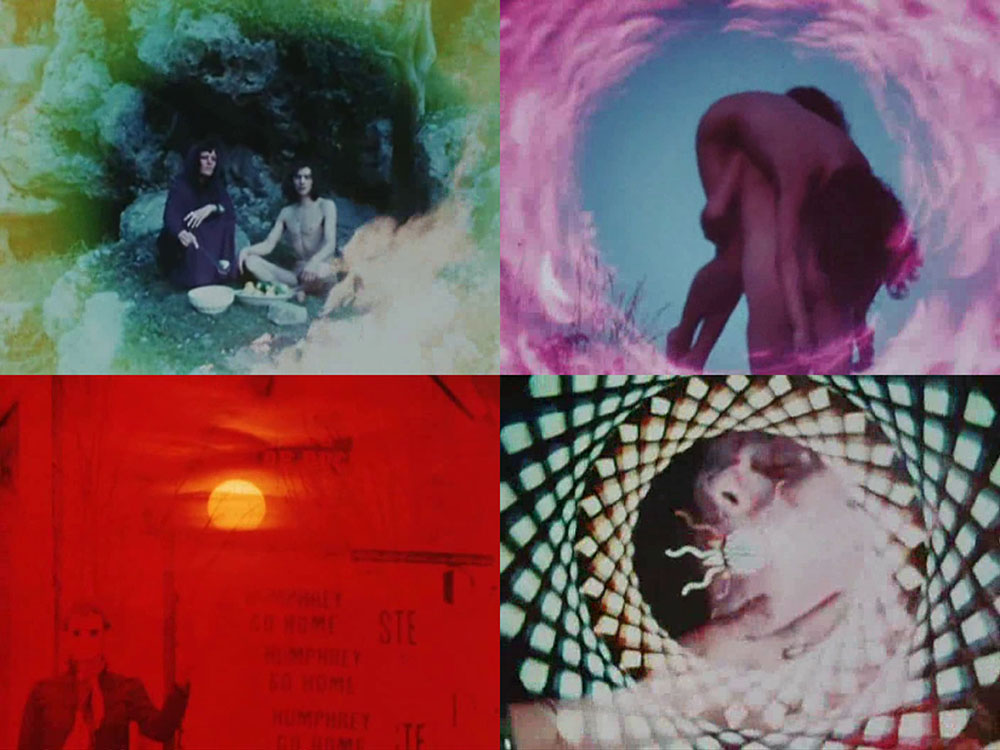
Synopsis: This flamboyantly poetic film includes two works of art: Livret De Famille and Carte De Vœux. A hallucinogenic voyage, psychedelic images float across the screen, of family and friends (Jean-Pierre Kalfon, Yves Beneyton, Valérie Lagrange…) as they share their adventures.
A slight return to Cyrille Verdeaux via actor Pierre Clémenti. If you watch enough European art cinema from the 1960s and 70s you’ll eventually run across Clémenti in films by Visconti, Pasolini, Buñuel, Bertolucci and others. His roles were often minor ones but his fashion-model looks made him stand out wherever he appeared. Clémenti also had a side career as a director, producing a number of mostly short films from the late 60s on. Visa de censure numéro X appears to be a product of his earliest experiments with a camera, being a collage of silent home-movie fragments which have been chopped up, filtered and overlaid to create a French hippy equivalent of Kenneth Anger’s Invocation of My Demon Brother; or maybe Derek Jarman’s early Super-8 films, although Jarman’s painterly approach to cinema tends to be more sedate.
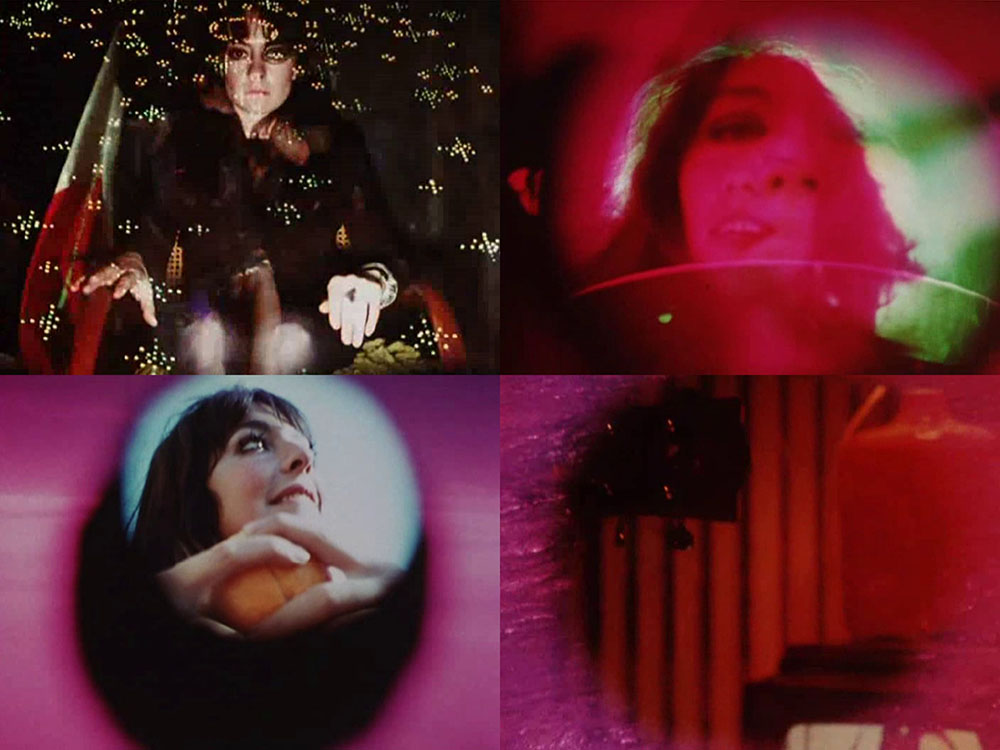
Where Anger had his film soundtracked with an irritating Moog score from Mick Jagger, Clémenti had the good sense to ask Cyrille Verdeaux and Ivan Coaquett to write some original music when the film was being prepared for release in 1975. Visa de censure numéro X runs for 42 minutes which is longer than most people want to spend watching a group of hippies partying, running around naked or cavorting in the woods. But this does give us a whole album of music in which Verdeaux and company—Christian Boulé and Tim Blake among them—go all-out for psychedelic rock; Boulé is credited with “cosmic guitar”. The improvisations were released under the name Delired Cameleon Family, an ensemble whose sole release sounds like Clearlight if they’d been liberated from the necessity of following Verdeaux’s compositions. As Clémenti’s film demonstrates, France had embraced the psychedelia of the 1960s as much as other European countries but French psychedelic rock wasn’t so common. The Delired Cameleon Family album is a notable exception, albeit one that arrived several years too late.
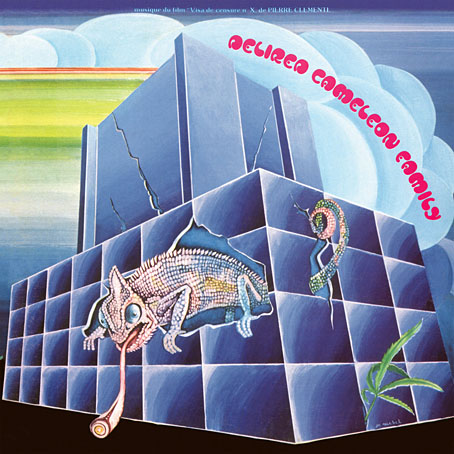
Cover art by Jean-Claude Michel.
All the online copies of Visa de censure numéro X that I’ve seen are horizontally stretched: the film should be viewed in 4:3, not 16:9. This copy at the Internet Archive may be downloaded then viewed in any application that allows you to change aspect ratios.
Previously on { feuilleton }
• Clearlight: Symphonies
• Into the Midnight Underground
• Us Down By The Riverside, a film by Jud Yalkut
• Kusama’s Self-Obliteration, a film by Jud Yalkut