Weekend links 246

ngai.jpg

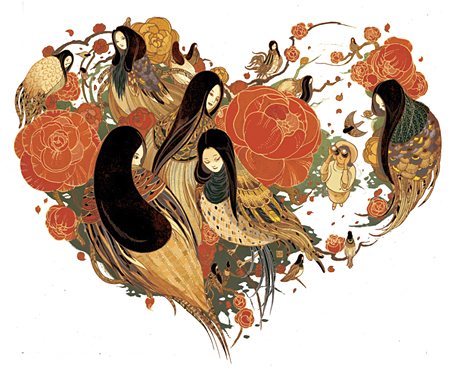
Love Hunter by Victo Ngai.

• “The strangeness of the lyric style, the misuse of words and awkward phraseology that have been criticized even by Poe’s fervent admirers, are here taken as virtues, heightening as they do, a given poem’s conscious and calculated formalism.” Marjorie Perloff reviews The Poet Edgar Allan Poe: Alien Angel by Jerome McGann.

• Mix of the week: Secret Thirteen Mix by Jeremy Kolosine. Starting with Michael Rother is apt when I’ve spent the past week in a Cluster/Harmonia/Kraftwerk/La Düsseldorf/Neu!/Rother loop.

• Court records “suggest that the supposedly prudish Victorians had a far more relaxed attitude to sex between men than their 1960s counterparts”. Historian Jeff Evans has the data.

• “Part of HP Lovecraft’s acknowledged debt to Machen also lies in hearing without seeing.” London Sound Survey on Arthur Machen’s “sounds from beyond the veil”.

• “…pity the designer who has to enact the stage direction that instructs rats to carry away a character’s feet.” Andrew Dickson on the extreme theatre of Sarah Kane.

• Psychedelic collage artist Wilfried Sätty receives a mention in Carey Dunne‘s piece about how LSD helped shape California’s ecstatic design legacy.

• More psychedelia: The Psychedelic Sex Book by Eric Gotland & Paul Krassner, edited by Dian Hanson.

• At Dangerous Minds: Robert Fripp demonstrates Frippertronics on The Midnight Special, 1979.

• Dreams from a Glass House: artist Josiah McElheny on the glass architecture of Paul Scheerbart.

• Director Peter Strickland on six films that fed into The Duke of Burgundy.

Vintage trade card designs

The Zero Of The Signified (1980) by Robert Fripp | Heptaparaparshinokh (1981) by Robert Fripp & The League of Gentlemen | 1984 (1981) by Robert Fripp

Weekend links 244

scarpulla.jpg

MMOB :: Far West (2013) by Alison Scarpulla.

• “…although same-sex love is as old as love itself, the public discourse around it, and the political movement to win rights for it, arose in Germany in the late nineteenth and early twentieth centuries. This message may surprise those who believe that gay identity came of age in London and New York, sometime between the Oscar Wilde trials and the Stonewall riots.” Alex Ross reviewing Robert Beachy’s Gay Berlin: Birthplace of a Modern Identity. Beachy talks about his book here.

• “I was in a room with tube synthesizers, where you had to tune them up to play them. It was unbelievable.” John Carpenter talking to Joseph Stannard about composing with electronics. Carpenter’s album of new music, Lost Themes, may be previewed here.

• From 2010: John Ridpath on Mervyn Peake’s illustrations for Lewis Carroll’s Alice Through the Looking Glass and Alice in Wonderland. Related: “The most twisted version of Alice in Wonderland you’ll ever see.”

I was brought up in a world where art was something owned and insured—usually inherited: but seldom if ever made by anyone one I knew.

I had an early inkling that there was fun to be had over the hill, like the feeling when faced with a sunset that someone’s throwing a mega awesome party just beyond the nearest cloud, and I set off to join the caravan. Let’s just say I was in search of company, headed towards the glow, and I found it.

Tilda Swinton‘s speech at the Rothko Chapel

• “Her art often touches on alchemy and magic; and in her memoir of insanity she writes of misreading an Imperial Chemicals sign as ‘chemistry and alchemy’.” Charlotte Higgins on Leonora Carrington.

Shadows Over Main Street, an anthology of small-town Lovecraftian terror, is out this week from Hazardous Press. 20 stories and poems plus interior illustrations including a contribution of my own.

• “With Fantastic Planet, I felt torn about using it, because it’s…the title of an animated film.” Guitarist Sarah Lipstate, aka Noveller, talks to Ned Raggett about her new album.

Jim Jupp of Belbury Poly and the Ghost Box record label answers 15 questions.

• A DeLorean driving through a Tron cityscape: Retrowave by Florian Renner.

• Powell & Pressburger’s Tales of Hoffmann (1951) has been restored.

Music from Forbidden Planet (1956) by Louis & Bebe Barron | The Four Horsemen (1972) by Aphrodite’s Child | Assault on Precinct 13 (Main Theme) (1976) by John Carpenter

Atmospherics

jamoul1.jpg

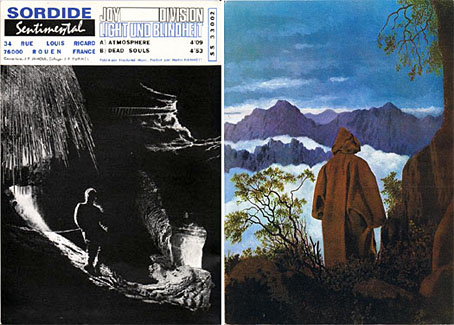
Listening to Joy Division over the weekend prompted another of those idle speculations that are immediately answered these days (so to speak…) by a few seconds of web searching. While Atmosphere was playing I’d remembered a conversation with a friend about the identity of the painting of a cowled figure that appears on the original Atmosphere/Dead Souls single for the Sordide Sentimental label. Neither of us had a copy of the Holy Grail of JD collectors, nor did we know anybody who owned one, so the discussion wasn’t very fruitful.

jd.jpg

Licht Und Blindheit (1980) by Joy Division.

Sordide Sentimental were (and still are) a French company run by Jean-Pierre Turmel and Yves von Bontee whose speciality was limited releases of exclusive material often by bands with a cult following. The typical Sordide Sentimental release would be a 7-inch single in a numbered edition, packaged in an A4-sized sleeve with inserts and an idiosyncratic essay by Monsieur Turmel. Licht Und Blindheit, as the Atmosphere single was called, sold out immediately, and since 1980 has been one of the most collectible (and costly) releases of the era: the cheapest of two copies currently for sale at Discogs is over £1,500. (Many bootleg copies also exist: beware.)

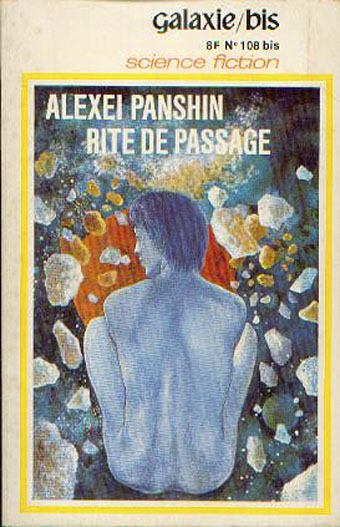
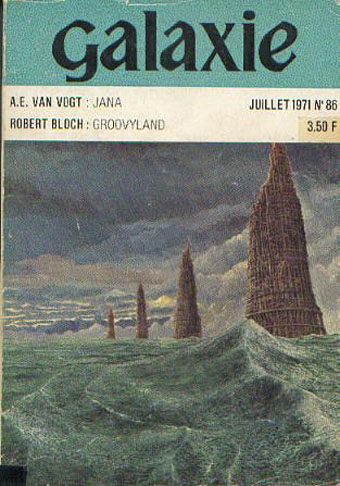
As to the Licht Und Blindheit packaging, the cover collage was by Jean-Pierre Turmel while the enigmatic painting on the back turns out to be an untitled work by Jean-François Jamoul (1925–2002), not Caspar David Friedrich as my friend suspected, although it is very Friedrich-like. Jamoul was evidently a friend of Turmel who used more of his paintings on other Sordide Sentimental releases. During the 1970s Jamoul had been a regular contributor to French SF magazines, both as cover artist and essayist. In 2006 Sordide Sentimental released Temps Incertains, a DVD/book devoted to Jamoul’s art and writings.

jamoul2.jpg

Rite de Passage (1968) by Alexei Panshin.

It’s interesting looking at some of Jamoul’s other art in light of all this: one painting on the cover of Galaxie magazine looks distinctly Lovecraftian while another piece was used by a publication named Nyarlathotep. Back in 2008 journalist Jon Savage was corresponding with my colleagues at Savoy Books prior to writing a piece for the Guardian about Ian Curtis’s reading material. (The Savoy bookshops in Manchester during the 1970s and 80s were notable for their comprehensive stock of Burroughs, Ballard and other essential material.) One of the questions was whether Curtis had read (or bought) any HP Lovecraft, something that neither Dave nor Mike could answer. These French magazines at least show one very tenuous connection (which Curtis wouldn’t have known about, of course) via Jamoul’s paintings. Savage’s Guardian piece has since been expanded into an introduction for the recent Faber book of Ian Curtis lyrics; HP Lovecraft receives a passing mention there during discussion of Licht Und Blindheit‘s B-side, Dead Souls.

jamoul4.jpg

Continue reading “Atmospherics”

Weekend links 236

carvalho.jpg

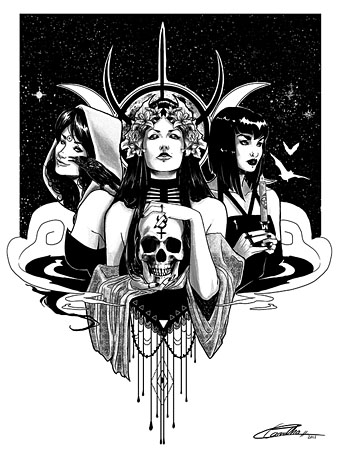
The Three Witches (2014) by Lorena Carvalho.

Immersion, a new album by Grey Frequency, “…is a recording of the broken signals, wraiths in the ether from lost futures and utopias which were once promised…”. Box Of Secrets (1999) is an album of electronica by Ian Boddy that’s a free download until the end of December.

• “Hothouse flowers, Egyptian statuary, jewels, Nubian servants, crystal balls, cocaine, opium and champagne were just some of the things she spent her money on…” Lucy Davies explores the riotous world of Marchesa Luisa Casati.

• “London is a network of complete nexuses, coincidences, overlaps, references…” Stephanie Boland talks to Iain Sinclair about his new book 70×70: Unlicensed Preaching: A Life Unpacked in 70 Films.

My Women’s Studies professors would say: “You don’t know how hard we fought for you.” And yet, when they told me my sexuality was not correct, I felt embarrassed. I knew I had longings that didn’t line up with the politics, but I refused to repress them, particularly in my writing. I fought to unravel a political correctness that was censoring desire.

Screenwriter Erin Cressida Wilson on sex, cinema and secrets

Cthulhu, Fiction and Real Magic, a lecture by Ian ‘Cat’ Vincent at Treadwell’s, London, on December 3rd. For those who can’t attend, Erik Davis has just posted his essay about Lovecraft and contemporary occultism.

• “John Gielgud was obsessed with trousers, loved corduroy and leather. And so he wrote a film set in a menswear shop.” Gielgud’s unfilmed screenplay for gay porn director Peter de Rome may now be filmed.

• “The stories are even more fantastic and full of marvels than those in the Arabian Nights.” Robert Irwin on the newly-translated Tales of the Marvellous.

• Mixes of the week: The Advisory Circle present Winter From Out Here; Fall by The Ephemeral Man; Secret Thirteen Mix 136 by Cosmin TRG.

Danny Cooke‘s drone views of Pripyat, Chernobyl. Related: Into the Zone: Gasworks Park (Seattle, WA) by Christina Scholz.

• Watch Dragnet’s 1967 LSD episode. More psychedelics: “Magic mushrooms change brain connections“.

• Earth Magic: Peter Bebergal on photography of witches at play and at ritual.

• Düsseldorf 1970: The crucible of Krautrock by those who were there.

• It’s Alright Ma, It’s Only Witchcraft (1968) by Fairport Convention | Witch’s Will (1973) by Wilburn Burchette | Witches’ Multiplication Table (1982) by Holger Czukay

The White People by Arthur Machen

aklo.jpg

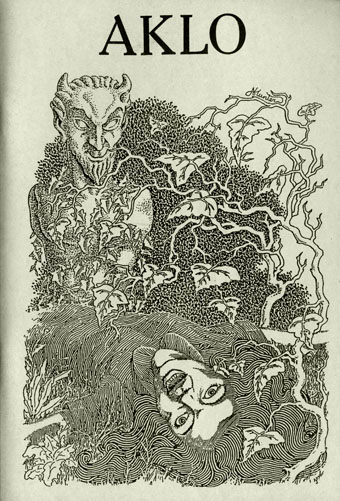
Aklo: A Journal of the Fantastic, Spring 1988 edition, edited by Mark Valentine & Roger Dobson. Illustration by Alan Hunter.

1: The White People

The White People by Arthur Machen was written in 1899 but not published until it appeared in Horlick’s Magazine, January 1904. The magazine, which ran for just over a year, was edited by Machen’s Golden Dawn colleague AE Waite which no doubt explains the unlikely venue. HP Lovecraft enthused about the story in Supernatural Horror in Literature (1927):

Less famous and less complex in plot than The Great God Pan, but definitely finer in atmosphere and general artistic value, is the curious and dimly disquieting chronicle called The White People, whose central portion purports to be the diary or notes of a little girl whose nurse has introduced her to some of the forbidden magic and soul-blasting traditions of the noxious witch-cult — the cult whose whispered lore was handed down long lines of peasantry throughout Western Europe, and whose members sometimes stole forth at night, one by one, to meet in black woods and lonely places for the revolting orgies of the Witches’ Sabbath. Mr. Machen’s narrative, a triumph of skilful selectiveness and restraint, accumulates enormous power as it flows on in a stream of innocent childish prattle, introducing allusions to strange “nymphs,” “Dols,” “voolas,” “white, green, and scarlet ceremonies,” “Aklo letters,” “Chian language,” “Mao games,” and the like. The rites learned by the nurse from her witch grandmother are taught to the child by the time she is three years old, and her artless accounts of the dangerous secret revelations possess a lurking terror generously mixed with pathos. Evil charms well known to anthropologists are described with juvenile naiveté, and finally there comes a winter afternoon journey into the old Welsh hills, performed under an imaginative spell which lends to the wild scenery an added weirdness, strangeness, and suggestion of grotesque sentience. The details of this journey are given with marvellous vividness, and form to the keen critic a masterpiece of fantastic writing, with almost unlimited power in the intimation of potent hideousness and cosmic aberration.

Lovecraft borrowed Machen’s naive narrator a year later for The Dunwich Horror: Wilbur Whateley’s diary is written “by a child of three-and-a-half who looked like a lad of twelve or thirteen”, and makes reference to “Aklo”, “the Dho formula” and “the Voorish sign”. (The journal in The White People refers to “a wicked voorish dome”.)

Lovecraft wasn’t alone in being impressed by the story, it’s long been regarded as Machen’s greatest piece of short fiction with good reason:

…it remains the purest and most powerful expression of what Jack Sullivan has called the “transcendental” or “visionary” supernatural tradition. Most other tales in that tradition, Blackwood’s The Wendigo, EF Benson’s The Man Who Went Too Far, and Machen’s own The Great God Pan, merely describe encounters with the dark primeval forces that reign beyond the edge of civilisation; The White People seems an actual product of such an encounter, an authentic pagan artefact…

TED Klein, The Penguin Encyclopedia of Horror and the Supernatural (1986)


2: The House of Souls
sime.jpg

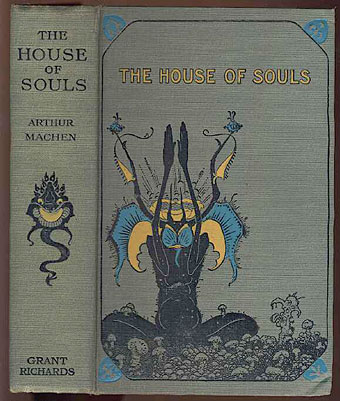
The House of Souls (1906). Cover illustrations by Sidney Sime.

The story was first collected in The House of Souls in 1906, a book that features a splendidly weird cover illustration by Sidney Sime. Inside there’s some of Machen’s finest supernatural writing including The Great God Pan, The Inmost Light and The Three Imposters. Also included is A Fragment of Life, a visionary piece that begins as a domestic drama but by the end has almost intersected with The White People.

And by coincidence (or is it?), I’ve just noticed that Tartarus Press are publishing a facsimile edition of the 1906 volume later this month.


3: The Ceremonies
ceremonies.jpg

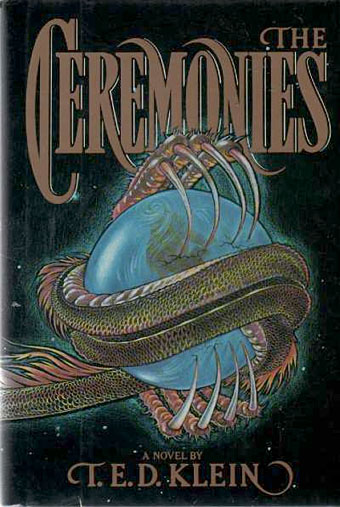
The Ceremonies (1984). Illustration by David Palladini.

TED Klein’s debut novel is also his only novel to date. Klein was editor of The Twilight Zone Magazine at this time, and he used the publication’s popularity to promote the weird fiction of the past; writers like Machen and Algernon Blackwood weren’t as visible in the mid-80s as they are today. The Ceremonies was expanded from a 1972 novella, The Events at Poroth Farm, and borrows much from The White People: the ceremonies of the title refers to those in the story, and the story itself—which a character is instructed to read by moonlight—is described as a key to occult mysteries. There’s a lot about the novel to recommend—Klein’s prose for a start—but I felt it could have been much weirder than it was. The book reads like a typical King/Straub narrative that’s aiming for more without quite getting there, and placing something as unique as Machen’s story at its heart only makes its eventual shortcomings all the more apparent.


4: A drawing
whitepeople.jpg

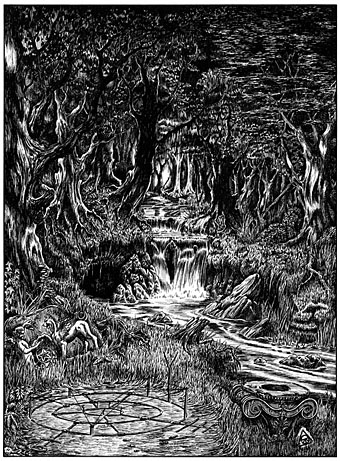
The White People (1990) by John Coulthart.

And speaking of aiming for more without quite getting there, my drawing from 1990. This was going to be one of a series based on Machen’s story but I ran out of steam, feeling that the usual approach of drawing separate scenes wasn’t going to deliver the essence of the piece. If I tried this today I’d probably go for a more surreal approach the way Sätty did with Poe.


5: Roses
roses.jpg

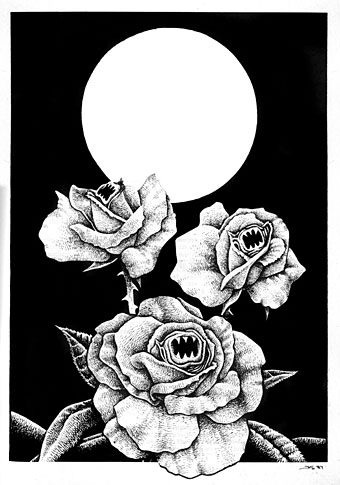
The Singing Roses (1987) by Jeffrey Salmon. From Dagon magazine no. 18/19, July–October, 1987.

“And what is sin?” said Cotgrave.

“I think I must reply to your question by another. What would your feelings be, seriously, if your cat or your dog began to talk to you, and to dispute with you in human accents? You would be overwhelmed with horror. I am sure of it. And if the roses in your garden sang a weird song, you would go mad. And suppose the stones in the road began to swell and grow before your eyes, and if the pebble that you noticed at night had shot out stony blossoms in the morning?

The White People

*

Sweet tortures fly on mystery wings / Pure evil is when flowers sing / My heart / My heart is a rose

Love’s Secret Domain (1991) by Coil


6: Ghost Box
zann.jpg

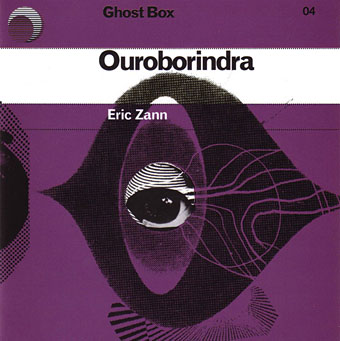
Ouroborindra (2005) by Eric Zann. Design by Julian House.

Track 4: Dôls
Track 6: Voolas
belbury.jpg

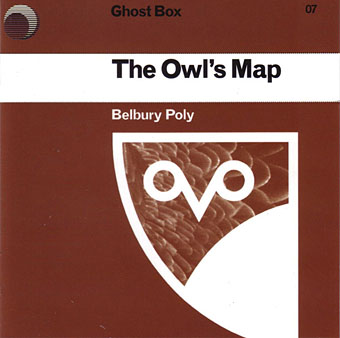
The Owl’s Map (2006) by Belbury Poly. Design by Julian House.

Track 11: Scarlet Ceremony

Among the sleeve notes there’s this:

And the noise and the singing would go on and on for a long time, and the people who were in a ring swayed a little to and fro; and the song was in an old, old language that nobody knows now, and the tune was queer.

Arthur Machen, The White People


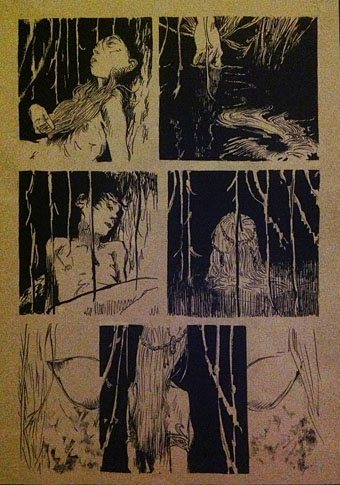
7: The White People by Ibrahim R. Ineke
ineke1.jpg

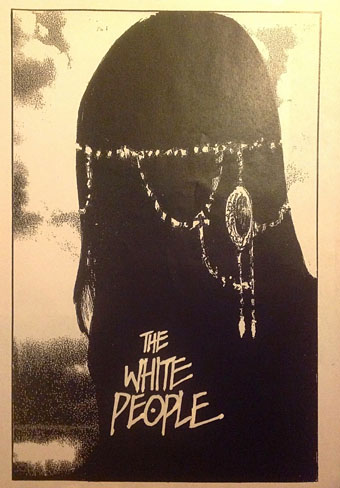
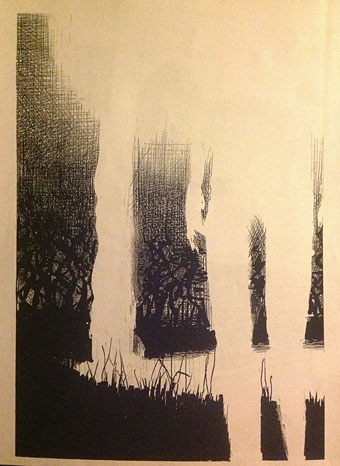
A very impressive comic-strip adaptation, the first of its kind, as far as I’m aware. See the full run of pages here. (And thanks to Ibrahim for getting in touch!)
ineke2.jpg

ineke3.jpg

ineke4.jpg

For those who can’t afford a limited edition from Tartarus Press, Machen’s story may currently be found in Penguin’s The White People and Other Weird Stories. The perfect thing now the nights are drawing in.

Update: See also The Forbidden Forest, a short animation based on the story. (Thanks, Richard!)

Elsewhere on { feuilleton }
The Lovecraft archive

Previously on { feuilleton }
The Bowmen by Arthur Machen
Rex Ingram’s The Magician
The Great God Pan