Weekend links 107

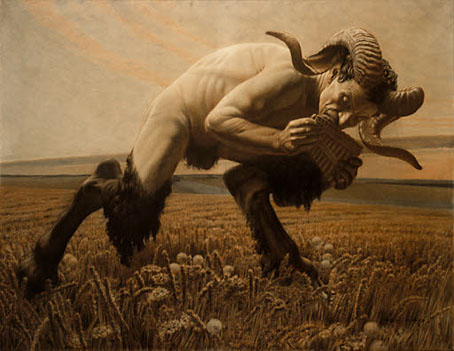
schwabe.jpg

Le Faune (1923) by Carlos Schwabe.

• “When I recently attended a conference in China, many of the presenters left their papers on the cloud—Google Docs, to be specific. You know how this story ends: they got to China and there was no Google. Shit out of luck. Their cloud-based Gmail was also unavailable, as were the cloud lockers on which they had stored their rich media presentations.” Ubuweb’s Kenneth Goldsmith on why he doesn’t trust the Cloud.

• “I’m a poet and Britain is not a land for poets anymore.” A marvellous interview with the great Lindsay Kemp at Dangerous Minds. Subjects include all that you’d hope for: Genet, Salomé, David Bowie, Ken Russell, Derek Jarman, The Wicker Man and “papier maché giant cocks”.

• “As early as the 1950s, Maurice Richardson wrote a Freudian analysis which concluded that Dracula was ‘a kind of incestuous-necrophilious, oral-anal-sadistic all-in wrestling match’.” Christopher Frayling on the Bram Stoker centenary.

Björk gets enthused by (among other things) Leonora Carrington, The Hourglass Sanatorium and Alejandro Jodorowsky’s YouTube lectures.

• Before Fritz Lang’s Metropolis there was Algol – Tragödie der Macht (1920). Strange Flowers investigates.
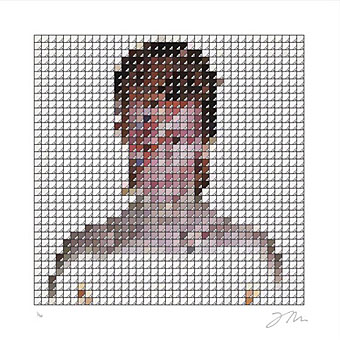
marsh.jpg

David Marsh recreates famous album covers using Adobe Illustrator’s Pantone swatches.

• New titles forthcoming from Strange Attractor Press. Related: an interview with SAP allies Cyclobe.

• 960 individual slabs of vinyl make an animated waveform for Benga’s I Will Never Change.

• An exhibition of works by Stanislav Szukalksi at Varnish Fine Art, San Francisco,

Keith Haring‘s erotic mural for the NYC LGBT Community Center is restored.

The Situationist Times (1962–1967) is resurrected at Boo-Hooray.

• Doors Closing Slowly: Derek Raymond‘s Factory Novels.

Will Wilkinson insists that fiction isn’t good for you.

• More bookplates at BibliOdyssey and 50 Watts.

The Top 25 Psychedelic Videos of All Time.

Flannery O’Connor: cartoonist.

• RIP Adam Yauch.

• Their finest moment: Sabotage (1994) by Beastie Boys.
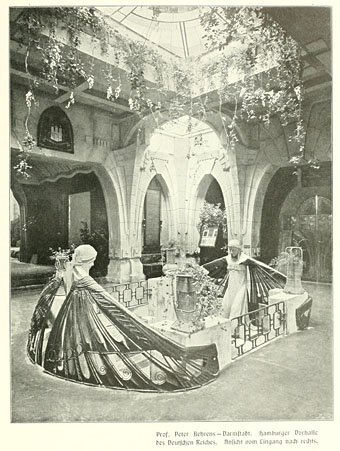
Deutsche Kunst und Dekoration #11

dkd11-01.jpg

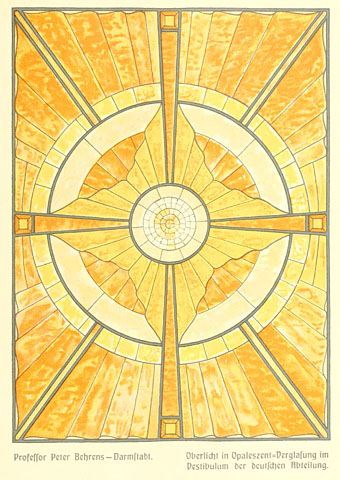
Continuing the delve into back numbers of Deutsche Kunst und Dekoration, the German periodical of art and decoration. Volume 11 covers the period from October 1902 to March 1903, and is almost solely devoted to the many design exhibits from the Prima Esposizione Internazionale d’Arte Decorativa Moderna, a major exposition held in Turin in the summer of 1902. As with the Secession work in the previous edition, many of the featured pieces here are familiar from books about the art and design of the period but DK&D shows them in greater detail. Peter Behrens’ vestibule (above) is one of these, a very advanced design which looks ahead to the stylisations of Art Deco. As before, anyone wishing to see these samples in greater detail is advised to download the entire volume at the Internet Archive. There’ll be more DK&D next week.

dkd11-02.jpg

The vestibule ceiling panel.

dkd11-03.jpg

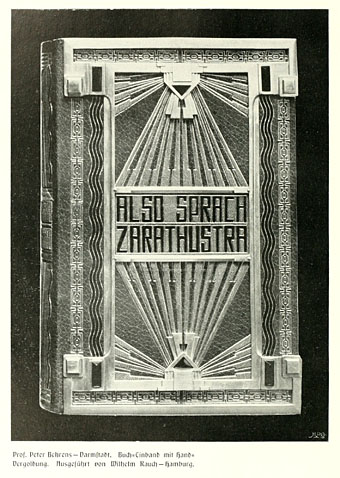
Another Behrens design which would have still looked modern twenty years later.

Continue reading “Deutsche Kunst und Dekoration #11”

The writhing on the wall

hands9.jpg

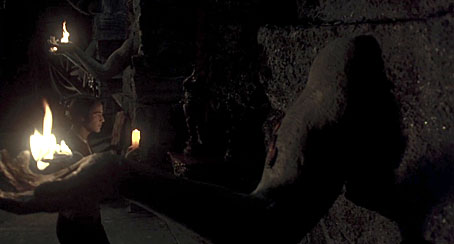
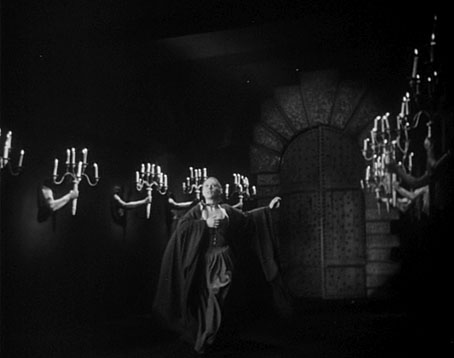
Dracula (1992).

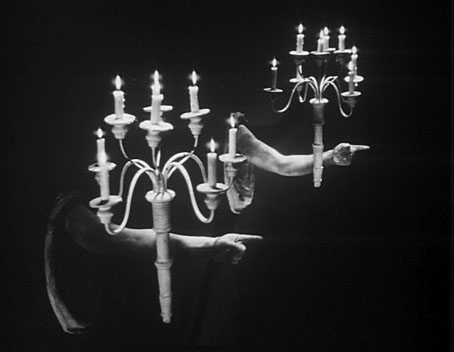
This is the closest you’ll get to a guest post here even though it’s been done remotely and I’ve changed things around a little. Following my mention yesterday of the Cocteau-derived lantern-arms in Francis Coppola’s Dracula, Jescie sent me an abandoned blog post which collected similar examples of the arms-through-the-walls motif. I’ve done this kind of thing here in the past so it’s good {feuilleton} material. Almost all these examples are fantasy- and horror-related which isn’t too surprising, and I’m sure there’ll be other examples in films I haven’t seen. If anyone has any suggestions just remember that hands grasping through doors and windows don’t count with this, it’s through the wall or not at all.

hands1.jpg

La Belle et la Bête (1946).

Jean Cocteau sets things off in 1946, a perfect piece of fairytale Surrealism and one of the many memorable aspects of this film.

hands2.jpg

La Belle et la Bête (1946).

Continue reading “The writhing on the wall”

Symbolist cinema

dracula1.jpg

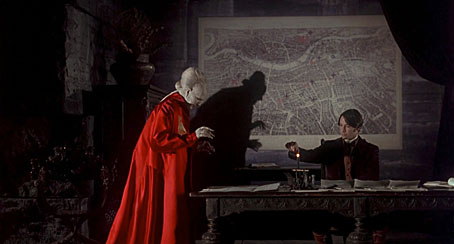
Symbolist? Arguably. Decadent? Certainly. Watching Francis Ford Coppola’s Dracula (1992) again this weekend I thought it worth making note of some of these resonances. The real age of Symbolist cinema was the Silent Era from around 1910 onwards, something I discussed in more detail here. That being so, several films made since can be taken as Symbolist (more usually Decadent) productions even if this was never their original intention. Kenneth Anger‘s Magic Lantern Cycle comes immediately to mind, so too Sergei Parajanov’s The Colour of Pomegranates.

dracula3.jpg

Bram Stoker’s novel was published in 1897 at the ebbing of the fin de siècle but vampires and vampirism were already recurrent Symbolist themes. Aesthetic magus Walter Pater wrote of the Mona Lisa in 1893, “She is older than the rocks among which she sits; like the vampire, she has been dead many times, and learned the secrets of the grave…” Dracula almost demands a Symbolist interpretation, and for now Coppola’s production is the closest we get. I’ve found this makes the film more satisfying in a way: you can ignore the shoddy performances by secondary characters and concentrate on the decor and details (and the tremendous score by Wojciech Kilar). Some of the following screen grabs argue my point.

dracula2.jpg

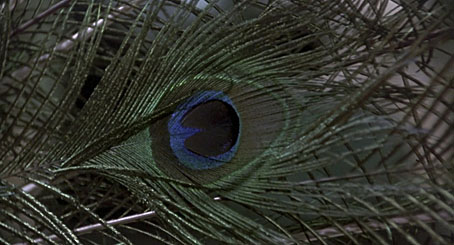
Oh look, peacock feathers. I loved the artificiality of this film, the excessive palette, the obvious models and miniatures, the layering of images. The dissolve from a peacock feather to Jonathan Harker’s infernal train journey is a great moment.

Continue reading “Symbolist cinema”

Weekend links: New Year edition

olofsdotter1.jpg

Flower Me Gently (2010) by Linn Olofsdotter.

• “Many of Moorcock’s editorials are published here, and they still make exhilarating reading. Then, as now, Moorcock set his face against a besetting English sin: a snobbish parochial weariness, an ironic superiority to the frightful oiks who have started filling up the streets. You can almost hear, behind the languorous flutter of the pages, Sir Whatsits sniggering to Lady Doo-Dah. It still goes on, and it’s usually the same flummery in different clothes. Moorcock not only would not go to the party: he threw the literary equivalent of explosive devices into the Hampstead living rooms.” Michael Moorcock’s Into the Media Web reviewed. And also here.

• “Beefheart channeled a secret history of America, the underbelly of a continent and a culture that has now all but vanished along with one of its greatest poets.” Jon Savage on the life and work of the late Captain.

Miniatures Blog, in which musician Morgan Fisher works his way through each of the fifty one-minute tracks on his extraordinary Miniatures compilation album, with details and anecdotes about the artists and the recording of each piece.

Look at Life: IN gear (1967). A Rank Organisation newsreel about Swinging London. Sardonic commentary and some great colour photography showing how the often shabby reality differs from the caricature. Many of the shots are familiar from documentaries about the era but this is the first time I’ve seen them all in one place.

olofsdotter2.jpg

Predator (Self-portrait) by Linn Olofsdotter.

Lewis Carroll’s new story: The Guardian‘s review of Through the Looking-Glass from December, 1871. Related: My Through the Psychedelic Looking-Glass 2011 calendar is now reduced in price.

The United Kingdom and Ireland as seen from the International Space Station, December, 2010. Related: Spacelog, the stories of early space exploration from the original NASA transcripts.

The “Big Basket” Fraud, 1958: “…there seems to be a limited segment with a one-track mind interested in seeing an exaggerated masculine appendage.”

• “Ancient arena of discord”: a billboard for King’s Cross by Jonathan Barnbrook. Related: Vale Royal by Aidan Andrew Dun.

• The inevitable Ghost Box link, Jim Jupp is interviewed at Cardboard Cutout Sundown.

• Amazon is still playing the random moral guardian at the Kindle store.

Antwerpian Expressionists at A Journey Round My Skull.

Salami CD and vacuum packaging by Mother Eleganza.

Paris 1900: L’Architecture Art Nouveau à Paris.

Bill Sienkiewicz speaks about Big Numbers #3.

Philippe Druillet illustrates Dracula, 1968.

Aesthetic Peacocks at the V&A.

Well Did You Evah! (1990), Deborah Harry & Iggy Pop directed by Alex Cox.