
Weekend links 437

watson.jpg

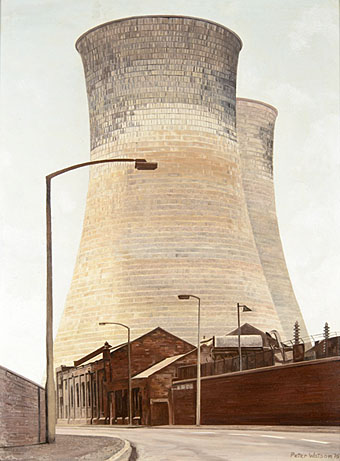
Rawmarsh Road, Rotherham, 1975 by Peter Watson.

Steel Cathedrals (1985), a composition by David Sylvian (with Ryuichi Sakamoto, Kenny Wheeler, Robert Fripp & others) was originally available only on the cassette release of Sylvian’s Alchemy: An Index Of Possibilities, and a video cassette where the music accompanied views of Japanese industry by Yasuyuki Yamaguchi. The video hasn’t been reissued since but may be viewed here.

• “If, as Arthur C Clarke famously observed, any sufficiently advanced technology is indistinguishable from magic, then can we accept that any sufficiently advanced magic is also indistinguishable from technology?” asks Mark Pilkington.

• “I didn’t like the idea of cartoons as just funny jokes, they had to have some relevant piece of observation in them to do with the society we are living in,” says Ralph Steadman.

I listen to music all the time, and I’ll often seek connections across quite disparate genres of that whatever I’m looking for. Sometimes it’s an aesthetic or a feeling, sometimes a pattern or structure, but it tends to cut across genres. The thing I liked about black metal and doom metal is the slowness and weightiness of it, it’s like deep time but in music. Sunn O))), Xasthur, and other bands captured this black gravity of sound. And they also tend to eschew the traditional vocal-lead guitar set-up, and everything is in the slow-moving wash and texture of sound.

I found that in other genres like noise music (especially Keiji Haino), the European avant-garde with composers like Ligeti, Scelsi, and Dumitrescu, dark ambient artists such as Lustmord or vidnaObmana, and contemporary works like Chihei Hatakeyama’s Too Much Sadness, Rafael Anton Irisarri’s A Fragile Geography, or Christina Vantzou’s No.4. There’s a lot to talk about in terms of music and forms of sorrow or grief, certainly every musical tradition has that—the funeral dirge, requiem, lamentation, or whatever.

Eugene Thacker listing a few favourite musicians and composers during a discussion with Michael Brooks about Thacker’s new book, Infinite Resignation

• The fourth edition of Wyrd Daze—”The multimedia zine of speculative fiction + extra-ordinary music, art & writing”—is out now.

• The Library of Congress has opened its National Screening Room, an online service for viewing films in the library’s collection.

The London Library discovered some of the books that Bram Stoker used for research when he was writing Dracula.

• “Oscar Wilde’s stock has never been higher,” says John Mullan, reviewing Oscar: A Life by Matthew Sturgis.

• Mixes of the week: RA Podcast 648 by Sarah Davachi, and Secret Thirteen Mix 269 by Sstrom.

• David Lynch directs a video for A Real Indication by Thought Gang.

• “Edward Gorey lived at the ballet,” says his biographer, Mark Dery.

• A new version of Blue Velvet Blues by Acid Mothers Temple.

• Photos of cooling-tower interiors by Reginald Van de Velde.

Aaron Worth on Arthur Machen: “the HG Wells of horror”.

• The Strange World of…Barry Adamson.

Glass And Steel No. 1 (1983) by Marc Barreca | Death Is The Beginning (1996) by Steel | Painless Steel (2000) by Bohren & Der Club Of Gore
Weekend links 432

urbanowicz.jpg

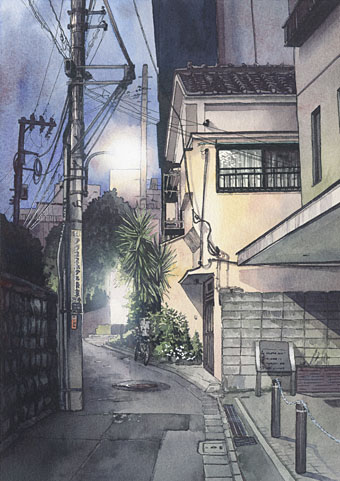
Tokyo at night, one of a series of watercolours depicting the back streets of the city by Mateusz Urbanowicz.

• “The experience of reading the book is something like watching Dr. Strangelove on one screen, Apocalypse Now on a second screen, and having both feeds interrupted by explicit gay erotica.” Bad Books For Bad People examines William Burroughs’ celebrated YA novel, The Wild Boys. The subject is a perennial one here, explored at length in this post.

• Lindsay Anderson’s The White Bus (1967), a surreal precursor to If…. and O Lucky Man!, will receive the high-quality BFI reissue treatment as part of the Woodfall Films portmanteau feature, Red, White and Zero.

• The Radiophonic Workshop have composed the score for Possum, a horror film by Matthew Holness. The main title theme is here. The film is released later next month.

Might I have written a sober affair, had I not been under the influence? Perhaps not—I have never needed tramadol to be attended by angels, or to feel demons pricking my feet. But I think of Vincent van Gogh, who looked at the world through the yellowish haze conveyed by digitalis, and grew enraptured by sunflowers and straw chairs, and I think of a glass prism through which a beam of white light passes and is split into a rainbow. What had been a single lucid idea had passed through the drugs I took and been dispersed into a spectrum of colours I had only half foreseen.

Sarah Perry on trying to write while besieged by bodily pain and prescription drugs

• Jacques Tourneur’s masterful MR James adaptation, Night of the Demon (1957), is released on region-free Blu-ray next month by Powerhouse Films.

• Mixes of the week: FACT mix 673 is The Bug presents PRESSURE, and XLR8R Podcast 561 by Zendid.

• The Space Shifters exhibition at the Hayward Gallery, London, messes with Adrian Searle‘s mind.

Gregory Wells on queers, faeries and revolutionaries in the psychedelic movement.

Wide Boys (1977) by Ultravox! | On Demon Wings (2000) by Bohren & Der Club Of Gore | Spoonful (2013) by Robert Plant and the Sensational Space Shifters
Weekend links 377

czukay.jpg

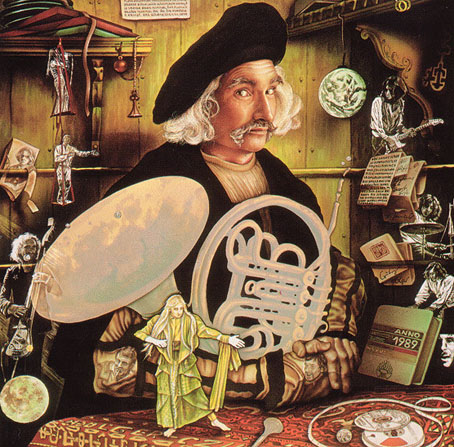
Holger Czukay by Ursula Kloss, from the cover of Czukay’s Moving Pictures (1993). (The painting is a pastiche of Holbein’s portrait of Georg Gisze.)

• RIP Holger Czukay. The obituaries have emphasised his role as the bass player for Can, of course, but he was just as important to the band as a sound engineer and producer: it was Czukay’s editing skills that shaped many of their extended jams into viable compositions. Post-Can he recorded 20 or so albums by himself or with collaborators, several of which can be counted among the best of all the Can solo works. Geeta Dayal and Jason Gross remembered their encounters with Czukay, while FACT reposted their 2009 interview. Czukay’s final interview was probably last year when he talked to Ian Harrison for Mojo magazine.

For my part, I was astonished when Czukay phoned me out of the blue one day in 1997 to thank me for sending him a video I’d made in the 1980s. This was a scratch production created with two VCRs that set 300 clips from feature films to Hollywood Symphony, the final piece on Czukay’s Movies album. Years later, MTV showed a couple of similar video collages that Czukay had made for Can so I sent a copy of my effort to Spoon Records thinking he might be amused. His public persona was often one of a wacky mad professor but the jokiness was allied to an impressive technical skill and curiosity. Most of our brief conversation was taken up with my answering his questions about my primitive video recording.

• “Every pebble can blow us sky-high”: A reconsideration by J. Hoberman of The Wages of Fear, directed by Henri-Georges Clouzot.

• Dario Argento’s masterpiece of horror cinema, Suspiria, is 40 years old. Martyn Conterio looks at five of its influences.

Mark Korven’s Apprehension Engine: an instrument designed to play the music of nightmares.

• The mystery of the Voynich Manuscript solved at last? Nicholas Gibbs thinks so.

• At Dangerous Minds: The macabre and disturbing sculptures of Emil Melmoth.

Jonathan Meades reviews A Place for All People by Richard Rogers.

• Mix of the week: Secret Thirteen Mix 229 by Erin Arthur.

• The ten creepiest objects in the Wellcome Collection.

Rob Chapman’s essential psychedelia reading list.

It’s Just A Fear (1966) by The Answers | Fear (1992) by Miranda Sex Garden | Constant Fear (2002) Bohren & Der Club Of Gore

Weekend links 333

timeout.jpg

Time Out (London), no. 2403. No illustrator or designer credited.

• October isn’t all about the dark, there’s also psychedelia: Ned Raggett reviews a new collection of British psych, Let’s Go Down And Blow Our Minds: The British Psychedelic Sounds of 1967, while Floodgate Companion, a forthcoming collection of art by Robert Beatty, is previewed here.

• Mixes of the week (aside from my own, of course): Samhain Seance 5: Invasion of the Robot Witch by The Ephemeral Man, Thee Finders Kreepers Halloween Spezial, and Secret Thirteen Mix 199 by Blue Hour.

• “No diggin’ ‘ere!” Adam Scovell revisits the ghostly locations of the BBC’s A Warning to the Curious, and presents a short film based on the same.

• Stanley Kubrick’s film of The Shining has lost its shine through endless quotation and over-familiarity, says Anne Billson. Hard to disagree.

Between Ballard’s Ears: in which two short stories by JG Ballard—Track 12 and Venus Smiles—are dramatised in binaural sound.

John Carpenter talks to Adam Woodward about remakes, his love of early synthesisers and why nostalgia works in mysterious ways.

• Next month at the British Library: Brion Gysin: A Centennial Invocation with Alan Moore, Iain Sinclair, Barry Miles and others.

Peter Bebergal on the Fraternity of the Rosy Cross, “a shadowy medieval brotherhood that probably didn’t exist”.

Until The Hunter, a new album by Hope Sandoval and The Warm Inventions, is streaming here.

• San Fran-disco: Geeta Dayal on how Patrick Cowley and Sylvester changed dance music forever.

• A small portion of Bill Laswell‘s vast back catalogue is now on Bandcamp.

• At MetaFilter: The strange history of books bound in human skin.

• Italian composer Fabio Frizzi remembers 50 years of cult horror.

Matthew Cheney on the strange horrors of Robert Aickman.

Jóhann Jóhannsson’s favourite records

Dark Start (1995) by ELpH vs Coil | Darkstalker (2000) by Bohren & Der Club Of Gore | Dark (2012) by Moritz Von Oswald Trio

Weekend links 305

marchbank.jpg

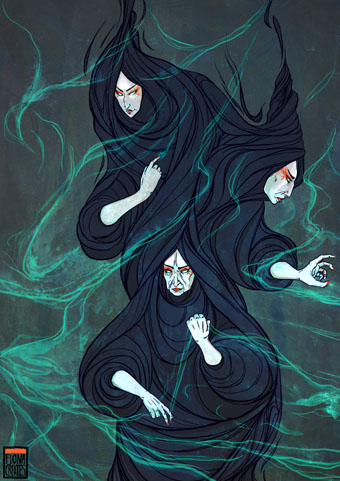
Threads of Fate—The Weird Sisters from Macbeth (2013) by Fiona Marchbank.

• The week in books: Claire Cameron on the difference between US & UK cover designs | Jason Diamond asks “Why do cats love bookstores?” | Alan Moore’s cover art for his forthcoming novel, Jerusalem, has been revealed | Brian Phillips on the typefaces used by New English Library for their Dune covers in the 1970s.

• On writing: Poetry and horror “share a universally human quest toward intimacy” says Evan J. Peterson | “The best work neither shows nor tells: it says by being, not by saying,” says M. John Harrison.

• At the BFI this week: Where to begin with Jerzy Skolimowski, and 10 overlooked British horror films of the 1970s. Both lists include Skolimowski’s excellent The Shout (1978).

Cultures do not, and cannot, work through notions of ‘ownership’. The history of culture is the history of cultural appropriation—of cultures borrowing, stealing, changing, transforming.

Nor does preventing whites from wearing locks or practicing yoga challenge racism in any meaningful way. What the campaigns against cultural appropriation reveal is the disintegration of the meaning of ‘anti-racism’. Once it meant to struggle for equal treatment for all. Now it means defining the correct etiquette for a plural society. The campaign against cultural appropriation is about policing manners rather than transforming society.

Kenan Malik on ill-considered complaints against “cultural appropriation”. Malik isn’t the first to note the intersection of such complaints with those of white supremacists who also want cultural purity and segregation

OUT, DEMONS, OUT!: The 1967 Exorcism of the Pentagon and the Birth of Yippie! An oral history by Larry “Ratso” Sloman, Michael Simmons and Jay Babcock.

• The long-overdue republication of Moebius’s work in English will begin with a new edition of The World of Edena (1985).

• More from radioactive Russia: Nadav Kander’s photographs of Soviet nuclear test sites.

• Comic artist and illustrator Kris Guidio in conversation with Jonathan Barlow.

• Francesca Gavin meets Tadanori Yokoo, “the Grandmaster of Pop-Psych Art”.

• “LSD’s impact on the brain revealed in groundbreaking images”

• Mix of the week: Secret Thirteen Mix 182 by Paul Jebanasam.

• A trailer for Nicolas Winding Refn’s The Neon Demon.

• Tony Conrad: 1940–2016 by Geeta Dayal.

Brian Eno’s favourite records

Neonlicht (1994) by Mitja VS (with Enzo Fabiani Quartet) | On Demon Wings (2000) by Bohren & Der Club of Gore | Shout At The Devil (2002) by Jah Wobble & Temple Of Sound