Weekend links 163

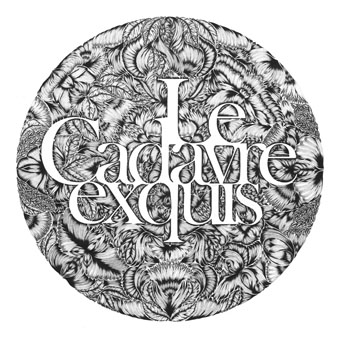
michishita.jpg

Le Cadavre Exquis by Yukio Michishita. As featured in The Purple Book: Sensuality & Symbolism in Contemporary Art & Illustration by Angus Hyland & Angharad Lewis.

• ” Like Polo’s magic cities, which in the end all turn out to be Venice, fantasy finally refers us back to reality and the challenge of everyday social engagement.” Jonathan Galassi on The Dreams of Italo Calvino. In the same edition of the NYRB, Anna Somers Cocks on The Coming Death of Venice?

• Mix of the week: Solid Steel Radio Show 7/6/2013 Part 3 + 4: Peter “Look Around You” Serafinowicz compiles 70 minutes of Boards of Canada-inflected ambience.

• “Magic and art tend to share a lot of the same language. They both talk about evocation, invocation, and conjuring.” Alan Moore talks to Peter Bebergal.

The gay rights movement around the world has promoted a basic idea: we want to show society that we are human beings like everyone else. The problem is that the train driver at the Kashirskaya train station doesn’t necessarily think that those few dozen passengers in whose face he closes the doors are a priori inferior and deserve such treatment. He feels that he becomes superior to them by means of using his power over them. This sense of superiority can be trumped only by some higher superiority.

On the Moscow Metro and Being Gay by Dmitry Kuzmin.

• “I went from being a very promising young writer to being completely ignored in two novels.” Madeleine Monson-Rosen on Angela Carter.

Sequence6, another excellent sampler from Future Sequence: 40 new pieces of music as a free download.

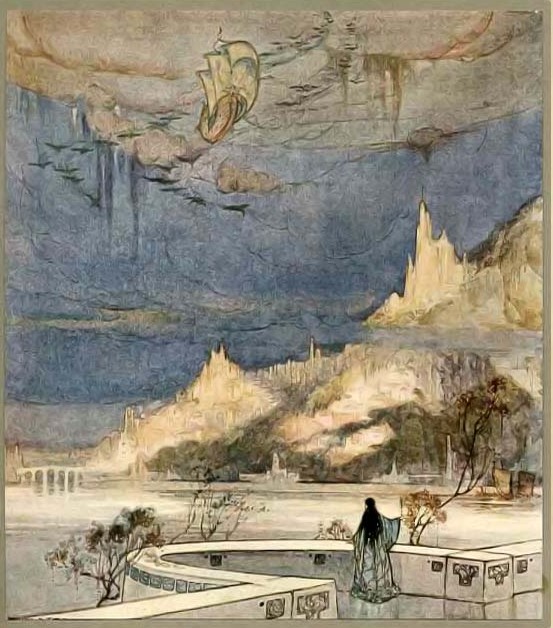
timlin.jpg

The Arrival on Mars, an illustration from The Ship That Sailed to Mars (1923) by William Timlin.

• At PingMag: An Icon for Everyone: Shoryu Hatoba, Japanese Crest Artist.

• More Japanese weirdness at Sardines Bizarres.

• Larry Nolen on Bruno Schulz.

Magic Ritual (1976) by Black Renaissance | Magic Fly (1977) by Space | Magic Vox (1981) by Ippu-Do

The horror

Last year I was asked to write something about my favourite horror comics for Nørd Nyt, a Danish comics zine. I’d pretty much forgotten about this until the printed copy arrived, so here’s my piece in English, a choice of three favourite horror stories.
breccia.jpg

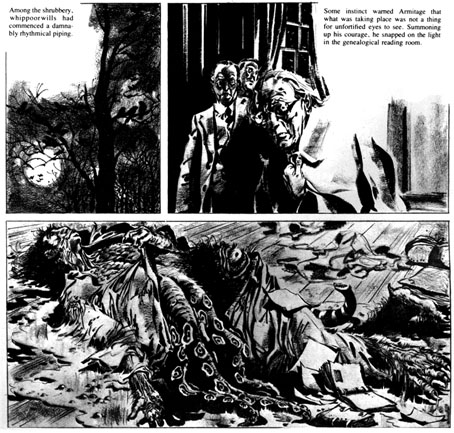
The Dunwich Horror by Breccia (1973)

The October 1979 issue of Heavy Metal magazine came as a revelation. I’d only bought a few issues prior to this, and seeing an entire magazine devoted to HP Lovecraft seemed far too good to be true. Lovecraft art is so common now that it needs to be emphasised how scarce this kind of illustration used to be, the most you saw was paperback art of varying quality. There had been a few comic-strip adaptations but they were mostly in American publications or foreign editions I hadn’t seen. As it turned out, Heavy Metal‘s great JK Potter cover promised more than it actually delivered: at least half the magazine was taken up with continuing strips that had nothing to do with Lovecraft, or strips that did little but borrow a few Lovecraftian motifs for a slight horror tale. The one really outstanding piece was Alberto Breccia’s The Dunwich Horror, one of several Lovecraft adaptations the artist produced in 1973. Breccia’s style was sketchy, shadowy and replete with period details. The faces of his characters looked absolutely right for what I still consider to be one of Lovecraft’s darkest stories (people tend to miss the implication that a backwoods magus very nearly destroys humanity). Until I encountered the artists in Heavy Metal I’d given up on comics as an artistic medium, having no time at all for superheroes or the poor science fiction of 2000AD. Artists like Breccia, Moebius and Druillet showed that there was more than one way of drawing imaginative work, that you could use the refined techniques of illustration to tell a story.
yeux.jpg

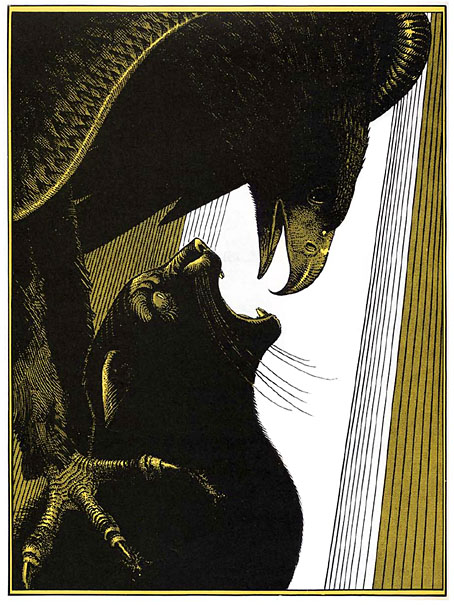
Les Yeux du Chat (The Eyes of the Cat) by Jodorowsky and Moebius (1978)

This story came to my attention when it received its first English translation in the pages of Steve Bissette’s Taboo anthology. It was printed in black on yellow paper, the original French edition having been yellow and black with white highlights. Compared to Jodorowsky’s customary flights of fancy the story is a very simple one, if typically grotesque: a silhouetted figure stands at a tall window overlooking a futuristic (or alien) city, directing with its thoughts the action of an eagle who hunts down a cat in the streets below. The horror comes from the shocking predicament revealed at the end, and the final line of dialogue, although this remains secondary to the formal perfection of the drawing and storytelling. Even by the standards of Moebius’s meticulous draughtsmanship this is a superbly controlled piece of work. Each spread operates as a kind of split-screen, with the left page showing the dialogue and the silhouetted figure, while the full-page illustration opposite shows a simultaneous moment of action somewhere in the city. One thing I immediately liked about this was Moebius’s architecture which even more than usual manages to seem otherworldly yet completely convincing. Everything we see in this brief tale poses questions that remain unanswered. And like many of the best short stories, a few carefully chosen details can imply an entire world.
fromhell.jpg

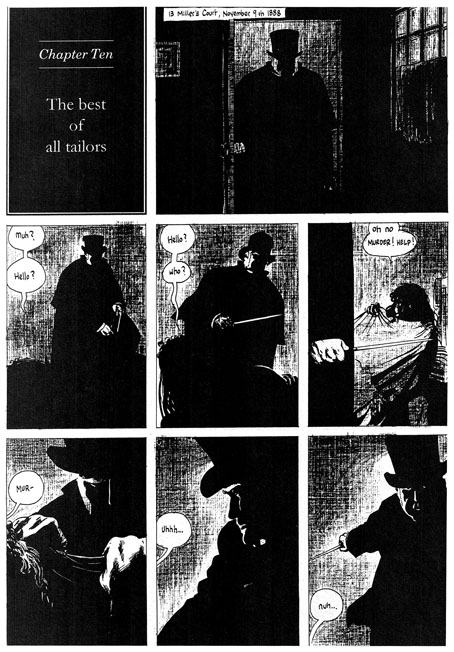
From Hell by Alan Moore and Eddie Campbell (1991–1996)

Horror doesn’t have to be delivered within genre stereotypes, in fact these days it’s often better if it isn’t when so many of those stereotypes—vampires and zombies, for example—have been diminished by over-familiarity. From Hell isn’t a horror story per se—it’s self-described as “a melodrama in sixteen parts”—but it debuted in Steve Bissette’s anthology Taboo where the brief was to offer the reader something dark or challenging that they hadn’t seen before. From Hell certainly fulfilled that brief: Alan Moore’s writing has never shied from the dark—consider the nihilistic Rorschach chapter of Watchmen—but this is as black as he gets. Eddie Campbell has been vocal about his dislike of horror stories but he was the perfect artist here with his long experience drawing ordinary human beings rather than posturing superheroes. Together the pair delivered a story that was novelistic in scope and minute in its attention to detail. Most people would have thought they knew more than enough about Jack the Ripper but no other representation has been this thorough in its exploration of all aspects of the case.

Watchmen had already aimed for a panoramic range of characters—from the president to a newspaper-seller—but From Hell went much further and in greater detail, with a scope that ranges from a group of homeless women to the head of the British Empire and all the classes in between. One of the most impressive aspects of the story was its exposure of the awful gap at the heart of previous dramatisations, namely the reduction of the lives of the murdered women to a cast of frequently nameless unfortunates who we glimpse for a moment sidling up an alley before their blood splashes on a wall. Moore’s script showed us (as much as is possible) the real women behind the roll-call of victims, crushed by poverty yet still distinct individuals. Looking for human detail has always been a feature of Moore’s writing, it’s why his work seemed so fresh in the 1980s compared with lesser writers who were simply recycling clichés as though there was no other way to behave. So too with Campbell’s artwork which has never been subject to the exaggerations of the superhero genre. One of my favourite moments in the entire story was utterly human and utterly trivial: the scene in Chapter 3 when Walter Sickert and Annie Crook meet. Annie says “I need a wee” so she hitches up her shift and squats in the road. It’s the accumulation of numerous human moments such as this—the moments that genre comics invariably avoid—that makes From Hell such a powerful and memorable piece of work. Eddie Campbell’s art shows us the true London dark, a city as black and terrible as it would have been in the days before electric light.

Previously on { feuilleton }
Heavy Metal, October 1979: the Lovecraft special

Terror and Magnificence

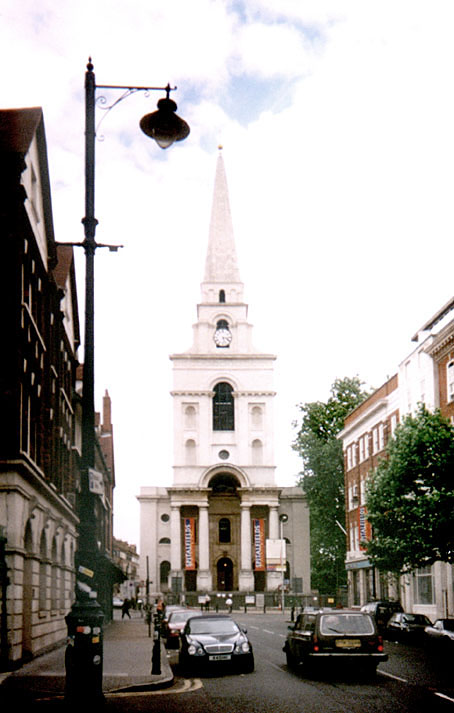
spitalfields.jpg

Christ Church, Spitalfields, London, in 2001. A photo I took with a disposable film camera.

And so let us beginne; and, as the Fabrick takes its Shape in front of you, alwaies keep the Structure intirely in Mind as you inscribe it. First, you must measure out or cast the Area in as exact a Manner as can be, and then you must draw the Plot and make the Scale. I have imparted to you the Principles of Terrour and Magnificence, for these you must represent in the due placing of Parts and Ornaments as well as in the Proportion of the several Orders: you see, Walter, how I take my Pen?

Hawksmoor (1985) by Peter Ackroyd

*

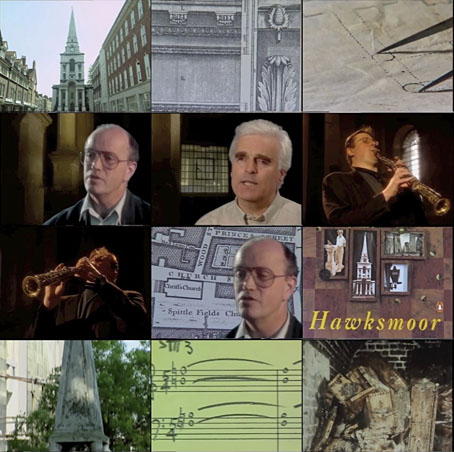
Bentley had laid down tracks for a shot that would feature the saxophonist and composer John Harle tooting away at his Terror and Magnificence in the setting of Hawksmoor’s church, which was now established, post-Ackroyd, as a cathedral of baroque speculation. Harle, in the notes published with the CD, writes that “darkness beneath the architecture and the very fabric of the stones pushed the idea towards a text.” The language here harks back to Ackroyd, towards privileged notions of place. The church was, in its proportions, a score to be unravelled; an overweening Pythagorean geometry to be tapped and sounded.

Iain Sinclair in Rodinsky’s Room (1999) by Rachel Lichtenstein & Iain Sinclair

Iain Sinclair first drew the world’s attention (or the minuscule portion of the world that was reading his books) to the strange character of Hawksmoor’s London churches in 1975 with Lud Heat, a book-length poem. Peter Ackroyd a decade later turned Sinclair’s esoteric excavation into a bestselling architectural murder mystery with his novel Hawksmoor, since when Sinclair’s psychogeography (if that term still has any valid currency) has found its way into From Hell by Alan Moore & Eddie Campbell, where Christ Church dominates the proceedings, and a musical work, Terror and Magnificence, by composer John Harle which takes its title from Ackroyd’s novel.

tandm.jpg

The short BBC film to which Sinclair refers can be seen on Harle’s YouTube channel. In addition to running through the Hawksmoor mythology we receive some glimpses of David Rodinsky’s abandoned room in the Princelet Street synagogue, a location (and a life) explored in detail in Sinclair’s book with artist Rachel Lichtenstein.

Bob Bentley’s film of Harle, Sinclair and Keith Critchlow was broadcast in 1995. In the same year Harle was commissioned by the BBC Proms to write an opera. The resulting work, Angel Magick, with libretto by David Pountney, advertises itself as “the first Dr Dee Opera”, a subject equally of interest to both Sinclair and Alan Moore, who in Sinclair’s Liquid City (1999) take a walk to John Dee’s home at Mortlake. (“We were a thrift-shop Dee and Kelley cupping our ears for whispers from tired stone.”) In that piece Sinclair mentions having been in on the early discussions for the opera but doesn’t go into any detail. I haven’t heard Angel Magick but you can hear a complete performance of Terror and Magnificence by the John Harle Band, the Balanescu Quartet, and the London Voices, here.

Previously on { feuilleton }
Mister Jarman, Mister Moore and Doctor Dee
Compass Road by Iain Sinclair

Reverbstorm on sale

reverbstorm1.jpg

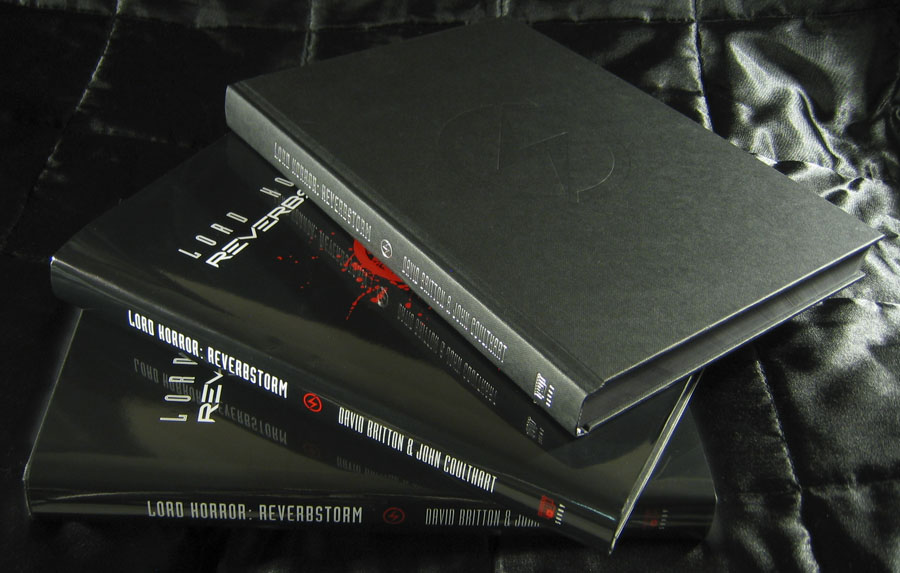
At long last, the news that many people have been waiting for: the Reverbstorm book is now on sale at Savoy. From the hyperbolic press release:

“Surfin’ bird Bbbbbbbbbbrbrbrbrbrb…awawawawawawawaaaaaah! A-pa-pa-pa-pa-pa-pa-pa-pa-pa-pa-pa-pa-pa-pa-pa-pa-pa-pa-pa-pa-pa-pa-pa-pa-pa-pa-pa-pa-pa-pa-ooma-mow-mow Papa-oom-mow-mow!” The Trashmen, Surfin’ Bird

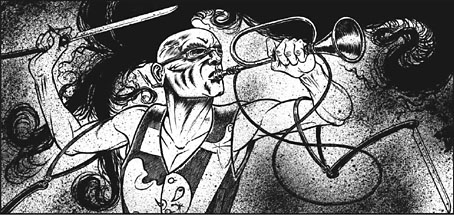
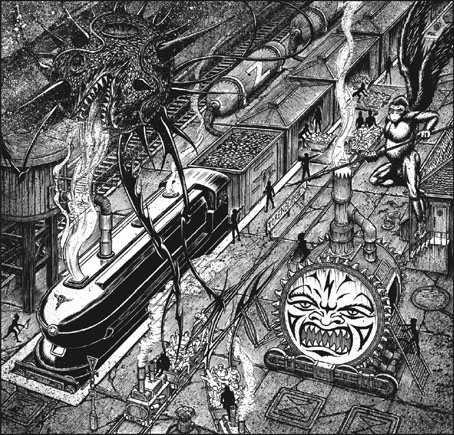
Welcome to the nightmare metropolis of Torenbürgen, where New York’s Art Deco architecture has fused with the termination machinery of Auschwitz. In this urban inferno Jessie Matthews is singing Sondheim, James Joyce is at work on a new novel and Lord Horror, ex-Nazi propaganda broadcaster and Torenbürgen’s model citizen, is stalking the streets in search of fresh victims for his razors. Murderous apes infest the alleyways, Ononoes feast on the living and the dead, while above the rooftops the Soul of the Virgin Mary drifts like a swollen Lovecraftian dirigible, picking at bodies destined for the charnel furnaces.

Lord Horror: Reverbstorm is a unique graphic collaboration between writer David Britton, the author of four Lord Horror novels, and artist John Coulthart, whose book of Lovecraft-derived comic strips and illustrations, The Haunter of the Dark, featured a collaboration with Alan Moore. Reverbstorm was originally published in serial form and is now being presented in a single volume for the very first time. Britton’s debut novel, Lord Horror (1990), was the last work of fiction to be banned in the UK; an earlier Lord Horror comic series, Hard Core Horror, was also banned by a British court in 1995. Coulthart’s death-camp artwork from the final issue in that series appears in Reverbstorm as a prelude to the main narrative.

There’s never been a comic like this surreal collision between Modernist art and pulp aesthetics, a world where Finnegans Wake is drenched in Alligator Wine and Picasso’s Guernica is invaded by Tarzan’s simian hordes. Ambitious, transgressive and meticulously rendered, Reverbstorm is one answer to the eternal question posed by those cultural philosophers, The Cramps: “How far can too far go?”

“Bababadalgharaghtakamminarronnkonnbronntonnerronn-
tuonnthunntrovarrhounawnskawntoohoohoordenenthurnuk!”
James Joyce, Finnegans Wake

reverbstorm2.jpg

rev2.jpg

Previously on { feuilleton }
Reverbstorm in print
Reverbstorm update
James Joyce in Reverbstorm
A Reverbstorm jukebox
Reverbstorm: Bauhaus Horror
Reverbstorm: an introduction and preview

Weekend links 139

barnes.jpg

Lucy in the Sky with Diamonds (2012) by Lesley Barnes. She also has peacock wrapping paper.

Big thanks to Dennis Cooper for including this blog in his favourite music, fiction, poetry, film, art & internet lists for 2012. Lots of good company there. One benefit of end-of-year lists is the way they suggest things to look for in January.

• “…the best pictures of dicks that I’ve ever seen…” Rudy Rucker reviews Malcolm McNeill’s The Lost Art of Ah Pook Is Here and Observed While Falling, out at last from Fantagraphics. Rucker notes that William Burroughs’ text is still only available in out-of-print editions in which case you’ll need a book dealer. Elsewhere, Burroughs: The Movie has cleared 50% of its restoration Kickstarter goal but still needs supporters.

• Julia Holter has been a recurrent presence in these posts since the release in March of her acclaimed second album, Ekstasis. FACT has an alternate version of the album’s opening song, Marienbad, one of the extra tracks on the recent UK reissue.

Suttree’s saga carried me down, down, down to the bottom of a heightened surrogate reality, a nadir where the rarest jewels of clarity are found. The fourth time through the novel I arrived at a state of barometric equipoise, a balancing between my mental state and Suttree’s. Then, as he descended again, I began to rise. There was a hypnotic poetry to his fall — his life disintegrated, then the fragments disintegrated, then those fragments followed suit ad infinitum.

Jim White on the life-preserving qualities of Suttree by Cormac McCarthy.

• “An 18-year-old boy who discovers he has a fetish for the aged gets a job in a nursing home and develops an intimate relationship with one particular old man.” Gerontophilia, a proposed film by Bruce LaBruce, is looking for funding.

• Can’t wait for this: Groenland Records announces Who’s That Man?, a four-CD set of music produced and performed by Conny Plank. FACT has a track list.

• At BUTT magazine: Pink Courtesy Phone Mix by Richard Chartier, a great selection of electronica old and new.

• Another end-of-year list: Volumes 1 & 2 of The Graphic Canon are in NPR’s Indie Bookseller best of 2012 selection.

The Nightmare Paintings: art by Aleister Crowley currently touring Australia.

• Christmas with Monte: Colin Fleming on the ghost stories of MR James.

• “The war on drugs is a war on human nature” says Lewis Lapham.

Alan Moore: why I turned my back on Hollywood.

• More electronica: Chris Carter discusses synths.

Saul Bass poster sketches for The Shining.

• At Pinterest: The Pan Within.

Ah Pook Is The Mayan God Of Death (1975) by William Burroughs | Panic (1985) by Coil | Light Shining Darkly (1992) by Coil.