Stone Tapes and Quatermasses

penguin.jpg

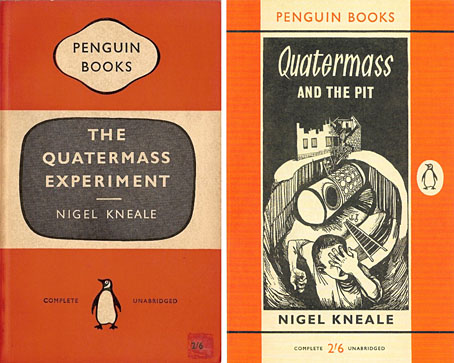
Quatermass paperbacks from Jovike’s Flickr pages.

This may be another occasional series in the making since there’s already been a post about Roadside Picnic/Stalker music, and one about music inspired by the cosmic horror of William Hope Hodgson. I was going to write something earlier this year about music derived from the works of Nigel Kneale after rewatching all of Kneale’s major works. The reappraisal was prompted by the publication in January of The Twilight Language of Nigel Kneale, an excellent anthology of essays/speculations (and a China Miéville interview) about Kneale’s film and TV dramas. The delay in writing was a result of having to wait several months after ordering a CD of the Tod Dockstader album (see below) which for some reason the distributors couldn’t manage to get in the post.

In the Twilight Language book there’s a piece by Ken Hollings about electronic music, some of which has material connections with Kneale’s work, notably the Radiophonic Workshop’s creation of sound effects for Quatermass and the Pit. Early copies of the book came with a bonus cassette tape of Kneale-inspired music; more about that below. The men and women of the Radiophonic Workshop are the godparents of the following Kneale soundworks, most of which are British, and inevitably tend towards the grinding, droning and doom-laden end of the electronic spectrum. Given the enduring influence of Kneale’s work, especially the Quatermass serials and their film equivalents, it’s surprising there isn’t more Knealesque music to be found. (I’m avoiding the obvious film soundtracks, and any bands such as Quatermass who may be named after Kneale’s work but whose music doesn’t reflect it.) If anyone can add to this list then please leave a comment.
quatermass.jpg

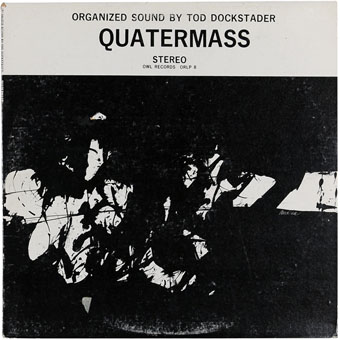
Quatermass (1964) by Tod Dockstader

The American master of tape manipulation here processes hours of recordings of cymbals, pipes, tone generators, a vacuum hose and rubber balloons to create what he calls “a very dense, massive, even threatening work”. Dockstader hadn’t seen any of the Quatermass films or serials when he chose the name but he said that it sounded right. It certainly does, as does the unnerving, shrieking morass of sound he manages to craft using the most primitive equipment. The Starkland CD containing the Quatermass suite includes two further edits of the source material entitled Two Moons of Quatermass.
seance.jpg

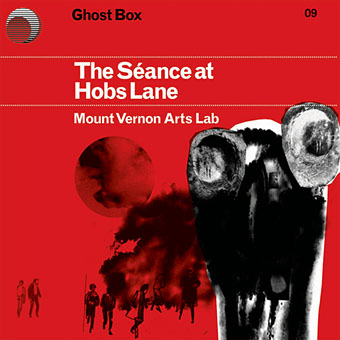
The Séance At Hobs Lane (2001) by Mount Vernon Arts Lab

Mount Vernon Arts Lab is Drew Mulholland and various collaborators. The Séance At Hobs Lane is an abstract concept album based on Mulholland’s lifelong obsession with Quatermass and the Pit (an idée fixe he writes about in the Twilight Language book), plus “Victorian skullduggery, outlaws, secret societies and subterranean experiences”. Among the collaborators are Coil, Norman Blake of Teenage Fanclub, Barry 7 of Add N to (X), and Adrian Utley of Portishead. The album was reissued in 2007 on the Ghost Box label.
ouroborindra.jpg

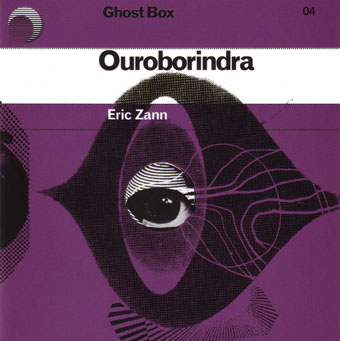
Ouroborindra (2005) by Eric Zann

And speaking of Ghost Box… This album has been mentioned here on several occasions, a one-off release that’s the most consciously horror-oriented of all the works in the Ghost Box catalogue. The artist “name” and track titles reference Lovecraft and Machen but it’s included here for the dialogue quote in the insert from Kneale’s ghost drama The Stone Tape. In addition to the Mount Vernon reissue other Ghost Box references to Kneale can be found in the samples from Quatermass and the Pit (TV version) on The Bohm Site from We Are All Pan’s People by The Focus Group, and the title of the track which follows: Hob’s Rumble. Continue reading “Stone Tapes and Quatermasses”
Weekend links 178

bantjes.jpg

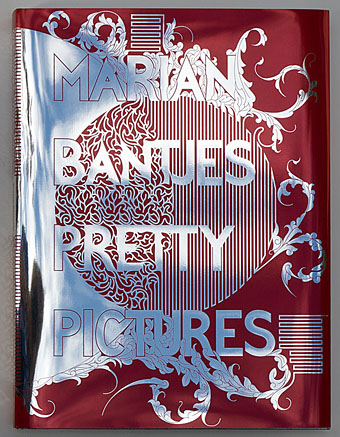
Pretty Pictures, a new book by designer Marian Bantjes, is out on October 1st.

• A writer admired by Angela Carter, Michael Moorcock, Harlan Ellison, Anthony Burgess, Jonathan Meades and Iain Sinclair; a “writer’s writer…[whose] best stories bear comparison with the Ficciones of Jorge Luis Borges”; a writer with an “unsettling quality to his writing, a whiff of brimstone that links him to fin-de-siècle occult figures such as HP Lovecraft—and even, at a further remove, Aleister Crowley”. David Collard explains why you may want to read something by Gerald Kersh (1911–1968), four of whose books are being republished.

• The Eccentronic Research Council and Maxine Peake pay homage to Delia Derbyshire’s The Dreams project with a new single out at the end of the month (Pye Corner Audio and Carol Morley appear on the flip). Ms Peake’s barm-cake reverie may be heard here.

• “Applying for grants, writing artist statements, showing up to openings—artists have to do far more than just make art if they want to find an audience for it.” Jen Graves on lies and deception in the art world.

The material does not make the work. The life does not make the art. Exactly the opposite. The work creates the material. The art creates the life. Did Trinidad exist before Naipaul? Did cargo ships exist before Joseph Conrad? Did Newark and the New Jersey suburbs exist before Philip Roth? Did women in playgrounds in New York City exist before Grace Paley? See how the writer invents the material? These places did not exist as literary subjects. They were invisible to literature. The magic of a great book is that it makes its own subject seem inevitable. The danger is, it makes the subject seem like the source of power in the work.

Phyllis Rose on life and literature.

• Mix of the week: Secret Thirteen Mix 087, 40 minutes of original electronic music by Geistform (Rafael Martinez Espinosa).

• “You’ve Got This“, an It Gets Better-style video support campaign for people recently diagnosed with HIV.

• At Dangerous Minds: Babalon Working: Brian Butler’s trippy occult odyssey with Paz de la Huerta.

Manfred Mohr‘s computer-created artwork, from the 1960s to the present.

Robert Macfarlane on the strange world of urban exploration.

Rick Poynor on Bohumil Stepan’s Family Album of Oddities.

• Oli Warwick talks to Martin Jenkins, aka Pye Corner Audio.

• The 384-page BUTT calendar for 2014 is now on sale.

• Pye Corner Audio: We Have Visitors (2010) | Toward Light (2011) | The Mirror Ball Cracked (2012)

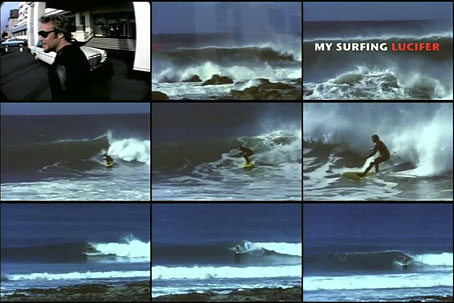
My Surfing Lucifer by Kenneth Anger

anger.jpg

One for completists only, My Surfing Lucifer (2009) is one of those recent Kenneth Anger shorts that would receive little attention if we didn’t know the director. Anger’s surfing friend, Bunker Spreckels, is memorialised in a sequence of home movie shots set to the Psychic TV version of Good Vibrations. For me the main point of interest is the use of “Lucifer” in the title, here used not in the context of Anger’s favourite angel but in the sense of a more mundane figure worthy of veneration. Putting a mythic frame around something that in other hands would be quite unremarkable connects this piece, however tenuously, to the more substantial productions of the director’s career.

Anger turned 86 this year, and he’s still keeping busy. His most recent film is another short entitled Airships. He talks a little about that here.

Previously on { feuilleton }
Inauguration of the Pleasure Dome: The Eldorado Edition
Brush of Baphomet by Kenneth Anger
Anger Sees Red
Kenneth Anger’s Hollywood Babylon
Lucifer Rising posters
Missoni by Kenneth Anger
Anger in London
Arabesque for Kenneth Anger by Marie Menken
Edmund Teske
Kenneth Anger on DVD again
Mouse Heaven by Kenneth Anger
The Man We Want to Hang by Kenneth Anger
Relighting the Magick Lantern
Kenneth Anger on DVD…finally

Balanchine, Lynes and Orpheus

lynnes3.jpg

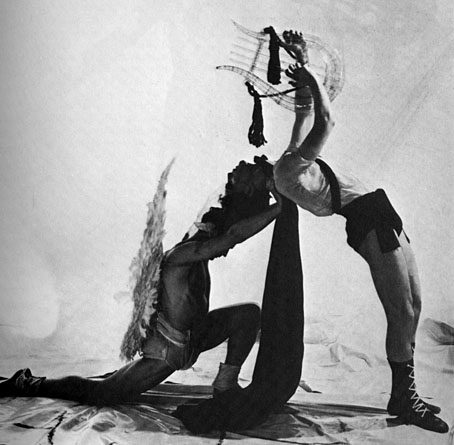
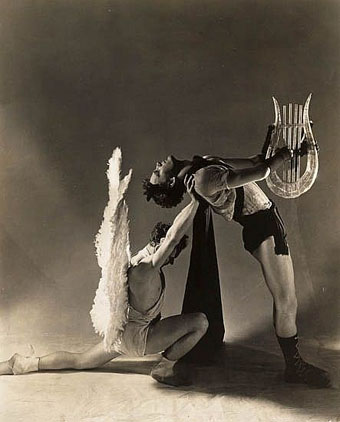
The photo above has appeared here before—it’s one of a number of dance photos taken by the great George Platt Lynes—but its subject has (for me at least) always been the source of some confusion. Since I dislike being nagged by petty conundrums I make a cursory search every so often to see if more details might be found. Five years ago all I knew was that the picture appeared in Philip Core’s Camp: The Lie that Tells the Truth (1984) where it was credited as showing dancers from Balanchine’s Icarus. Additional confusion was sown by a photo site showing the picture below with a statement that it was a) a Lynes photo (correct), and b) from Balanchine’s Die Fledermaus (wrong). No dates were given. The presence of a lyre made Orpheus seem a more likely subject: Balanchine wrote an Orpheus ballet for a Stravinsky score in 1948 but photos of that production showed very different dancers and costumes.

lynnes2.jpg

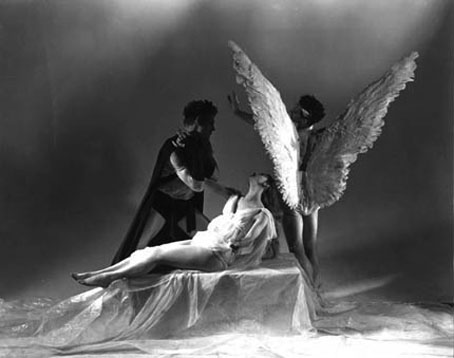
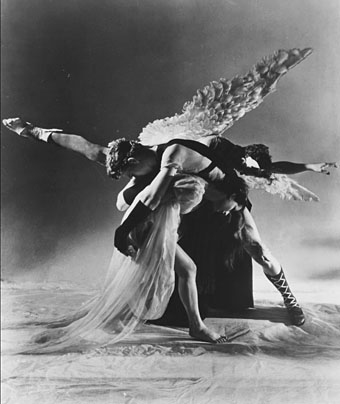
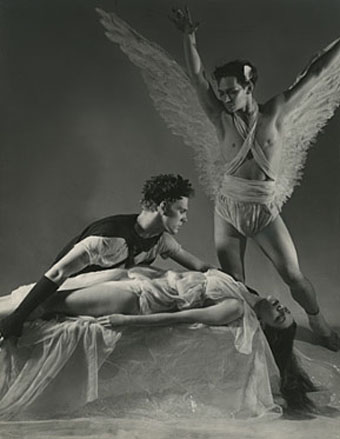
It turns out that these photos are indeed for a Balanchine ballet on the Orpheus theme, a short-lived production, Orpheus and Eurydice, from 1936 based on music from Gluck’s opera. The dancers are Lew Christensen, William Dollar and Daphne Vane. What’s most surprising now is having found a photo that’s almost but not quite the one from the Core book; photos from this session are elusive, with searches hampered by other photos taken by Lynes of Balanchine’s later ballets. There may be more in this series.

Pinterest is a good place to see more of Lynes’ photos which range from fashion shoots and celebrity portraits to moody, and occasionally surreal, homoerotica.

lynes1.jpg

lynes2.jpg

lynes3.jpg

Previously on { feuilleton }
The end of Orpheus
The recurrent pose 17
George Platt Lynes

Old New Orleans

neworleans01.jpg

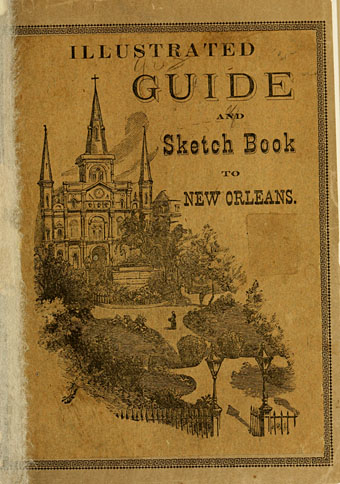
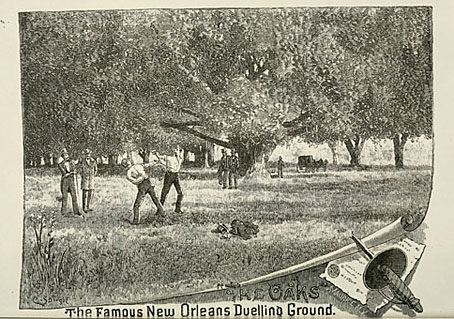
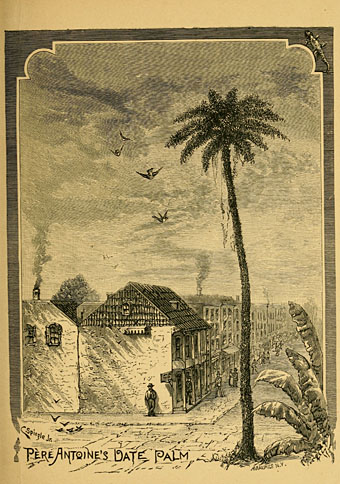
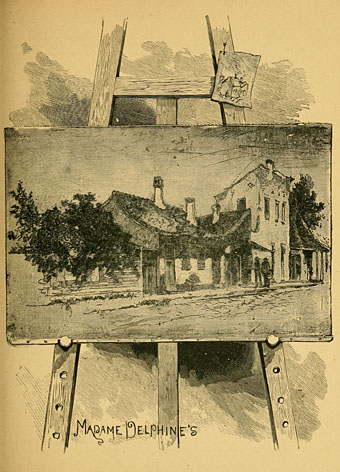
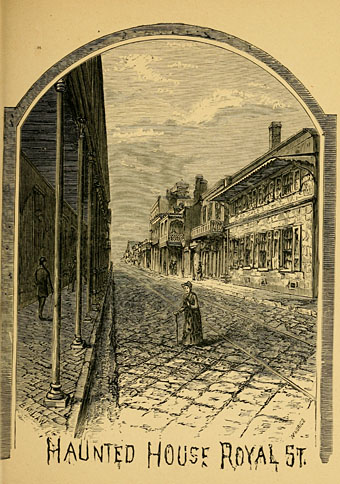
If you know the names Lafcadio Hearn and Joseph Pennell it’s surprising to see them brought together for this 1885 guide to the city of New Orleans. Hearn is better known for his many books about the folklore of Japan and China, while Pennell was a highly regarded artist and illustrator with a predilection for impressionistic cityscapes. The book is part of the Internet Archive so details are scant but it looks like a gathering together of prior work about the city with no single author—Hearn and others are credited inside. The deteriorated glamour of New Orleans means the illustrations are more picturesque than usual. Hearn had a fascination with ghost stories so he’d no doubt appreciate the view of the Haunted House on Royal Street. Browse the rest of the book here or download it here.

neworleans02.jpg

neworleans03.jpg

neworleans04.jpg

neworleans05.jpg

Continue reading “Old New Orleans”