Evelyn Paul’s Myths & Legends of Japan

paul01.jpg

I don’t think I’ve encountered anything by British artist Evelyn Paul (1883–1963) before, but she illustrated a number of books before and after Myths & Legends of Japan, a guide to Japanese folklore which was published in 1912. The book by F. Hadland Davis differs from similar volumes which tend to be simple recountings of folk tales with accompanying illustrations. Davis recounts specific stories but his volume is a more thorough guide to all forms of Japanese folk culture, with chapters on religious tradition and superstition, as well as separate chapters devoted to trees, thunderstorms, bells, mirrors, tea, Mount Fuji, foxes and supernatural beings. The book as a whole runs to over 500 pages, ending with a number of contextual appendices. Davis also lists his sources (Lafcadio Hearn, for one) which you don’t usually find in books of this type. Two of the illustrations show characters from Kwaidan, Hearn’s ghost-story collection: the sinister Lady of the Snow, and the hapless musician Hoichi the Earless.

paul02.jpg

Evelyn Paul’s illustrations strive to balance the traditional elements of ukiyo-e print-making with the watercolour style that was a common feature of illustrated books at this time. The combination doesn’t always work as well as it might—the nebulosity of watercolour painting runs counter to the definition and flatness of woodcut prints—but her illustrations still look more Japanese than European. To be fair to the artist, colour printing using photo separations was still in its infancy in 1912, and Paul’s paintings seem muddier in reproduction than they might have been in their original state. Davis’s book was published by Harrap, Harry Clarke’s London publisher, and you find similar deficiences in the reproduction of Clarke’s paintings.

paul03.jpg

paul04.jpg

paul05.jpg

Continue reading “Evelyn Paul’s Myths & Legends of Japan”

Covers for The Double-Dealer

dd01.jpg

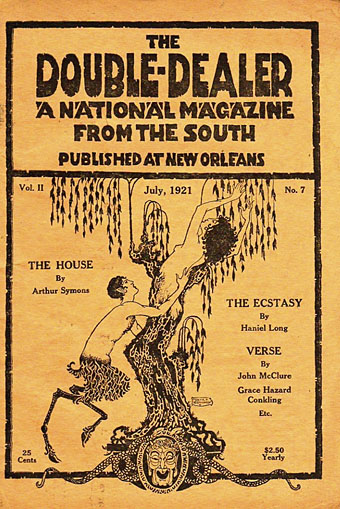
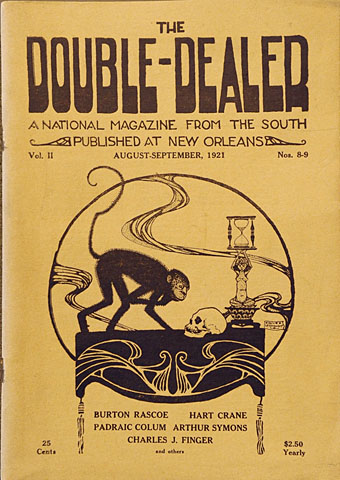
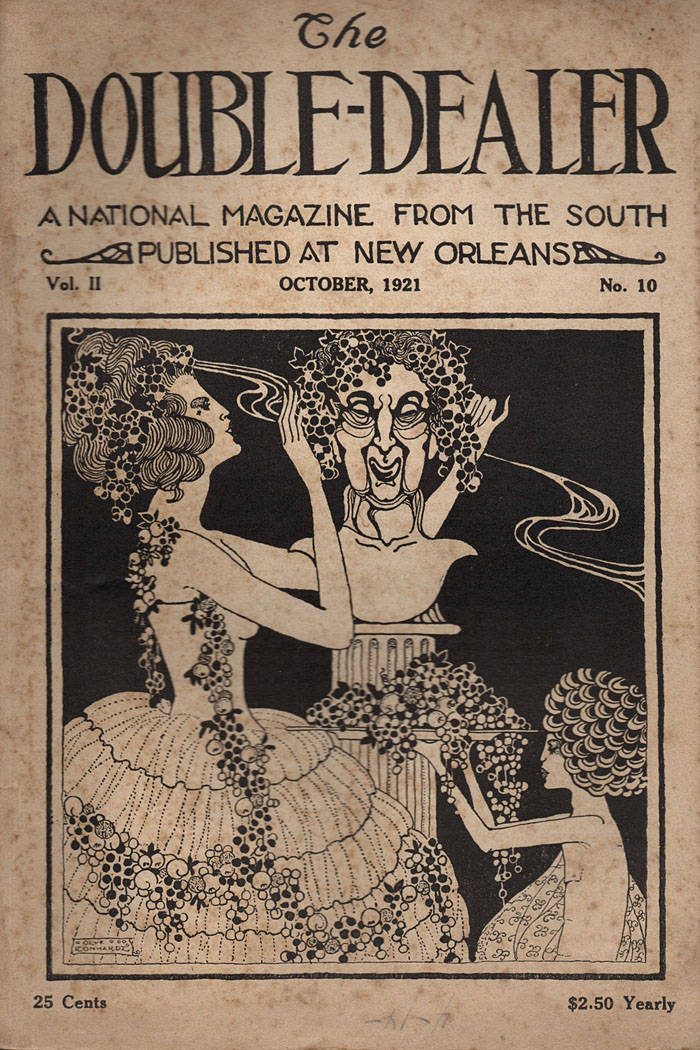
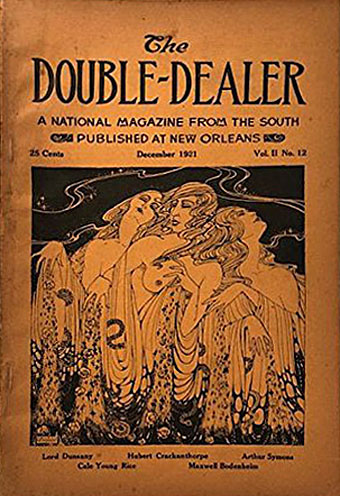
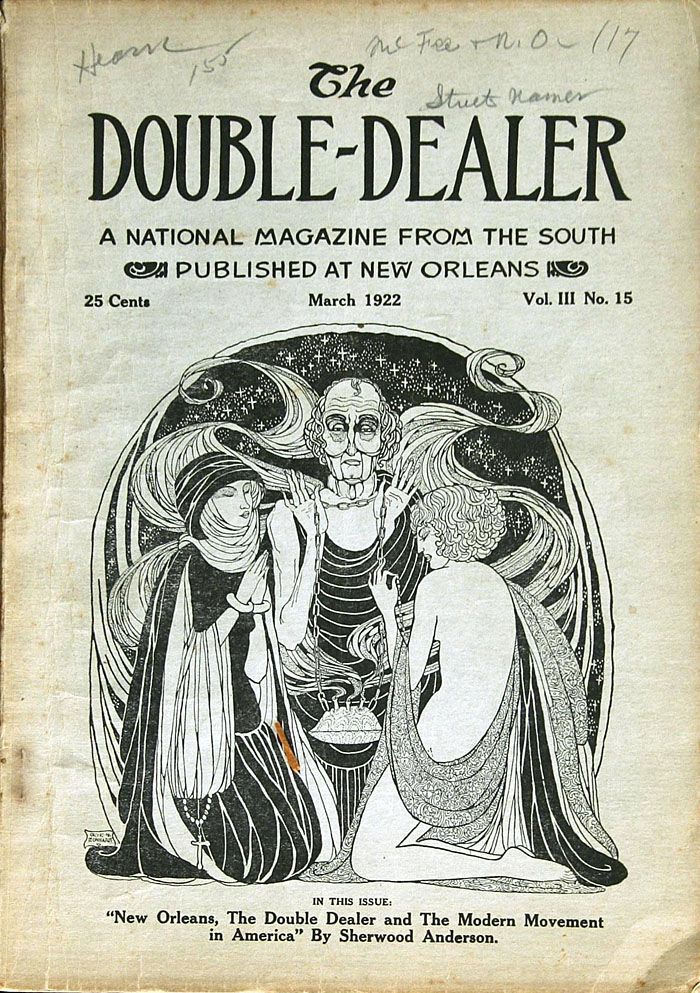
The Double-Dealer was a literary magazine “published at New Orleans” from 1921 to 1926 whose covers for the first two years of its run wouldn’t have been out of place twenty years earlier. In its written content the magazine wasn’t a throwback to the fin de siècle but was flying the flag for Modernism, an editorial stance that might seem at odds with the Beardsley-like cover art, at least until you notice the names of some of the contributors. Essayist and poet Arthur Symons had been a friend of Aubrey Beardsley’s in the 1890s, and the pair worked together on their own magazine, The Savoy, as editor and art editor respectively. Another contributor, Djuna Barnes, was a thoroughgoing Modernist in her writing but she was also an occasional artist who produced a number of drawings in a Beardsley-like style.

dd01.jpg

The covers of The Double-Dealer up to June 1922 were the work of Olive Leonhardt who doesn’t seem to have produced anything else in this manner. The magazine is notable today for having published early writings by William Faulkner and Ernest Hemingway but the first few issues also include contributions from Lafcadio Hearn, Lord Dunsany and James Branch Cabell. A press ad declared that “rebels and reactionaries rub shoulders” in the pages of the magazine, so maybe Leonhardt’s covers were a further example of editorial equanimity. Or maybe this type of art was more suited to New Orleans than New York City. The cover for July 1922 by Gordon Ertz continues in the Leonhardt manner, after which the magazine adopted the sober presentation common to literary magazines of the period, with a simple design based on a Janus-headed Roman coin.

Update: Added a credit for Gordon Ertz.

dd03.jpg

dd04.jpg

dd05.jpg

Continue reading “Covers for The Double-Dealer”

Weekend links 472

isono.jpg

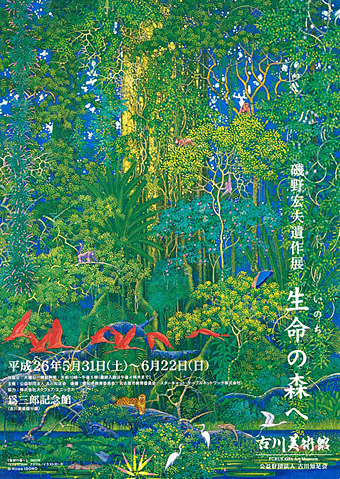
Poster art by Hiroo Isono.

• “[Divine] didn’t want to pass as a woman; he wanted to pass as a monster. He was thought up to scare hippies. And that’s what he wanted to do. He wanted to be Godzilla. Well, he wanted to be Elizabeth Taylor and Godzilla put together.” I can’t help linking to yet another John Waters interview when he always has things like this to say.

• Fifty shades of grey: great towers of the Eastern bloc photographed by David Navarro & Martyna Sobecka.

• Seeking Beastliness and Defining Beauty: Clive Hicks-Jenkins on visualisations of Beauty and the Beast.

Fire Temple by Bobby Krlic (The Haxan Cloak) from the Midsommar soundtrack.

Brad Jolliff & Mark Robinson on the scientific legacy of the Apollo programme.

John Boardley on Renaissance memes and the chemical pleasure garden.

• “It’s important to go out and feel the so-called reality,” says David Lynch.

Peter Strickland talks to Robert Barry about his new film, In Fabric.

Nico in Manchester: “She loved the architecture—and the heroin”.

• Mix of the week: Secret Thirteen Mix 292 by Paco Sala.

• Andrei Codrescu on the many lives of Lafcadio Hearn.

Hiroo Isono: Into the Depths of the Sacred Forest.

• At Dennis Cooper’s: Queer.

The Beast (1956) by Milt Buckner | The Beast (1989) by Rhythm Devils | Beast (1994) by Brian Eno

Old New Orleans

neworleans01.jpg

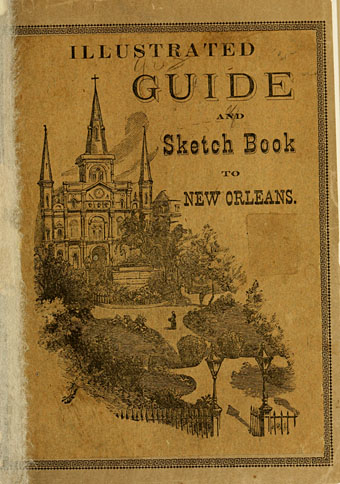
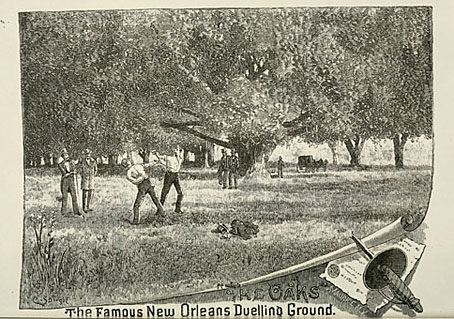
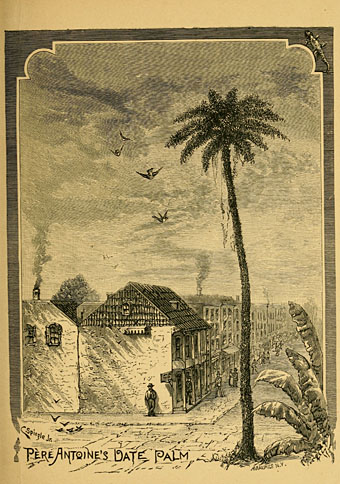
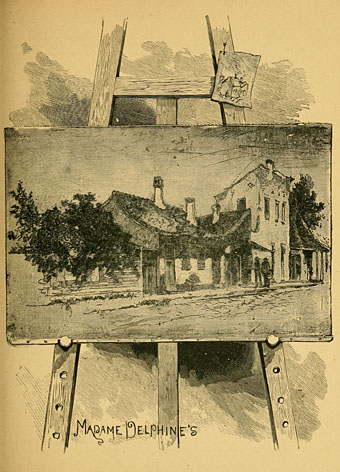
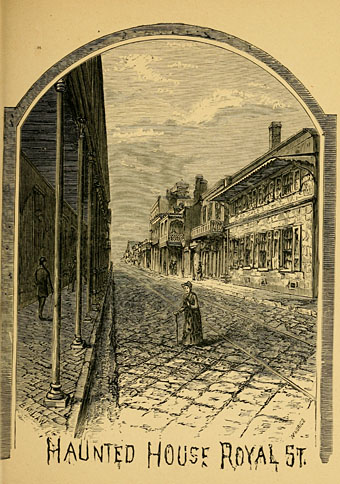
If you know the names Lafcadio Hearn and Joseph Pennell it’s surprising to see them brought together for this 1885 guide to the city of New Orleans. Hearn is better known for his many books about the folklore of Japan and China, while Pennell was a highly regarded artist and illustrator with a predilection for impressionistic cityscapes. The book is part of the Internet Archive so details are scant but it looks like a gathering together of prior work about the city with no single author—Hearn and others are credited inside. The deteriorated glamour of New Orleans means the illustrations are more picturesque than usual. Hearn had a fascination with ghost stories so he’d no doubt appreciate the view of the Haunted House on Royal Street. Browse the rest of the book here or download it here.

neworleans02.jpg

neworleans03.jpg

neworleans04.jpg

neworleans05.jpg

Continue reading “Old New Orleans”

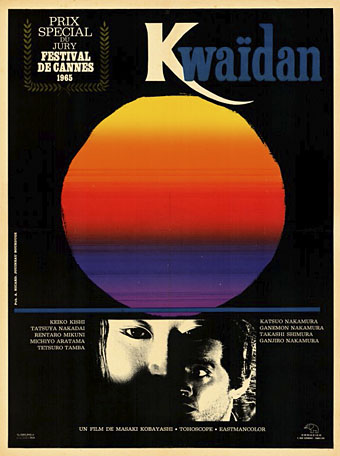
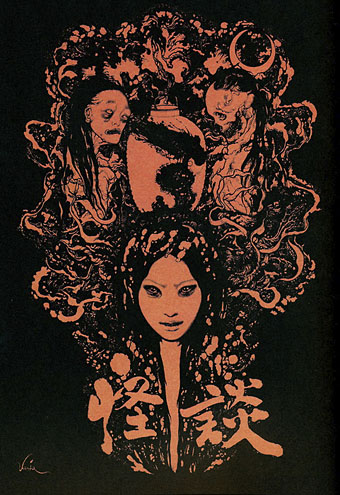
Kwaidan

kwaidan1.jpg

Kwaidan: Stories and Studies of Strange Things (1904), a book by Lafcadio Hearn retelling Japanese ghost stories. Later an incredible film by Masaki Kobayashi and a drawing by Vania Zouravliov.

kwaidan2.jpg

Kwaidan (aka Kaidan; 1964).

kwaidan3.jpg

Kwaidan by Vania Zouravliov (no date).

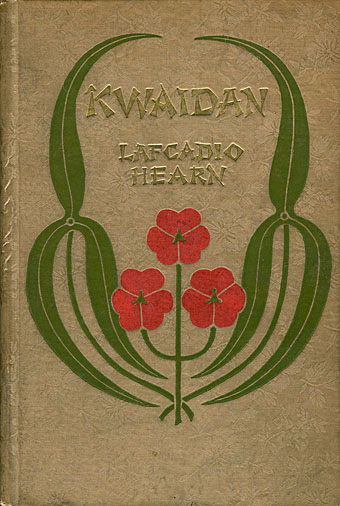
Kwaidan, Stories and Studies of Strange Things by Lafcadio Hearn with an introduction by Oscar Lewis (1932).

Previously on { feuilleton }
The art of Bertha Lum, 1869–1954
The Boy Who Drew Cats
The art of Takato Yamamoto