Weekend links 207

barker.jpg

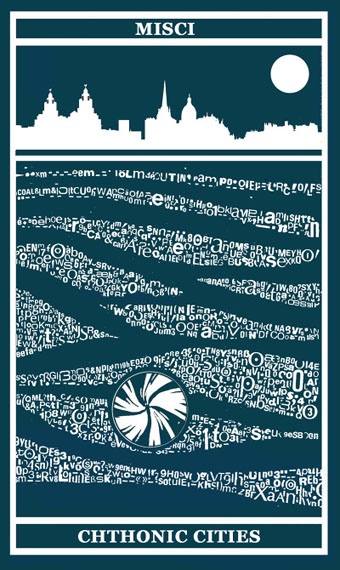
Chthonic Cities by David Chatton Barker. One of a series of Folklore Tapes screenprints available from Bleep.

• The original version of Kenneth Anger’s Lucifer Rising, the one with the Jimmy Page soundtrack that was completed in 1973, has always been described as lost/stolen/buried or otherwise gone forever. So you’d think the news that a print had been discovered recently by Brian Butler would have received greater attention. There’s a screening in Los Angeles this Thursday. When do the rest of us get to see it?

Chris Marker: A Grin Without a Cat, an exhibition and series of Marker-related events at the Whitechapel Gallery, London. Related: The Encounter of M. Chat & Chris Marker as Told By Louise Traon.

• The trailer for The Gospel According to St Derek, a forthcoming documentary about Derek Jarman. Related: Carl Swanson on why Tilda Swinton is not quite of this world.

Maybe there’s just something conservative at the bedrock of American fiction. […] Or maybe it’s just another symptom of the creeping conservatism that’s infected so many aspects of the culture.

Eric Obenauf talks to author Jeff Jackson whose comments about cultural conservatism could equally be applied to the UK.

• Primitive graphics, inventive graphics, budget Surrealism, and some great theme tunes; it’s Trunk TV, Episode 1: Title Sequences.

• Mixes of the week: Secret Thirteen Mix 110 by Black To Comm, and Intro To Drone For Debcon 1, almost 7 hours of music!

Joseph Burnett reviews Ett, an album of electronic music by Klara Lewis.

The Delian Mode (2009), a film about Delia Derbyshire by Kara Blake.

• Extracts from Tokyo Reverse by Simon Bouisson and Ludovic Zuili.

Dan Piepenbring on The Haunting Illustrations of Alfred Kubin.

• At Strange Flowers: Photos of arcades by Germaine Krull.

• Fish, Fiends, and Fantasy: The Gothic Art of Ian Miller.

• At 50 Watts: Richard Teschner and His Puppets.

• Sonic Foam: Ian Penman on Kate Bush and Coil.

Bits and Pieces

Lucifer (1968) by The Salt | Experiment IV (1986) by Kate Bush | Methoxy-N, N-Dimethyl (5-MeO-DMT) (1998) by Coil
Weekend links 204

somnium.jpg

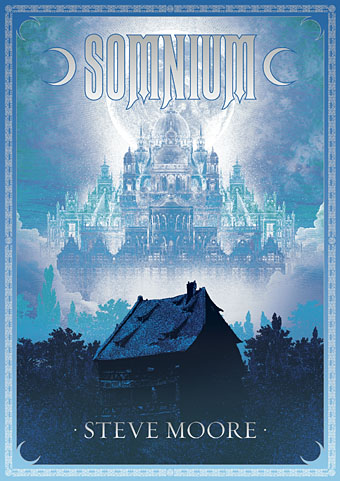
RIP Steve Moore. We never met, unfortunately, but I was very pleased he asked me to create a cover for his unique occult novel, Somnium, in 2011. Prior to this we’d been connected by shared acquaintances, colleagues, and membership in the informal cabal that was (and maybe still is) The Moon & Serpent Grand Egyptian Theatre of Marvels. Steve’s long friendship with Alan Moore (no relation) is well-documented, not least by Alan himself who made Steve the subject of his Unearthing project. One surprising connection for me was that Steve also had a link to Savoy Books. In the late 1960s he was working for comics publisher Odhams where he was able to copy for David Britton some Ken Reid comic art which Odhams had refused to print. Dave published the forbidden pages in his first magazine, Weird Fantasy, in 1969. In 2011 Steve talked to Pádraig Ó Méalóid about Somnium, and also to Aug Stone at The Quietus. Aug Stone penned a few memorial words here.

• “People love using the word ‘porn’ as long as there’s a partner for it. Pair ‘porn’ with something else and it’s usually a good thing. A celebration of style and culture. But that word on its own? Well.” Porn star Conner Habib asks why people have such a problem with porn actors.

Dave Maier‘s Russian cinema recommendations. Several favourites there including the magical and remarkable Shadows of Our Forgotten Ancestors (1964) which, as Maier notes, isn’t really Russian but should be seen in any case.

Shakespeare uses verbal magic, cantrips and ditties, nonsense songs and verses throughout the plays, but in Othello he gives a glimpse of how powerful a spell becomes when it’s no longer oral, but fixed in material form. The fatal handkerchief is no ordinary hanky; it’s a love spell, and it was made with gruesome and potent ingredients (mummified “maiden’s hearts”) by a two-hundred-year-old sibyl in Egypt—Egypt being the birthplace and pinnacle of magic knowledge.

Marina Warner on magic.

• Mixes of the week: an hour of electro-acoustics and contemporary classical recordings sequenced by Laurel Halo, and (from 2010) 36-minutes of “umbral electronic hypnagogia” by The Wyrding Module.

• “This is the book that, 10 years later, inspired Richard Hollis’s landmark design for John Berger’s Ways of Seeing.” Rick Poynor on Chris Marker’s Commentaires.

• Is the Linweave Tarot the grooviest deck ever made? Dangerous Minds thinks so.

• Bobby Barry talks to Holger Czukay about his 1969 audio collage, Canaxis 5.

• “What Happened to Experimental Writing?” asks Susan Steinberg.

Aldous Huxley‘s lectures on visionary experience at MIT, 1962.

Laura Palmer will see Agent Cooper again in just a few hours.

Callum found a copy of The Gay Coloring Book (1964).

Metal Cats

Moonshake (1973) by Can | Lunar Musick Suite (1976) by Steve Hillage | Dark Moon (1993) by Holger Czukay | Boy In The Moon (2012) by Julia Holter

Weekend links 196

wellcome1.jpg

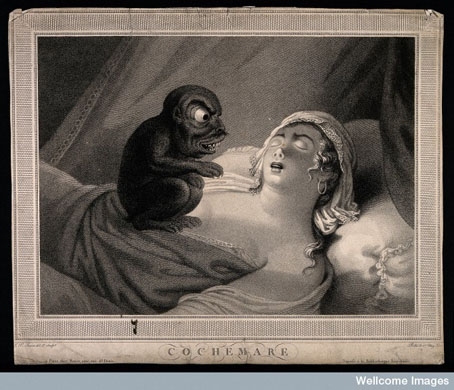
Cochemare (1810) by Jean Pierre Simon. One of 100,000 high-resolution images now available from Wellcome Images.

• Ted Morgan’s Literary Outlaw: The Life and Times of William S. Burroughs (1990) was a solid biography blighted by a bizarrely bad-tempered and judgemental attitude towards many of Burroughs’ friends and colleagues. Morgan says Burroughs disliked the book (he also says his subject died in 1993, not 1997…) so I’m looking forward to the new biography by Barry Miles, Call Me Burroughs: A Life. There’s a curious detail in Jeremy Lybarger’s piece about August Derleth, HP Lovecraft’s publisher and lifetime champion, causing a fuss after the Chicago Review published extracts from Naked Lunch in 1958. Burroughs enjoyed Lovecraft’s fiction but it’s unlikely that Lovecraft would have been anything other than appalled by Burroughs’s work. Barry Miles will be holding a Q&A session at the ICA, London, next month following a screening of Howard Brookner’s restored documentary, Burroughs: The Movie.

• Mix of the week: Secret Thirteen Mix 105 by Sturqen. At 3quarksdaily Dave Maier writes in praise of drones (the musical variety), and links to three mixes.

• Interviews: Haakon Nelson talks to Harold Budd, Joseph Burnett talks to William Basinski, John Stezaker talks to Nicolas Roeg.

Derek responded to an invitation to address [AIDS] hysteria by lining the gallery with a set of tarred and feathered mattresses loaded with the traces of queer love-making and then framing them against wallpaper made from Xeroxed, blood-spattered front pages. In the middle of all this he then constructed a makeshift barbed-wire cage that imprisoned and protected a pair of apparently naked lovers – usually a pair of handsome, sleeping boys, but for one afternoon at least Tilda Swinton dropped by, just to make the point that the boys didn’t have an exclusive stake in or artistic rights to this crisis. Between the walls and the cage, the air of the gallery was thick with tension and hatred – sometimes literally so, as visitors to the gallery objected vociferously to what they were seeing.

Neil Bartlett on celebrating Derek Jarman 20 years after his death.

• William Friedkin’s Wages of Fear remake, Sorcerer (1977), receives an overdue reissue on DVD/Blu-ray in April.

James Knowlson asks “What lies beneath Samuel Beckett’s half-buried woman in Happy Days?”

• The UK’s web filtering seems to be blocking common sense says Jane Fae.

wellcome2.jpg

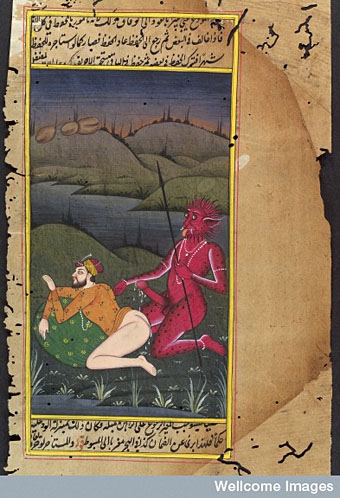
A devil buggering a man (19th century).

• The poetry of Hart Crane, from the American epic to personal belonging.

The Sonny Sharrock Quartet play Stupid Fuck, live 1988.

Pinterest nightmares

Borogoves

• Lutinemusic: Espera | Died Of Love | All I Have Is Gold

Einstein on the Beach

einstein1.jpg

Well this was a revelation. Einstein on the Beach (1976) is Philip Glass’s first opera, a collaboration with theatrical producer Robert Wilson, and the only Glass opera with which I’m familiar. With a running-time of almost five hours it’s not light listening, and when many of the pieces consist of little more than slabs of keyboard or choral arpeggios it’s always been evident that visuals are required to augment music that otherwise threatens to outstay its welcome.

einstein2.jpg

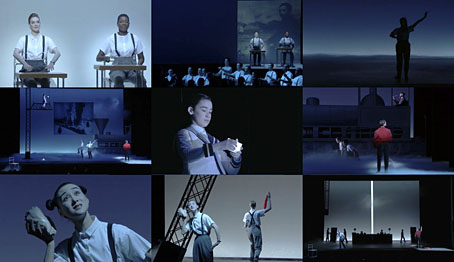
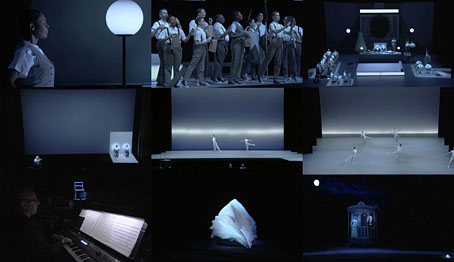
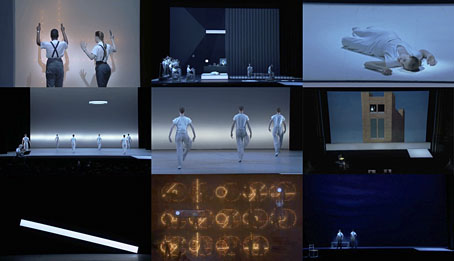
The opera has been revived several times, and in 2012 a touring presentation was staged. Despite it being one of the most celebrated works by Glass and Wilson a complete performance has never been filmed, until this month, that is, a staging at the Theatre du Chatelet in Paris. The shots here are from a video stream of the entire four-and-a-half hour show, and it’s astonishing to discover how much your appreciation is elevated—and the music enhanced—by the performance and the production.

Einstein’s life is the ostensible subject but it’s up to the audience to interpret the many allusive symbols and motifs that may (or may not) be derived from either the man’s biography or his scientific theories. The libretto is strictly formal and fragmented, and while the score alone may drive some listeners to distraction the visuals change continually, maintaining the interest while the text and music work through their cycles. Philip Glass had this to say about the work in 2012:

The opera isn’t a narrative about Einstein’s life. What connected Bob and I was how we thought about time and space in the theatre. We worked first with the time—four hours—and how we were going to divide it up. Then we thought about the images, and then the staging. I discovered that Bob thinks with a pencil and paper; everything emerged as drawings. I composed music to these, and then Bob began staging it.

Yet the piece is actually full of Einstein. Practically every image comes from Einstein’s life or ideas: trains, spaceships, clocks. And I suggested we have a musician taking his part, because Einstein played the violin—although he was such an amateur musician he couldn’t possibly have played the music I composed for him. (more)

einstein3.jpg

I’ve seen many photos of Wilson’s designs for the opera in the past but static views do nothing to convey the drama and impact of his designs when you see them coming together on the stage. The same goes for the performers, many of whom are required to be trained dancers as well as actors: several scenes are elaborate dance pieces. It’s been a pleasure to see at last the presentation of the mysterious “Knee Play” sections which separate the four acts. And I was surprised by the similarity—intentional or not—of some sequences to the shots of the slaving workers in Fritz Lang’s Metropolis, especially the climactic (and incredible) “Spaceship” scene where the whole stage erupts into light and movement. It’s easy to see why New York’s art crowd were so beguiled by this opera following its first performances in the 1970s, it really is a remarkable piece of work. The streaming version will apparently remain active for a while (there’s also a DVD release planned), and while I wouldn’t want anyone to indulge in piracy I’ll note that there’s currently a torrent of the entire video circulating if you know where to look. If you’ve any time for Philip Glass I can’t recommend this too highly. (Via Metafilter.)

Previously on { feuilleton }
Milton Glaser album covers

What the Butler Saw by Joe Orton

orton4.jpg

Dr Rance: You can’t be a rationalist in an irrational world. It isn’t rational.

“Lunatic” is a description suited to the frenetic pace and escalating calamities of the stage farce. Here the word gains greater resonance when the farce takes place in a psychiatric hospital. The customary sexual shenanigans are all in place—the play opens with Dr Prentice telling a prospective secretary to remove her clothes so he can see whether she’s suitable for the job—but in place of Carry On-style belly laughs we have another attack against authority and social ideas of normal behaviour, sexual or otherwise. This is a blacker shade of comedy than you usually find in farce. Joe Orton uses the mechanics of the form whilst undermining the cosy formulas; the ending is a happy one but only after the characters have gleefully overlooked double-incest and an act of rape. Bad taste was Orton’s forte, and that quality is very much in evidence here.

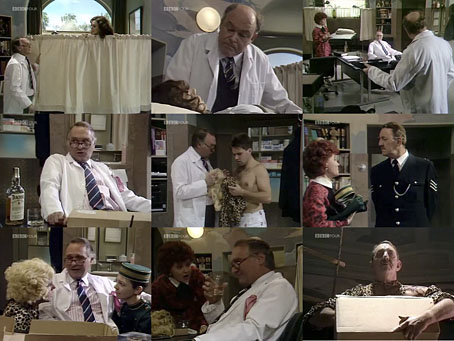
What the Butler Saw was one of several plays shown in the BBC’s Theatre Night strand in 1987. In this production Dinsdale Landen plays Dr Prentice with Prunella Scales playing Mrs Prentice. Timothy West (Prunella’s husband off-screen) perfectly incarnates the monstrous Dr Rance, a character so intoxicated with his own righteousness that he’s prepared to sign a committal order against anyone who crosses his path. (He boasts at one point of having committed his entire family.) It’s a great performance but West is ably matched by Dinsdale Landen and Prunella Scales. Barry Davis is the director. Plays such as this suffer without the involvement of an audience but this production gives an idea of how manic a decent stage production must be. The version on YouTube is in six parts.

What the Butler Saw: part 1 | part 2 | part 3 | part 4 | part 5 | part 6

Previously on { feuilleton }
A Genius Like Us: A Portrait of Joe Orton
Malicious Damage
Joe Orton Online
Joe Orton