What the Butler Saw by Joe Orton

orton4.jpg

Dr Rance: You can’t be a rationalist in an irrational world. It isn’t rational.

“Lunatic” is a description suited to the frenetic pace and escalating calamities of the stage farce. Here the word gains greater resonance when the farce takes place in a psychiatric hospital. The customary sexual shenanigans are all in place—the play opens with Dr Prentice telling a prospective secretary to remove her clothes so he can see whether she’s suitable for the job—but in place of Carry On-style belly laughs we have another attack against authority and social ideas of normal behaviour, sexual or otherwise. This is a blacker shade of comedy than you usually find in farce. Joe Orton uses the mechanics of the form whilst undermining the cosy formulas; the ending is a happy one but only after the characters have gleefully overlooked double-incest and an act of rape. Bad taste was Orton’s forte, and that quality is very much in evidence here.

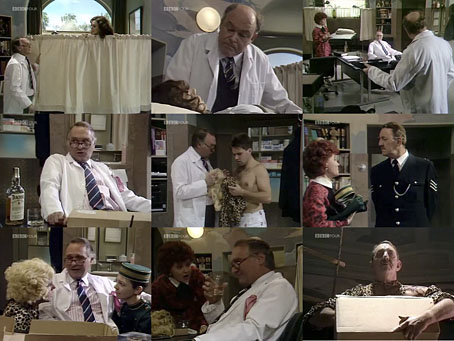
What the Butler Saw was one of several plays shown in the BBC’s Theatre Night strand in 1987. In this production Dinsdale Landen plays Dr Prentice with Prunella Scales playing Mrs Prentice. Timothy West (Prunella’s husband off-screen) perfectly incarnates the monstrous Dr Rance, a character so intoxicated with his own righteousness that he’s prepared to sign a committal order against anyone who crosses his path. (He boasts at one point of having committed his entire family.) It’s a great performance but West is ably matched by Dinsdale Landen and Prunella Scales. Barry Davis is the director. Plays such as this suffer without the involvement of an audience but this production gives an idea of how manic a decent stage production must be. The version on YouTube is in six parts.

• What the Butler Saw: part 1 | part 2 | part 3 | part 4 | part 5 | part 6

Previously on { feuilleton }
• A Genius Like Us: A Portrait of Joe Orton
• Malicious Damage
• Joe Orton Online
• Joe Orton
A Genius Like Us: A Portrait of Joe Orton

orton1.jpg

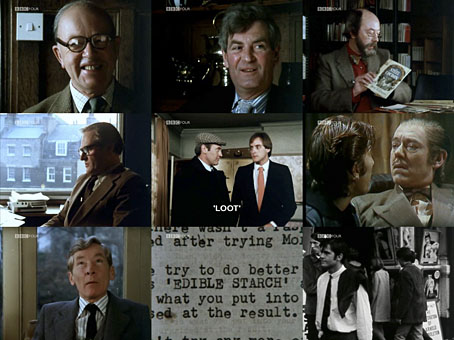
Last week’s reading was the script of Joe Orton’s Loot after finding one of the first published editions of the play. Reading a play is never the same as seeing it performed, of course, but it’s still very funny, and many of its digs at police corruption haven’t dated at all. There is a film of Loot but it’s poor stuff, with Richard Attenborough miscast as the belligerent Inspector Truscott. Much better is Douglas Hickox’s film of Entertaining Mr Sloane (1970) which appeared shortly before Loot, and which is worth seeing for Beryl Reid reprising her stage role as the unfortunate Kath.

orton2.jpg

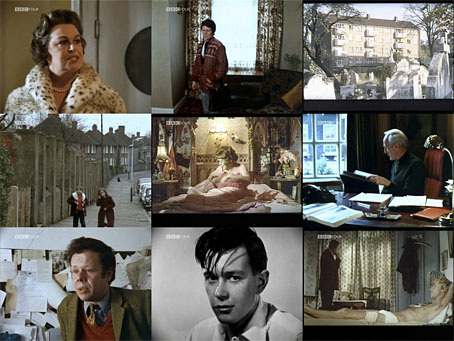
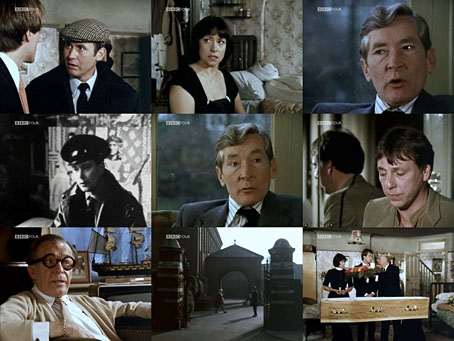
Orton’s brief career—a mere four years from complete obscurity in 1963 to his death at the hands of partner Kenneth Halliwell in 1967—is explored in A Genius Like Us: A Portrait of Joe Orton, a 70-minute BBC Arena documentary from 1982. Anyone who’s seen Prick Up Your Ears (1987)—Stephen Frears’ Orton biopic with a script by Alan Bennett—will be familiar with the train of events. Pamela Brighton and Nigel Williams’ film interviews some of the real people who appear in Prick Up Your Ears, notably surviving members of Orton’s family and Orton biographer John Lahr. In addition there’s a substantial contribution from Kenneth Williams, a close friend of Orton and Halliwell’s who was also badly miscast as Inspector Truscott in the first disastrous performances of Loot. Between the interviews there are some scenes from a lacklustre TV performance of Loot, a stage performance of What the Butler Saw, and bits of Entertaining Mr Sloane.

orton3.jpg

Previously on { feuilleton }
• Malicious Damage
• Joe Orton Online
• Joe Orton
Weekend links 189

wilson.jpg

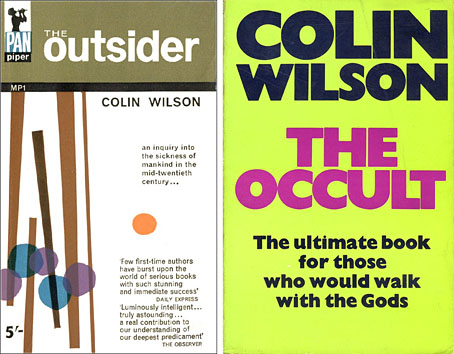
The Outsider (1956), 1963 edition; The Occult (1971), 1973 edition.

The cover of the 1973 UK paperback of Colin Wilson‘s mammoth overview of occultism can still be offered as a pinnacle of hyperbole. The book itself is a very serious and informative study but its success set Wilson on a path as a writer about the paranormal where he’d previously been concerned with literature, philosophy and psychology. For many critics this finished his already shaky reputation as a serious thinker. He continued to write about philosophy and literature in subsequent books but dubious speculations about Atlantis are always more commercially attractive than studies of Nietzsche, hence the proliferation of lost continents in the later part of a bibliography which the Wilson website lists at 114 titles. Wilson was a maverick intellectual whose curiosity ignored many of the boundaries that restrained his metropolitan contemporaries; he was also an autodidact of a type that seems to irritate the university-educated. Mentions of his name in British newspapers were frequently couched in sneering or dismissive terms. His current reputation can be measured by the lack of attention the news of his death has prompted in the UK at the time of writing. (That said, dying on the same day as Nelson Mandela was unfortunate timing.)

Savoy Books published an edition of Wilson’s crime novel, The Killer, in 2002. I designed that volume, rather badly, I think. In 2004 Robert Meadley wrote a book-length reaction to Wilson’s autobiography, Dreaming to Some Purpose, which can be downloaded for free from Savoy. In it Meadley mounts a robust defence of Wilson against the broadsheet termagants. Elsewhere: the only newspaper obituary so far is at The Times (subscription required); Colin Wilson on Desert Island Discs in 1978; Gary Lachman interviewing Wilson for Fortean Times in 2004; musician Anthony Reynolds discussing his collaboration with Wilson.

• “Art, music and a mind-blowing voyage of discovery”: Richard Neville on the late Martin Sharp. At Design Observer Rick Poynor looks back at Sharp’s book and magazine illustrations of the 1960s. Of particular note is Sharp’s contribution to the “Magic Theatre” issue of Oz magazine, a unique combination of collaged visuals and text which Alan Moore often refers to as a favourite work. (See issue 12 of Moore’s Promethea, “The Magic Theatre of the Mind“.)

• “The naked woman in art isn’t unusual, but we have trouble viewing the male body as a sexual, or artistic, object,” says James Polchin.

But how can anyone be bored when there’s always death to think about? Every day. Every hour. Don’t you? All the rest is just evading or glossing the real subject of our lives. Beckett, again, the maestro of death: Never but the one matter. The dead and gone. The dying and the going. From the word go. I too shall cease and be as when I was not yet, only all over instead of in store.

Jenny Diski on death and dying.

• A teaser trailer for The Dreamlands, a film by Huan Vu (Die Farbe) based on HP Lovecraft’s Dream Cycle.

• “On Watching Wages of Fear with my 11-Year-Old Daughter” by Debra Morris.

• Abram Games’ “bat wings” BBC logo is 60 years old. See it in action here.

• At Strange Flowers: Romaine Brooks‘ portraits of her famous friends.

• At Front Free Endpaper: Mervyn Peake illustrates Treasure Island.

• The Great God Pan (plus satyrs and fauns) at Pinterest.

• Dan Wilson on “Electric Music” on the Victorian stage.

• Mix of the week: Fact Mix 414 by Julianna Barwick.

• The BFI chooses 10 great British rural horror films.

• Dunwich – The search for Britain’s Atlantis.

• The Grand Canyon filled with fog.

• The Bells of Dunwich (1975) by Stone Angel | O.O.B.E. (1992) by The Orb (feat. Colin Wilson) | Why We Make It Difficult On Ourselves (2010) by Anthony Reynolds & Colin Wilson

Jarman (all this maddening beauty)

jarman1.jpg

February 2014 will see the 20th anniversary of the death of Derek Jarman. Between then and now I expect we’ll see some retrospectives, although we’ve already had an excellent cinematic one, Isaac Julien and Tilda Swinton’s memorial/documentary Derek (2008). I’d be pleased to see more of Jarman’s films given a decent release on disc: In the Shadow of the Sun has never been available on DVD, and Sebastiane has yet to be released in an uncensored print. When the BFI is releasing Peter de Rome’s gay porn uncut on DVD there’s no longer any excuse for this.

jarman2.jpg

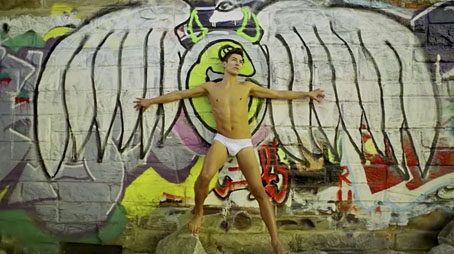
Stephen Benedicto filmed by Ben Carver.

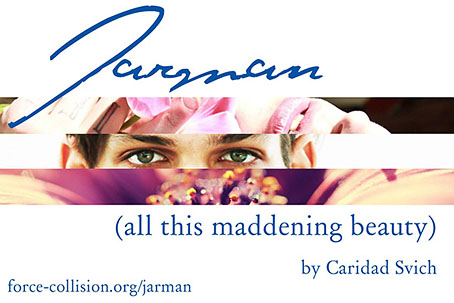
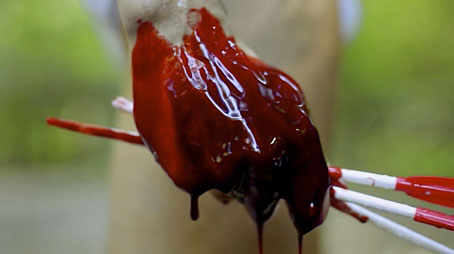
Jarman (all this maddening beauty) is a multimedia solo performance work by playwright Caridad Svich currently in production, with plans for performance in the US later next year. Most of us are unlikely to see this but there is a short promo/trailer by Ben Carver featuring some Jarmanesque imagery, albeit a lot more high-def than Derek was usually allowed. I’d have been tempted to use slowed-down Super-8 if you can still find the cameras or film stock. Production company force/collision has more information about the project in pdf form. Via Towleroad.

jarman3.jpg

jarman4.jpg

Previously on { feuilleton }
• Sebastiane by Derek Jarman
• A Journey to Avebury by Derek Jarman
• Derek Jarman’s music videos
• Derek Jarman’s Neutron
• Mister Jarman, Mister Moore and Doctor Dee
• The Tempest illustrated
• In the Shadow of the Sun by Derek Jarman
• Derek Jarman at the Serpentine
• The Angelic Conversation
• The life and work of Derek Jarman

Salomé: the font

salomefont01.jpg

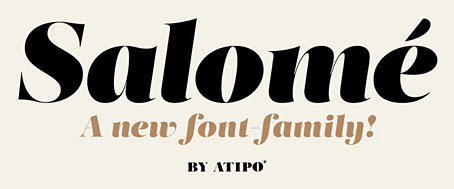
This isn’t the first font that’s been named after Salomé but Salome (without accent) by Rebecca Alaccari and Patrick Griffin was a revival of an earlier design, Cantini, from 1972, whereas Salomé is an original creation by Spanish design studio Atipo. The Atipo design itself owes something to the 1970s being reminiscent of François Boltana’s Stilla (1973), albeit without the eccenticities that make Boltana’s typeface so redolent of the period. Salomé comes in four styles, all of them variations on the extra-bold weights of Didone typefaces.

salomefont02.jpg

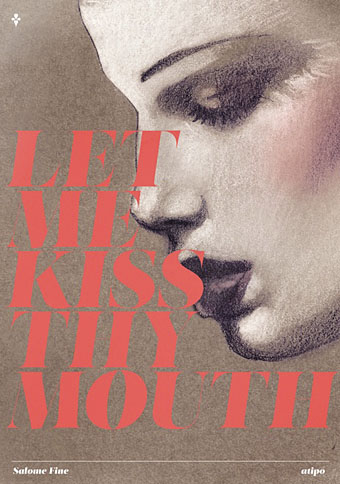
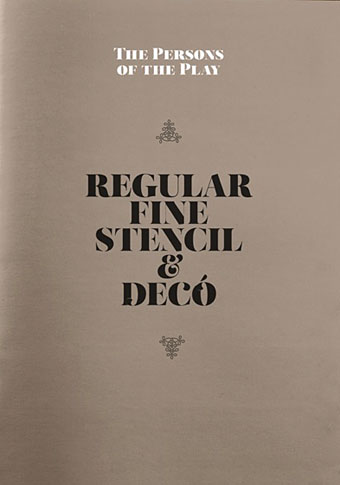
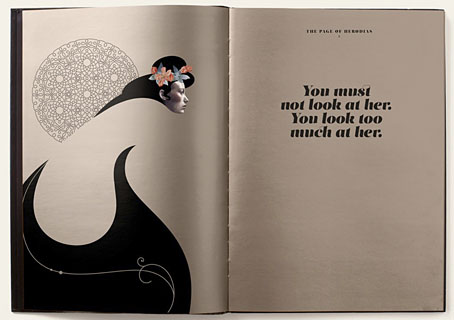
Having a predilection for this look the design appeals to me even without its associations. Atipo add to the attraction by promoting their font family with some gorgeous illustrations juxtaposed against quotes from Oscar Wilde’s play. None of the poster designs or the booklet pages below are credited on the website. The on-screen booklet highlights significant moments from the play with illustrations that manage to be Beardsley-like without going down the pastiche route. This is the way to show off a new font design, it’s just a shame the booklet isn’t available as a pdf. The icing on the cake is that the regular style of Salomé is available for free so long as you help promote it via Twitter or Facebook. The complete family is available for a very reasonable price. Now I have to find something to create that’s worthy of the design.

salomefont03.jpg

salomefont04.jpg

Continue reading “Salomé: the font”