
Weekend links 802

grimshaw.jpg

November (1879) by John Atkinson Grimshaw.

• As usual, the first links in November are heavy with the spirit of Halloween. At the BFI: Zombies in the Lake District: how locations from The Living Dead at Manchester Morgue look today; Adam Scovell looks back at one of the more curious zombie films of the 1970s, a Spanish/Italian production directed by Jorge Grau in and around my home city. Also at the BFI: Georgina Guthrie selects 10 great erotic horror films.

• “We must recognise that reality without mystery is impossible.” In a recently digitised film clip, René Magritte is interviewed (in French) by Belgian TV in 1961.

• The Italian edition of The Moon and Serpent Bumper Book of Magic is out now from Panini. Thanks to Smoky Man for posting photos!

• Among the new titles at Standard Ebooks, the home of free, high-quality, public-domain texts: Short Fiction by Saki.

• At Smithsonian Mag: Elizabeth Djinis explains how an Italian town came to be known as the “City of Witches”.

• New music: The Whole Woman by Anna von Hausswolff ft. Iggy Pop; Forces, Reactions, Deflections by Scanner.

• RIP Jack DeJohnette, jazz drummer; Prunella Scales, actor; Peter Watkins, film-maker.

Space Type Generator

Algiers November 1, 1954 (1965) by Ennio Morricone | November Sequence (2011) by Pye Corner Audio | Richter: November (2019) by Mari Samuelsen
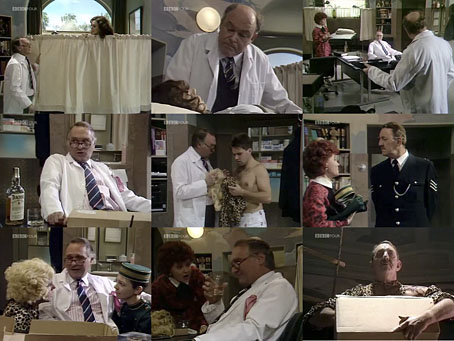
What the Butler Saw by Joe Orton

orton4.jpg

Dr Rance: You can’t be a rationalist in an irrational world. It isn’t rational.

“Lunatic” is a description suited to the frenetic pace and escalating calamities of the stage farce. Here the word gains greater resonance when the farce takes place in a psychiatric hospital. The customary sexual shenanigans are all in place—the play opens with Dr Prentice telling a prospective secretary to remove her clothes so he can see whether she’s suitable for the job—but in place of Carry On-style belly laughs we have another attack against authority and social ideas of normal behaviour, sexual or otherwise. This is a blacker shade of comedy than you usually find in farce. Joe Orton uses the mechanics of the form whilst undermining the cosy formulas; the ending is a happy one but only after the characters have gleefully overlooked double-incest and an act of rape. Bad taste was Orton’s forte, and that quality is very much in evidence here.

What the Butler Saw was one of several plays shown in the BBC’s Theatre Night strand in 1987. In this production Dinsdale Landen plays Dr Prentice with Prunella Scales playing Mrs Prentice. Timothy West (Prunella’s husband off-screen) perfectly incarnates the monstrous Dr Rance, a character so intoxicated with his own righteousness that he’s prepared to sign a committal order against anyone who crosses his path. (He boasts at one point of having committed his entire family.) It’s a great performance but West is ably matched by Dinsdale Landen and Prunella Scales. Barry Davis is the director. Plays such as this suffer without the involvement of an audience but this production gives an idea of how manic a decent stage production must be. The version on YouTube is in six parts.

What the Butler Saw: part 1 | part 2 | part 3 | part 4 | part 5 | part 6

Previously on { feuilleton }
A Genius Like Us: A Portrait of Joe Orton
Malicious Damage
Joe Orton Online
Joe Orton