The art of Roland Cat

cat02.jpg

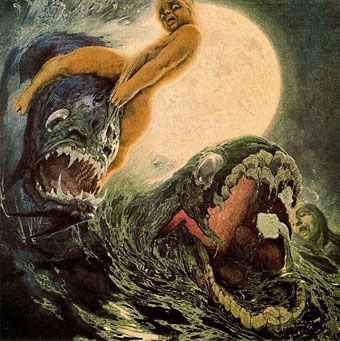
The Rime of the Ancient Mariner (Axium, 1969).

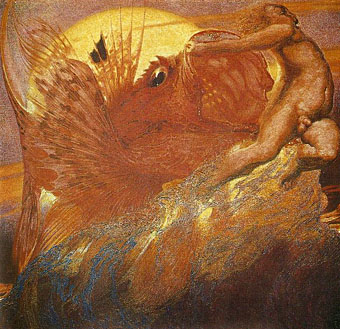
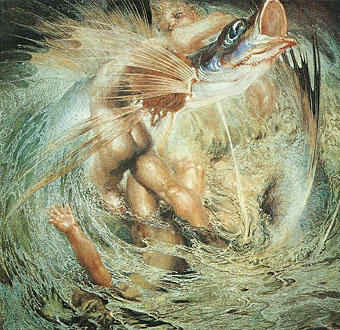
The work of French artist Roland Cat is less Surreal—although some of it could be classed as such—than Fantastic in a manner similar to that of contemporaries such as Michel Henricot, Jean-Pierre Ugarte, Jean-Marie Poumeyrol, Gérard Trignac and others. Art of this nature receives support and encouragement from the French to a degree which often seems inversely proportional to the ignorance it receives from the Anglophone art world. For years the only example of Cat’s work I’d seen was the picture that Dave Britton used on the cover of the Savoy edition of New Worlds magazine in 1979. The examples here are the result of a web trawl, hence the missing titles and dates.

The Coleridge illustration above was for a volume that was part of a series produced by a French publisher in 1969, each edition of which was illustrated by a different artist. This forum post has more details. For more about Roland Cat see this short appraisal at Visionary Review.

cat08.jpg

Sleep (1980).

cat01.jpg

Dagon (Belfond, 1987).

Continue reading “The art of Roland Cat”

The art of James Gleeson, 1915–2008

gleeson1.jpg

Funeral Procession in a Wounded Landscape (1945).

James Gleeson was an Australian Surrealist painter whose work I don’t think I’d seen before. The early pictures tend towards the post-Dalí school that crowds the second and third generation of Surrealist painting. More interesting for me are the later landscapes (if they can be labelled such) produced by a combination of collage and painting techniques. Some of HR Giger’s work in the 1970s explored similar organic terrain but this period didn’t last very long before he was into his biomechanical territory.

gleeson3.jpg

Locus Ganesa (1985).

gleeson2.jpg

Sky Techtonics (2002).

Elsewhere on { feuilleton }
The fantastic art archive

Two sides of Liška

svankmajer1.jpg

Et Cetera (1966).

A little more on the music of Czech soundtrack composer Zdeněk Liška (1922–1983). Liška seems to stand in relation to Czech cinema as Ennio Morricone does to that of the cinema of Italy, being similarly prolific, highly regarded, and idiosyncratic to a degree that makes his work immediately recognisable. Both men could also draw on their experience outside the film world to fuel their scores: Morricone for many years was a performer with Gruppo di Improvvisazione di Nuova Consonanza, a group of Italian free improvisers, while Liška’s work with electro-acoustic composition and early electronic music explains the frequent eruptions in his lush orchestrations of tape effects, exaggerated echoes and other forms of artificial processing. This kind of cross-pollination doesn’t seem so surprising today but it’s striking and surprising in soundtracks from the 1960s.

Good examples of the opposite poles of Liška can be found in two of Jan Švankmajer’s early shorts. Et Cetera (1966) is one of the director’s most formal exercises, a series of crude drawings (or cut-outs) coming to life to perform a repetitive routine before being interrupted by the words “ET CETERA”. The film plays with the audience by beginning with a title card that states “The End”, and the piece as a whole could easily be screened as an endless loop. Liška’s score is a combination of fairly minimal orchestration with a variety of electro-acoustic effects which are closer to Pierre Henry or İlhan Mimaroğlu than other Eastern European composers.

svankmajer2.jpg

Shade of Magritte: The Flat (1968).

At the opposite end of the scale there’s the score for The Flat (1968), a typical piece of Švankmajer Surrealism with an unfortunate individual locked in a room where everything, from walls to furniture, contradicts his expectations. René Magritte casts a long shadow over this one, with director Juraj Herz making a brief appearance as a bowler-hatted man carrying a chicken. Liška’s score has a driving and reverberent choral rhythm that always makes me think of Krzysztof Komeda’s similar music for Roman Polanski’s Dance of the Vampires (1967). For such a short film it’s a remarkable piece of orchestration. The Brothers Quay are great Liška enthusiasts, and used some of the score from The Flat (and two other Liška pieces) for their 1984 film The Cabinet of Jan Švankmajer, an animated portrait of the director.

Previously on { feuilleton }
Liška’s Golem
The Cremator by Juraj Herz

Weekend links 173

orszag.jpg

Icarus (1974–75) by Lili Ország.

• The Cabaret Voltaire albums released on the Virgin label in the 1980s have suffered the same shoddy treatment on CD as other Virgin reissues, a situation to be rectified in November with an extensive revisiting of the CV back catalogue. The long-overdue reappraisal will also include the release of Earthshaker, a collection of previously unavailable recordings from the Virgin period.

• It’s that book again: Design Observer has the preface from Lolita — The Story of a Cover Girl: Vladimir Nabokov’s novel in art and design, a book by John Bertram and Yuri Leving. At The Millions John Bertram talks to designer John Gall about the problems Lolita poses for cover designers.

• Jerry Lewis’s The Day the Clown Cried (1972) has acquired legendary status over the years for the apparent tastelessness of its subject matter—a clown in Auschwitz—and the fact that its director/star has never allowed the film to be seen in public. This week some footage arrived on YouTube.

Candy Bullets And Moon (1967), a one-off psychedelic collaboration between Don Preston and Meredith Monk.

• What’s the collective term for many bookshops? Whatever it is, there’s a lot of them in this Pinterest collection.

• At Dangerous Minds: Artist Gail Potocki’s exploration of Alice in Wonderland and the passing of time.

Anne Billson on the late Karen Black and why horror movies deserve our respect.

Tobias Carroll on the Surreal life and fiction of Leonora Carrington.

More details emerge about The Wicker Man – The Final Cut.

• Issue 35 of Arthur Magazine is now available for order.

• Graphics, drawings and collages by Jan Švankmajer.

• Every film poster designed by Saul Bass.

• Cabaret Voltaire: Just Fascination (1983) | Sensoria (1984) | I Want You (1985)

Valerie and Her Week of Wonders

valerie1.jpg

First English translation, 1970. Faux-Penguin edition by gregoreverb.

1: A Surrealist novel (1932) by Vítezslav Nezval.

valerie2.jpg

Design by Rudolf Nemec.

2: A feature film (1970) by Jaromil Jires (director), Ester Krumbachová (screenplay) and Jirí Musil (dialogue). (Region 2 DVD from Second Run.)

valerie3.jpg

Design by Josef Vylet’al. Figure originally by Aubrey Beardsley from The Comedy Ballet of Marionettes III (1894).

valerie4.jpg

3: Valerie: A song (2003) by Broadcast.

valerie5.jpg

4: The Valerie Project: A musical group and album (2007).

Previously on { feuilleton }
The Robing of The Birds