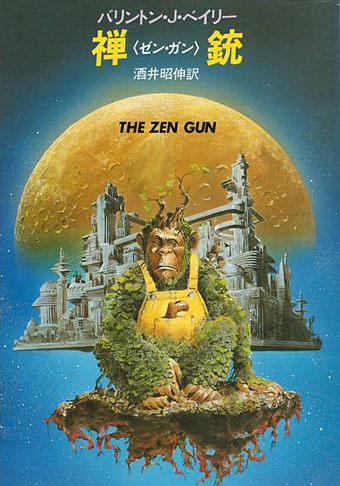
Zen-Gun and The Zen Gun

zen1.jpg

Japanese edition, 1984. Cover artist unknown.

At last, kosho Hako Ikematsu permitted himself to exult, at last he held the zen gun in his hands.

Zen in the art of electronics…

He knew its age: more than three Earth centuries. He knew its provenance: the zen master who made it had been a member of the order from which his own had originally sprung. The external appearance of the gun was a testament to certain cultural concepts: it seemed improvised, unfinished, crude, yet in its lack of polish was a feeling of supreme skill…in the Nipponese language of the time it had wabi, the quality of artless simplicity, the rustic quality of leaves strewn on a path, of a gate mended roughly with a nailed-on piece of wood and yet whose repair was a quiet triumph of adequacy and conscious balance. It had shibusa, the merit of imperfection. Only incompleteness could express the infinite, could convey the essence of reality. Hence, the unvarnished wood bore the marks of the carver’s chisel…

These qualities were themselves but superficial excrescences of the principles on which the gun acted, principles so abstruse in character that one dictum alone succeeded in hinting at them: Nothing moves. Where would it go? Pout the chimera had succeeded in using the gun as an electric beam to hurt or kill, without regard to location. But that was the most trivial of its capabilities. Only a kosho could unlock its real, dreadful purpose…

I read a novel recently that was unapologetic space opera. This isn’t something I do very often. Ryuichi Sakamoto is to blame, strange as this may seem, as a result of my spending a day or two listening to my old Sakamoto CDs. One of these, Illustrated Musical Encyclopedia, contains a short instrumental titled Zen-Gun, a piece which almost shares a title with the space opera in question, The Zen Gun by Barrington J. Bayley. I bought the Sakamoto disc in 1990, and I’ve known about the novel, which was published in 1983, for almost as long as I’ve been listening to the album. Every now and then I’ve wondered whether the two works might be connected, or at least whether Sakamoto borrowed Bayley’s title, but I’d never considered reading the novel until now.
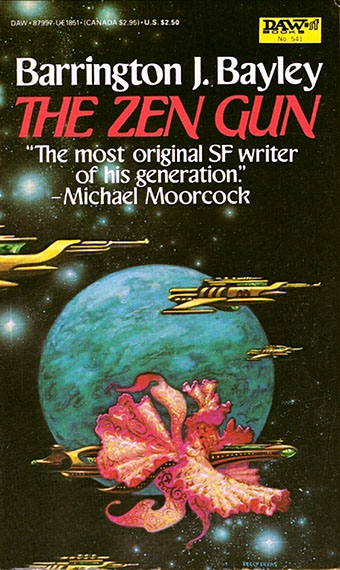
zen2.jpg

US edition, 1983. Cover art by Kelly Freas.

Barrington Bayley (1937–2008) is a writer whose works I’d mostly avoided while he was alive. This despite the continual praise he received from Michael Moorcock, and the acknowledgement by William Burroughs in Nova Express for an idea borrowed from a Bayley story with a Burroughs-like title, The Star Virus. (Samples of Burroughs’ voice happen to turn up on an album that Ryuichi Sakamoto recorded after Illustrated Musical Encyclopedia, the Bill Laswell-produced Neo Geo. Make of this what you will.) Bayley was the odd man out among the British writers of science fiction’s New Wave for persevering with hard SF, a sub-genre I don’t enjoy reading very much unless it’s by a trustworthy writer. All genres have their share of bad writers but science fiction, especially the variety concerned with space-faring and futuristic technology, has historically been home to more than most. I already knew that Bayley could write a decent story—he appeared regularly in the pages of New Worlds magazine—but I feel I’ve been doing him a disservice by ignoring his novels for so long.

The thing that really pushed me towards The Zen Gun was reading the Wikipedia entry for the novel which includes the following praise from Bruce Sterling:

Yet Bayley’s elemental energy, his mastery of the sense of wonder, cannot be denied. His work is the very antithesis of tired hackdom. To invent an entire self-consistent cosmology and physics for a $2.50 DAW paperback…is one of those noble acts of selfless altruism that keep SF alive.

Then there’s this comment about the mysterious Zen Gun itself, a piece of wood carved into the shape of a pistol which is capable of destroying entire suns: “Powerful as the weapon is, its existence is a paradox, as only those who have attained inner peace can use it.” After reading this I knew I had to read the novel.
Continue reading “Zen-Gun and The Zen Gun”

Weekend links 660

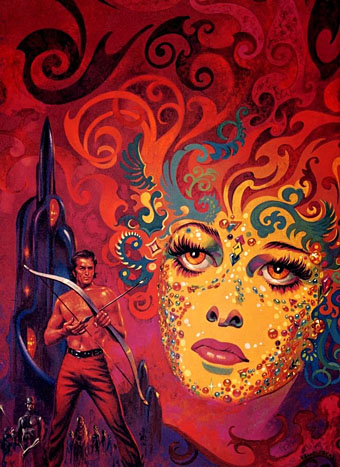
freas.jpg

Cover painting by Kelly Freas for Mayenne (1973) by EC Tubb.

• “The kamishibai (literally “paper play”) is a Japanese form of storytelling that involved a narrator using illustrated paper boards to tell stories. As the story would progress, a new board would replace the previous board, propelling the story forward. This concept served as the inspiration for graphic designer Katsuhiko Shibuya and his class of students at Joshibi University of Art and Design. The task, however, was to deconstruct fairy tales even further using only graphic symbols.” Graphic design kamishibai tell visual fairytales at Spoon & Tamago. Great stuff.

• “If it’s not magical it’s not worth doing it… Without magic there’s no quality.” Musician/producer/catalyst Bill Laswell in conversation.

• At Public Domain Review: Lara Langer Cohen on the emancipatory visions of a sex magician: Paschal Beverly Randolph’s Occult Politics.

• At Smithsonian Magazine: Nicola Jones on the scientific history of cannabinoids.

• “Deep beneath the streets of London, musical wax cylinders reveal lost histories.”

• “The Moon smells like gunpowder.” And all that fine dust is bad for your lungs.

• At Aquarium Drunkard: Guiding Light : A Tom Verlaine Appreciation.

• New music: Sacred Tonalities by Mike Lazarev.

Supernatural Fairytales (1967) by Art | X-Rated Fairy Tales (1985) by Helios Creed | The Fairy Tale (1991) by Biosphere

Weekend links 659

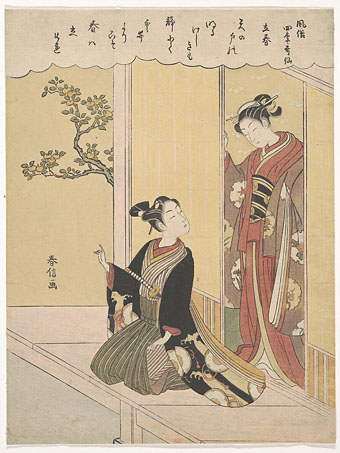
harunobu.jpg

The First Day of Spring (Risshun), from the series Fashionable Poetic Immortals of the Four Seasons (c.1768) by Suzuki Harunobu. Risshun in Japan begins on the 4th of February.

• “…after centuries of imbibing alcoholic beverages as their main source of potable water, European’s new fondness for boiled drinks—coupled with the psychoactive properties of caffeine—swapped societal tipsiness with a mindstate primed for the Enlightenment’s intoxication with reason.” Hunter Dukes on A Treatise Concerning the Properties and Effects of Coffee (1792) by Benjamin Moseley.

• Steven Heller on John Wilcock, Master of the Underground: “[He] was one of the great ‘happening’ characters of midcentury America, beat myth to Hippie legend. He was founder of half a dozen underground papers, and started one of the first citizen-access cable television shows. His achievements are a dense package.”

• At Fonts In Use: Florian Hardwig explores the origin of “the Dune font” as used on the covers of Frank Herbert’s novels during the 1970s and 80s.

• At Smithsonian Magazine: “Hundreds of Frank Lloyd Wright’s designs were never built. Here’s what they might have looked like.”

• Mix of the week: Fact Mix 893 by KMRU & Aho Ssan & Sevi Iko Dømochevsky.

• New music: Hypnagogia by Martina Bertoni, and Cosmos Vol. II by Ran Kirlian & Jaja.

• “Forgotten ‘Stonehenge of the north’ given to nation by construction firm.”

• At Aquarium Drunkard: Soft Machine live at Jazz Bilzen, 1969.

• RIP Tom Verlaine.

Goofin’ At The Coffee House (1959) by Henri Mancini | Bring Me Coffee Or Tea (1971) by Can | Starfish And Coffee (1986) by Prince

Strange Adventures: a film list

alphaville1.jpg

This is science fiction.

Presenting the list I mentioned earlier in which I highlight a number of worthwhile science-fiction films (also some TV productions) that aren’t the usual Hollywood fare. I’ve spent the past few years watching many of these while searching for more. This isn’t a definitive collection, and it isn’t filled with favourites; I’ve deliberately omitted a number of popular films that would count as such. It’s more a map of my generic tastes, and an answer to a question that isn’t always spoken aloud in discussions I’ve had about SF films but which remains implicit: “Okay, if you dislike all this stuff then what do you like?” I tend to like marginal things, hybrids, edge cases, the tangential, the unusual and the experimental. And for the past two decades I’ve increasingly come to value anything that isn’t a Hollywood product. There are two Hollywood productions on this list but neither of them were very successful. Not everything here has been overlooked or neglected but many of the entries have, either because they made a poor showing at the box office or because they have the effrontery to be filmed in languages other than English. Not everything is in the first rank, either, but they’re all worth seeing if you can find them.

liquid1.jpg

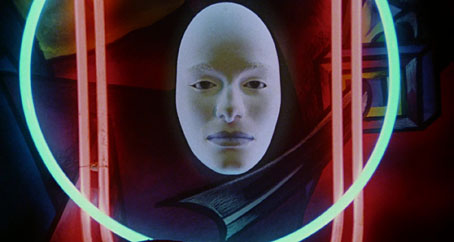
Liquid Sky.

The starting point is around 1960 because prior to this date any marginal or unusual examples of SF cinema are harder to find. A genre has to be somewhat set in its ways before radically different artistic approaches emerge, and pre-1960 there wasn’t much testing of the SF boundaries in the film world. Science-fiction cinema has also tended to lag behind the written word, so even though the literature was growing more sophisticated during the 1950s, films from the same period are mostly filled with monsters, spaceships and mad scientists. By the 1960s enough written science fiction was playing with (or ignoring) genre stereotypes for a “New Wave” to be identified. Some of the films detailed here might be regarded as cinematic equivalents of SF’s New Wave but I’ll leave it to others to argue the finer points of definition. A few of the choices are a result of directors going in unexpected directions, with several selections being one-off genre excursions by people better known for other things. I’ve omitted many films and/or directors that receive persistent attention, so there’s no David Cronenberg, Nicolas Roeg, Andrei Tarkovsky or John Carpenter; and no Mad Max 2, Akira, Ghost in the Shell or The Prisoner. A couple of edge cases are so slight I couldn’t really justify their inclusion so you’ll have to look elsewhere for appraisals of The Unknown Man of Shandigor (a spy satire with Alphaville influences) and Trouble in Mind (more of a neo-noir fantasy). 2010 is the cut-off point. I’ve never been someone who watches all the latest things so it often takes me years to catch up with recent releases.

avalon2.jpg

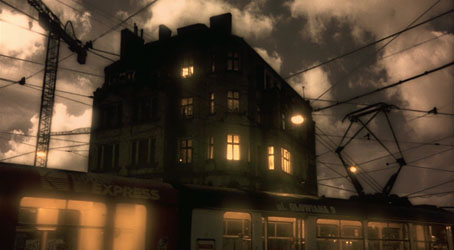
Avalon.

I can imagine there might be questions about the availability of some of these films. All I can say is search around. I’ve managed to accumulate half the things on this list on either DVD or blu-ray so they’re not all impossible to find. I did consider posting links but the whole issue of region coding complicates matters. Most of the short films circulate on YouTube, as do a number of the features although these don’t always include subtitles. Have I missed something good? (Don’t say Zardoz….) The comments are open.


Invention for Destruction (Czechoslovakia, 1958)

invention.jpg

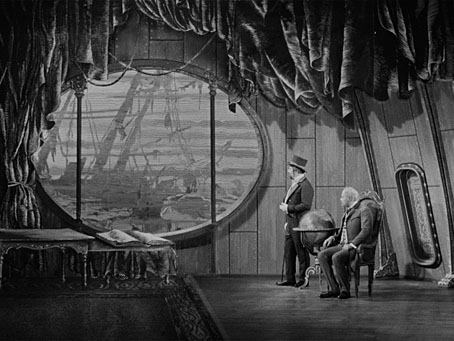
An evil millionaire named Artigas plans to use a super-explosive device to conquer the world from his headquarters inside an enormous volcano.

(Previously.) It seems fitting to start with a film that adapts a novel by one of the founders of the genre, Jules Verne. Karel Zeman’s third feature extended his technical effects to combine live-action with animation, creating a film in which the engraved illustrations of Verne’s novels are brought to life. With music by Zdeněk Liška.


La Jetée (France, 1962)

lajetee.jpg

The story of a man forced to explore his memories in the wake of World War III’s devastation, told through still images.

Chris Marker’s haunting short is one of the great time-travel stories, a 25-minute film that JG Ballard often listed as a favourite. Memory was a recurrent theme in Marker’s work, and memories here provide a physical route into the past, with the predicament of the unnamed protagonist concentrated on a single memory from his childhood. Marker’s interests ranged widely but he haunts the margins of science-fiction cinema in France, assisting Walerian Borowczyk with an early animation, Les Astronauts (1959), as well as the Pierre Kast entry below.


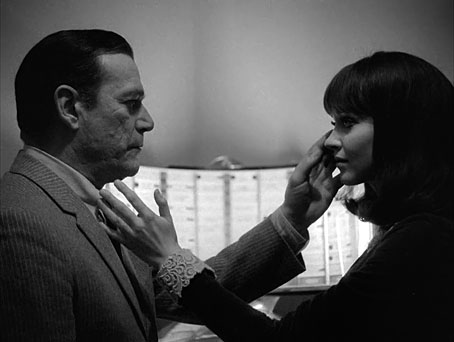
Alphaville: A Strange Adventure of Lemmy Caution (France, 1965)

alphaville2.jpg

A secret agent is sent to the distant space city of Alphaville where he must find a missing person and free the city from its tyrannical ruler.

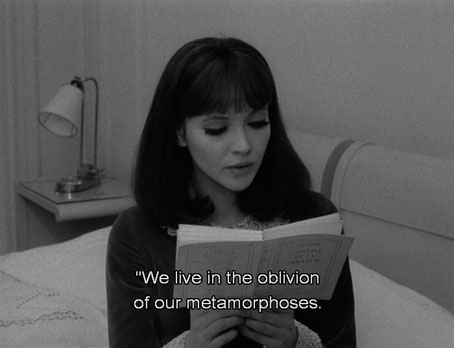
Another Ballard favourite, and not a neglected film by any means but the first in our collection of one-off SF excursions by directors better-known for other things. Alphaville is also important for being the first film to present itself as science fiction without any of the obvious or expected trappings of the genre. Paris in 1965 is Alphaville because Godard says it is. In part this is the director doing his usual thing of self-consciously adopting a genre; this is “science fiction” in the same way that Breathless is “crime”. But the conceptual leap was an important one for cinema, a step that freed film-makers from the need to build expensive sets and dress their cast in silver jump-suits. With Raoul Coutard’s high-contrast photography, Paul Misraki’s noirish score, Eddie Constantine’s bull-in-a-china-shop performance (he makes Ralph Meeker in Kiss Me Deadly seem soft-hearted), and the incomparable Anna Karina.


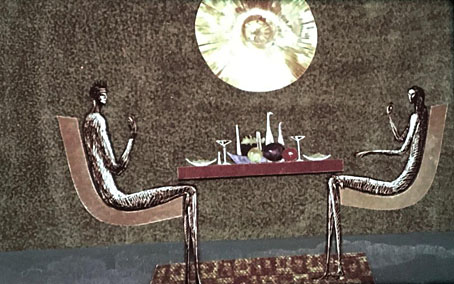
The Heat of a Thousand Suns (France, 1965)

heat.jpg

(Previously) A one-off animated short by Pierre Kast with assistance from Chris Marker, drawings by Eduardo Luiz, and an electronic score by Bernard Parmegiani. A young man with his own spaceship solves the problem of faster-than-light travel then heads into the cosmos with his pet cat.


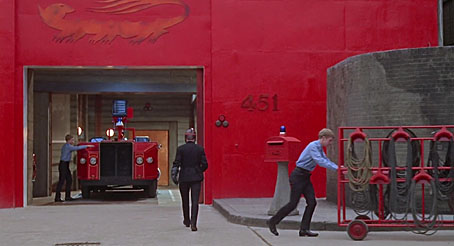
Fahrenheit 451 (UK, 1966)

fahrenheit.jpg

In an oppressive future, a fireman whose duty is to destroy all books begins to question his task.

Francois Truffaut’s first colour feature has always seemed a little dull despite its incendiary subject matter and the Hitchcockian urgency of Bernard Herrmann’s score. It might have been improved with an actor other than Oskar Werner in the central role but there’s still a lot I like about this one: the music, the shots of the SAFEGE monorail, Nicolas Roeg’s striking photography, and Julie Christie in a double role. There’s also some amusement for Brits in seeing a Frenchman presenting ticky-tacky English suburbia as a soulless dystopia. With spoken titles, flat-screen TVs in every home (it’ll never happen…), and Genet novels condemned to the flames.


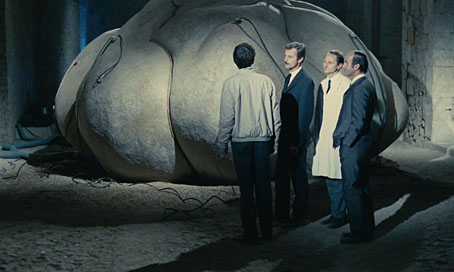
Je t’aime, Je t’aime (France, 1968)

jetaime.jpg

After attempting suicide, Claude is recruited for a time travel experiment, but, when the machine goes haywire, he may be trapped hurtling through his memories.

(Previously.) Much as I like toying with the idea that Last Year in Marienbad is science fiction there really isn’t anything in it that easily justifies the claim. Director Alain Resnais said that this one wasn’t SF either but it does at least feature a time machine. Resnais had collaborated with Chris Marker in the 1950s, and the pair remained friends, so it’s tempting to see this as a riff on La Jetée. (There’s even an echo of Marker’s film in the title…) Both films use a doomed romance as a focus for their examination of memory and time, and both feature choral scores, the music for this one being composed by Krzysztof Penderecki.


Continue reading “Strange Adventures: a film list”

SF/Not SF

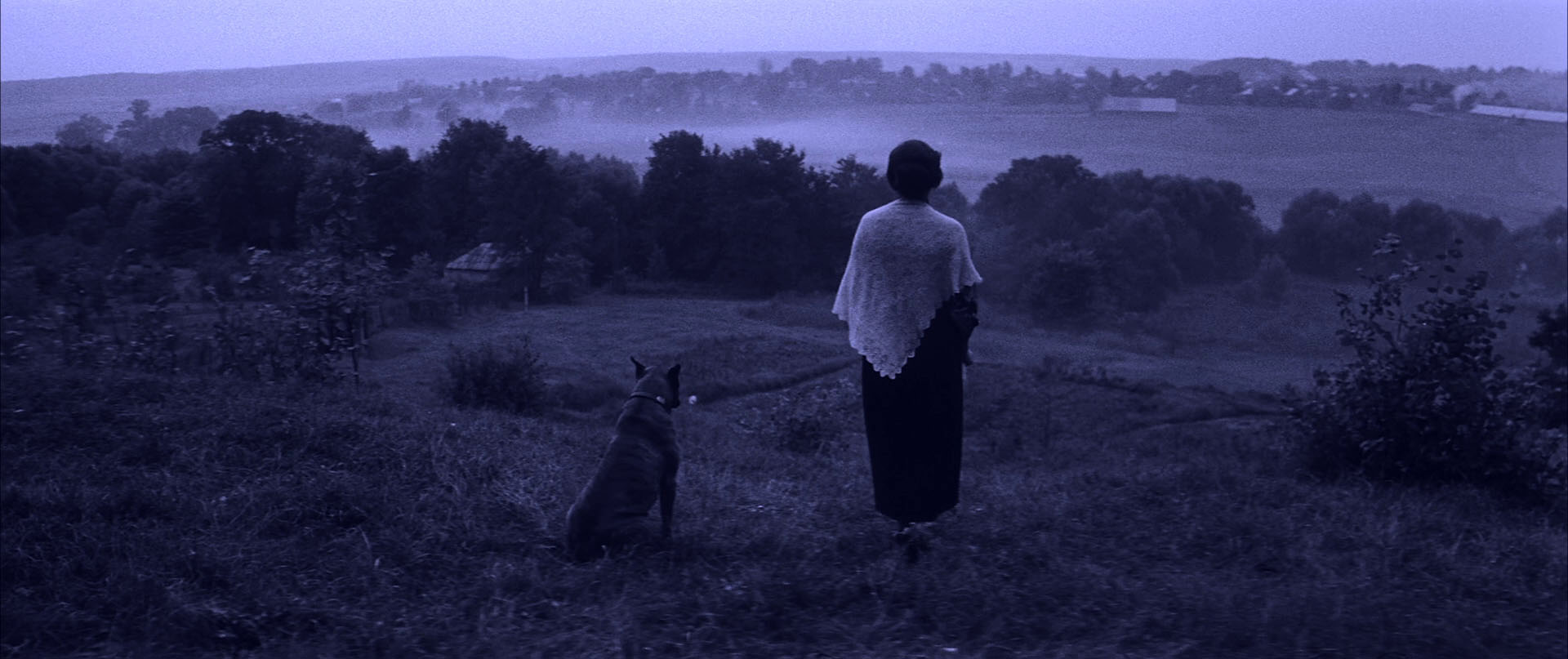
tarkovsky1.jpg

This is science fiction.

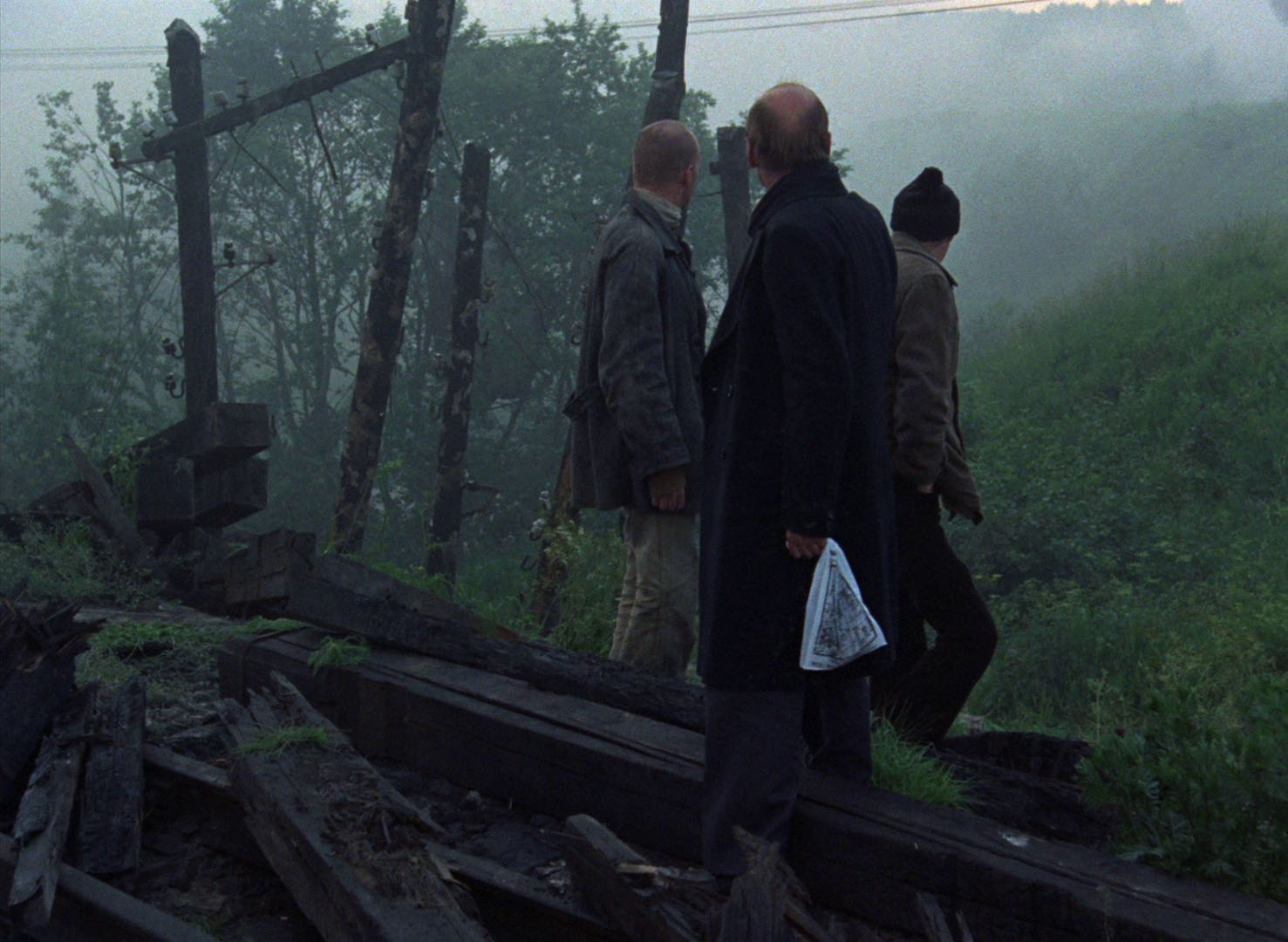
tarkovsky2.jpg

This is science fiction.

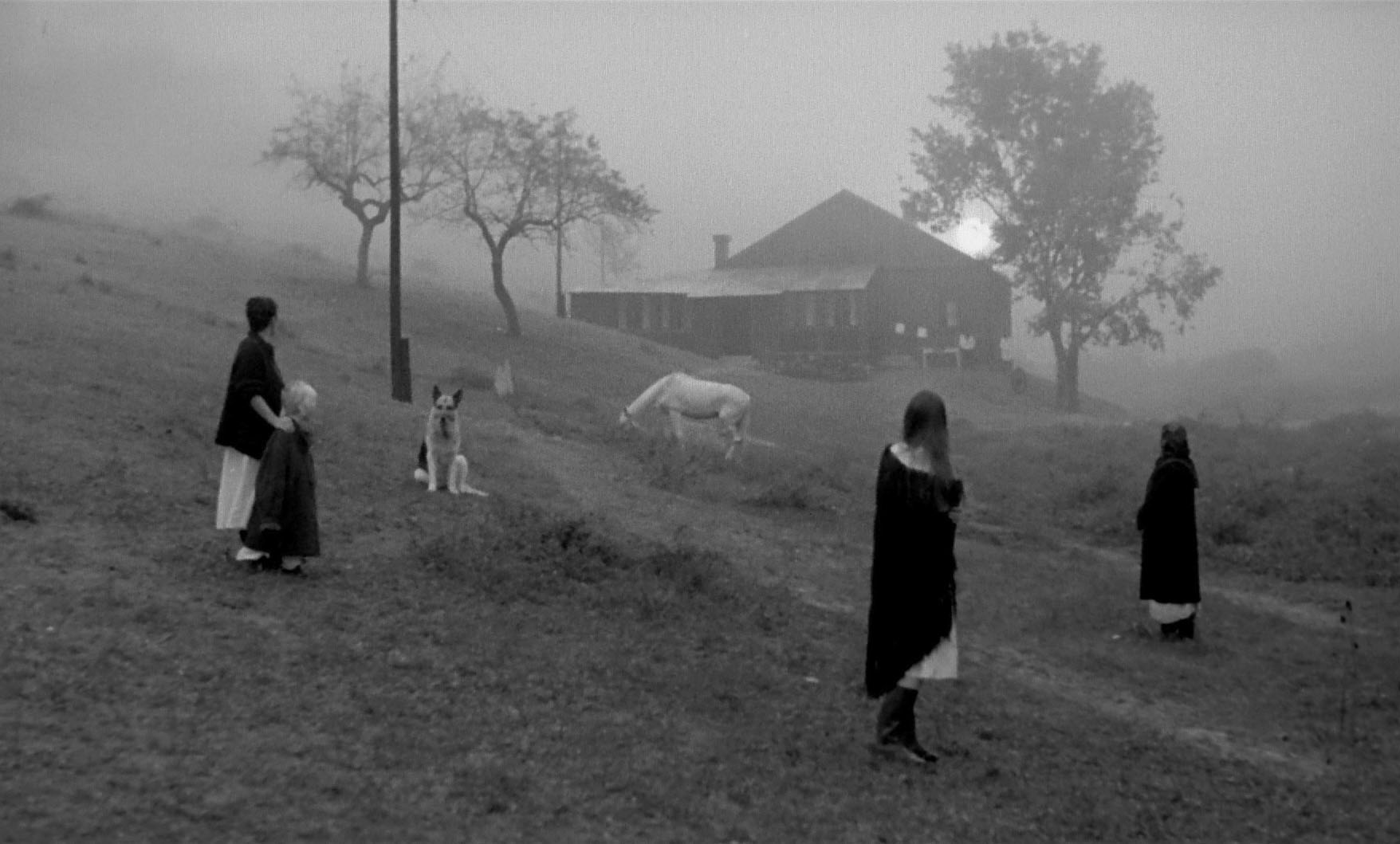
tarkovsky3.jpg

This is not science fiction.

Andrei Tarkovsky, of course. I’ve been putting the finishing touches to my list of offbeat science-fiction films, and in doing so remembered that I’d posted these shots on Twitter some time ago. The annotated list is one of the longest things I’ve written for this site which I’ll be posting next week. Tarkovsky isn’t on it even though Stalker has long been a favourite film of mine. With a couple of exceptions I’ll be talking about the neglected and the overlooked. Watch this space.

Previously on { feuilleton }
Arena: Andrei Tarkovsky