Weekend links 343

carrington.jpg

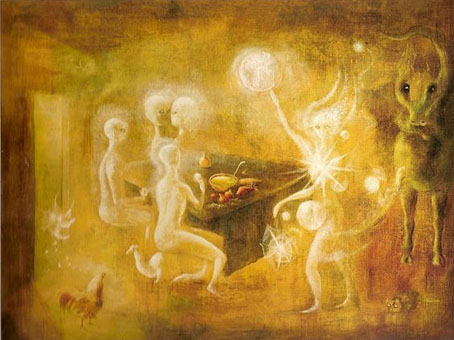
Sidhe, the white people of the Tuatha Dé Danann (1954) by Leonora Carrington.

• January brings a wealth of recommended-reading lists for the new year, together with the feeling that many of those lists are merely clones of each other. Not so the recommendations at Strange Flowers which also includes links to forthcoming events such as this exhibition of Symbolist art at the Guggenheim, New York.

Some Ceremonies are Better than Others, an exhibition of sound objects and drawings by Matthias König & Ibrahim R. Ineke inspired by Arthur Machen’s The White People, at The Bries Space, Borgerhout, Belgium, from 21st January. Previously: Ineke’s comic-strip adaptation of the Machen story.

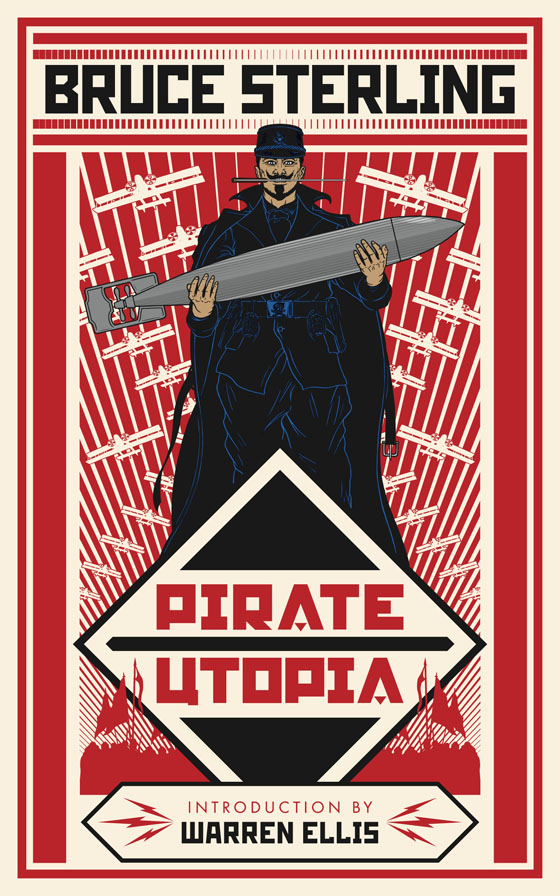
• “These must-reads explore Dada, Futurism, Surrealism, and the art of opposition,” says Carol Cooper. One of the titles under discussion is the Bruce Sterling book I designed and illustrated last year, Pirate Utopia. Sterling talked to Wired about the book and its relation to the present moment.

RIP Mark Fisher, a cultural theorist whose death was announced just as extracts from his latest book, The Weird and the Eerie, were beginning to appear. One of those extracts is at The Quietus. Related: Fisher’s k-punk blog and its earlier incarnation.

James Cargill (ex of Broadcast) announces a debut release by his new group, Children of Alice. Related: Jonathan Miller’s 1966 TV film of Alice in Wonderland rescored with Broadcast songs.

We are the Martians: the Legacy of Nigel Kneale, a collection of Kneale-related essays and appreciations edited by Neil Snowdon, is finally appearing in print from PS Publishing.

• Pursuing paths hauntological, The Electric Pentacle offers “an unholy stew of library music, Kosmische, arcane ritual electronica, modular synthesisers and shortwave radio”.

• Mixes of the week: The Ivy-Strangled Path Vol. XVI by David Colohan, and Low Visibility Across Sunken Village by The Geography Trip.

• “With Reflection, [Brian Eno] offers generative music for a turbulent time,” says Geeta Dayal.

Anna Biller, director of The Love Witch, talks to New Jack Witch about her film.

• The story behind Gay Bob, the world’s first out-and-proud doll.

Alice (1969) by Jon Plum | Alice (1982) by The Sisters of Mercy | Alice (2009) by Sunn O)))
Weekend links 342

zarraga.jpg

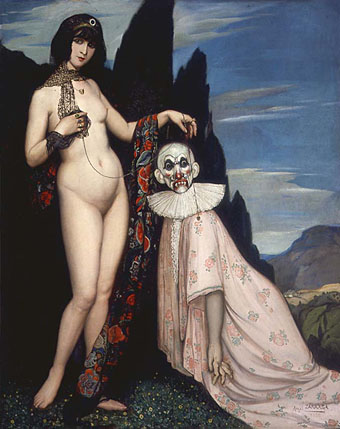
La femme et le pantin (1909) by Ángel Zárraga.

• RIP John Berger. Berger’s essential TV series on art, Ways of Seeing (1972), is at YouTube and Ubuweb; “Such freedom is unthinkable today,” says series director Mike Dibb; the book of the series was designed by Berger and Richard Hollis; ways of seeing Ways of Seeing; Geoff Dyer, Olivia Laing & Ali Smith on Berger; M. John Harrison on Berger.

• The beginning of January means the LRB posting Alan Bennett‘s diary for the previous year. In related news, Network DVD will be releasing Six Plays by Alan Bennett next month, a collection that includes a favourite of mine, Me! I’m Afraid of Virginia Woolf (1978).

• At Dennis Cooper’s: Acid Westerns Day (Restated). Related: Jodorowsky’s El Topo and The Holy Mountain are being released on Blu-ray (Region B) by Gryphon Entertainment.

The acre of suburban lawn surrounding our house became like the Paramount lot for my feverish theatrics. I graduated to building “spook houses” in the family garage out back. Inspired by the ride-through Trimper’s Haunted House in Ocean City, Maryland, designed by Bill Tracy (and it’s still there in operation), I remembered excitedly wheeling through this attraction in these rickety little coffin-shaped cars and dreaming of befriending the crudely built, motorized corpses, cannibals, and skeletons who lived inside. I fantasized the cars breaking down, the panicked, chickenshit children screaming, bolting from their seats, tripping over live wires, and electrocuting themselves. I wanted to take this imagined fear, this frightened happiness, back to my own house where I knew I could preserve, protect, and stylize it on my own adolescent terms.

John Waters on his childhood home

Strange Flowers‘ latest reading recommendations include books on lesbian decadence, occult Paris, flâneurie and the queerness of the Benson family.

Where Evil Dwells (1985), a 28-minute preview of a longer piece of weird cinema (now destroyed) by Tommy Turner and David Wojnarowicz.

Francis Ford Coppola and Brian De Palma having a conversation about Coppola’s The Conversation.

The Edge Question for 2017: “What scientific term or concept ought to be more widely known?”

• Mixes of the week: Drone Theory with Roly Porter, and Secret Thirteen Mix 205 by Stavaris.

Simran Hans suggests where to begin with the films of Todd Haynes.

• More decadence, this time among the Mexican Modernists.

Moon Wiring Club at Bandcamp.

No Name, No Slogan (1989) by Acid Horse | Those Tapes Are Dangerous (1997) by The Bug | Spooky Action At A Distance (2014) by Sqürl

Weekend links 338

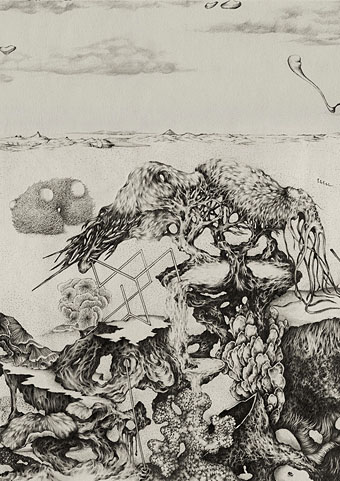
lee.jpg

At the mountains of madness, fragment I (2014–16) by Céli Lee.

Spirits of Place, edited by John Reppion: new writings from Bryndís Björgvinsdóttir, Vajra Chandrasekera, Maria J. Pérez Cuervo, Warren Ellis, Alan Moore, Silvia Moreno-Garcia, Kristine Ong Muslim, Dr. Joanne Parker, Mark Pesce, Iain Sinclair, Gazelle Amber Valentine and Damien Williams.

• “Are we wrong to neglect [Jean Cocteau]? We are.” Kevin Jackson reviews Jean Cocteau: A Life, a biography by Claude Arnaud that’s finally available in an English edition (translated by Lauren Elkin & Charlotte Mandell). Related: Jean Cocteau speaks to the year 2000.

Void Beats / Invocation Trex by Cavern of Anti-Matter has been one of my favourite music releases this year. Tim Gane talks about the inadvertent origin of the group, and there’s also the welcome news of a reissue for the scarce first album, Blood Drums.

• Pauline Oliveros: 1932–2016; Geeta Dayal looks back on the life of US composer Pauline Oliveros, including reflections from, amongst others, Betsey Biggs, Fred Frith, Terry Riley, and Morton Subotnick.

• The relaunched Jayde Design website is selling copious Moorcock publications and ephemera, back issues of New Worlds magazine, and much else besides, including rare works of my own.

• New from Mute Records: Richard H. Kirk #7489 (Collected Works 1974–1989) and Sandoz #9294 (Collected Works 1992–1994).

• Drawings by Austin Osman Spare are on display for the next two weeks at the Atlantis Bookshop, London.

The Architecture of the Overlap: Sir John Soane’s Museum, London, scanned in three dimensions.

• Mixes of the week: Secret Thirteen Mix 201 by Félicia Atkinson, and FACT mix 579 by Jenny Hval.

• “No one has the slightest idea what is and isn’t cultural appropriation,” says Fredrik deBoer.

• I’m never keen on end-of-year lists but I’ll read any list that John Waters writes.

• “The Driller Killer and the humanist behind the blood and sickening crunch”.

• More Lovecraft: Stories to make you say UGH! by Pete Von Sholly.

Alan Moore talks to Stewart Lee.

At The Mountains Of Madness (1968) by H.P. Lovecraft | Mountains Falling (2001) by Bluebob | Mountains Crave (2012) by Anna von Hausswolff

Pirate Utopia by Bruce Sterling

pirateutopia.jpg

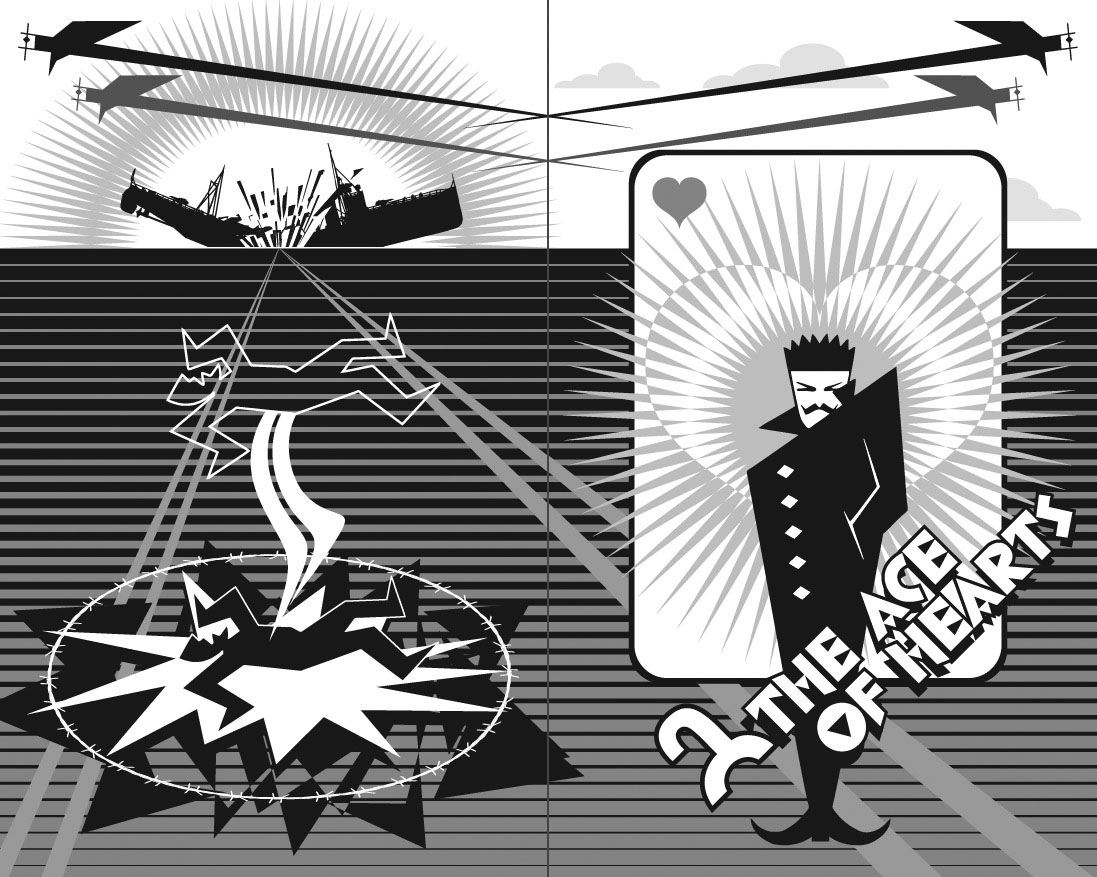
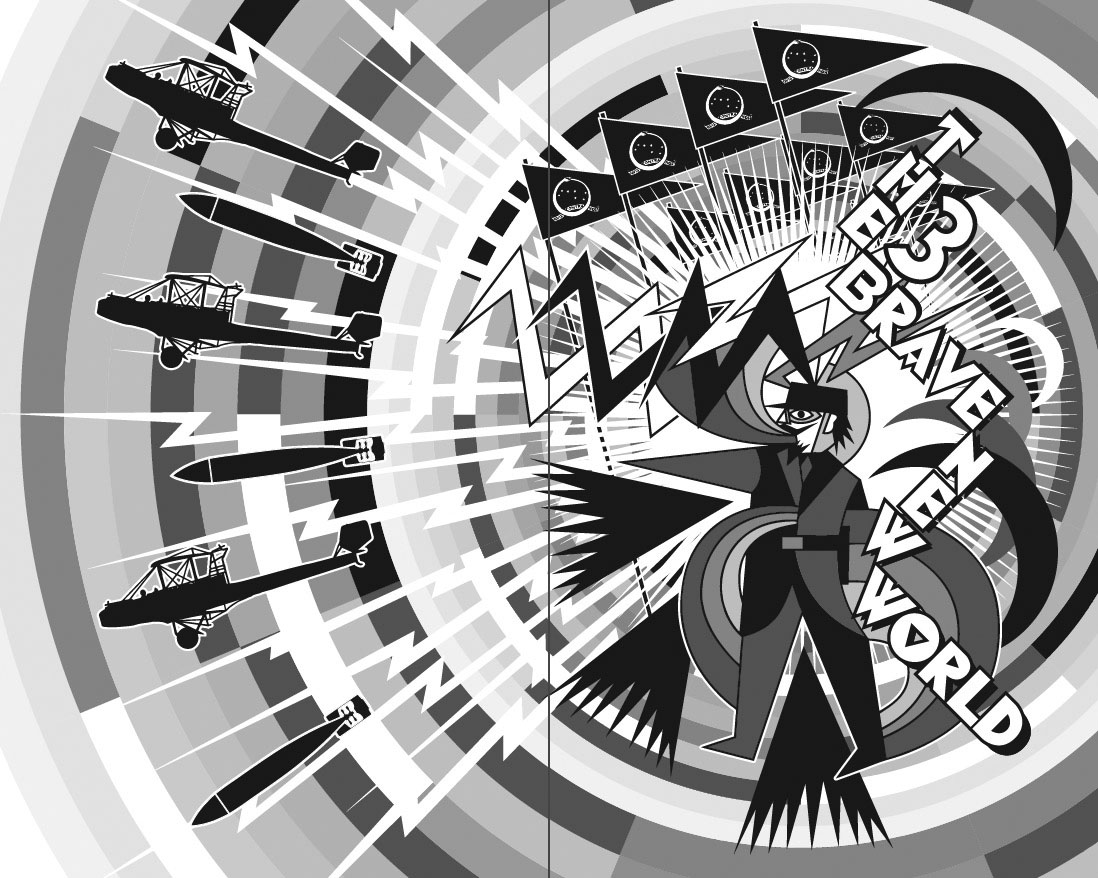
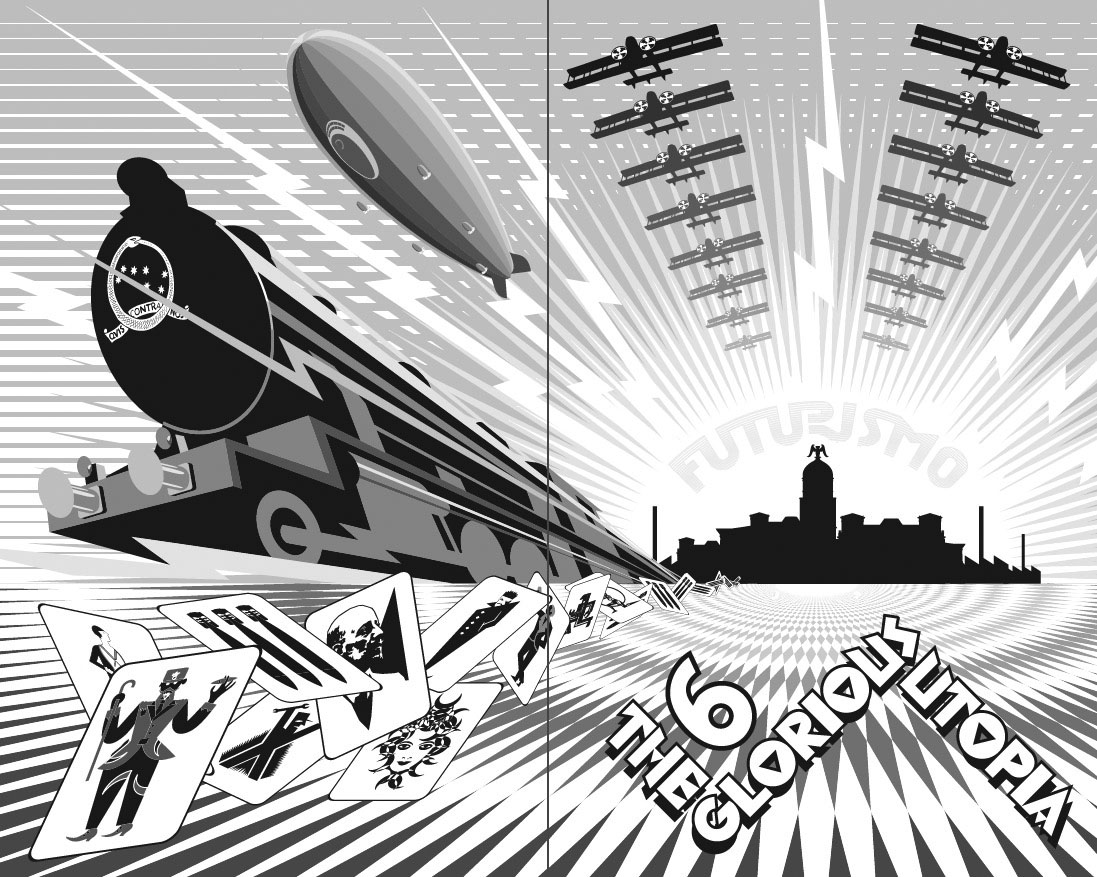
Here at last is the small hardback book I spent most of February and March working on. Pirate Utopia is published this week, and I’m pleased that it’s been very well received, with reviews drawing attention to the illustration and design as well as the text. This is a dieselpunk alternate history which begins in 1920:

WHO are these bold revolutionaries pillaging their confused European neighbours? The Futurists! Utopian outlaws of Italy’s tiny Regency of Carnaro, unlikely scourge of the Adriatic Sea!

It is the end of the Great War, and yet there is unrest in newly formed Carnaro. Carnaro is utterly in thrall to all things new, no matter how impractical or improbable. Futurism unites artists, pirates, propagandists, veterans, scientists, and libertines alike; military innovation and unabashed gratification rule the day. No one will rest until they crush Europe’s communists, capitalists, fascists, and bewildered coastal townsfolk.

But some have theorized that the Soldier-Citizens of Carnaro are not completely sane. At the dawn of mutiny, they are led by on ever-changing, passionate coterie, which may include:

* Lorenzo Secondari, the infamous Pirate Engineer, leader of ferocious Croatian raiders (and theatre enthusiasts)
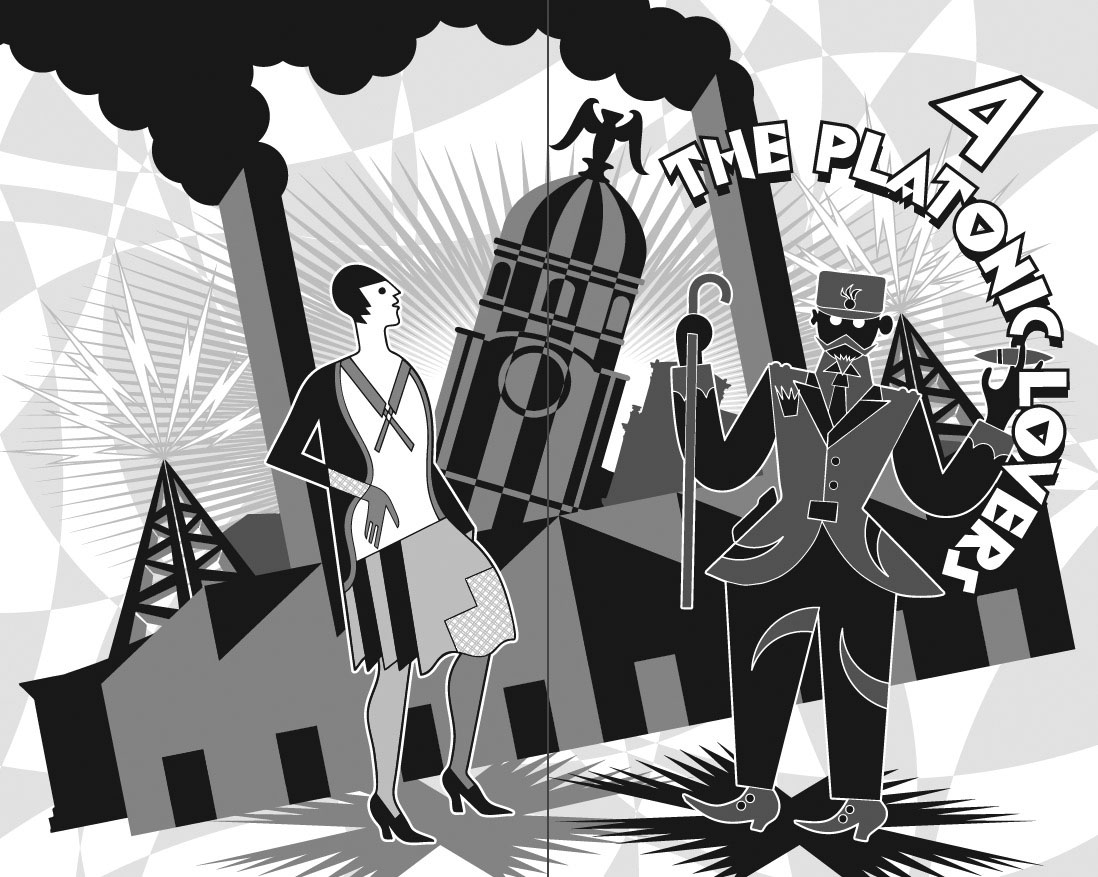
* Blanka Piffer, staunch patriot and smartly clad Syndicalist manager of a torpedo factory staffed exclusively by women
* The Prophet, charismatic warrior-poet ruthless dictator, and very active proponent of free love
* The Ace of Hearts, dashing aristocrat spy, yogi, drug pusher, and combat pilot
* The Art Witch, the compelling Milanese millionairesse in the inner circle and mysterious, avid occultist

Two infamous Americans have arrived in Carnaro offering a Faustian bargain. Will HP Lovecraft and Houdini betray their own nation, and lead the Futurists to international glory?

No need to emphasis the pertinence of a story of global political turmoil appearing at this point in time. Back in March the traumas of Brexit and the US election were mere possibilities rather than the unavoidable facts they are today. Pirate Utopia doesn’t necessarily reflect the present moment but some of the resonances are, shall we say, suggestive. Bruce Sterling, as noted earlier, is a futurist (as distinct from a Futurist), and had this to say recently about the current state of affairs.

pirate1.jpg

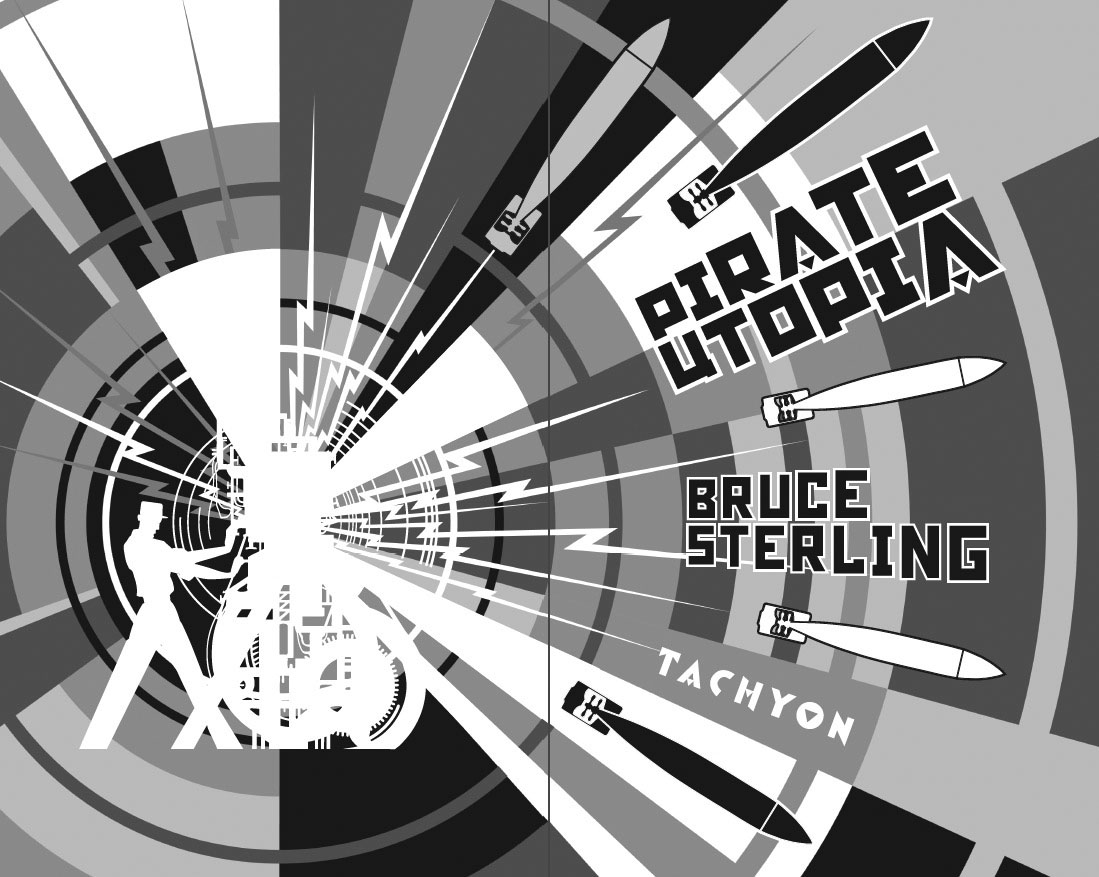
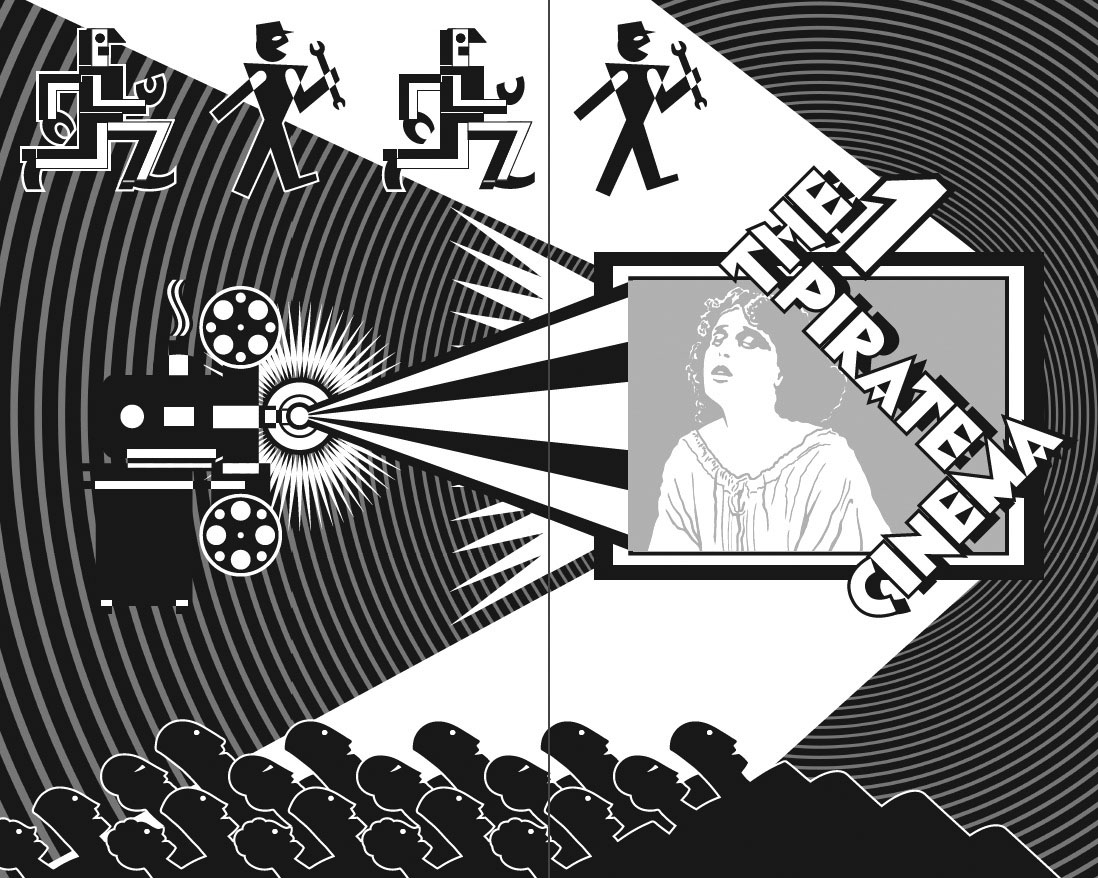
The chapter spreads and other interior graphics run variations of the works of Fortunato Depero and others. Depero was an ideal choice not only because his work tends to the cartoonish—this is a humorous book about serious matters—but much of it is bold and monochromatic, ideal for deployment as black-and-white graphics. Ordinarily I’d write a little more about the art influences, but since I already did so inside the book itself it seems better to encourage those who want to know more to buy a copy. You can, however, see a few more of the page layouts here. A book about Interesting Times for Interesting Times. Join the Futurist Revolution!

pirate2.jpg

pirate3.jpg

pirate4.jpg

pirate5.jpg

pirate6.jpg

pirate7.jpg

Previously on { feuilleton }
Futurismo!

Weekend links 330

battle.jpg

Summer Passing (2013) by Laura Battle.

• The Marquis de Sade’s enduringly contentious The 120 Days of Sodom has been republished by Penguin Books in a new translation by Will McMorran and Thomas Wynn. “[De Sade] described his novel as ‘the most impure tale ever written since the world began’ and, for all the hyperbole, his description still holds true even now,” says Will McMorran, exploring the history and reputation of the book.

• From the Cutting Room Floor: Rick Klaw talks to Bruce Sterling about the current state of US (and world) politics. Sterling’s Futurist novel Pirate Utopia (which I’ve designed and illustrated) will be published by Tachyon next month.

• New from Strange Attractor: In Fairyland: The World of Tessa Farmer, edited by Catriona McAra, and Of Shadows: One Hundred Objects from The Museum of Witchcraft and Magic by Sarah Hannant and Simon Costin.

• Mix of the week: Programme No. 16 in the long-running Radio Belbury series is a guest presentation by The Pattern Forms (Jon Brooks, Edward Macfarlane and Edward Gibson).

The Book of Three Gates by Simon Berman, “An Esoterica of HP Lovecraft’s Cthulhu Mythos”, is seeking funding.

• Occultist Phil Hine discusses Richard Payne Knight and phalluses at the Conway Hall, London, later this month.

• “My goal is to make music that is transcendent and isn’t specific of a certain time,” says Earth’s Dylan Carlson.

• Kiss the sky: psychedelic posters of the 60s and 70s from the collection of the late Felix Dennis.

Radionics Radio: An Album Of Musical Radionic Thought-Frequencies.

Madeleine LeDespencer on the occult bookshops of London.

Unknown Pleasures waveform gif generator

Sade Masoch (1968) by Bobby Callender | Confessional (Give Me Sodomy Or Give Me Death) (1991) by Diamanda Galás | The Sodom And Gomorrah Show (2006) by Pet Shop Boys