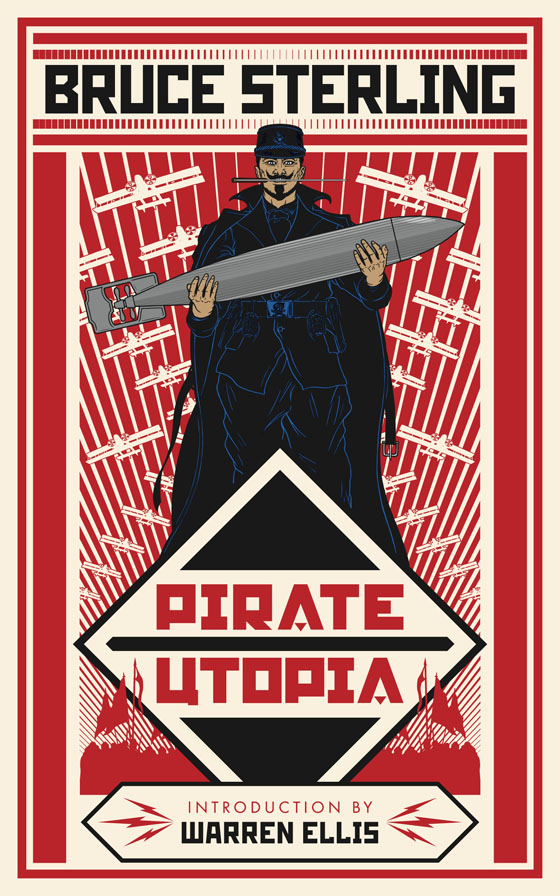
Pirate Utopia by Bruce Sterling

pirateutopia.jpg

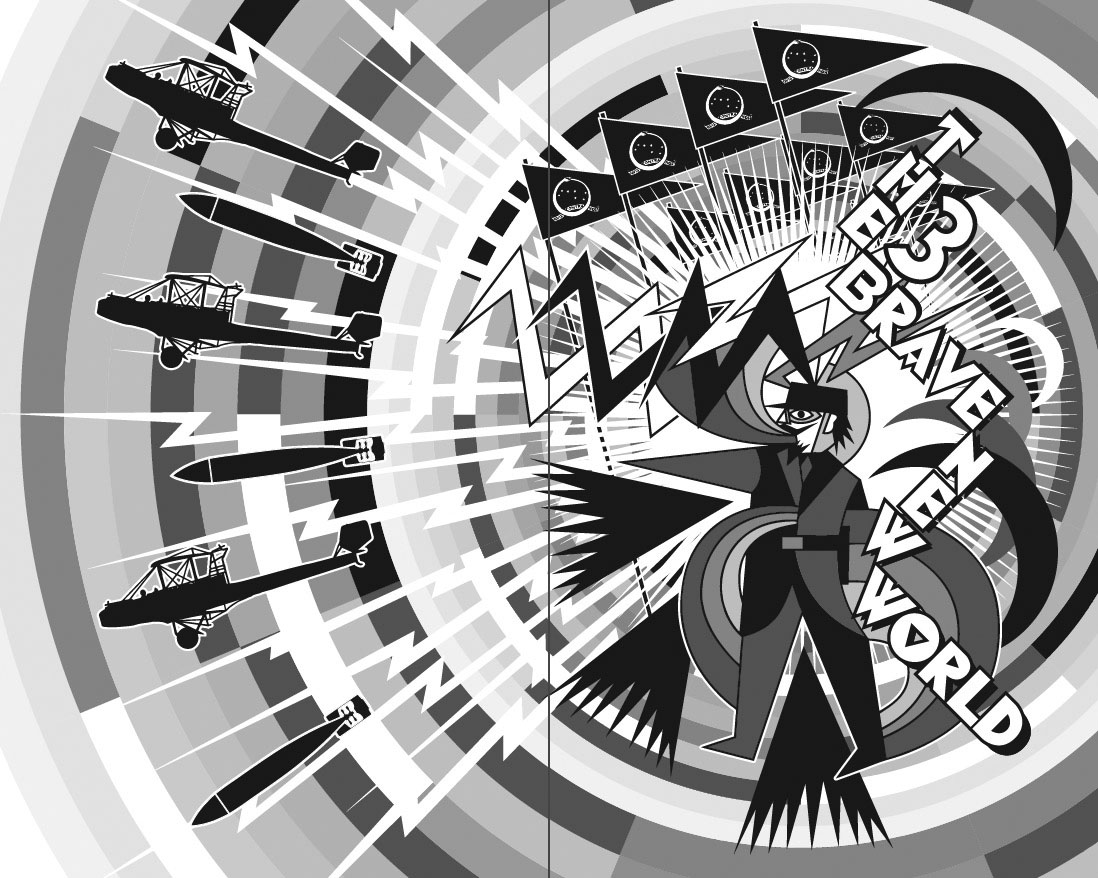
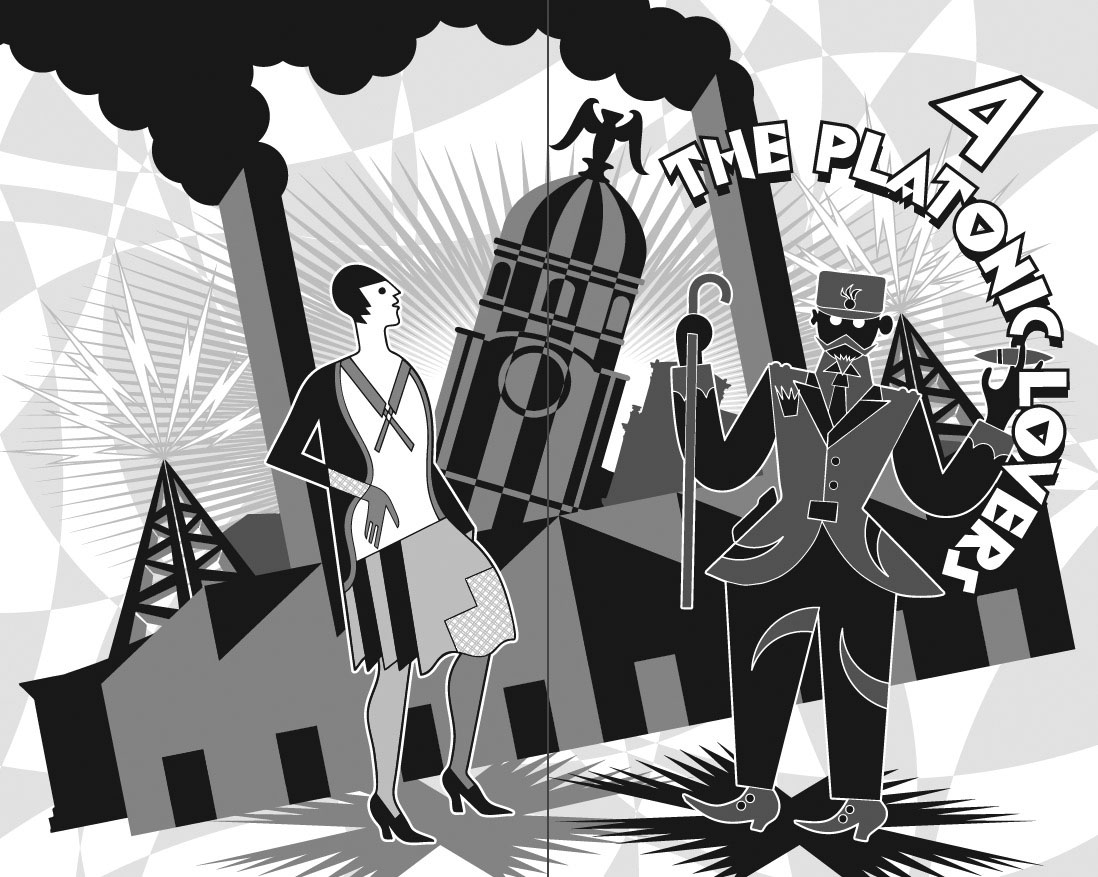
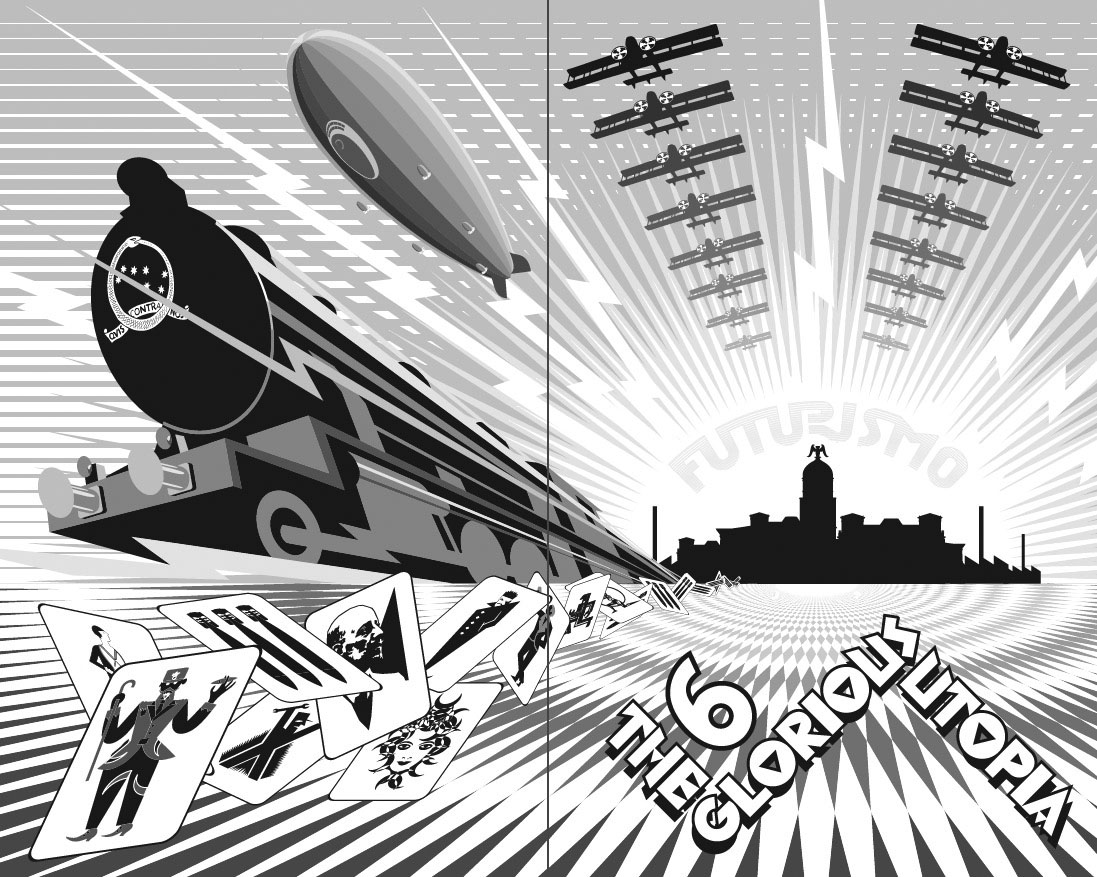
Here at last is the small hardback book I spent most of February and March working on. Pirate Utopia is published this week, and I’m pleased that it’s been very well received, with reviews drawing attention to the illustration and design as well as the text. This is a dieselpunk alternate history which begins in 1920:

WHO are these bold revolutionaries pillaging their confused European neighbours? The Futurists! Utopian outlaws of Italy’s tiny Regency of Carnaro, unlikely scourge of the Adriatic Sea!

It is the end of the Great War, and yet there is unrest in newly formed Carnaro. Carnaro is utterly in thrall to all things new, no matter how impractical or improbable. Futurism unites artists, pirates, propagandists, veterans, scientists, and libertines alike; military innovation and unabashed gratification rule the day. No one will rest until they crush Europe’s communists, capitalists, fascists, and bewildered coastal townsfolk.

But some have theorized that the Soldier-Citizens of Carnaro are not completely sane. At the dawn of mutiny, they are led by on ever-changing, passionate coterie, which may include:

* Lorenzo Secondari, the infamous Pirate Engineer, leader of ferocious Croatian raiders (and theatre enthusiasts)
* Blanka Piffer, staunch patriot and smartly clad Syndicalist manager of a torpedo factory staffed exclusively by women
* The Prophet, charismatic warrior-poet ruthless dictator, and very active proponent of free love
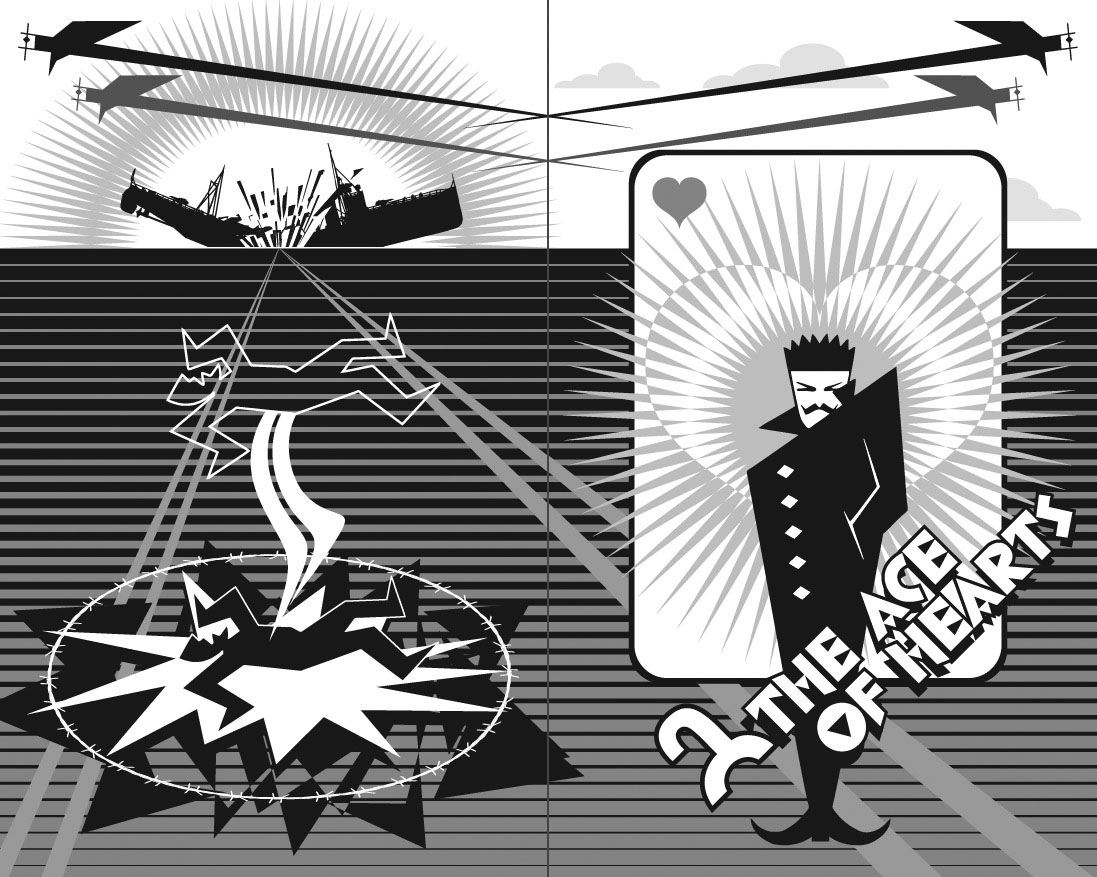
* The Ace of Hearts, dashing aristocrat spy, yogi, drug pusher, and combat pilot
* The Art Witch, the compelling Milanese millionairesse in the inner circle and mysterious, avid occultist

Two infamous Americans have arrived in Carnaro offering a Faustian bargain. Will HP Lovecraft and Houdini betray their own nation, and lead the Futurists to international glory?

No need to emphasis the pertinence of a story of global political turmoil appearing at this point in time. Back in March the traumas of Brexit and the US election were mere possibilities rather than the unavoidable facts they are today. Pirate Utopia doesn’t necessarily reflect the present moment but some of the resonances are, shall we say, suggestive. Bruce Sterling, as noted earlier, is a futurist (as distinct from a Futurist), and had this to say recently about the current state of affairs.
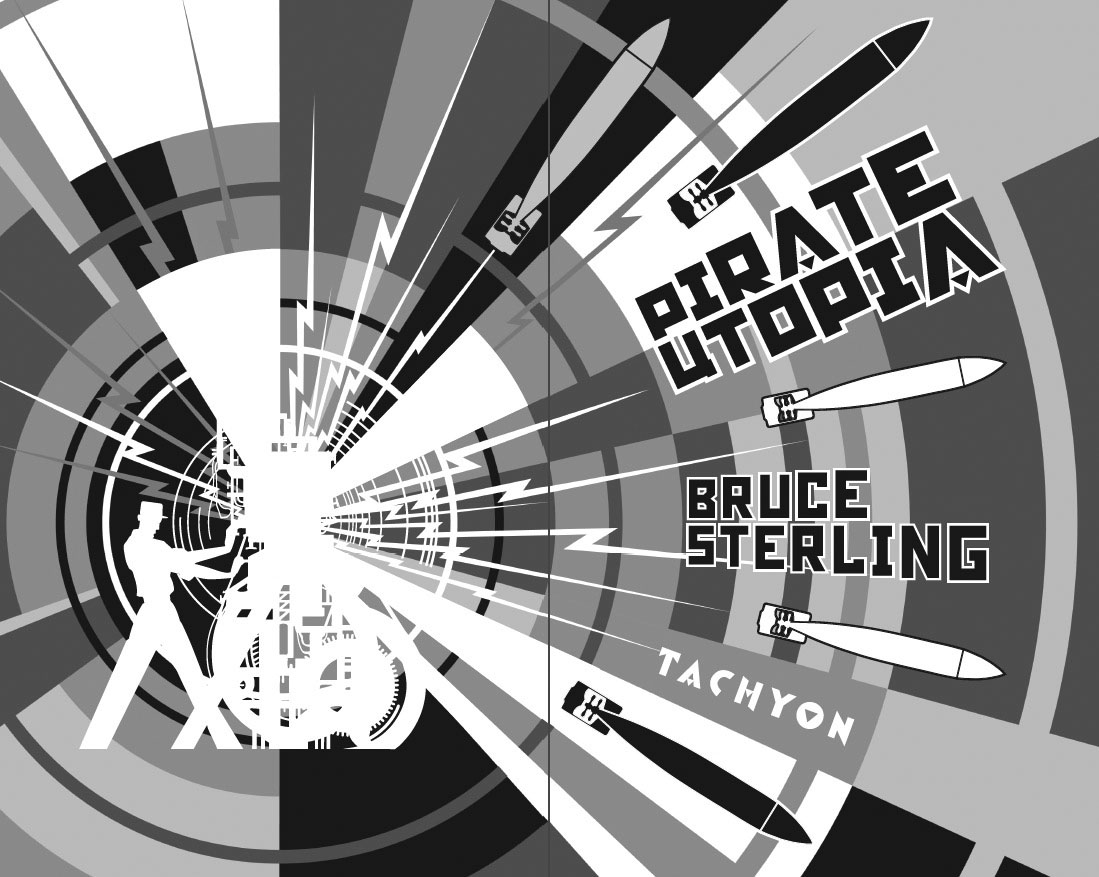
pirate1.jpg

The chapter spreads and other interior graphics run variations of the works of Fortunato Depero and others. Depero was an ideal choice not only because his work tends to the cartoonish—this is a humorous book about serious matters—but much of it is bold and monochromatic, ideal for deployment as black-and-white graphics. Ordinarily I’d write a little more about the art influences, but since I already did so inside the book itself it seems better to encourage those who want to know more to buy a copy. You can, however, see a few more of the page layouts here. A book about Interesting Times for Interesting Times. Join the Futurist Revolution!
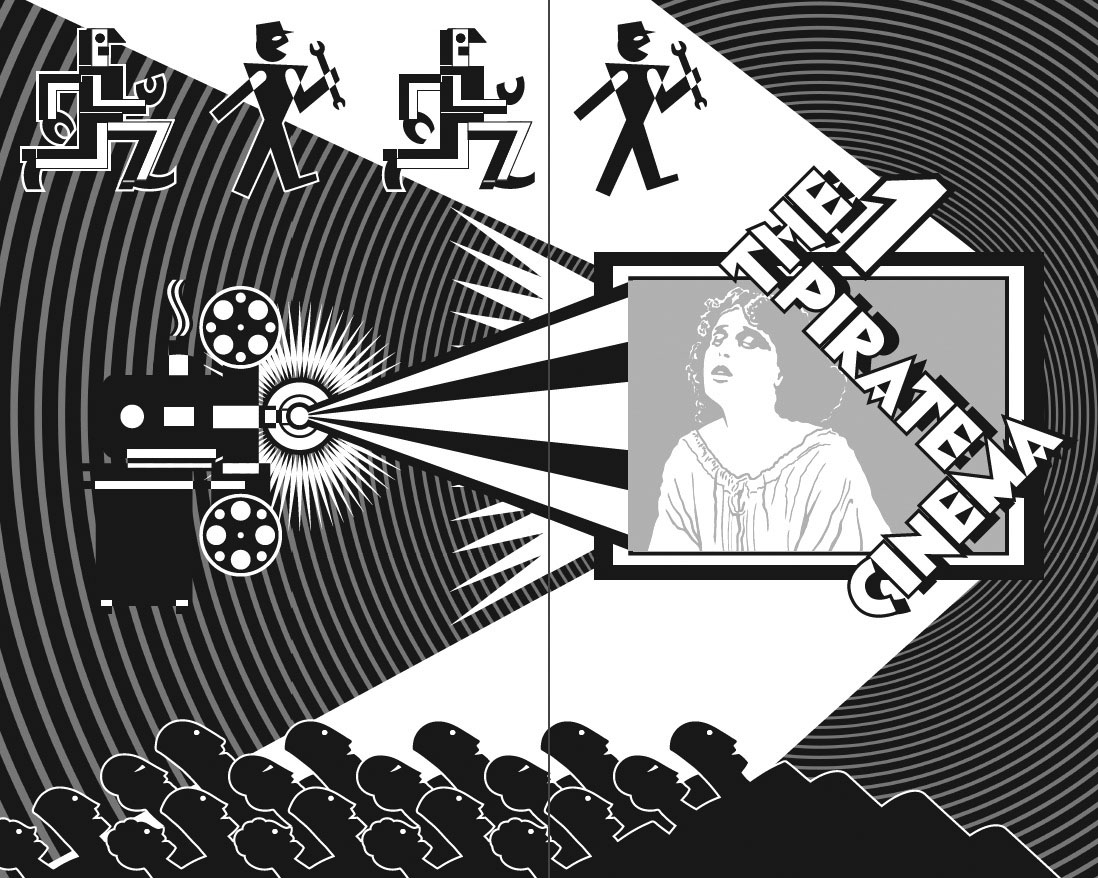
pirate2.jpg

pirate3.jpg

pirate4.jpg

pirate5.jpg

pirate6.jpg

pirate7.jpg

Previously on { feuilleton }
Futurismo!

Weekend links 330

battle.jpg

Summer Passing (2013) by Laura Battle.

• The Marquis de Sade’s enduringly contentious The 120 Days of Sodom has been republished by Penguin Books in a new translation by Will McMorran and Thomas Wynn. “[De Sade] described his novel as ‘the most impure tale ever written since the world began’ and, for all the hyperbole, his description still holds true even now,” says Will McMorran, exploring the history and reputation of the book.

• From the Cutting Room Floor: Rick Klaw talks to Bruce Sterling about the current state of US (and world) politics. Sterling’s Futurist novel Pirate Utopia (which I’ve designed and illustrated) will be published by Tachyon next month.

• New from Strange Attractor: In Fairyland: The World of Tessa Farmer, edited by Catriona McAra, and Of Shadows: One Hundred Objects from The Museum of Witchcraft and Magic by Sarah Hannant and Simon Costin.

• Mix of the week: Programme No. 16 in the long-running Radio Belbury series is a guest presentation by The Pattern Forms (Jon Brooks, Edward Macfarlane and Edward Gibson).

The Book of Three Gates by Simon Berman, “An Esoterica of HP Lovecraft’s Cthulhu Mythos”, is seeking funding.

• Occultist Phil Hine discusses Richard Payne Knight and phalluses at the Conway Hall, London, later this month.

• “My goal is to make music that is transcendent and isn’t specific of a certain time,” says Earth’s Dylan Carlson.

• Kiss the sky: psychedelic posters of the 60s and 70s from the collection of the late Felix Dennis.

Radionics Radio: An Album Of Musical Radionic Thought-Frequencies.

Madeleine LeDespencer on the occult bookshops of London.

Unknown Pleasures waveform gif generator

Sade Masoch (1968) by Bobby Callender | Confessional (Give Me Sodomy Or Give Me Death) (1991) by Diamanda Galás | The Sodom And Gomorrah Show (2006) by Pet Shop Boys

The Quietened Bunker

bunker.jpg

Bunkers were a recurrent feature in the media of the 1980s, a consequence of increasing Cold War tensions following the election of Ronald Reagan and the Soviet invasion of Afghanistan. The decade birthed new horrors of the body-mutating variety, and also reanimated some older ones in the figure of the knife-wielding psychopath, but the omnipresent spectre of nuclear war posed a threat not only to characters in films and TV serials but to the audiences who watched them. That threat manifests most strikingly in the middle of the decade with the TV film Threads (1984), the TV serial Edge of Darkness (1985), and the comic-book serial/graphic novel Watchmen (1986–87). To these you could add feature films such as WarGames (1983) and James Cameron’s The Terminator (1984) and its sequel. Not all of these works feature bunkers but nuclear warfare by its very nature implies the existence of subterranean control centres with all their latent mythological resonances. Some of those resonances are played with in David Rudkin’s Penda’s Fen (1974) and Artemis 81 (1981), the latter featuring an extended sequence in a sinister subterranean complex. Troy Kennedy Martin’s superb nuclear thriller, Edge of Darkness, runs the gamut of underground enclaves, from labyrinthine cave systems and abandoned nuclear shelters to a dusty Cold War command centre with a telephone link to Downing Street.

Bunkers of the abandoned variety provide the theme for the latest compilation album from A Year In The Country:

The Quietened Bunker is an exploration of the abandoned and/or decommissioned Cold War installations which lie under the land and that would have acted as selectively populated refuges/control centres if the button was ever pushed; a study and reflection on these chimeric bulwarks and the faded but still present memory of associated Cold War dread, of which they are stalwart, mouldering symbols.

Track list:
1) Lower Level Clock Room – Keith Seatman
2) Drakelow Tunnels – Grey Frequency
3) The Filter’s Gone / The Last Man Plays The Last Piano – A Year In The Country
4) Aggregates II – Panabrite
5) Bunker 4: Decommissioned – Polypores
6) Comms: Seen Through The Grey – Listening Center
7) Crafty Mechanics – Time Attendant
8) Crush Depth – Unknown Heretic
9) Waiting For The Blazing Skies – David Colohan

This is another quality collection in distinctive black-and-white packaging that will be of immediate interest to anyone who enjoys the releases on the Ghost Box label (Listening Center are already Ghost Box artists): spectral pianos, shortwave radios, ambient chords. The bunker theme connects to shared concerns among related artists with the old Civil Defence films, samples of which have been used on releases by The Advisory Circle and Mordant Music. The Cold War bunker is more than another empty space, it joins the bio-weapons lab (see The Satan Bug) as a source of contemporary horror that doesn’t require any supernatural component to chill the blood.

Previously on { feuilleton }
Fractures

Weekend links 320

liefhebber.jpg

Palm Night (2016) by Nick Liefhebber.

• “Gortner includes reference to the little known Hollywood ‘sewing circles’ (code word for lesbian communities) of which Marlene became a part. This group included Ann Warner, Lili Damita, Claudette Colbert, and Dolores del Río.” Walter Holland reviewing Marlene, a “novelization” of the life of Marlene Dietrich by CW Gortner.

• “Challenges and all, Jerusalem ensures Moore’s place as one of the great masters of the English language.” Heidi MacDonald reviewing Alan Moore’s forthcoming novel. Photos of the slipcased paperback edition (a 3-volume set) appeared last week.

• “It’s unlikely that a gnawing sense of being unborn tops the neuroses of most writers these days, but I’d argue that Beckett’s Jungian insight is more commonly known today as anxiety.” Robert Fay on nihilism and the writing life.

• “So why would I be ‘great for this cover’? Good chance it’s because the book is aimed at a female audience and I am a female designer.” Jennifer Heuer on gendered book covers and being a woman designer.

• Mixes of the week: FACT mix 562 by M. Geddes Gengras, Secret Thirteen Mix 191 by Monica Hits The Ground, and a mix by Daniel Miller.

• Strange Flesh: The Use of Lovecraftian Archetypes in Queer Fiction, an ongoing series by The Punk Writer: part 1 | part 2 | part 3 | part 4.

• “For the Sake of the Prospect”: Lily Ford on the ways in which balloon flight transformed ideas about landscape in the 18th century.

• “Why did Google erase Dennis Cooper’s beloved literary blog?” asks Jennifer Krasinski.

• From Leeds to London: portraits of English cities in the 1970s by Peter Mitchell.

Phantasm is Dune

• RIP Jack Davis

Palm Grease (live, 1974) by Herbie Hancock & The Headhunters | Phantasm (1994) by Biosphere | Fizzy Flesh (1996) by Spacer

Weekend links 319

hibert.jpg

The Sapphic Sleep Web by Oliver Hibert.

• “Google isn’t willing to say whether or not it’s censorship. That they don’t have to even address this is what’s so shocking, It seems like cowardice.” Dennis Cooper talking to Andrew Durbin at Frieze about Google’s unexplained deletion of his long-running blog. Cooper’s case has been covered by arts sites and some newspapers but I’ve yet to see any mention at all on the main US gay news sites despite Cooper being a notable gay author. I’ve cast aspersions at those sites in the past for their obsession with terrible pop acts and off-topic trivia (one site still reports every last fart of Britain’s Royal Family as “news”); this recent issue only reinforces their irrelevance.

• Creating Jerusalem: Alan Moore on the most important book he has written. Related: Alan Moore uses nine-year-old’s fan letter on new book’s cover.

• “Whatever side of the aisle you’re on, HL Mencken is as relevant as ever,” says Paula Marantz Cohen.

To say that Goodbar is an obsessive and symbolically overdetermined film would be an understatement: the film compulsively reiterates themes, visual motifs and parallel narratives, a relentless and repetitive reiteration of ideas that lends that film the aspect of a Freudian dream landscape, a baroque, Boschian sequence of fantasies, projections and illusions.

Bruce LaBruce on Richard Brooks’ film of Looking for Mr. Goodbar

Mare Teno by Michel Redolfi, performed by Thomas Bloch, Susan Belling & Michel Redolfi.

• From 2015: Suicide’s Alan Vega Talks Fiery Record With Big Star’s Alex Chilton.

• Mix of the week: The Takeover with Front & Follow & The Geography Trip.

• Psychic Spaces & Neon Nirvana: The Art of Oliver Hibert by S. Elizabeth.

• How William Burroughs‘s drug experiments helped neurology research.

Yello, absurdist Swiss pop pioneers, return with a new video, Limbo.

• Morphologies Masterclass: Ramsey Campbell on HP Lovecraft.

Cliff Martinez on horror, homage and The Neon Demon.

• A City of Dust: photos of London by Lewis Bush.

Dust To Dust (1986) by Ginger Baker | Neon Sisters (1992) by Thomas Dolby | Limbo (1992) by Sandoz