Schütze and Unstable at Maggs Bros

schutze.jpg

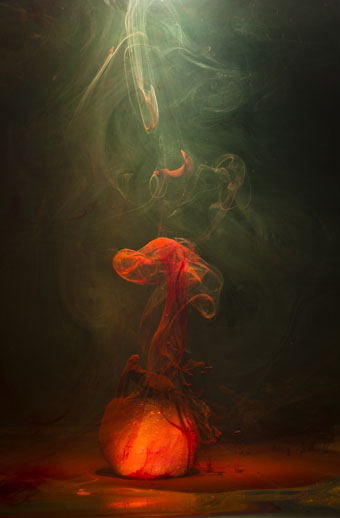
Maggs Bros. Ltd, London, hosts two events soon featuring { feuilleton } friends and cohorts. First up is Paul Schütze with Air Into Light, a showing of eighteen of his photo prints with musical and perfume accompaniment. Paul has been making perfume a subject of particular concern recently. The combination of sound and scent is still little explored despite Scriabin’s ambitious plans for his apocalyptic Mysterium. Air Into Light opens on 12th March.

biroco.jpg

Chaos (2001) by Joel Biroco.

Unstable is a Strange Attractor event which will run from 8th May to 8th June, 2012 presenting new and old work by Battle of the Eyes (Chris Long & Edwin Pouncey), Joel Biroco, Julian House and Cathy Ward. Maggs Bros. has a page with exhibition details here including a PDF catalogue.

Previously on { feuilleton }
Strange Attractor Salon

Opium fiends

opium1.jpg

When bachelor dens cast over waking hours a loneliness so deep (1904).

From morphine to opium. Despite drug addiction being an equal opportunities affair, many representations of opium dens in the late 19th and early 20th centuries tend to show women as the victims. This is probably chauvinistic in part—women being thought of as the weaker sex—but no doubt also connects to xenophobic fears about the white slave trade that fueled so much popular fiction of the time. The photo above at the Library of Congress is one exception with its young man chilling with a hookah in his fur-lined den, as you do. (He’s not necessarily smoking opium, of course…) The posters below, all from 1899, are also from the Library of Congress, and are more typical both in their sensationalism and in the dens being filled with white women.

As for Miss Ada Lewis, Mesmerize Magee was a “dope song” by Melville Ellis from a farce entitled A Reign of Error (1899), in which she recounts how her dope is paid for by a young policeman (the Magee of the title) who the lyrics describe as being “green as a pill”. When Magee worries about spending his wages in this fashion Ada has to wield her charms. And people think of 19th-century entertainment as being entirely wholesome and innocent…

opium2.jpg

opium3.jpg

opium4.jpg

opium5.jpg

Previously on { feuilleton }
La Morphine by Victorien du Saussay
Haschisch Hallucinations by HE Gowers
The Mask of Fu Manchu
The Dark Ledger
Demon rum leads to heroin
German opium smokers, 1900

The art of Elmgreen and Dragset

eandd1.jpg

Ganymede (Jockstrap) (2009).

Artist partners Michael Elmgreen and Ingar Dragset—Danish and Norwegian respectively—became better known to the British public this week (well, Londoners anyway…) when their Powerless Structures, Fig 101 was unveiled by Joanna Lumley in Trafalgar Square. The pair’s bronze boy on a rocking horse is their contribution to the series of works that temporarily occupy the square’s Fourth Plinth, a site originally intended to display an equestrian statue of William IV. Elmgreen & Dragset admit that their new piece is slightly camp but also say:

“One thing that is absolutely forbidden in the public realm is to show emotions and be fragile,” Elmgreen says. “That is something we wanted to touch upon in the square, where it’s all about power. The sculpture is not about pop culture issues, or what is in trend at the moment. You step outside the whole thing and try to speak with another voice.”

“It’s beyond that,” says Dragset. “It’s like daring to expose sides of yourself you’re not supposed to show. Like vulnerability. It is often on our minds at the moment. Dare to be uncool!” (more)

eandd2.jpg

 Jason (Briefs) (2009).

Rather more overtly camp are these photos of additions by the artists’ to statues by Danish sculptor Bertel Thorvaldsen (1770–1844), amendments which lend an erotic frisson to cold marble. The Thorvaldsens Museum in Copenhagen commendably hosted an exhibition of these photo prints last year, and have a page detailing Elmgreen & Dragset’s intentions.

Powerless Structures, Fig 101, will be on display in Trafalgar Square throughout the year.

eandd3.jpg

Mercury (Socks) (2009).

Elsewhere on { feuilleton }
The gay artists archive

Astrolabes

astrolabe1.jpg

Planispheric Astrolabe (and also below) from Persia, 1675/6 (A.H. 1086). Made by Muhammad Amin.

One of the many astrolabes from the Museum of the History of Science, Oxford, who describe their collection as “the world’s largest and most important”. There are pages and pages of these beautiful instruments with large photographs of each in a disassembled state, the better to see the shape of their retes. The site also has an introductory area describing their multiple uses and showing some unusual examples such as an astrolabe clock, and an incredible spherical astrolabe from 1480.

astrolabe2.jpg

astrolabe3.jpg

The rete.

Previously on { feuilleton }
The Midsummer Chronophage

Pleasure of Ruins

beny01.jpg

The ideas ruins evoke in me are grand. Everything comes to nothing, everything perishes, everything passes, only the world remains, only time endures. How old is this world! I walk between two eternities.

Denis Diderot, 1767

Ruins, as Diderot observed, are the memento mori of civilisations, a reminder that the apparent permanence of architecture is illusory: this too shall pass. Rose Macaulay explored the melancholy pleasure inspired by this contemplation in Pleasure of Ruins (1953), a book I was reminded of on two separate occasions this weekend. Before I get to those I can’t resist showing something of my own copy of Macaulay’s study, a heavyweight volume (286 pp, 346mm x 260mm) published by Thames & Hudson in 1964. This was the third book by Canadian photographer Roloff Beny who made a habit of photographing ancient ruins. Here he visits Angkor, Tintern Abbey, Persepolis, Petra, Baalbek, Leptis Magna, Chichen Itza, Machu Picchu and elsewhere to embellish Macaulay’s text with 160 photogravure pages, 12 tipped-in colour plates, and maps of the locations on fold-out spreads. Beny also designed the book which even in my rather scuffed and damp-afflicted copy is an impressive example of the mass-produced edition as work-of-art.

beny02.jpg

Metallic silver printing on the endpapers.

Rick Poynor provided the first mention of Macaulay’s book in a piece of polemic justifiably disputing the pejorative term “ruin porn”, an epithet that’s appeared recently among critics of those fascinated by photos of abandoned Detroit, or Battleship Island off the coast of Japan. If photos of ruins are “ruin porn” then Roloff Beny’s books must count as hardcore, while my National Trust Book of Ruins is evidently a government-sponsored sex manual. Poynor notes the criticism being a particularly American one, and wonders whether some Americans fail to appreciate the long cultural and political history of the ruin in Europe. Plenty of European cities have ruins in their midst, whether ancient ones like London Wall and the centre of Rome, or more recent ones like the Kaiser Wilhelm Memorial Church in Berlin and Coventry Cathedral, both partially destroyed during the Second World War. An appreciation of ruins began in the 18th century and evolved in tandem with the emergence of antiquarianism. Prior to this, ancient ruins were either a nuisance or a resource to be plundered for their stones. (Or, as can be seen in some of Piranesi’s Views of Rome, a convenient support for shops and houses.)

beny03.jpg

From ruin porn to Ruin lust: our love affair with decaying buildings, an essay by Brian Dillon which covers similar ground to Poynor’s piece, and discusses Rose Macaulay’s interest in ruins, an interest that survived being bombed out of her home during the war. This is a great run through the usual suspects, from the Romantics (with a nod to Fonthill Abbey) to JG Ballard’s obsession with the remnants of the Cold War and the Space Age. Dillon mentions the painting John Soane commissioned from Joseph Gandy showing his Bank of England building as a future ruin. And he also recounts the story (which I heard repeated recently in a Robert Hughes documentary) of Hitler’s demands to Albert Speer during their planning of the future capital of the Third Reich, Germania, that the buildings should make good ruins. It’s impossible to imagine anyone today planning a building as a future ruin even though many will end up that way, if they last at all.

beny04.jpg

If it wasn’t already apparent that ruins are the thing du jour, a current exhibition at Dundee Contemporary Arts is of photographic prints by Jane and Louise Wilson showing views of abandoned Pripyat, better known as the town at the heart of the Chernobyl Exclusion Zone. Rick Poynor refers to Pripyat in his piece, and it’s also an inevitable subject of discussion in Geoff Dyer’s latest book, Zona, an exploration of Andrei Tarkovsky’s Stalker where a disused power station adds a more sinister quality to the pleasure of ruins.

More pages from Roloff Beny’s book follow.

Continue reading “Pleasure of Ruins”