Atalanta Fugiens

teb.jpg

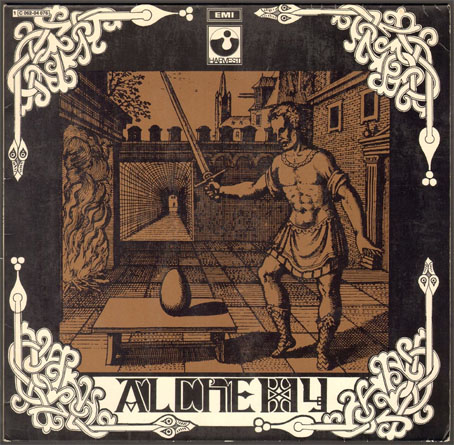
Alchemy (1969) by the Third Ear Band. Design by Dave Loxley.

For an idea of how these posts often come into being, this one is the result of the following chain of association: an article by Leo Robson about the films of Roman Polanski > A re-viewing of Polanski’s Macbeth > A re-listening to albums by the soundtrack artists for Macbeth, British folk group the Third Ear Band > A tracking down of the famous cover image from the first Third Ear Band album.
mm01.jpg

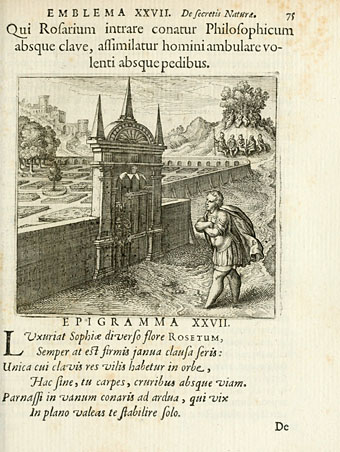
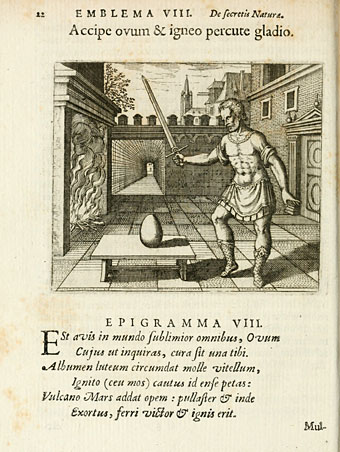
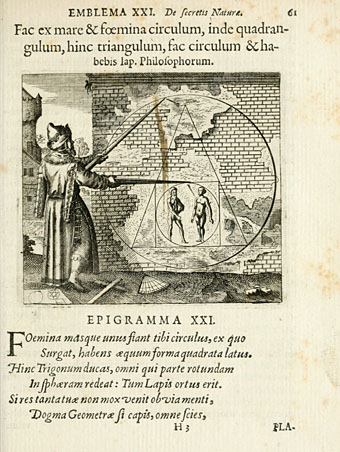
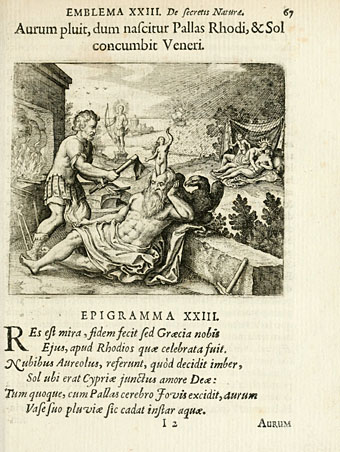
Alchemy is the dominant theme of the first two Third Ear Band albums. The engraving used on the cover of their debut album is one of the most frequently reproduced of all images associated with this branch of occultism, one of fifty emblems from Atalanta Fugiens (1618) by the German alchemist Michael Maier (1568–1622).

The plates are by Matthäus Merian, an artist whose career produced a number of notable alchemical illustrations. A detail from one of his other oft-reproduced pieces, Macrocosm and Microcosm from the Basilica Philosophica (1618), appeared on the cover of Pink Floyd’s Saucer Full of Secrets album a year before the Third Ear Band debut. Merian would no doubt be astonished that his work was so visible to future generations even though his name is seldom mentioned at all. The popularity can be accounted for by the way the best of these images seem almost archetypal whilst being resistant to any easy interpretation. Some of Merian’s plates remind me of Magritte’s paintings; they share a tension between carefully rendered yet impossible images that imply a hidden meaning. As Borges considered metaphysics to be a branch of fantastic literature it’s possible to consider this kind of alchemical illustration as a branch of fantastic art.

A 1687 edition of Maier’s Atalanta Fugiens (retitled Scrutinium Chymicum) may be browsed here or downloaded here.
mm02.jpg

mm03.jpg

mm04.jpg

Continue reading “Atalanta Fugiens”

Xenis Emputae Travelling Band

xenisemputae.jpg

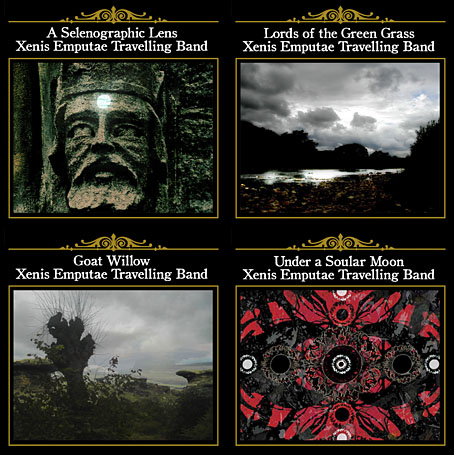
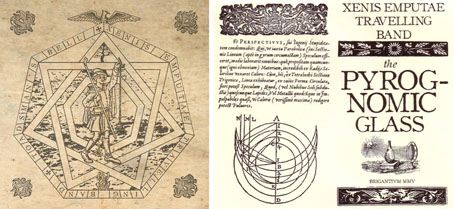
The Old Weird Britain of folk tales, folk songs and pagan ritual has been a recurrent theme for the past couple of months so here’s another post on the subject. The music of Phil Legard’s Xenis Emputae Travelling Band is steeped in British folklore but mostly sidesteps songs in favour of drones and improvised soundscapes. Early pieces feature electronic sounds which are substituted in the later works by bells and accordion tones. A number of Legard’s recordings are made in response to locations with a weight of history and ritual association, a process elaborated in a chapbook entitled Psychogeographia Ruralis.

xenisemputae2.jpg

The past decade has seen the emergence of a cottage industry of micro-label music production, mostly people offering limited run CD-Rs via mail order. Many of Legard’s recordings were released in this fashion on his own Larkfall label but you can now explore them as free downloads at the Internet Archive. (Thanks to Warren Ellis for pointing this out). Among the few songs there’s a setting of Moly, a poem by Clark Ashton Smith. If you need a respite from unavoidable seasonal torment then this is a good place to start.

As usual I’ll be away for a few days so the { feuilleton } archive feature will be activated to summon posts from the past below this one. Enjoy your wassail.

Weekend links 139

barnes.jpg

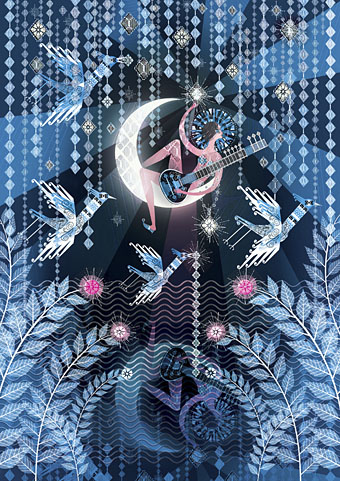
Lucy in the Sky with Diamonds (2012) by Lesley Barnes. She also has peacock wrapping paper.

Big thanks to Dennis Cooper for including this blog in his favourite music, fiction, poetry, film, art & internet lists for 2012. Lots of good company there. One benefit of end-of-year lists is the way they suggest things to look for in January.

• “…the best pictures of dicks that I’ve ever seen…” Rudy Rucker reviews Malcolm McNeill’s The Lost Art of Ah Pook Is Here and Observed While Falling, out at last from Fantagraphics. Rucker notes that William Burroughs’ text is still only available in out-of-print editions in which case you’ll need a book dealer. Elsewhere, Burroughs: The Movie has cleared 50% of its restoration Kickstarter goal but still needs supporters.

• Julia Holter has been a recurrent presence in these posts since the release in March of her acclaimed second album, Ekstasis. FACT has an alternate version of the album’s opening song, Marienbad, one of the extra tracks on the recent UK reissue.

Suttree’s saga carried me down, down, down to the bottom of a heightened surrogate reality, a nadir where the rarest jewels of clarity are found. The fourth time through the novel I arrived at a state of barometric equipoise, a balancing between my mental state and Suttree’s. Then, as he descended again, I began to rise. There was a hypnotic poetry to his fall — his life disintegrated, then the fragments disintegrated, then those fragments followed suit ad infinitum.

Jim White on the life-preserving qualities of Suttree by Cormac McCarthy.

• “An 18-year-old boy who discovers he has a fetish for the aged gets a job in a nursing home and develops an intimate relationship with one particular old man.” Gerontophilia, a proposed film by Bruce LaBruce, is looking for funding.

• Can’t wait for this: Groenland Records announces Who’s That Man?, a four-CD set of music produced and performed by Conny Plank. FACT has a track list.

• At BUTT magazine: Pink Courtesy Phone Mix by Richard Chartier, a great selection of electronica old and new.

• Another end-of-year list: Volumes 1 & 2 of The Graphic Canon are in NPR’s Indie Bookseller best of 2012 selection.

The Nightmare Paintings: art by Aleister Crowley currently touring Australia.

• Christmas with Monte: Colin Fleming on the ghost stories of MR James.

• “The war on drugs is a war on human nature” says Lewis Lapham.

Alan Moore: why I turned my back on Hollywood.

• More electronica: Chris Carter discusses synths.

Saul Bass poster sketches for The Shining.

• At Pinterest: The Pan Within.

Ah Pook Is The Mayan God Of Death (1975) by William Burroughs | Panic (1985) by Coil | Light Shining Darkly (1992) by Coil.

Weekend links 138

durette.jpg

Heartsick (2011) by Kelly Durette.

• Now that Scott Walker’s Bish Bosch album is out and causing the usual consternation, the spotlight-shy singer/composer has been doing a surprising amount of promotional interviews. Simon Hattenstone talked to him for the Guardian at the end of last month; this week it was John Doran’s turn at The Quietus. One quote from the latter piece stood out in the light of this week’s posts: “…the music we’re making is meant to be an aural version of the HR Giger drawings for Alien. It always sounds to me like those look.”

Satanica is a limited-edition publication curated by Gio Black Peter & Christopher Stoddard “for anyone who rejects societal norms, for those dedicated to a life of pleasure, excess and self-reflection”.

• Sci-Fi-O-Rama has put five years’ worth of blog pictures onto Pinterest. I don’t really need to do that, there’s already a diverse crowd of Pinterest users compiling their own selection of things posted here.

As Susan Sontag once observed, pornography is practical. It was designed as a marital aid, and its vocabulary should follow natural biological rhythms and stick with hot-button words in order to produce a predictable climax. It is not about sex but is sex. Whereas the great sex writers (Harold Brodkey, DH Lawrence, Robert Gluck, David Plante, the Australian Frank Moorhouse) have a quirky, phenomenological, realistic approach to sex. They are doing what the Russian formalists said was the secret of all good fiction – making the familiar strange, writing from the Martian’s point of view.

Edmund White on writing about sex in fiction

• When pirate DVDs of films by Cocteau, Bresson and Pasolini are on sale in a Mexican market, life in the 21st century increasingly resembles a William Gibson novel. Joanne McNeil investigates.

• Copies of City Fun, Manchester’s premier music fanzine/alt culture mag (founded 1978), can now be read online at the Manchester District Music Archive.

• Linked everywhere during the past few days, the astonishing map of bomb hits on London during the Blitz (October 1940 to June 1941).

• At 50 Watts: 30 Vintage Magazine Covers from Japan and Alfred Kubin’s illustrations for Lesabéndio: An Asteroid Novel (1913) by Paul Scheerbart.

• Earlier this year for Frieze Magazine Geeta Dayal talked to musical collaborators of the great German producer Conny Plank.

Invisible Ink by Christopher Fowler, “the extraordinary stories of over one hundred forgotten authors”.

Cynthia Carr talks about Fire in the Belly, her biography of American artist David Wojnarowicz.

• “Blasphemy, Filth, And Nonsense” More Aleister Crowley ephemera at Front Free Endpaper.

• At Strange Flowers: Surrealist art by Jindrich Heisler (1914–1953).

Vladimir Nabokov wrote to Alfred Hitchcock in 1964.

• Scott Walker’s four tracks from the Nite Flights album (1978): Shutout | Fat Mama Kick | Nite Flights | The Electrician.

Giger’s Tarot

giger13.jpg

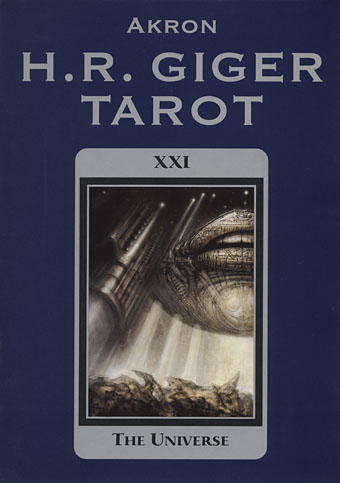
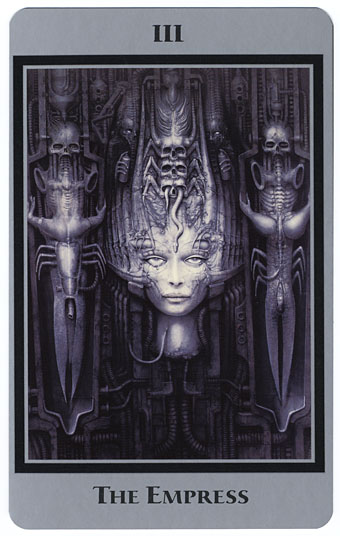
This week’s posts reminded me that I have a copy of the HR Giger Tarot set published by Taschen under their Evergreen imprint in 2000. The set is Taschen’s reworking of Giger & Akron’s Baphomet Tarot der Unterwelt set from 1994, and I recall this being one of the last things Taschen created with Giger after spending the previous decade producing a run of books, diaries and posters featuring his paintings. Inside a box you find a set of 22 oversize Tarot trumps presenting some of Giger’s works against metallic silver surrounds. There’s also a poster-size sheet for card readings printed with his pentagram design plus a 224-page paperback book by Swiss Tarot scholar Akron, aka CF Frey, which interprets the paintings as they relate to the Major Arcana. (The Baphomet set had a hardback book and the pentagram design printed on the back of each card.)

giger12.jpg

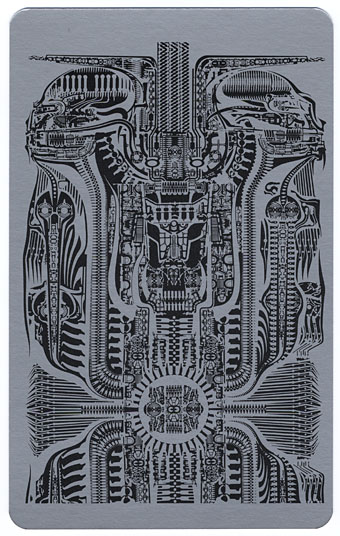
The design on the back of the cards, printed in black on metallic silver.

If you’re familiar with Tarot symbolism you don’t have to use these cards to find the correspondences intriguing. The trump ordering is an odd mix of the Crowley scheme with the more traditional designations. Two of the trumps have also been given new names: The Hanged Man is now The Hanged Woman while Crowley’s Art (formerly Temperance) has become Alchemy, an association which works since the card in the Crowley deck depicts the Androgyne of alchemical symbolism. I can imagine some Tarot collectors finding these cards far too dark and nasty, but when so many Tarot designs today are various degrees of garish or twee there’s plenty of room for a Giger or two to harsh the New Age mellow.

The card set has been out of print for years but Abebooks still carries copies at reasonable prices. A few examples of the cards follow.

giger14.jpg

Continue reading “Giger’s Tarot”