Weekend links 147

kalynovych.jpg

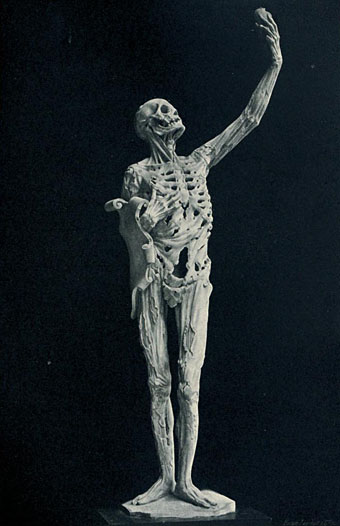
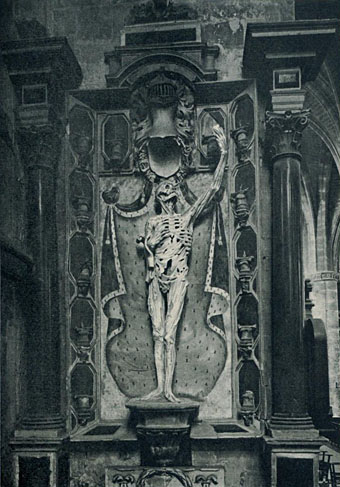
Bestia Apocalypsi (2000) by Konstantin Kalynovych.

A funding page for Better Things: The Life and Choices of Jeffrey Catherine Jones, Maria Paz Cabardo’s documentary film about the late comic artist and illustrator.

• Phantasmaphile’s Pam Grossman has declared 2013 to be the Year of the Witch.

• At WFMU: The Space Ghost Coast To Coast Sonny Sharrock Tribute Episode.

I think that mass culture is idiotic. I always have. Even things that are the sort of trendy new whatevers, it’s always about money and sex and nothing else.

Laurie Anderson on music for dogs and Obama.

• It’s that…thing…again. Clive Hicks-Jenkins on his new Mari Lwyd designs.

• Rick Poynor’s Dictionary of Surrealism and the Graphic Image.

• “Why do gay porn stars kill themselves?” asks Conner Habib.

scarfolk.jpg

If you’re staycationing in Scarfolk this year you’ll be pleased to hear the town now has 20% less rabies. Above: The 1972–73 prospectus for scarecrow and wicker man biology at Scarfolk Technical College. Related: A Day At The Seaside. I guessed the source even without the cryptic comments. Can you?

Laurie Spiegel designed a T-shirt for The Wire magazine.

Julia Holter covers Chiamami Adesso by Paolo Conte.

Strange Attractor has two new Austin Spare prints.

Forgotten Women Designers and Illustrators.

• RIP Alan Sharp, a sharp screenwriter.

• “Can You Pass the Acid Test?

Sonny and Linda Sharrock live at WKCR 03/21/74 | Many Mansions (1991) by Sonny Sharrock | Ghost Planet National Anthem (1993) by Sonny Sharrock

Kenneth Anger’s Hollywood Babylon

anger1.jpg

Nigel Finch was a key member of the team of producers and directors working on the BBC’s Arena arts documentaries throughout their golden run during the 1980s and 1990s. The films he directed himself—among them studies of Robert Mapplethorpe’s photography, and a history of the Chelsea Hotel in New York—gave him an opportunity to push some gay content into the TV schedules at a time when Britain’s gay population were seen as enough of a public threat to be legislated against. Some of that proselytising impulse can be found in Kenneth Anger’s Hollywood Babylon (1991), an hour-long documentary which alternates the life and work of the filmmaker with readings and enactments of the lurid episodes recounted in Anger’s scandal anthologies, Hollywood Babylon and Hollywood Babylon II. Finch at one point asks whether Fireworks, the first film in Anger’s Magick Lantern Cycle, should be regarded as a pioneering piece of gay cinema; Anger’s says he’s happy if people take it that way but says little else about its evident homoerotic atmosphere. He remains as resistant to identity politics as he’s always been. (See the unauthorised biography by Bill Landis for details.)

anger2.jpg

Between the readings and interview sections Finch shows Anger being chauffeured around Beverly Hills in a hearse which stops occasionally at some locus of bygone scandal. Most of the Anger anecdotes are familiar ones from subsequent interviews but there is a bonus for Angerphiles with the appearance at the end of Marianne Faithfull who talks a little about their relationship before singing Boulevard Of Broken Dreams. The picture quality of this YouTube copy could be better but it’s watchable enough.

Update: That YouTube link went private so I’ve updated the links to a better copy at the Internet Archive.

Previously on { feuilleton }
Lucifer Rising posters
Externsteine panoramas
Missoni by Kenneth Anger
Anger in London
Arabesque for Kenneth Anger by Marie Menken
Edmund Teske
Kenneth Anger on DVD again
Mouse Heaven by Kenneth Anger
The Man We Want to Hang by Kenneth Anger
Relighting the Magick Lantern
Kenneth Anger on DVD…finally

Atalanta Fugiens

teb.jpg

Alchemy (1969) by the Third Ear Band. Design by Dave Loxley.

For an idea of how these posts often come into being, this one is the result of the following chain of association: an article by Leo Robson about the films of Roman Polanski > A re-viewing of Polanski’s Macbeth > A re-listening to albums by the soundtrack artists for Macbeth, British folk group the Third Ear Band > A tracking down of the famous cover image from the first Third Ear Band album.

mm01.jpg

Alchemy is the dominant theme of the first two Third Ear Band albums. The engraving used on the cover of their debut album is one of the most frequently reproduced of all images associated with this branch of occultism, one of fifty emblems from Atalanta Fugiens (1618) by the German alchemist Michael Maier (1568–1622).

The plates are by Matthäus Merian, an artist whose career produced a number of notable alchemical illustrations. A detail from one of his other oft-reproduced pieces, Macrocosm and Microcosm from the Basilica Philosophica (1618), appeared on the cover of Pink Floyd’s Saucer Full of Secrets album a year before the Third Ear Band debut. Merian would no doubt be astonished that his work was so visible to future generations even though his name is seldom mentioned at all. The popularity can be accounted for by the way the best of these images seem almost archetypal whilst being resistant to any easy interpretation. Some of Merian’s plates remind me of Magritte’s paintings; they share a tension between carefully rendered yet impossible images that imply a hidden meaning. As Borges considered metaphysics to be a branch of fantastic literature it’s possible to consider this kind of alchemical illustration as a branch of fantastic art.

A 1687 edition of Maier’s Atalanta Fugiens (retitled Scrutinium Chymicum) may be browsed here or downloaded here.

mm02.jpg

mm03.jpg

mm04.jpg

Continue reading “Atalanta Fugiens”

Xenis Emputae Travelling Band

xenisemputae.jpg

The Old Weird Britain of folk tales, folk songs and pagan ritual has been a recurrent theme for the past couple of months so here’s another post on the subject. The music of Phil Legard’s Xenis Emputae Travelling Band is steeped in British folklore but mostly sidesteps songs in favour of drones and improvised soundscapes. Early pieces feature electronic sounds which are substituted in the later works by bells and accordion tones. A number of Legard’s recordings are made in response to locations with a weight of history and ritual association, a process elaborated in a chapbook entitled Psychogeographia Ruralis.

xenisemputae2.jpg

The past decade has seen the emergence of a cottage industry of micro-label music production, mostly people offering limited run CD-Rs via mail order. Many of Legard’s recordings were released in this fashion on his own Larkfall label but you can now explore them as free downloads at the Internet Archive. (Thanks to Warren Ellis for pointing this out). Among the few songs there’s a setting of Moly, a poem by Clark Ashton Smith. If you need a respite from unavoidable seasonal torment then this is a good place to start.

As usual I’ll be away for a few days so the { feuilleton } archive feature will be activated to summon posts from the past below this one. Enjoy your wassail.

Weekend links 139

barnes.jpg

Lucy in the Sky with Diamonds (2012) by Lesley Barnes. She also has peacock wrapping paper.

Big thanks to Dennis Cooper for including this blog in his favourite music, fiction, poetry, film, art & internet lists for 2012. Lots of good company there. One benefit of end-of-year lists is the way they suggest things to look for in January.

• “…the best pictures of dicks that I’ve ever seen…” Rudy Rucker reviews Malcolm McNeill’s The Lost Art of Ah Pook Is Here and Observed While Falling, out at last from Fantagraphics. Rucker notes that William Burroughs’ text is still only available in out-of-print editions in which case you’ll need a book dealer. Elsewhere, Burroughs: The Movie has cleared 50% of its restoration Kickstarter goal but still needs supporters.

• Julia Holter has been a recurrent presence in these posts since the release in March of her acclaimed second album, Ekstasis. FACT has an alternate version of the album’s opening song, Marienbad, one of the extra tracks on the recent UK reissue.

Suttree’s saga carried me down, down, down to the bottom of a heightened surrogate reality, a nadir where the rarest jewels of clarity are found. The fourth time through the novel I arrived at a state of barometric equipoise, a balancing between my mental state and Suttree’s. Then, as he descended again, I began to rise. There was a hypnotic poetry to his fall — his life disintegrated, then the fragments disintegrated, then those fragments followed suit ad infinitum.

Jim White on the life-preserving qualities of Suttree by Cormac McCarthy.

• “An 18-year-old boy who discovers he has a fetish for the aged gets a job in a nursing home and develops an intimate relationship with one particular old man.” Gerontophilia, a proposed film by Bruce LaBruce, is looking for funding.

• Can’t wait for this: Groenland Records announces Who’s That Man?, a four-CD set of music produced and performed by Conny Plank. FACT has a track list.

• At BUTT magazine: Pink Courtesy Phone Mix by Richard Chartier, a great selection of electronica old and new.

• Another end-of-year list: Volumes 1 & 2 of The Graphic Canon are in NPR’s Indie Bookseller best of 2012 selection.

The Nightmare Paintings: art by Aleister Crowley currently touring Australia.

• Christmas with Monte: Colin Fleming on the ghost stories of MR James.

• “The war on drugs is a war on human nature” says Lewis Lapham.

Alan Moore: why I turned my back on Hollywood.

• More electronica: Chris Carter discusses synths.

Saul Bass poster sketches for The Shining.

• At Pinterest: The Pan Within.

Ah Pook Is The Mayan God Of Death (1975) by William Burroughs | Panic (1985) by Coil | Light Shining Darkly (1992) by Coil.