The Layering

layering.jpg

In Alan Moore’s recent novel, Jerusalem, the ghosts of Northampton travel to different ages of the town by pulling up the concentrated layers of time which they peel back like the pages of a book. The passage of time as an accumulation of layers was materially evident in 18th-century Rome even before geology became an established science. Piranesi’s most popular series of prints, the Vedute di Roma, show how centuries of wind-blown dust and soil had raised the level of the city several feet above its ancient ruins. Before antiquarians began to remove the soil the city was a place of curious juxtapositions, with truncated Corinthian columns growing from the earth, surrounded by—or even forming part of the structure of—the rougher buildings where contemporary Roman citizens were living or sheltering their livestock.

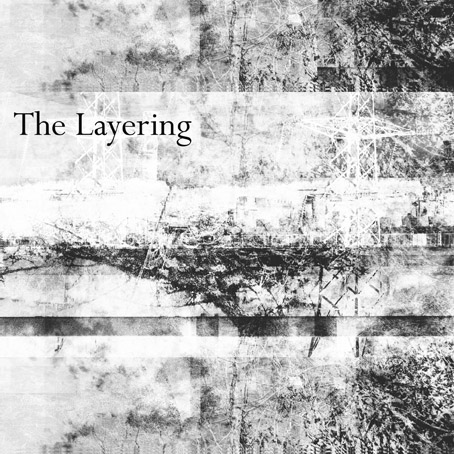
Layers of time and history are the subject of the new compilation from A Year In The Country:

The album explores the way that places are literally layered with history, and is an audio slicing through the layers of time. It journeys amongst the stories and characters of these layers, including, amongst other aspects, the structures built, events which took place and different era’s technologies and belief systems.

Such layering can go far back into pre-recorded history. Much of the earth is thought to have once been underwater, and it is likely that the majority of cities, towns and villages are built in former ocean areas. Current land masses have come to be formed, in part, through a layering of past marine, other life and plants, which in turn are then quarried or mined, subsequently being used to create the infrastructure of contemporary civilisation, and creating something of a cyclical, time-out-of-joint nature to the layers of time.

Track list:
1) A Year In The Country — Cross Sections Of Time
2) Circle/Temple — The Hollow Stream Buried
3) The Heartwood Institute — Beneath The City Streets
4) Sproatly Smith — Chapel Still Stands
5) Field Lines Cartographer — Layers Of Belief
6) Howlround — A Heart Shaped Forest
7) Folclore Impressionista — The Problem Of Symmetry
8) Handspan — At The End Of The Aerial Flight
9) Widow’s Weeds — Gilmerton Cove
10) Listening Center — Wattle And Daub Office Blocks
11) Vic Mars — Once There Were Houses
12) Pulselovers — Brodsworth
13) Grey Frequency — Tigguo Cobauc

As with some of the earlier releases in this series, the accompanying notes are essential to flesh out the substance of the instrumentals; so The Hollow Stream Buried follows Coil in charting the lost rivers of London, Tigguo Cobauc deals with the labyrinth of caves under the city of Nottingham, Chapel Still Stands concerns a place of worship marooned inside an industrial estate, and so on. Without a description, Howlround’s evocation of a Cumbrian landmark might be another example of stone-tape clairaudience. The tape distortions, however, turn out to be the tape feedback playing itself; if there are any ghosts here their origin is presumably rural, not mineral. Handspan combine a traditional tune from the North-East of England with outdoor percussion, a piece whose jauntiness is undermined (somewhat literally) by thoughts of the collieries of Northumberland and the “aerial flight” itself, the cable conveyor at Blackhall Rocks that makes such a memorable backdrop to the final scenes of Get Carter (1971). Relying on notes in this manner may seem like a flawed approach but it’s the nature of all programme music to be accompanied by some kind of description. Several of the more ambient pieces aren’t too far removed from Brian Eno’s On Land, an album that also concerns itself with place and memory, and which contains its own lengthy contextualising note. Delve beneath the layers here.

Previously on { feuilleton }
• The Quietened Journey
• Echoes And Reverberations
• The Watchers
• The Corn Mother
• The Quietened Mechanisms
• The Shildam Hall Tapes
• Audio Albion
• A Year In The Country: the book
• All The Merry Year Round
• The Quietened Cosmologists
• Undercurrents
• From The Furthest Signals
• The Restless Field
• The Marks Upon The Land
• The Forest / The Wald
• The Quietened Bunker
• Fractures
Weekend links 537

clarke.jpg

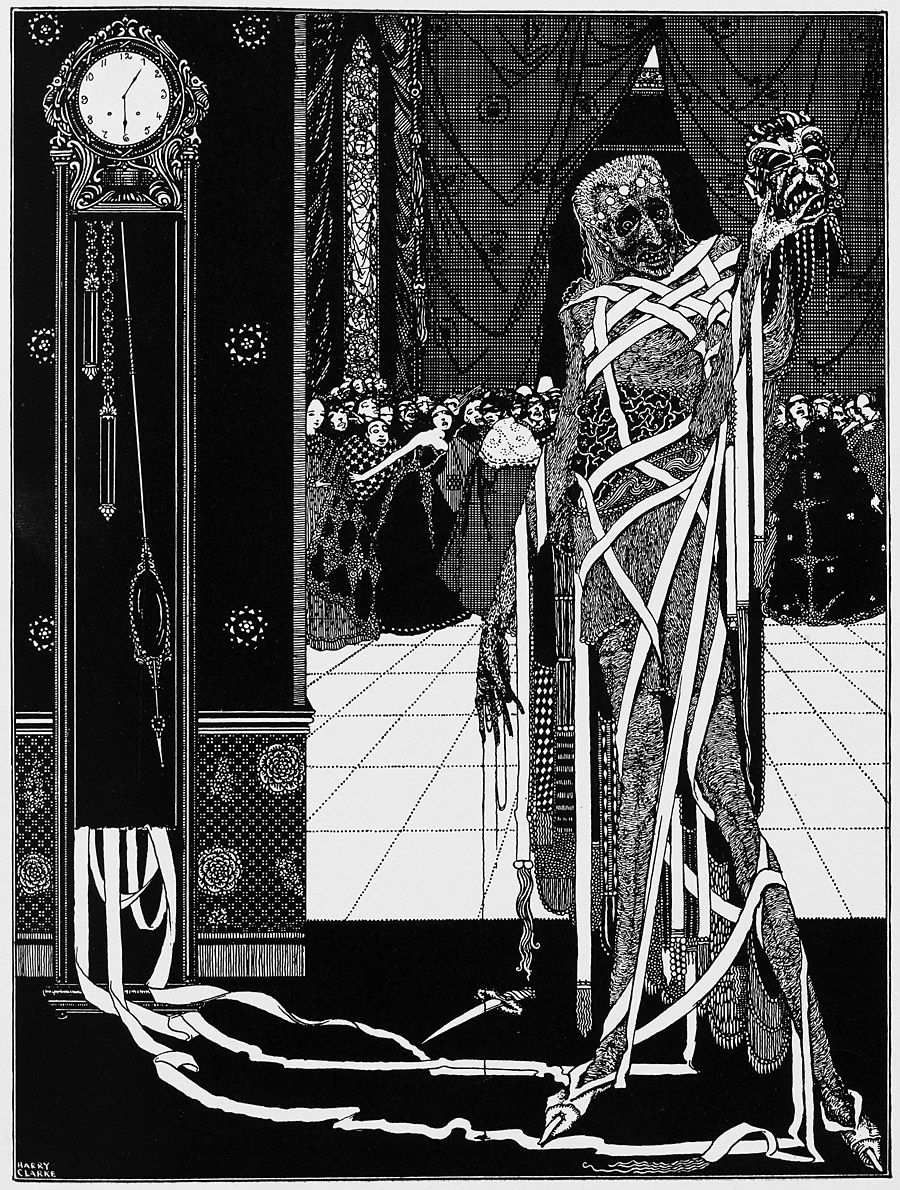
“The dagger dropped gleaming upon the sable carpet.” The Masque of the Red Death illustrated by Harry Clarke, 1919.

• 2020 is the year of enormous pink lady faces on book covers, apparently. As someone who spends little time following cover trends, the identification of a new variety of herd behaviour among designers or their art directors is always fascinating and bizarre.

• Tomoko Sauvage plays her porcelain and glass instruments inside a disused water tank in Berlin for a new album, Fischgeist. The Wire has previews.

• At The Paris Review: Craig Morgan Teicher on the later work of Dorothea Tanning, and Daniel Mendelsohn on the rings of Sebald.

Unlike many of the rapidly forgotten [Nobel] “winners”, and despite the occasional sniffy critic wondering “who still reads it?” Durrell’s Alexandria Quartet has never been out of print since he published it in 1957. The centenary of his birth in 2012 raised a flurry of revived interest in Durrell. Indeed the whole Durrell family has been popping up regularly in reprints of Lawrence’s novels and poetry, in his brother Gerald’s popular tales of his “family and other animals,” and in several TV series about their life in Greece on Corfu island in the late 1930s. A BBC interviewer once asked Lawrence about the difference between his writing and brother Gerald’s. He replied: “I write literature. My brother writes books that people read.”

I’ve read Gerald and I’ve read Lawrence; I prefer Lawrence, thank you. Thomas O’Dwyer examines the chef d’oeuvre of the elder Durrell, The Alexandria Quartet

• Dark Entries shares Patrick Cowley’s cover of Chameleon by Herbie Hancock. The original is here.

• Saunas, sex clubs and street fights: how Sunil Gupta captured global gay life.

• Inside the Grace Jones exhibition at Nottingham Contemporary.

• Rob Walker on how dub reggae’s beats conquered 70s Britain.

• Who invented the newspaper? John Boardley reports.

• Spread The Virus (1981) by Cabaret Voltaire | Cut Virus (2003) by Bill Laswell | The Unexclusive Virus ~even our invincible religion “Technology” cannnot~ (2006) by Kashiwa Daisuke

Posterized

cramps.jpg

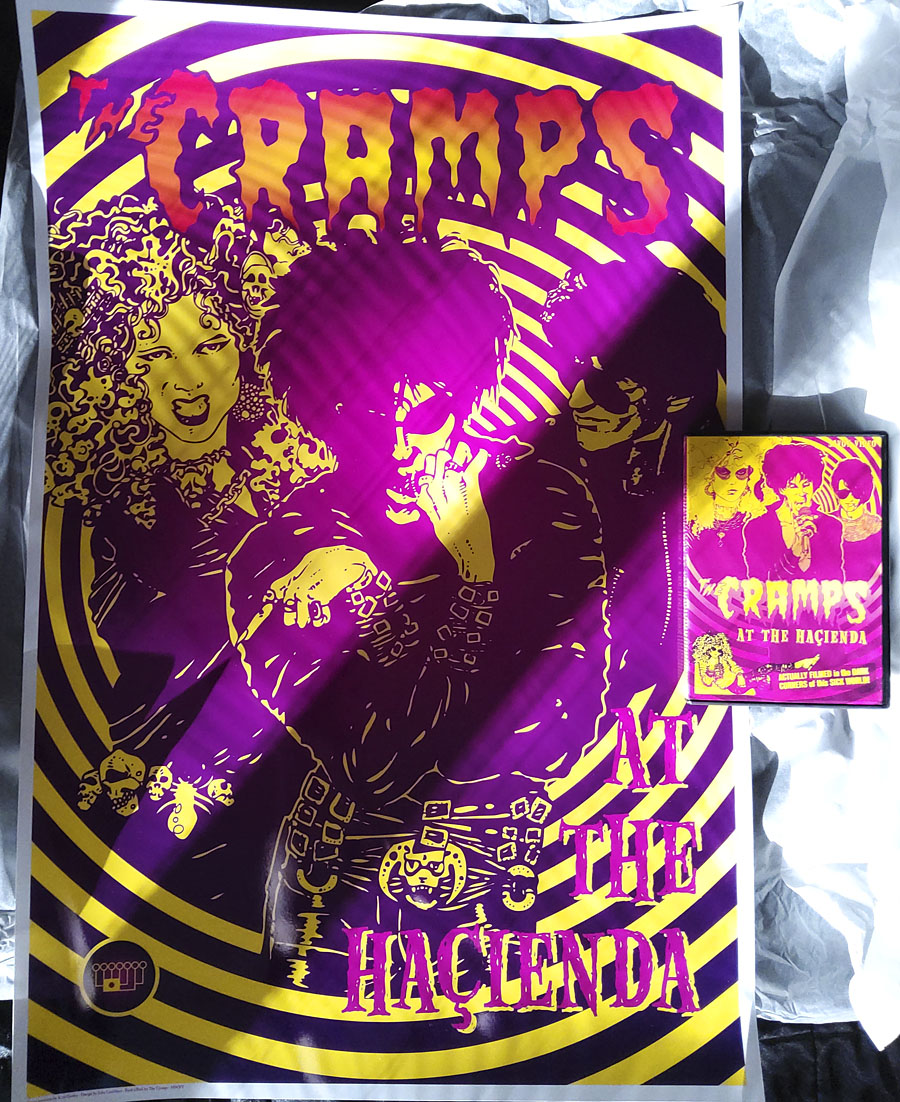
Band portraits by Kris Guidio from his original fanzine illustrations. Cramps DVD shown for scale.

I was asked recently if it was possible to have a poster made of one of the insert pages from the Cramps DVD I designed for Savoy a few years ago. This is the result, a 50.8 cm x 76.2 cm (20 x 30 inches) C-type Fuji print on heavy paper with a gloss finish. I’ve done this in part as a tentative move towards making signed prints available of my other artwork, something I mentioned when writing earlier about the website redesign. I’ve found print-on-demand services like CafePress to be increasingly unsatisfactory, and they were never very useful for poster art since their sizes are limited and they lack the options that a dedicated printer can offer.

This poster is exactly the kind of quality I was hoping for, so the next step will be to add a page to my site so that prints may be ordered via the site itself rather than emailing me with a query. In the meantime, if anyone does want a quality print made from one of my pictures or designs, get in touch.

Previously on { feuilleton }
• The Cramps at the Haçienda

Weekend links 536

peake.jpg

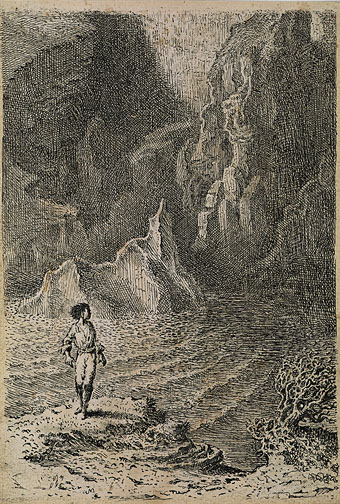
Jim Hawkins in Treasure Island. An illustration by Mervyn Peake, 1949.

• “Since it was 1967 when I became a teenager, I suspected that the Now would stir together rock ’n’ roll bands and mod girls and cigarettes and bearded poets and sunglasses and Italian movie stars and pointy shoes and spies.” Luc Sante on hs youthful search for The Now.

• “…in response to listener requests to play ‘more music like This Heat’, [John] Peel responded that he couldn’t because ‘nobody else sounds like them’.” Alexis Petridis on the mighty This Heat, the band who tried to change everything.

• “While I hesitate to deploy the overused and near-devalued word shamanic here, it does smell right. Or rite.” Ian Penman on the polychromatic delirium of Parliament and Funkadelic in 1970.

Anyway, we knew this new culture was there, we knew this phenomenon was occurring, centered in the Haight-Ashbury, so after this event, we dramaturges sat together and tried to think it out. What is this, in terms of breaking down the fourth wall? How is this a historical follow-through for Antonin Artaud on one hand and Bertrolt Brecht on the other? How did these two come together in this? What do you call this, when you provoke riots and use the audience as members of the cast? When you can stage events that brings the audience on the stage—but there is no formal stage? But it’s a theatricalized event…? It’s all new. So I called it ‘guerrilla theater.’ And Ronnie heard that phrase, and wrote an essay about doing Left provocative theater. That wasn’t what I saw. I saw it as being deeper than that. And I began writing plays that now were for sure plays except that a lot of the dialogue was spontaneously derived from the performers—we had some really great performers at the Mime Troupe at the time, I’d say there were at least a dozen good performers, and a couple who were really brilliant. Anyways, put these people together, I gave them a context, and we began improvising dialogue.

Peter Berg of the San Francisco Diggers talking to Jay Babcock for the sixth installment of Jay’s verbal history of the hippie anarchists

• “I love improvisation. I still do. For me it’s the way I like to be acting, you see.” RIP Michael Lonsdale, talking in 2015 about Jacques Rivette’s Out 1.

• “Would you find this bookstore beautiful or terrifying? Or both,” asks Jonny Diamond.

• Yukino Ohmura uses stationery store stickers to create dazzling nightscapes.

• At Spine: Penguin Books celebrates 85 years with original artworks.

• Strange Selectors by Various Artists on Werra Foxma Records.

• Daisy Dunn on the gentle genius of Mervyn Peake.

• This Heat: Rimp Ramp Romp (1977) | Repeat (1979) | Makeshift Swahili (1981)

Man Ray and the Marquis

manray1.jpg

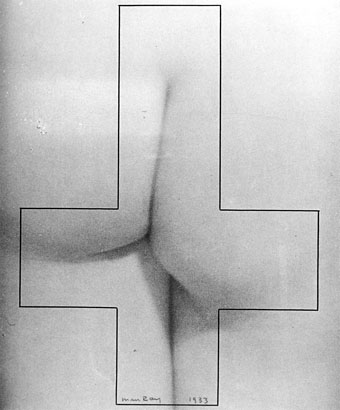
Monument to D.A.F. de Sade (1933).

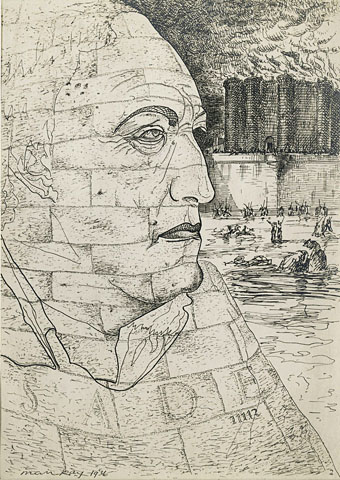
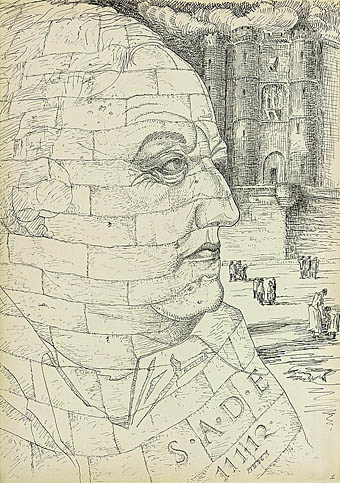
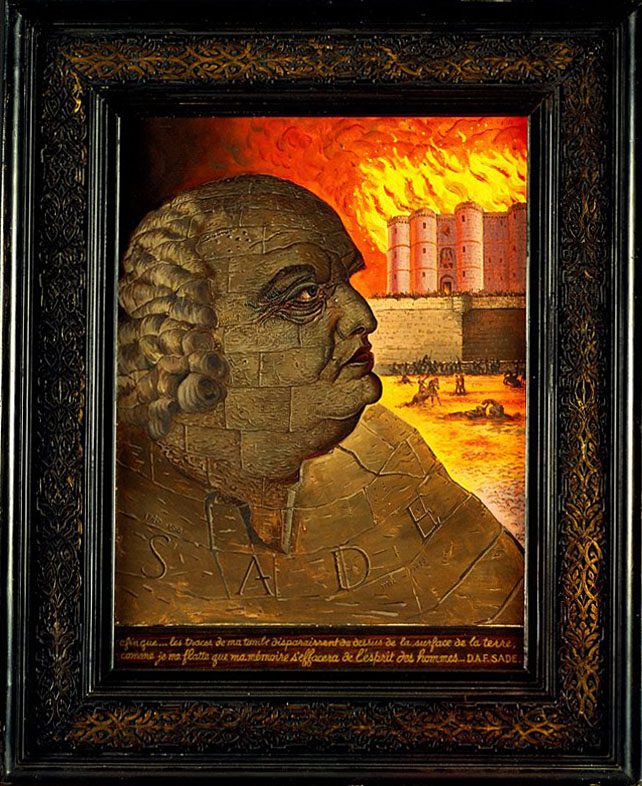
A slight return to the literary outlaw. Man Ray was more preoccupied by the Marquis de Sade than many of his fellow Surrealists, although he never took his interest as far as the obsessive Jean Benoît. His imaginary portraits were created after Sade scholar Maurice Heine complained that the only surviving picture of the Marquis was a drawing that could be of any other young aristocrat of the time.

manray2.jpg

Imaginary Portrait of D.A.F. de Sade (1936).

Man Ray’s portraits ran through several variations, first as drawings, then as two paintings, finally as a bronze. These always seemed to me to be more representations of Sade’s character as it comes through his writing than portraits of the writer himself. The two paintings could easily depict the villainous Duke de Blangis from The 120 Days of Sodom, with the castle of the Bastille standing for the castle where Blangis and his colleagues conduct their murderous games. An earlier photo work, Monument to D.A.F. de Sade (1933), was used by Mary Reynolds in a metal binding she created in 1935 for the first print edition of the 120 Days. Penguin used the same photo on the cover of their new translation of the book in 2016. And it would be remiss of me if I didn’t mention the gay variation designed by Peter Christopherson for the CD release of Scatology by Coil.

manray3.jpg

Imaginary Portrait of D.A.F. de Sade (1936).

manray4.jpg

Imaginary Portrait of D.A.F. de Sade (1938).

Continue reading “Man Ray and the Marquis”