Weekend links 315

knights.jpg

The Deluge (1920) by Winifred Knights.

Dennis Cooper‘s favourite fiction, poetry, nonfiction, film, music, art & internet of 2016 so far. (Thanks again for the nod to this blog!)

• At Literary Hub: Jonathan Russell Clark on Jorge Luis Borges, and Jon Sealy on why indie presses [in the US] are opening bookstores.

• “It’s not just about the music.” A conversation on the occult practices in the arts between poet Janaka Stucky and Peter Bebergal.

• Daisy Woodward talks to Andreas Horvath about Helmut Berger, Actor, a documentary about Visconti’s muse and lover.

• More Fritz Leiber: Brian J. Showers on his decision to republish Leiber’s horror novel, The Pale Brown Thing.

• Mixes of the week: Sextape 4 by Drixxxe, and Radio Oscillations #96 (Richard Pinhas/Heldon) by Iron Blu.

• The 5th Young One: Pay No Attention to the Girl Behind the Sofa; John Reppion on a television mystery.

• More reading suggestions: Cheerless beach reads for gloomsters and saddies by S. Elizabeth.

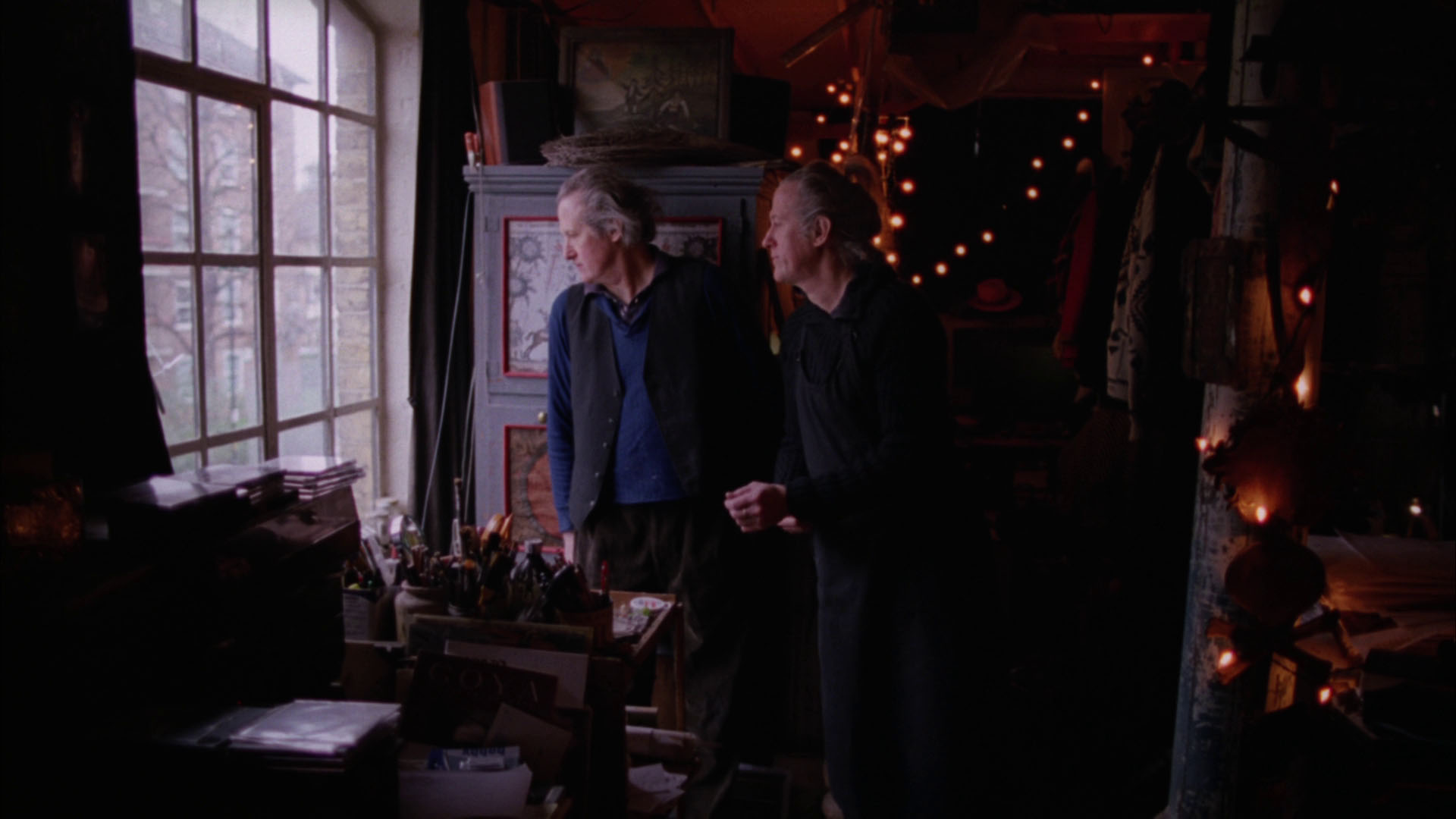
• Never the same film twice: Seances by Guy Maddin, Evan Johnson, Galen Johnson.

• How painter Winifred Knights became Britain’s “unknown genius”.

• The Journey & The Destination: An interview with Hawthonn.

Robert Latona goes in search of the grave of Constance Wilde.

• Invisible by Day: photos by Mikko Lagerstedt.

• A Queer Lit Q&A with Evan J. Peterson.

• RIP Michael Herr and Bernie Worrell.

Bridget Riley: The Curve Paintings.

• The typography of Blade Runner.

Japanese matchbox labels

SOS by Portishead

A Rainbow In Curved Air (1969) by Terry Riley | The Great Curve (1980) by Talking Heads | Dangerous Curves (2003) by King Crimson

Weekend links 314

alderslade.jpg

Avebury Kite (2006) by David Alderslade.

• “Klaus Mann, son of Thomas Mann, author of Mephisto, was one of the first in Germany to write gay novels and plays.” Walter Holland reviews Cursed Legacy: The Tragic Life of Klaus Mann by Frederic Spotts.

The Pale Brown Thing, a shorter/alternate version of Fritz Leiber’s supernatural masterwork, Our Lady of Darkness, is given a limited reprinting by Swan River Press next month.

• “Not only is metal not directly harmful to adolescent minds, as the thinking goes, it may actually be helpful.” Christine Ro on the reappraisal of a once-suspect musical genre.

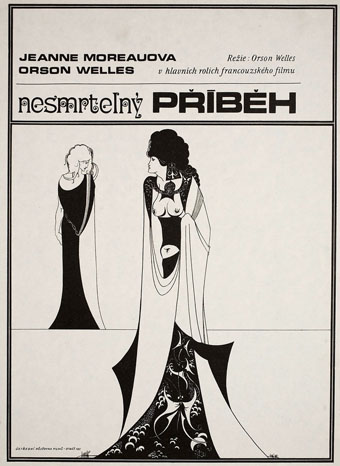
Something of that tension between past and future is visible in Beardsley’s work. It is the art of a dying era peering, with a mixture of excitement and trepidation, into the next. For all the prancing and bravado, Beardsley’s art was really about finding something in which to believe—and if Beardsley came to believe in anything it was the deep black line. Shading held little interest for Beardsley, and color fascinated him not at all. The black line and white space were all he needed.

Morgan Meis on Aubrey Beardsley

• More of my art for Bruce Sterling’s forthcoming Dieselpunk novella, Pirate Utopia, has been revealed. Tachyon will be publishing the book in November.

• “Secretly, though, I frequent junk shops because I am wishing for some kind of transcendence,” says Luc Sante.

• Mixes of the week: Gizehcast #28 by Christine Ott, and a mix for The Wire by Asher Levitas.

• “It took centuries, but we now know the size of the Universe.” Chris Baraniuk explains.

Barnbrook Studios creates identity for Kubrick exhibition at Somerset House.

• Watch a haunting video from Subtext Recordings and Eric Holm.

• Folklore Tapes: A Rum Music Special by Joseph Burnett.

Brion Gysin’s Dreamachine is on sale again.

Rhys Chatham’s favourite albums.

A Guide to Occult London

Skulls and Bones

Zero Time (1979) by Chrome | Zero-Gravity (1996) by Sidewinder |  Zero Moment (2016) by Contact

Fractures

fractures.jpg

Fractures is the latest musical anthology from A Year In The Country, and having been listening to an advance copy for the past couple of weeks I can say it’s as fine a collection as the label’s previous opus, The Quietened Village. The latter album encouraged a variety of artists to create pieces around the theme of lost or abandoned villages; the theme for Fractures fixates on a year rather than a location:

Fractures is a gathering of studies and explorations that take as their starting point the year 1973; a time when there appeared to be a schism in the fabric of things, a period of political, social, economic and industrial turmoil, when 1960s utopian ideals seemed to corrupt and turn inwards. […] Fractures is a reflection on reverberations from those disquieted times, taking as its initial reference points a selected number of conspicuous junctures and signifiers: Delia Derbyshire leaving The BBC/The Radiophonic Workshop and reflecting later that around then “the world went out of time with itself”. Electricity blackouts in the UK and the three day week declared. The Wicker Man released. The Changes recorded but remained unreleased. The Unofficial Countryside published. The Spirit Of Dark And Lonely Water released.

Track list:
1) The Osmic Projector/Vapors of Valtorr – Circle/Temple
2) The Land Of Green Ginger – Sproatly Smith
3) Seeing The Invisible – Keith Seatman
4) Triangular Shift – Listening Center
5) An Unearthly Decade – The British Space Group
6) A Fracture In The Forest – The Hare And The Moon ft Alaska/Michael Begg
7) Elastic Refraction – Time Attendant
8) Ratio (Sequence) – The Rowan Amber Mill
9) The Perfect Place For An Accident – Polypores
10) A Candle For Christmas/311219733 – A Year In The Country
11) Eldfell – David Colohan

This isn’t the first time a year has been isolated as a basis for a musical anthology but prior examples such as Jon Savage’s Meridian 1970 are invariably concerned with the musical scene alone. Fractures is different for trying to seize the essence of the year itself even if a number of the musicians involved may not have been alive in 1973.

The year has a resonance for me that I recounted in the memorial post for David Bowie. That summer was significant (and therefore memorable) for being warm, carefree and positioned between the end of junior school and the beginning of secondary school. The years after those few weeks were increasingly bad on a personal level so 1973 for me spells “fracture” in more ways than one. None of this can be communicated by Fractures, of course, the contents of which have more of a cultural focus: A Fracture In The Forest by The Hare And The Moon sets readings from Arthur Machen to music, while The Land Of Green Ginger by Sproatly Smith draws in part upon a TV film of the same name that was broadcast in the BBC’s Play For Today strand. As those Plays For Today recede in time they seem increasingly like a dream of Britain in the 1970s, reflecting back in a concentrated form much more of the nation’s inner life than you get from today’s Americanised fare. Another Play For Today, Penda’s Fen, was being filmed in the fields of England in the summer of 1973 so we can add the crack in the church floor to the catalogue of fractures. (And for an additional musical entry, I’d note the astonishing Fracture by King Crimson, not released until 1974 but most of the track was a live recording from Amsterdam in November of the previous year.)

Fractures is available from the usual sources such as Bandcamp but hard copies are also being distributed via the Ghost Box Guest Shop.

Weekend links 313

oneill.jpg

The Sullen Son (1921) by Rose O’Neill from her Sweet Monsters series (also here).

10 hours of Popcorn (1972) by Hot Butter. Related (and linked here before) 79 different versions of Gershon Kingsley’s original. If that’s not enough, there’s at least 100 more out there.

• Mixes of the week: Touristica Mystica Sigillistica by Gregg Hermetech, FACT Mix 554 by The Body, and Secret Thirteen Mix 187 by Dalhous.

• Another electronic cover version: Trans Europe Express by Cobby & Mallinder.

In the 1950s people like Pierre Schaeffer and John Cage were saying: “But there are all these sounds in the world, and if you listen to them carefully enough you will hear the music that they speak.” This immediately opened up a new world; it’s enriching once you’ve educated your ear to that, because when you’re annoyed by the sound of the street you can make music out of it. You can make music out of almost everything!

Eliane Radigue discussing her career with Paul Schütze

Patricia Highsmith’s Snail Obsession and Two Weird Tales of Monstrous Mollusks.

Youth and Alex Patterson remember the making of Little Fluffy Clouds by The Orb.

Strange Flowers pursues Sheila Legge and other Phantoms of Surrealism.

• Revealed: Cambodia’s vast medieval cities hidden beneath the jungle.

Alan Moore describes the cover of epic novel Jerusalem.

Ashgabat: the city of the living and the city of the dead.

• In praise of the tram by Christian Wolmar.

Taxidermists at DC’s

Brian The Snail (1982) by Pigbag | Slow Loris Versus Poison Snail (1996) by David Toop & Jon Hassell | Popcorn (2000) by Gershon Kingsley

Out of Tune: Book 2

outoftune01.jpg

Respawn, Reboot by Allison Pang.

Out of Tune: Book 2 is an anthology of original fiction edited by Jonathan Maberry that’s just been published by JournalStone. Last year I contributed six illustrations to JournalStone’s The Gods of HP Lovecraft, and would have done more if I hadn’t been busy with other work. For this new collection I’ve illustrated all the stories in a slightly sketchier style than usual (see larger views here), the brief being to provide something similar to the illustrations that appeared in the first volume.

outoftune02.jpg

The Knoxville Girl by Cherie M. Priest.

Both books in the Out of Tune series feature short stories based on folk songs or murder ballads, some of which are very familiar if you listen to folk, blues or country music. Almost all the songs are from an American perspective even though a number of them use songs that are derived from old English and Scottish folk songs. Each story ends with a commentary by Nancy Keim-Comley that reveals the song that the story was based on (some are more obvious than others), and also gives a brief history of the song. Not all the stories take an obvious route: Nik Vincent-Abnett’s piece based on The Two Corbies concerns people trying to survive in a near-future dystopia.

outoftune03.jpg

The Beams of the Sun by Dan Abnett.

As to the drawing style, all these illustrations are digital works produced with a collection of Photoshop brushes I’ve had lying around for a while. It’s taken me some time to get used to using brushes that do more than draw straight lines or imitate an airbrush but this book acted as a kind of crash course in their application. Once I’d finished the work I felt quite at home using them so I’m looking forward to doing more in this looser style.

outoftune04.jpg

The Ghost Rider by David Mack.

Continue reading “Out of Tune: Book 2”