Audio Albion

audioalbion.jpg

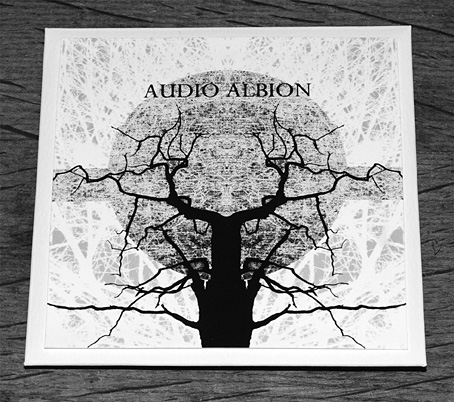
Last year saw a series of themed compilation albums from A Year In The Country, each of which was released a few months at a time. This year follows suit with Audio Albion, a collection of 15 new pieces of music from regular contributors such as David Colohan, Howlround, Keith Seatman, Sproatly Smith and others. The theme this time is “the sounds found and heard when wandering down pathways, over fields, through marshes, alongside rivers, down into caves and caverns, climbing hills, along coastlands, through remote mountain forestland, amongst the signs of industry and infrastructure and its discarded debris.”

Track list:
1) Bare Bones—Marshland Improvisation
2) David Colohan—On Stormy Point
3) Grey Frequency—Stapleford Hill
4) Field Lines Cartographer—Coldbarrow
5) Howlround—Cold Kissing
6) A Year In The Country—The Fields of Tumbling Ideas
7) Keith Seatman—Winter Sands
8) Magpahi—Shepsters in the Yessins
9) Sproatly Smith—Ethelbert & Mary
10) Widow’s Weeds—The Unquiet Grave
11) Time Attendant—Holloway
12) Spaceship—The Roding in Spate
13) Pulselovers—Thieves’ Cant
14) The Heartwood Institute—Hvin-lettir
15) Vic Mars—Dinedor Hill

As with previous A Year In The Country collections, the approaches are diverse, ranging here from the banjo-plus-location-recordings of Bare Bones to abstract electronic treatments by Howlround and Time Attendant. The accompanying texts are useful for contextualising the recordings; so David Colohan informs us that his piece, On Stormy Point, contains a whistle recording made in one of the caves at Alderley Edge in Cheshire, an important location in the Rural Wyrd via the popularisation of its myths in the novels of Alan Garner. Not everything here aims for a sinister atmosphere but the The Unquiet Grave by Widow’s Weeds certainly achieves this, a marvellous interpretation of one of the spookiest English folk songs, and the standout piece in an excellent collection.

Audio Albion will be released on 29th May but is available for pre-order now.

Previously on { feuilleton }
A Year In The Country: the book
All The Merry Year Round
The Quietened Cosmologists
Undercurrents
From The Furthest Signals
The Restless Field
The Marks Upon The Land
The Forest / The Wald
The Quietened Bunker
Fractures
Folk Horror Revival: Field Studies

Weekend links 413

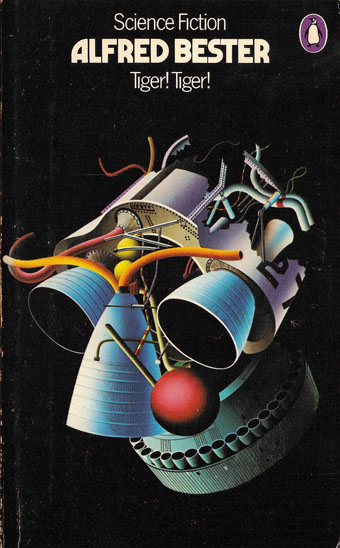
bester.jpg

Cover art and design by David Pelham, 1974. The author’s name is set in Marvin (see below).

• Revelation of the week is a lengthy, career-spanning interview with Igor Wakhévitch, the French composer whose extraordinary run of albums from the 1970s are cult items in these parts. (Previously) Wakhévitch isn’t exactly reclusive but he lives in India, and hasn’t recorded anything since the 1980s, so in recent years he wasn’t visible or even known much at all outside France. The release in 1998 of a CD collection, Donc…, and a handful of vinyl reissues, brought him out of obscurity, although all the reissues to date have been in limited quantities. Work of this quality really warrants a wider release.

The Sky Torn Apart is a new album by Paul Schütze, his first for several years. Very good it is too, 56 minutes of growling and glittering atmospherics that could equally suit the enervating heights of summer (as in Wendy Carlos’s drone piece from Sonic Seasonings) as the depths of winter, the inspiration being the apocalyptic cycles of Norse mythology.

• At Lambda Literary: Cathy Camper talks to cartoonist Justin Hall about his planned film, No Straight Lines, about the history of queer comics. There’s a Kickstarter for the project, and more background detail at QueerClick (NSFW).

• Introducing Marvin Visions, a digital revival of Marvin, a photoset typeface first launched in 1969, and very popular during the 1970s on science-fiction cover designs. Marvin Visions is free for personal use.

• The second number of the relaunched Wyrd Daze—”The multimedia zine of speculative fiction + extra-ordinary music, art & writing”—has arrived.

• At New Noise: Dylan Carlson (again) talking about the influences on his solo album, Conquistador.

• Video Drone: Russell Cuzner talks to Rose Kallal about her audio-visual concerts.

• Mix of the week: a Dark Souls-inspired drone mix from Justin C. Meyers.

• RIP Glenn Branca

The Ascension (1981) by Glenn Branca | Ascension (1992) by O Yuki Conjugate | Ascension (2014) by The Bug

Weekend links 412

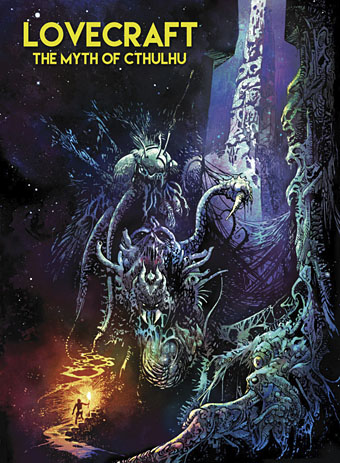
maroto.jpg

Lovecraft: The Myth of Cthulhu, an English-language edition of three comic-strip adaptations by Esteban Maroto, is now available from IDW.

The Coffin House, a short story by Robert Aickman that’s a taster for the new Aickman collection, Compulsory Games. Anwen Crawford wrote an introduction to Aickman’s world of “strange stories” for The New Yorker. Related: Victoria Nelson, editor of the new collection, chooses ten favourite horror stories.

• German music this week at The Quietus: Sean Kitching talks to Irmin Schmidt about his years with Can; and there’s an extract from Force Majeure, an autobiography by the late Edgar Froese, writing about the early days of Tangerine Dream.

• More German music at Carhartt WIP: a lengthy and revealing interview with guitarist Michael Rother about his time as one half of Neu!. There’s also a bonus Neu!-themed mix (and one of the mixes of the week) by Daniel Miller.

• From October last year, a Stereoklang interview with master synthesist Hideki Matsutake (Logic System, Yellow Magic Orchestra, et al).

• “When did you first get interested in esoteric studies?” Gary Lachman interviewed at The Astral Institute.

• At Sweet Jane: early illustrations by Wojtek Siudmak for Plexus magazine, 1969.

• 87 prints and drawings by MC Escher in zoomable high-resolution.

• Meet the Small Press: James Conway of Rixdorf Editions.

• Mix of the week: Goodbyes & Beginnings by Zach Cowie.

Derek Jarman on the trouble with shopping for clothes.

Person To Person (1981) by Logic System | Plan (1981) by Logic System | Prophet (1981) by Logic System

Weekend links 411

crowley.jpg

The Temple of Love (1911–24) by Herbert E. Crowley.

• My film viewing in the 1980s involved a considerable amount of backtracking: watching any film noir that turned up on the TV while chasing the early works of David Cronenberg, and various “New Hollywood” classics on television or at repertory cinemas (when such things were still plentiful). Contemporary fare by comparison was often a lot less attractive, although I’d be waiting for new work from David Lynch and Nicolas Roeg while pursuing obscurities (usually the banned or censored) on videotape. Popular films seldom generated actual loathing but throughout the decade I nurtured a persistent hatred for the works of John Hughes, an animus that can still return today when I read yet another nostalgic article about his oeuvre.

The monoculture of the 1980s was writ large on American cinema of the decade. From Arnold Schwarzenegger’s muscle-rippling actioners to John Hughes’s adolescent confections, bombastic, generally upbeat films characterised the decade of the yuppie.

Christina Newland offers a welcome riposte to the pastel-hued retrospectives in a piece entitled “Reagan’s bastard children: the lost teens of 1980s American indie films”. While not exclusively teen pictures, I’d have mentioned three low-budget films written by Eric Red: The Hitcher (1986), Near Dark (1987) and Cohen and Tate (1989).

The Temple of Silence: Forgotten Works & Worlds of Herbert Crowley is a lavish (and costly) study of the strange comic strips and incredibly detailed drawings of Herbert E. Crowley (1873–1937). Mark Newgarden interviewed Justin Duerr about rescuing Crowley’s art from undeserved neglect. I missed an earlier interview by Steven Heller with Temple of Silence publisher Josh O’Neill. There’s more: The Wiggle Much a Tumblr devoted to Crowley’s comic strips and other artwork. (Ta to Jay for the tip!)

Pandemic is an interactive film by John Bradburn for The Science Museum. “A pandemic is causing heart failure–how far will you go to create a pig/human hybrid to provide donor organs?” The multiple choice begins at YouTube; there’s also a behind the scenes feature at the Museum blog, and a trailer. Anyone who remembers a certain scene in Lindsay Anderson’s O Lucky Man! may hesitate before playing.

Given the plain palette of so much 1969–70 rock—jammed-out bluesy boogie in the Canned Heat and Allman Brothers mode, nasal pseudo-country harmony singing à la CSN&Y and their afterbirth—it is tempting to imagine an entirely alternative history for rock. It’s a parallel world where Fifty Foot Hose’s Cauldron, United States of America’s self-titled album and synthedelic oddities from Syrinx, Silver Apples, Beaver & Krause and Tonto’s Expanding Head Band were just the run-up to a giant leap into the electronic future.

Simon Reynolds in an excellent piece on one of my favourite musical sub-genres, electronic psychedelia

• The week in animated film: Emerald Rush, a video for an extract from Jon Hopkins’ new album, Singularity; Awaken Akira, a short homage to Katsuhiro Otomo’s graphic novel/film by Ash Thorp and Zaoeyo; Extra (1996), a video by one of the Akira animators, Koji Morimoto, for music by Ken Ishii.

Tenebrous Kate on The Powers of Darkness & The Powers of the Mind: The Legacy of Jacques Tourneur’s Night of the Demon. Related: a look at the film’s shooting script and pressbook.

• At Dangerous Minds: John Gray, the pre-Bosie lover of Oscar Wilde, and the man whose surname is memorialised in Wilde’s most famous creation, Dorian Gray.

• Skewing the Picture: China Miéville posts the full text of an essay from 2016 about the rural weird.

• Share a pastrami sandwich with TED Klein in Episode 65 of Eating the Fantastic.

• More Hodgsoniana: The Land of Lonesomeness, a short story by Sam Gafford.

• At The Quietus: Barry Miles on William Burroughs’ years in London.

• At Dennis Cooper’s: Curtis Harrington Day.

Night Of The Assassins (1977?) by Les Rallizes Dénudés | Night Of The Earth (1980) by Chrome | Night Of The Swallow (1982) by Kate Bush

Weekend links 410

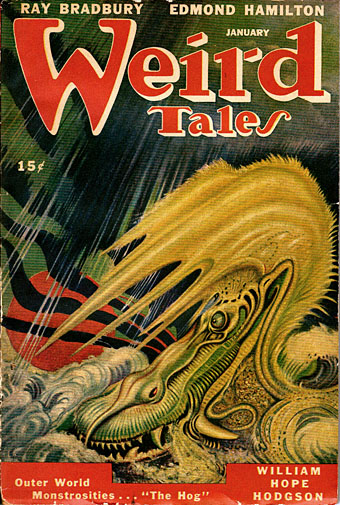
hog.jpg

William Hope Hodgson’s final Carnacki mystery, The Hog, received its first magazine publication in January 1947. The cover art by AR Tilburne may not have been originally created for Hodgson’s tale but it complements the story’s atmosphere of febrile dread.

• It’s still April so that means it’s still the month that saw the 100th anniversary of the death of William Hope Hodgson, bodybuilder, manacler of Harry Houdini, and the author of several novels of weird fiction that continue to entrance new generations of readers. The edition of Hodgson’s The House on the Borderland that I illustrated for Swan River Press would have been on sale this month but print problems have caused delays with the run as a whole; anyone interested is advised to contact the publisher for news. • Meanwhile, Jon Mueller (composer of the book’s accompanying soundtrack CD) and myself talked to Swan River Press about the attractions of Hodgson’s novel. • More Hodgsoniana: Greydogtales acknowledged the Hodgson centenary via a discussion with Hodgson scholar Sam Gafford, while Michael Dirda reviewed the new edition of The House on the Borderland and another SRP title, The Scarlet Soul (whose cover I also designed), for The Washington Post.

• “From the ashes of countless decayed Modernities comes Neo-Decadence, a profaned cathedral whose broken stained glass windows still glitter irregularly in the harsh light of a Symbolist sun. Behind this marvellously vandalised edifice, a motley band of revellers picnic in the graveyard of the Real, leaving behind all manner of rotting delicacies and toxic baubles in their wake.” Drowning in Beauty: The Neo-Decadent Anthology edited by Daniel Corrick & Justin Isis is published this month by Snuggly Books, an imprint whose catalogue of new books and first-time translations will be of interest to anyone who comes here for Decadence, Symbolism or anything related. Related to the above: A Neo-Decadence Day at Dennis Cooper’s.

• “Witches are change-makers. They’re transgressive beings who dwell on the fringes of society, and so they’re the perfect icon for rebels, outsiders, and rabble-rousers, especially those of the female persuasion.” Pam Grossman talks to Grimoire about witchcraft and related arts.

• Mixes of the week: Resident Advisor Podcast 621 by Grouper, and Bacchus Beltane 5: The Owl Service by The Ephemeral Man.

• Back in black: Publisher/translator James Conway and designer Cara Schwartz on the cover designs of Rixdorf Editions.

• I was talking again this week at The Writer’s Corner where JKA Short asked me about working as an illustrator.

All Gates Open: The Story of Can by Rob Young is published next week. The Wire has an extract.

• Delusional Albion: Brad Stevens on how foreign directors saw Britain in the Swinging Sixties.

• “There’s no book I love more than Derek Jarman’s Modern Nature,” says Olivia Laing.

Eden Tizard on Soliloquy For Lilith, the drone album by Nurse With Wound.

Owls (1969) by Ruth White | Decadent & Symmetrical (1995) by ELpH vs Coil | The Owls (2013) by Félicia Atkinson