Weekend links 496

kemeny.jpg

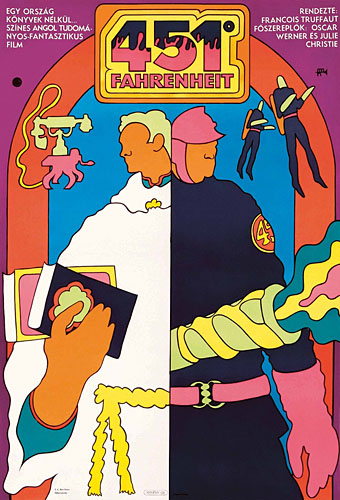
Fahrenheit 451 (1966) poster by György Kemény.

• “The novel is constantly assailed by people wanting to conscript it to their own ends. (Other art forms are not similarly burdened; someone yelling ‘What about global warming?’ between numbers at a Keith Jarrett concert would be recognized to have made a category error.)” Jonathan Clarke on the demands that literature should nurture empathy.

• The first three features by Alejandro Jodorowsky—Fando y Lis (1968), El Topo (1970) and The Holy Mountain (1973)—return to Britain’s cinema screens in January (well…two of them return; I’m not sure that Fando y Lis has ever been shown in cinemas over here). All three films will be given overdue blu-ray releases by Arrow in March.

• “What distinguishes Oulipo from other language games, is that its methods have to be capable of producing valid literary results.” Tony White reviews The Penguin Book of Oulipo: Queneau, Perec, Calvino and the Adventure of Form, edited by Philip Terry.

But from a present-day perspective, it is also remarkable the extent to which cafés, busy conduits for knowledge and sentiment, resembled later digitally connected systems. The larger establishments offered not just a huge selection of newspapers, domestic and foreign, but also reference material—maps, dictionaries, encyclopaedias, language lexicons, address books—for writers struggling with their research, or merely trying to settle an argument. The combination of hard facts and caffeinated opinion firing through the steamy analogue ether constituted a local area network of extraordinary reach. In the pre-digital era, the Viennese café offered the greatest possible concentration of current knowledge—for the price of a mélange.

From the Strange Flowers guide to Vienna, part 2

• “People like Edmund Wilson and Isaiah Berlin, they have to love Zhivago to prove that good writing can come out of Soviet Russia. They ignore that it is really a bad book.” Jennifer Wilson on Vladimir Nabokov’s fighting spirit.

• Master animator Richard Williams died in August so here again is the exceptional adaptation of A Christmas Carol made by his studio in 1971.

• Hearing a person: Annea Lockwood remembers her partner, composer Ruth Anderson, whose death was announced last week.

• The London Review of Books has relaunched its website. The paywall is currently down until mid-January so dig in.

Live In Paris by Pharoah Sanders, a previously unreleased ORTF concert recording from 1975.

• Unrising sun: Amos Chapple’s photographs of the polar nights of Murmansk.

Mary McNamara on the rescuing of 200 historic Hollywood backdrops.

• Mix of the week: XLR8R Podcast 623 by Aida.

• At Dennis Cooper’s: Sandy Dennis Day.

The Desert Is A Circle (1970) by Shades Of Joy | The Desert Is A Circle (1971) by Paul Horn | Holy Mountain (1994) by Axiom Ambient

Weekend links 495

klee.jpg

Angelus Novus (1920) by Paul Klee.

• “Compared to [László] Krasznahorkai’s earlier fiction, Baron Wenckheim’s Homecoming is funnier and more stylistically accessible—despite its length and seemingly endless sentences—but it is also his most unremittingly ruthless work,” says Holly Case. Elsewhere: “Baron Wenckheim’s Homecoming may not bring joy or consolation, but reading it is a mesmerisingly strange experience: a slab of late modernist grindcore and a fiercely committed exercise in blacker-than-black absurdity,” says Sukhdev Sandhu.

Zeitraffer (“Time-lapse“) is an exhibition devoted to Tangerine Dream which opens at the Barbican, London, in January. Also coming in January is a new album, Recurring Dreams, by the current iteration of the group which will be available on CD and double vinyl. I was impressed by the last TD release, Quantum Gate, so I’m looking forward to this even if it is only a reworking of popular pieces from the Virgin years.

• RIP Gershon Kingsley, an electronic music pioneer best known for the silly but fun albums he made with Jean-Jacques Perrey, and for being the composer of that evergreen synthesizer novelty, Popcorn.

The first major study in English of ancient Greek sexuality—especially the way relationships between men were both common and celebrated as a perfect embodiment of love—A Problem in Greek Ethics helped set the stage for the modern-day gay rights movement. But it did so surreptitiously, behind closed doors, as required by the times. Symonds printed it privately in 1883; a print run of just 10 copies reduced the risk that it would fall into the wrong hands. The typesetter complained about the content. Symonds circulated it cautiously, to people he trusted or had reason to think would be discreet. Until now, researchers believed that only five copies survived.

Rachel Wallach on the discovery of a sixth copy of John Addington Symonds’ landmark study

Contagious Magick of the Super Abundance is a book of art by the late Ian Johnstone, former partner of John Balance and cover artist for some of the last releases by Coil.

Dennis Cooper‘s favourite fiction, poetry, non-fiction, film, art, and internet of 2019. Thanks again for the link here!

• At the BFI: Hannah McGill on the umbrellas of cinema, and Jasper Sharp on 10 essential films by Yasujiro Ozu.

• Bobby Krlic, aka The Haxan Cloak, talks to Claire Lobenfield about creating the soundtrack for Midsommar.

Joker and Chernobyl composer Hildur Guðnadóttir: “I’m treasure hunting”.

Joshua Rothman on how William Gibson keeps his science fiction real.

Samantha Rose Hill on Walter Benjamin’s last work.

Scientific phenomena photographs of the year.

The Dream Before (1989) by Laurie Anderson | Angel Tech (1994) by The Grid feat. Sheila Chandra | Angel Tech (1994) by Pete Namlook & Bill Laswell

Weekend links 494

church.jpg

Aurora Borealis (1865) by Frederic Edwin Church.

• December is over-stuffed with enervating cultural lists, most of them reminding you of things which received enough attention earlier in the year. Better value than these—and always unpredictable—is John Waters‘ choice of favourite films; unpredictable and enlightening are the Secret Satan selections at Strange Flowers which come in two flavours: books originally published in English and books translated from other languages.

Flash Of The Spirit (1988), a collaboration between Jon Hassell and African group Farafina (with production by Hassell plus Brian Eno & Daniel Lanois), receives its first ever reissue on double-vinyl and CD next year. The last piece on the album is the 11-minute Masque (Strength).

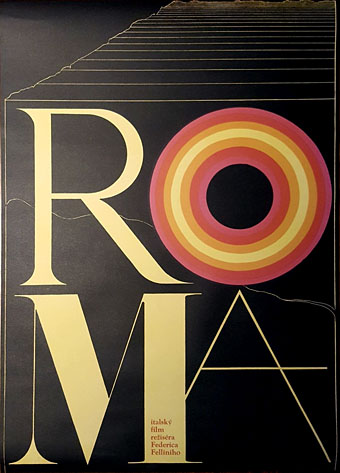
• “In 1968, Federico Fellini decided he was going make the greatest homosexual movie ever made. What he meant by a homosexual movie, no one was quite sure, but it was going to be great.” Paul Gallagher on Federico Fellini’s delirious (and distinctly homosexual) Satyricon.

• “Here’s the typography of the next decade; the age of font minimalism is coming to a close,” says Rachel Hawley. I’ve been using Didones for the past decade so I’ll carry on happily ignoring the trends.

• More obituaries for comic artist Howard Cruse: Justin Hall at The Comics Journal; Trudy Ring at The Advocate; and Richard Sandomir at the New York Times.

• “Cowley records a kind of utopian sleaze that’s breathtaking.” Brett Josef Grubisic reviews Patrick Cowley’s sex journal of the 1970s, Mechanical Fantasy Box.

• At the BFI: Carmen Gray on where to begin with Sergei Parajanov, and Matthew Thrift on 10 essential Fritz Lang films.

A promo video by Julian House for Paul Weller’s In Another Room EP which is released in January by Ghost Box.

• At Aquarium Drunkard: San Francisco Radical Laboratory and the Mysterious Moogist of Altamont.

• Mix of the week: Through A Landscape Of Mirrors Vol. V – France III by David Colohan.

Aurora Australis (2005) by Émilie Simon | Iceblink (Aurora Borealis Mix) (2011) by Netherworld | Aurora Liminalis (2013) by William Basinski & Richard Chartier

Weekend links 492

wilson

Cover art by Gahan Wilson for Monster (1980) by Herbie Hancock.

• RIP Gahan Wilson, a great cartoonist with a flair for horror, the macabre and grotesque. Many of his best cartoons are buried in back issues of The New Yorker, Playboy and National Lampoon but book collections of his work are worth seeking out. He also wrote regularly, and for several years was a film reviewer and columnist for The Twilight Zone Magazine, back issues of which may be found at the Internet Archive. Related: Gahan Wilson and the Comedy of the Weird, an interview with Wilson by Richard Gehr; The Beautifully Macabre Cartoons of Gahan Wilson by Michael Maslin.

• The Unanswered Question: Irmin Schmidt, the last surviving member of Can, interviewed by Duncan Seaman. The conversation is mostly about his solo work but he also mentions plans to release a collection of live Can recordings next year.

Valerie and Her Week of Wonders (1970), the Surrealist fable directed by Jaromil Jires, receives a welcome region-free blu-ray release by Second Run in January.

At its best, the true psychedelic experience is an analogue of psychotherapy: you are encouraged to lean in to something potentially rupturing or even disturbing, in an attempt to achieve deep personal resolution rather than simply mind-scrambling hedonism or entertainment (which, to be fair, the group can provide as well). […] Despite clear and longstanding links with the extreme worlds of black metal, power electronics, industrial, sludge metal and doom, Sunn O))) have created a space that now stands beyond any obvious scene signifiers. This zone of pure affect—and what they hope will be a healing experience—is welcome to all.

John Doran on the vibrational power of Sunn O)))

Neuland is an electronic collaboration by two ex-members of Tangerine Dream, Peter Baumann and Paul Haslinger.

• Flying teapots and electric Camembert: the story of Gong, prog’s trippiest band by Simon Reynolds.

• Conversations with Ursula: Clive Hicks-Jenkins answers some questions about his art.

• Mix of the week: Test Transmission Archive Reel 38 by Keith Seatman.

• Limitation of Life: Tim Pelan on John Frankenheimer’s Seconds.

Anthony Madrid on the most famous coin in Borges.

• At Dennis Cooper’s: Jacques Tati Day.

Dutch Graphic Roots

The Magic Yard (1970) by Lubos Fiser | Valerie (2003) by Broadcast | Introduction (2007) by The Valerie Project

The Quietened Journey

ayitc.jpg

Britain’s Labour government of the 1960s achieved a great deal with its social reforms, but the shrinking of the nation’s railway network—the so-called Beeching Cuts—was a serious mis-step, and one whose repercussions have lasted to the present day. Bus services intended to replace the rail service were less efficient than the trains they were replacing, or else they failed to materialise at all; commuters forced into cars didn’t divide their journeys as intended but switched to using their cars for the entire journey; and many of the smaller branch lines which were closed after being deemed inefficient left isolated communities without any form of public transport at all. I’m just old enough to remember a train journey in 1967 which ended at one of the branch line stations shortly before it was closed. The line itself continued to be used but only by trains taking goods to and from a chemical works that in later years always seemed irredeemably menacing, like the food production plant in Quatermass II.

The derelict lines and stations that littered the countryside following the Beeching Cuts form the subject of the final themed compilation being released this year by A Year In The Country:

The album is an exploration of abandoned and former railways, railway stations and roads, a reflection on them as locations filled with the history, ghosts and spectres of once busy vibrant times—the journeys taken via them, the stories of the lives of those who travelled, built and worked on them.

Nature is slowly reclaiming, or has already reclaimed, much of this infrastructure, with these testaments to industry and “the age of the train” being often left to quietly crumble and decay.

The Quietened Journey is both a celebration and a lament for these now faded links across the land, of the grand dreams and determination which created them and their layered histories that—as these asphalt ribbons, steel lines and stone built roads once prominently were—are threaded throughout the twentieth century and even back to Roman times.

Track list:
1) Pulselovers—Woodford Halse To Fenny Compton In Five Minutes
2) Sproatly Smith—The 19.48 From Fawley
3) The Séance—Elm Grove Portal
4) Widow’s Weeds—The Ghosts Of Salzcraggie
5) The Heartwood Institute—The Solway Viaduct
6) Depatterning—The Beets At Wellington Bridge
7) Howlround—Thrown Open Wide
8) A Year In The Country—Silent Treasure
9) Field Lines Cartographer—Ghosts Of The Wires
10) Dom Cooper and Zosia Sztykowski—Summonings
11) Keith Seatman—Along The Valley Sidings
12) Grey Frequency—An Empty Platform

The train theme is rendered immediately apparent by the opening piece from Pulselovers, a chugging electronic rhythm which suggests a network still full of life and energy. After this the mood quickly darkens, and we’re left on the platform of a station like the haunted one in Sapphire and Steel, with the sun going down and only the ghosts for company. This is another impressively strong collection, ranging from the wistful memorialising of The Ghosts of Salzcraggie by Widow’s Weeds, and A Year In The Country’s hissing roadway, to Howlaround’s Thrown Open Wide, an eruption of noise prompted, he says, by the rebellion of his machines. The machinery of the railway returns to life on Keith Seatman’s Along The Valley Sidings, another synthesised train journey, before we find ourselves on Grey Frequency’s empty platform. The Quietened Journey is a welcome exploration of a feature of the British landscape which has been given surprisingly little attention, and which is now disappearing altogether. The last train will be departing soon.

Previously on { feuilleton }
Echoes And Reverberations
The Watchers
The Corn Mother
The Quietened Mechanisms
The Shildam Hall Tapes
Audio Albion
A Year In The Country: the book
All The Merry Year Round
The Quietened Cosmologists
Undercurrents
From The Furthest Signals
The Restless Field
The Marks Upon The Land
The Forest / The Wald
The Quietened Bunker
Fractures