Weekend links 598

lucier.jpg

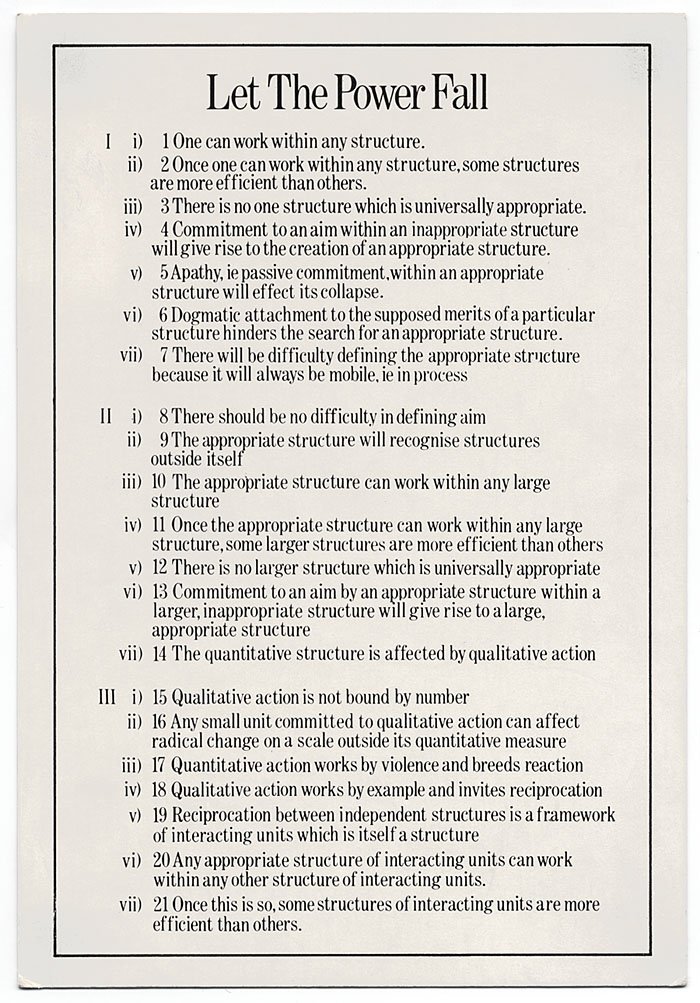
The Wire, July 2004. Illustration and design by Non-Format. Christopher Cox’s interview with Lucier is available to read here.

• “I went into experimental overdrive. Lyrical motifs became literal imagery. A hammer shattering a plate of glass. A lyrical maze of geometric tunnels and formations.” Chris Mosdell talking to Aquarium Drunkard about writing lyrics for Yellow Magic Orchestra and others (you can hear his voice on YMO’s Citizens Of Science), plus the recording of his own debut album, Equasian.

• At Public Domain Review: “…this short, odd book confronts a question that has vexed naturalists for thousands of years: how do we account for the precipitation of animals?” Odd Showers; or, An Explanation of the Rain of Insects, Fishes, and Lizards (1870) by George Duncan Gibb.

• “…few writers on our list could have functioned in the culture that, today, sees literature as a profession for which you prepare like any other: going to the right school, meeting the right people.” Francine Prose on her encounters with the literary strange.

• “Where was glass first fashioned? How was it worked and coloured, and passed around the ancient world?” Carolyn Wilke presents a brief scientific history of glass.

• RIP Antony Sher and Alvin Lucier. In 1969 Lucier was sitting in a room different to the one you are in now. Elsewhere: Alvin Lucier at Ubuweb.

• New/old music: Zeitgeist: Ambient Music from 2012 to 2020 by Marco Simioni & Mattia Saviolo.

James Balmont on five unmissable films from the Japanese New Wave movement.

• At Spoon & Tamago: Illuminated paintings of Tokyo after dark by Keita Morimoto.

• Mixes of the week: XLR8R Podcast 724 by Laura BCR, and Isolatedmix 115 by HVL.

• At Strange Flowers: part two of James Conway’s Secret Satan end-of-year list.

• “Jony Ive’s first major design since leaving Apple isn’t what you’d expect.

• At Dennis Cooper’s: Yasuzo Masumura Day.

Glass (1968) by Sagittarius | Glass (1979) by Joy Division | Glass (2009) by Bat For Lashes

Weekend links 597

okazaki.jpg

Untitled art by Toshio Okazaki from JCA Annual 5, 1984.

• “Yeah, when I first started writing it, nobody knew what to call it at all. I mean, the publishers didn’t know what to call it. They thought that Tolkien was (writing about) a post-apocalyptic nuclear world. That’s the only way they could perceive an alternate world, in other words. And it was the same with Mervyn Peake… they’re all interpreted that way. The idea of putting ‘fantasy’ on a book meant usually meant that it was a children’s book. And if you put fantasy as the genre, they usually put ‘SF’ larger than ‘fantasy’ to show that it was what it was.” Michael Moorcock (again) talking to Derek Garcia about fiction, games, and (of course) Elric.

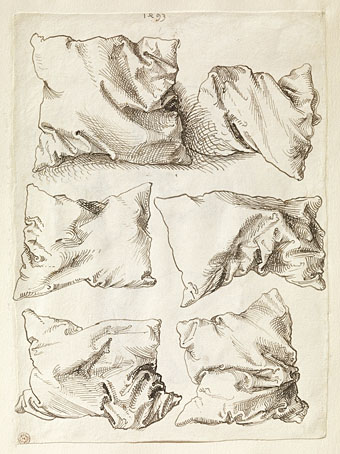
• “Non-payment, low payment, late payment and promises of jam tomorrow, or at some unspecified future date, bedevil the freelance life as they did five centuries ago.” Indeed. Boyd Tonkin on Albrecht Dürer, patron saint of stroppy freelancers.

• “All at once, Non-Stop Erotic Cabaret is tender, outrageous and daft.” Patrick Clarke compiles an oral history of Soft Cell’s debut album.

Yeah, it was kind of a media hype. In January [1967], the media said, [breathless] ‘Oh my god, San Francisco is the place to be. Come to San Francisco, wear flowers in your hair.’ So we had a meeting of the people in the Haight-Ashbury about how we were going to deal with so many people coming. The Diggers decided to kind of make it a university of the streets, an alternative anarchist culture.

We knew that all these people were coming to San Francisco, and we knew they weren’t going to stay. And we thought, well, the best thing we could do would be to kind of educate them about the kinds of things that are possible in society, and then let them go back to where they’re from, and they would carry these ideas. And that is what happened. We were quite successful in that.

Judy Goldhaft of the San Francisco Diggers talking to Jay Babcock for another installment of Jay’s verbal history of the hippie anarchists

• “What ‘impossible’ meant to Richard Feynman; what I learned when I challenged the legendary physicist,” by Paul J. Steinhardt.

• At Strange Flowers: part one of James Conway’s essential end-of-year shopping list, Secret Satan.

• Mixes of the week: Part II and Part III of the three-part At The Outer Marker series by David Colohan.

• At Dennis Cooper’s: Olivia Duval presents…Suave: A History of Les Disques du Crépuscule.

Mystery and Truth of the Cthulhu Myth, a Japanese guide to the Cthulhu Mythos.

• Intimacy, Loss and Hope: Inside Florian Hetz’s beautiful 2020 photo diary.

• New music: The Tower (The City) by Vanessa Rossetto/Lionel Marchetti.

Nite Jewel’s favourite albums.

• RIP Stephen Sondheim.

Nothing Is Impossible (1974) by The Interns | Mission Impossible Theme (1981) by Ippu-Do | Impossible Guitar (1982) by Phil Manzanera

Weekend links 595

dunwich.jpg

Dig the eldritch letterforms, man. Dean Stockwell as Wilbur Whateley making the High Sign on the cover of Les Baxter’s soundtrack album, 1970. That gesture, incidentally, goes back a long way.

• If you have an abundance of interstellar credits burning a hole in your stillsuit then you may be interested in bidding for the original of the book commonly known as The Dune Bible, the complete set of storyboards by Jean “Moebius” Giraud, together with designs by other artists for Alejandro Jodorowsky’s abandoned feature film. I keep hoping someone might turn this into an animated feature, something like René Laloux’s Time Masters but on a grander scale and with better animation (hello, Japan). 46 pages of scans from a limited printing of the book may be seen here.

• RIP Dean Stockwell. His 1995 interview in Psychotronic Video magazine is much better value than any potted biography.

• Bed-hopping, martinis and self-loathing: Emma Brockes on Patricia Highsmith’s unpublished diaries.

• At Spoon & Tamago: Tracing the footsteps of travelling Ukiyoe artist Kawase Hasui.

• Culture.pl examines the theoretical revolution of Nicolaus Copernicus.

Killian Fox on the cover designs for Penguin’s Modern Classics.

Nick Mamatas on his favourite genre-breaking mysteries.

• New music: HYbr:ID oval p-dance by Alva Noto.

• Mix of the week: Isolatedmix 114 by R.A.D.E.

Justin Robertson’s favourite music.

• At Dennis Cooper’s: Clock.

Jay Babcock at Substack.

The Clock (1968) by Ruth White | Clock Factory (1993) by The Sabres Of Paradise | Internal Clock (2009) by Monolake

Weekend links 594

klinger.jpg

Eva und die Zukunft (1898) by Max Klinger.

• “It is no exaggeration to say that MAD invented the modern, postwar American takedown.” Thomas Larson reviews Seeing MAD: Essays on Mad Magazine’s Humor and Legacy.

• At the Internet Archive: Cartoon Modern: Style And Design In Fifties Animation (2006) by Amid Amidi, a book which has been made available as a free download by its author.

• New music: A preview of Metta, Benevolence by Sunn O))), recorded live in the Mary Anne Hobbs’ radio show in 2019; Veils by Víz; The Mountain (Blakkat Dub) by Ladytron.

• At Public Domain Review: Claude Mellan’s The Sudarium of Saint Veronica (1649), an engraving made with a single continuous line.

• “For Harry Houdini, séances and Spiritualism were just an illusion,” says Bryan Greene.

TheStencil is Steven Heller’s font of the month.

• At Dennis Cooper’s: Derek Jarman Day.

Nicky Mao’s favourite music.

Mad Man Blues (1951) by John Lee Hooker | Mad Pierrot (1978) by Yellow Magic Orchestra | Mad Keys (2002) by Al-Pha-X

Weekend links 593

inlandprinter.jpg

Cover art by Gwinn (?) for The Inland Printer, October 1901.

The 50 British films that inspired a young Martin Scorsese. No Michael Powell (or Hitchcock, for that matter) but I think we’re supposed to take The Archers as a given. And he’s always had a commendable taste for British horror; few directors of Scorsese’s stature would put so many Hammer films and minor chillers on a list like this.

• New music: Grey Frequency return with Essentia, an album that explores “the connections and conflicts between internal and external worlds, and our sense of place and function in an unfathomable, transcendent universe”. Ideal Halloween listening, as is much of the Grey Frequency catalogue, especially Paranormal.

• “You don’t want to have a brilliant idea for a novel at the age of 87,” says Alan Garner. Justine Jordan reviews Treacle Walker, the novel in question, here.

In his gloomy tales, predominantly written in French, journalists disappear while hunting for esoteric secrets, ships sailing to mythic islands get lost in unreal waters, protagonists track down occult artefacts such as Dr Dee’s black spirit mirror, and the living wander down alleyways that lead to the hereafter. These are all unfaithfully retold in Ray’s uniquely arcane, often kaleidoscopic prose.

Robert Davidson on Belgian author Jean Ray

• “Poe brings forth, as if out of thin air, a grotesque world fully crystallized.” Sudipto Sanyal on you-know-who.

• At Bandcamp Ed Blair compiles a list of John Carpenter-like music beginning with an album from the man himself.

• At Wormwoodiana: Mark Valentine on the current condition of second-hand bookshops in Britain.

• Mix of the week: Samhain Séance 10: There and Back Again by The Ephemeral Man.

• At Dennis Cooper’s: Terence Hannum presents…Horror Soundtracks Day.

• No One Here Knows I’m a Vampire: A Spooky Matt Berry Reading List.

• New/old music: Aqua by Ryuichi Sakamoto.

More dark arts at Unquiet Things.

Treacle Toffee World (1968) by The Fire | Treacle People (1970) by UFO | Woodsmoke & Treacle (2010) by Moon Wiring Club