Eduardo Paolozzi’s Jet Age Compendium

paolozzi.jpg

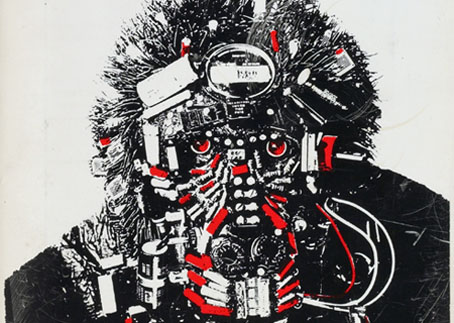
Detail from the cover of Ambit # 40, 1969.

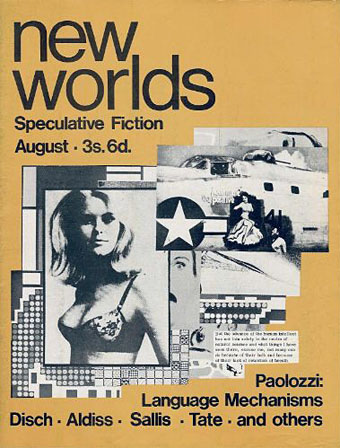
A teenage enthusiasm for Pop Art meant I was familiar with the paintings and collages of Eduardo Paolozzi (1924–2005) long before I became aware of his association with sf magazine New Worlds, and his friendship with JG Ballard. Paolozzi was famously credited on the masthead of New Worlds as “Aeronautics Advisor”, a listing which impressed the relevant authorities when Brian Aldiss petitioned for an Arts Council grant and saved the magazine from collapse. Paolozzi’s work was featured in New Worlds now and then, and he provided a cover for issue 174, but it was to Ambit magazine one had to turn to see regular work by the artist.

paolozzi2.jpg

New Worlds #174, Aug 1967.

My favouritism towards New Worlds has always led me to see Ambit as NW-lite; frequent NW contributor JG Ballard was Ambit‘s fiction editor, and both stood to the side of the British literary scene, although Ambit editor Martin Bax didn’t share Michael Moorcock’s preference for pursuing generic or experimental means to Romantic or visionary ends. Quibbles aside, it’s good to see Paolozzi’s work for the magazine is now the subject of an exhibition, The Jet Age Compendium, at Raven Row, London, and also a book, The Jet Age Compendium: Paolozzi at Ambit from Four Corners Books. If you can’t see the former, the latter is priced £12.95 which strikes me as very reasonable.

The Jet Age Compendium runs until 1 November 2009. For an insight into the artist’s interests and attitudes, there’s a great Studio International interview here from 1971 with Paolozzi and Ballard talking to art critic Frank Whitford.

Previously on { feuilleton }
Sculptural collage: Eduardo Paolozzi
Revenant volumes: Bob Haberfield, New Worlds and others

Memories of the Space Age

jc60s.jpg

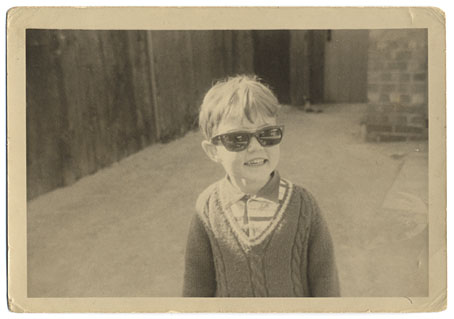
I was a Space Age boy. John Glenn became the first American to orbit the Earth in Project Mercury’s Friendship 7 a month before I was born, and growing up in the 1960s it was impossible to be unaware of the NASA missions. The first encyclopedia I was given in 1967 had a whole chapter about the Mercury and Gemini projects which ran from the late 1950s through to 1966. A subsequent section showed an artist’s impression of how it might look when we were exploring the Moon and the planets. By the time the photo above was taken, in 1968 or ’69, I was obsessed with the Apollo missions and had the names of the astronauts memorised the way others memorised the names of football players. (Everyone knows Neil Armstrong and Buzz Aldrin landed on the Moon; I’ve never forgotten that Michael Collins was the third member of the team, waiting for them in the Command Module.) For a while there was an American boy at school of whom I was deeply jealous; his father was in the USAF and his family had actually been present during the launch of Apollo 8!

Space was everywhere, it became a dominant theme, at least while the Apollo missions lasted. Pop culture of the 1950s had its share of rockets ships and flying saucers but was predominantly filled with Westerns and other Earth-bound adventures. You can see a watershed moment occurring when the hugely popular Gerry Anderson puppet shows went from the cowboy adventure of Four Feather Falls in 1960 to the science fiction of Supercar and, immediately after that, the full-on space adventure of Fireball XL5 in 1961 and ’62. Cowboys couldn’t compete with astronauts; Supercar and subsequent Anderson shows were regularly repeated, Four Feather Falls wasn’t. As well as being enthused by the Anderson shows I enjoyed something called Space Patrol, another science fiction puppet series which few now seem to remember.
airfix.jpg

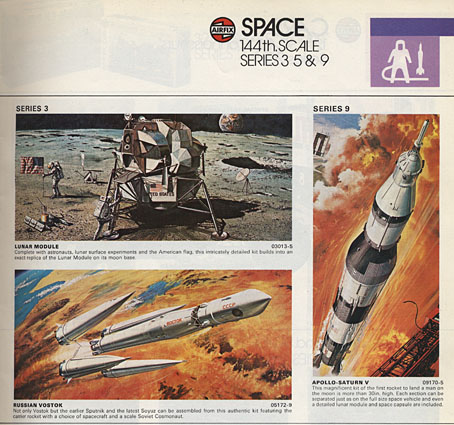
A page from a 1977 catalogue for Airfix model kits. I had the lunar module and the Saturn V. I don’t recall ever being interested in the Russian craft.

I wasn’t watching TV when Neil Armstrong first set foot on the Moon—it was 3.39 am here, I was fast asleep—but that didn’t matter, it was the event rather than the moment which counted. And there were five more landings following Apollo 11, each repeating those first moments and all accepted with the same spirit of innocent enthusiasm. What none of us kids realised at the time was that these events weren’t universally seen as a positive thing. Timothy Leary and Robert Anton Wilson later declared that going into space was the next step in human evolution but you wouldn’t know it looking through the underground press of the period. Appraisal of the NASA missions was filtered through the prisms of the Cold War and the cultural wars of the 1960s, with the entire Apollo enterprise being seen as a spin-off of the US military—the astronauts were all airforce pilots, after all—encouraged by a despised President Nixon and used as a means of embarrassing the Soviet Union. (This latter point tends to forget that the Russians were playing tit-for-tat, and had earlier embarrassed the US with Sputnik and Yuri Gagarin.) No one wanted to support men with crew-cuts who prayed in space and enjoyed country & western music. And few were prepared to concede that a President stoking the Vietnam War might have inadvertently done something worthwhile by continuing Kennedy’s space programme.
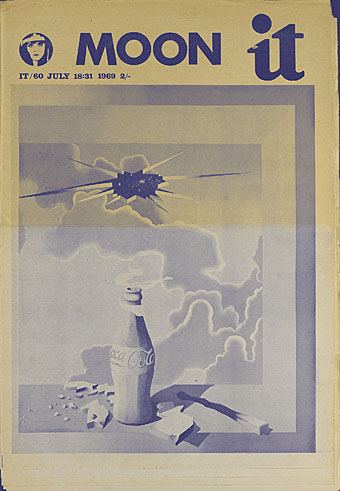
moon_it.jpg

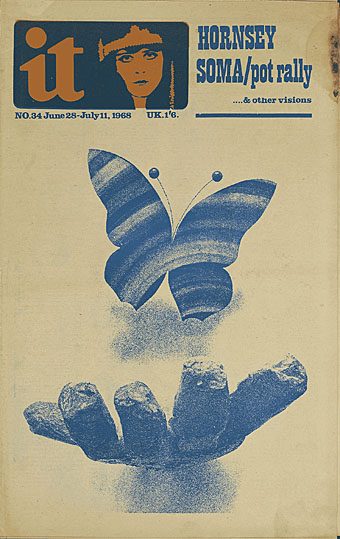
The cover of International Times for July 18, 1969, the Moon mission seen as an exploding Coke bottle which shatters the sky. An editorial within complains about the hoisting of an American flag on the Earth’s satellite.

There was a similar hostility in the attitudes of some of the younger breed of sf writers of the time who saw the Moon missions being praised and supported by the old guard of sf and, like the counterculture freaks, were disappointed by the conservative character of the astronauts. I only know this retrospectively, of course, but the complaints have always seemed rather purposeless; those men were test pilots, what else were people expecting? Equally dismaying was the amount of times throughout the 70s and 80s you’d hear black musicians only referring to the space missions in terms of a waste of money. What happened, I’d want to know, to Sun Ra’s “Space is the place”, to the elegant science fiction of Samuel R Delany, and to Parliament’s Mothership Connection? (For a more positive attitude we now have Afrofuturism.)

My own disappointment came in 1972 when it became evident that the whole show was over. As Tom Wolfe notes, after the Moon landing there was nowhere left to go. I developed a taste for written science fiction which lasted for several years but I’ve wondered sometimes whether that sense of an interplanetary future being brought to a dead stop isn’t the reason why I’ve since regarded all visions of the future as suspect. Everything in the 1960s told us that by 2009 we’d have bases on the moon and probably Mars; some of us might be living in Gerard K O’Neill‘s space colonies. When that future, which for a while seemed not only likely but inevitable, can be so easily short-circuited, why should we believe any others presented to us?

Related links:
NASA’s pages for the Apollo missions
Wired: The Moon Landings: Fact, Not Fiction
Wired: The Science of Apollo 11
Geeta Dayal on Apollo: Atmospheres and Soundtracks
by Brian Eno with Daniel Lanois and Roger Eno

Pink Floyd’s Moon-Landing Jam Session
Armstrong and Aldrin’s “lost Lunar City”
Julius Grimm’s map of the Moon from 1888

Previously on { feuilleton }
Apollo liftoff
Earthrise
East of Paracelsus

Merely fanciful or grotesque

graphic.jpg

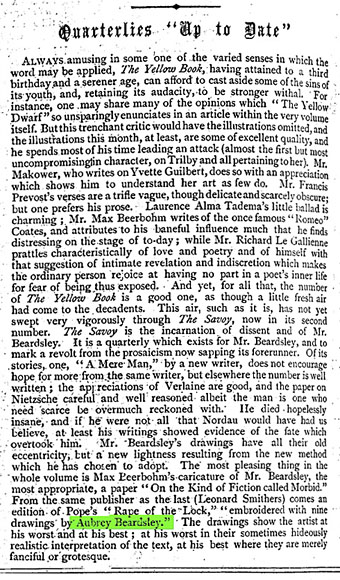
Thus the judgement of a reviewer examining Aubrey Beardsley’s work in The Graphic for May 23, 1896. The work in question was Beardsley’s Rape of the Lock illustrations being unveiled for the first time in the second number of The Savoy, the magazine which Beardsley co-founded with Arthur Symons and Leonard Smithers as a rival to the staid Yellow Book, also reviewed in the same column. Beardsley’s illustrations for Pope are now considered some of his very finest works and it’s difficult from our perspective to find any grotesquery there at all. It may be a reference to The Cave of Spleen, a drawing which saw the brief return of Beardsley’s earlier foetus creatures and a work to which some of Harry Clarke’s style would seem to owe a debt. In which case the reviewer should have been grateful to be spared the giant phalluses of The Lysistrata which Aubrey was also drawing for Smithers at this time.

The column above is one of many mentions of Beardsley and company to be found at the British Library’s new online archive of 19th century British newspapers. What might be a treasure trove is compromised slightly for me by being a collection of newspapers only, rather than magazines. A magazine database would give us all of The Savoy and The Yellow Book, as well as other titles which featured the work of fin de siècle illustrators. Patience is the key here, with every passing year more of the past becomes easily accessible.

So now, given the quantity of references there’s likely to be, dare I search for Oscar Wilde?

Elsewhere on { feuilleton }
The Aubrey Beardsley archive

International Times archive

itcover.jpg

The entire run of Britain’s first underground/alternative newspaper. Incredible. IT was never as flashy as Oz but ran for longer and arguably had the better contributors, among them William Burroughs. One notable feature was an avant garde comic strip, The Adventures of Jerry Cornelius, written by Michael Moorcock and M John Harrison with artwork by Mal Dean and Richard Glyn Jones. Heavyweight contributions to magazines tend to get reprinted, however, what I enjoy seeing in archives such as this is the ephemera which can’t be found elsewhere: adverts, reviews and illustrations like the one below. The site is a bit slow and it would have been good to have individual issues as PDFs but it feels churlish to complain. More archives like this, please.

Via Jahsonic.

it.jpg

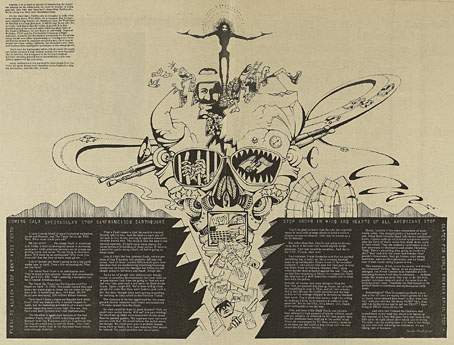
Illustration by Stanley Mouse (1969).

Previously on { feuilleton }
The Realist
Revenant volumes: Bob Haberfield, New Worlds and others
Oz magazine, 1967-73

The Great God Pan

pan_daphnis.jpg

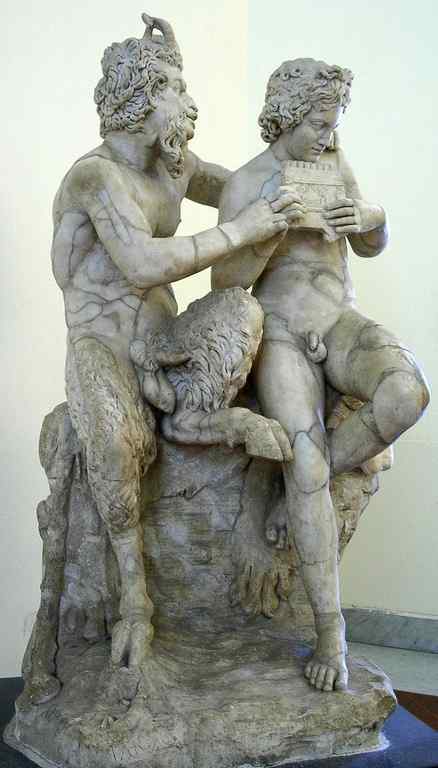
Pan teaching Daphnis to play the panpipes; Roman copy of a Greek original from the 3rd-2nd centuries BCE by Heliodoros.

“The worship of Pan never has died out,” said Mortimer. “Other newer gods have drawn aside his votaries from time to time, but he is the Nature-God to whom all must come back at last. He has been called the Father of all the Gods, but most of his children have been stillborn.”

So says a character in The Music on the Hill, one of the slightly more serious stories from Saki’s The Chronicles of Clovis (1911). Saki’s Pan is a youthful spirit closer to a faun than the goatish creature of legend. But being a gay writer whose tales regularly feature naked young men (surprisingly so, given the time they were written) I’m sure Saki would have appreciated the Roman statue above. There’s nothing chaste about this Pan with his “token erect of thorny thigh” as Aleister Crowley put it in his lascivious 1929 Hymn to Pan, a poem which caused a scandal when read aloud at his funeral some years later. The Roman statue was for a long while an exhibit in the restricted collection of the Naples National Archaeological Museum where all the more scurrilous and priapic artefacts unearthed at Pompeii were kept safely away from women, children and the great unwashed. These are now on public display and include the notorious statue of a goat being penetrated by a satyr.

Continue reading “The Great God Pan”