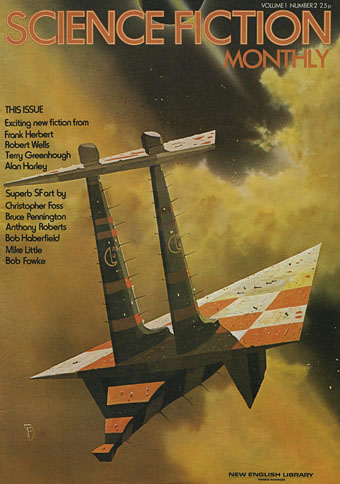
Science Fiction Monthly

sfm01.jpg

Art by Chris Foss.

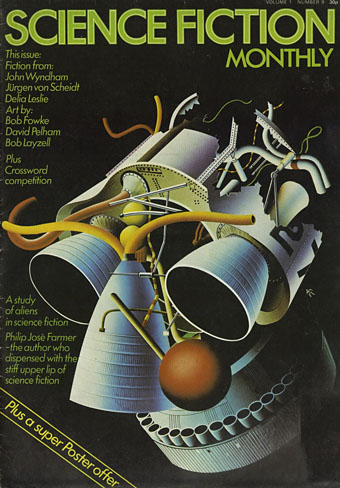
Recent uploads at the Internet Archive include an incomplete run of British magazine Science Fiction Monthly, a large-format collection of SF art and original fiction that ran for 28 issues from 1974 to 1976. Science Fiction Monthly was significant for my generation since it was the only regular British SF magazine available in the mid-70s. (Michael Moorcock and co. were still producing issues of New Worlds but the only ones I saw were the quarterly paperbacks). Science Fiction Monthly was published by New English Library which made it seem at first glance like a promotional tool for the publisher, even more so when most of the cover art and almost all the ads were for NEL titles. The early issues lean heavily on NEL content but later issues had a broader reach and contained all the features you’d expect from an SF magazine of the period: news columns, film reviews, interviews, a bad comic strip, and so on. The thing I liked most at the time was the reproduction of book cover art at a large size, with full-colour paintings filling the broadsheet pages or spreads, all printed with the intention of being removed and fixed to bedroom walls. The early issues were also unique in giving regular attention to the artists, running interviews and even showing photographs of the people responsible for all of that familiar paperback art. I didn’t see all of the early issues but the interviews were later collected in book form by NEL in Visions of the Future (Janet Sacks ed., 1976), a volume that made a considerable impression since it showed me that SF and fantasy illustration was a viable career rather than the product of remote and mysterious talents.
sfm02.jpg

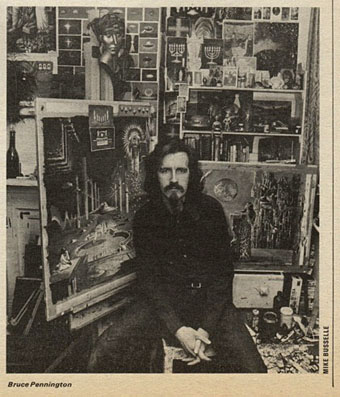
Artist Bruce Pennington (see this post).

A few page samples follow. It’s a shame the collection at the Internet Archive is incomplete since the magazine’s contents were interesting to the end. The only copy I own today is the one for October 1975 (not currently available online) which is almost a JG Ballard special, with a feature on the writer, an interview about his new novel, High-Rise, and an original piece of fiction.
sfm03.jpg

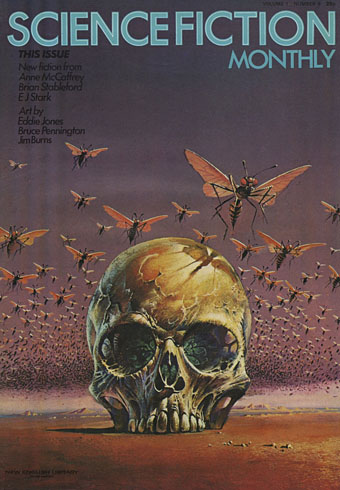
Art by Bruce Pennington.

sfm04.jpg

Art by David Pelham.

Continue reading “Science Fiction Monthly”

Form and Austin Osman Spare

form01.jpg

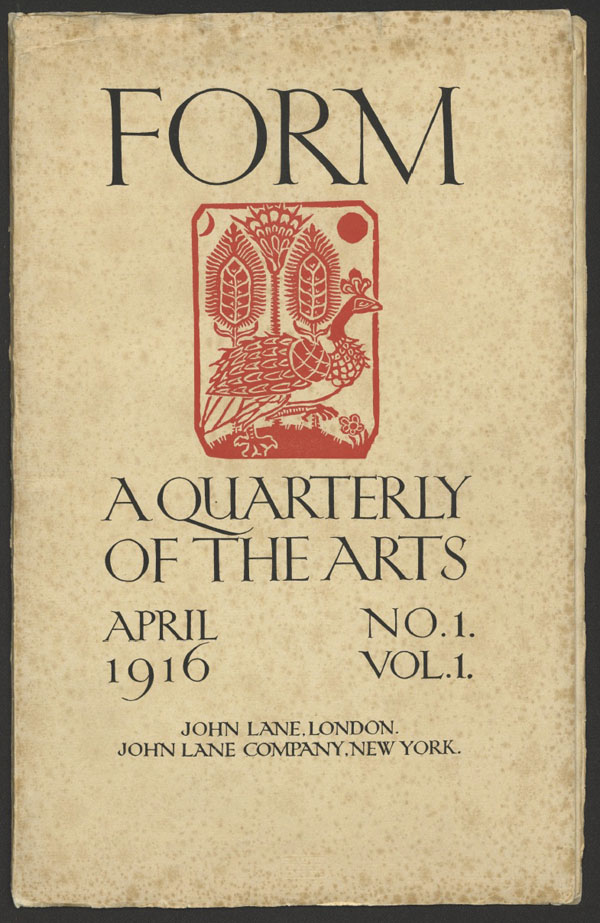
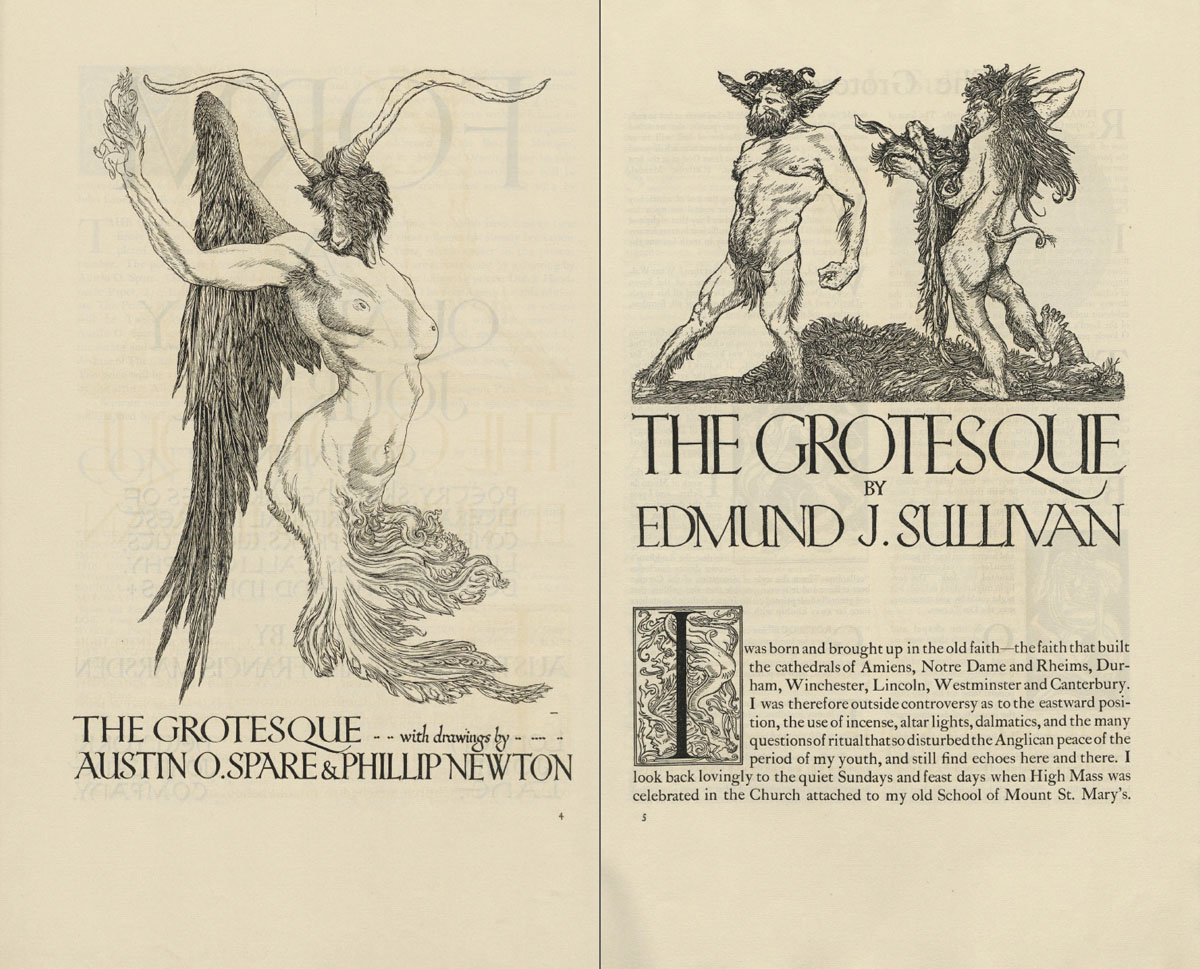
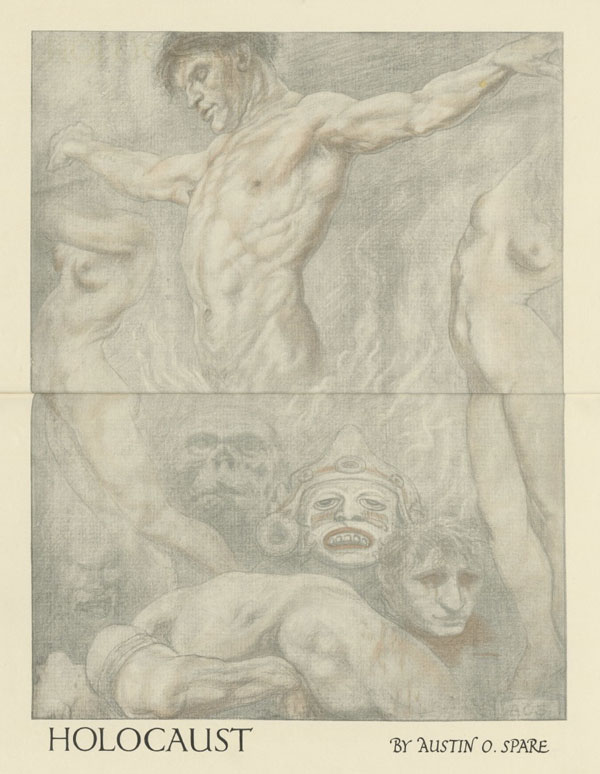
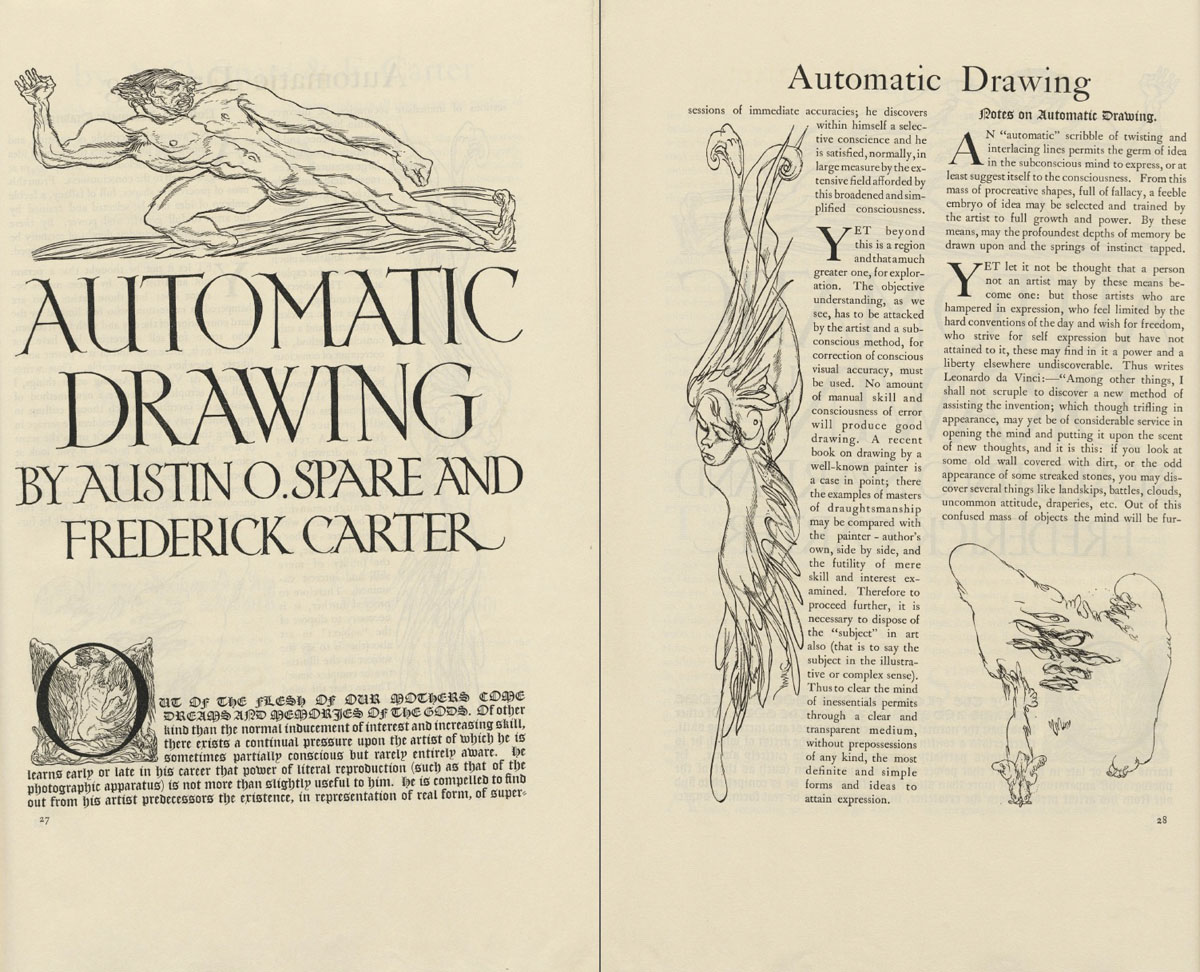
The University of Heidelberg‘s scanning programme continues to be a source of delight for those of us without professional or financial access to rare book collections. Having recently made the entire run of Der Ochideengarten available, they’ve added scans of another journal that was on my list of magazines I’d been hoping would eventually turn up online. Form was the first of two short-lived publications edited by Austin Osman Spare from 1916 to 1924, the second being The Golden Hind. Spare and co-editor “Francis Marsden” (Frederick Carter) published two issues of Form before Spare was conscripted in 1917. After the war, publication resumed with two further issues. Spare aficionados have long been familiar with the drawings in these publications, many of which have been reprinted over and over in collections of Spare’s art but often with no indication of their original context.

form02.jpg

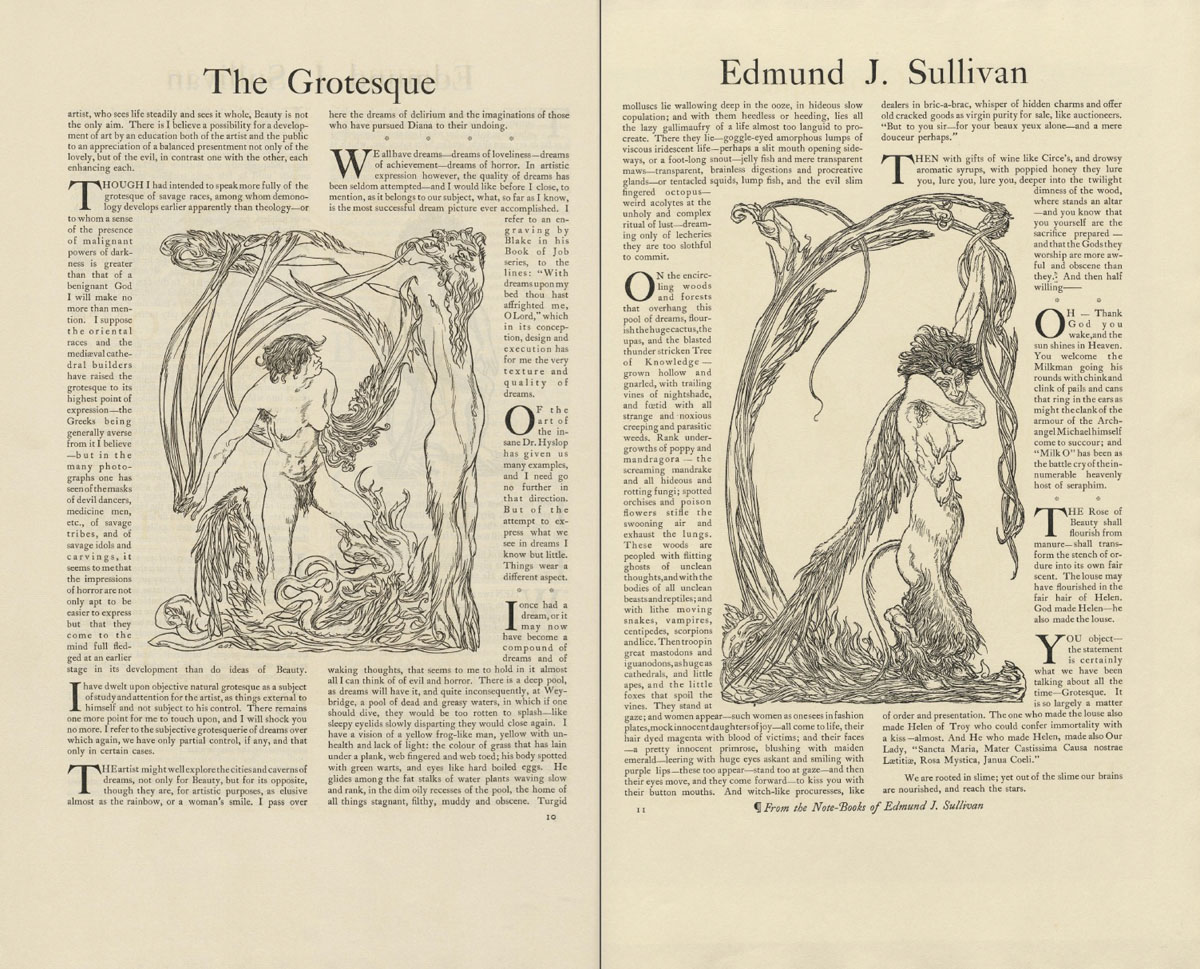
Seeing the drawings in situ like this not only restores the context but also sets them beside the accompanying work by Spare’s fellow writers and artists. Some of the other contributors need no introduction—WB Yeats, Robert Graves—while others have been neglected or even forgotten. Most descriptions of Form mention its following in the lineage of The Yellow Book, publisher John Lane having been responsible for both publications. But looking through the first two issues I’d say the model is as much The Savoy, the magazine that Aubrey Beardsley and Arthur Symons put together after The Yellow Book kicked out Beardsley in the wake of the Oscar Wilde trial. Yeats was a contributor to The Savoy, and two other artists present in Form—Charles Ricketts and Charles Shannon—were friends and publishers of Wilde.

form03.jpg

The samples here are mostly Spare’s work, and only a small selection at that. Enthusiasts are encouraged to download the PDFs for themselves. I had seen one of these issues before (Alan Moore has an enviable collection of Spare publications) but the rest were magazines I’d been waiting decades to see in full. I’m hoping now that the excellent staff at Heidelberg may have copies of The Golden Hind waiting for similar treatment.

form04.jpg

form05.jpg

Continue reading “Form and Austin Osman Spare”

Covers for Der Orchideengarten

orchid01.jpg

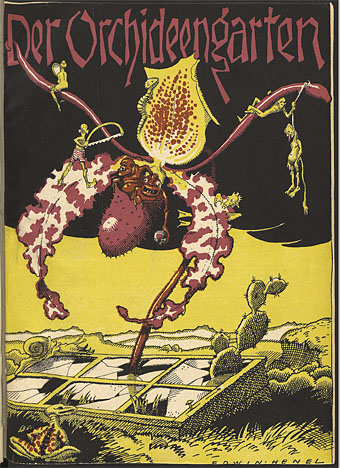
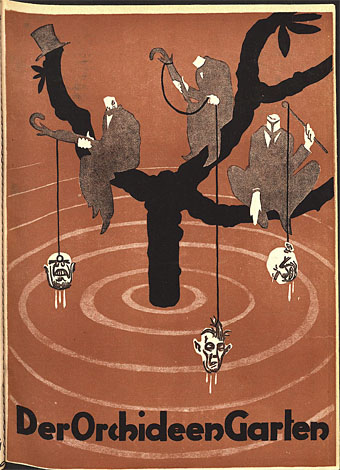
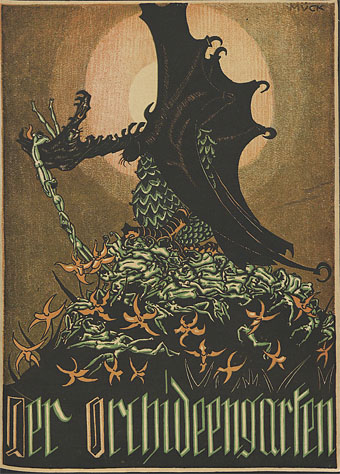
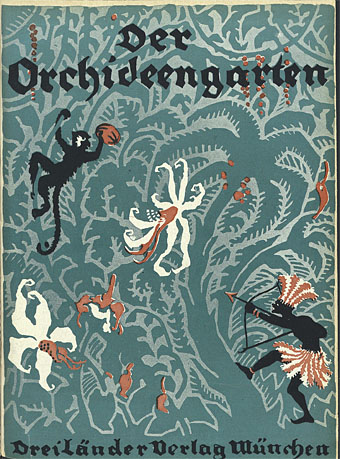
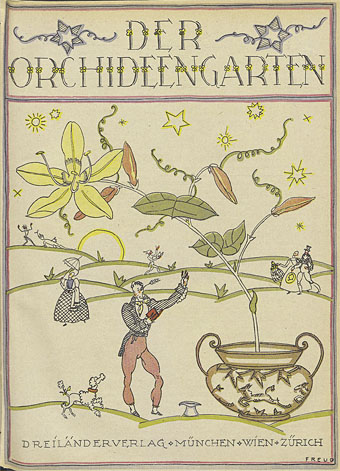
I was going to finish the year with a post showing some of the handful of product designs I’ve done recently but since some the products in question still need to be photographed that’ll have to wait. After a peculiarly dark and grotesque year it seems more fitting to end with a post of dark and grotesque artwork from an earlier epoch. Der Orchideengarten has been the subject of several posts here in the past but it’s only this week that I’ve had the opportunity to see an entire run of the world’s first magazine devoted solely to fantastic art and literature. Der Orchideengarten ran for 51 issues from 1919 to 1921; the editors were Hans Strobl and Alfons von Czibulka, and the contents comprised original fiction, book reviews and reprints in German of notable works of weird literature.

orchid02.jpg

The interior graphics (previously) are in a style similar to those found in Jugend and other German magazines of the period (plus reprints of Beardsley, Doré, and the like), while the covers follow the Jugend template of being different in style and format for every issue. All of these covers are from the wonderful resource at the University of Heidelberg where every issue of Der Orchideengarten is available for download. Even if you can’t read German the magazine is worth browsing for its very European view of the fantastic, a view which tends to be darker and more adult than the American magazines that would soon overshadow it. Some of the covers are strange in a manner that Weird Tales seldom achieved, and many of them feature an orchid somewhere in the design.

orchid03.jpg

orchid04.jpg

orchid05.jpg

orchid06.jpg

Continue reading “Covers for Der Orchideengarten”

Things

thing01.jpg

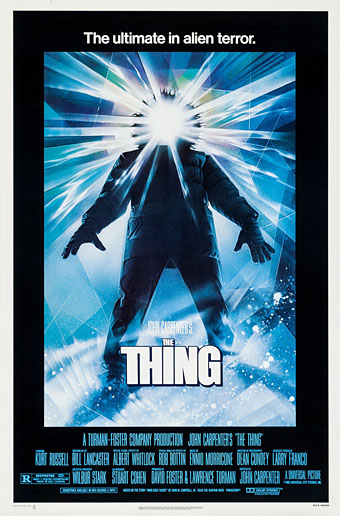
Art by Drew Struzan.

One of my current commissions is a piece of art for a book based on John Carpenter’s The Thing, due to be published next year. This was a request I agreed to immediately, having been astonished by the film when it appeared in 1982 (I saw it three times), and having rated it ever since as Carpenter’s best, as well as one of my all-time favourite horror films. I haven’t started on the planned piece just yet but the commission encouraged me to upgrade my DVD copy of the film to the Blu-ray version, and to also read for the first time John W. Campbell’s “Who Goes There?”, the short story that was the origin of both Carpenter’s film and The Thing From Another World (1951) directed by Christian Nyby. Reading the story set me hunting around for other interpretations of Campbell’s alien.

thing02.jpg

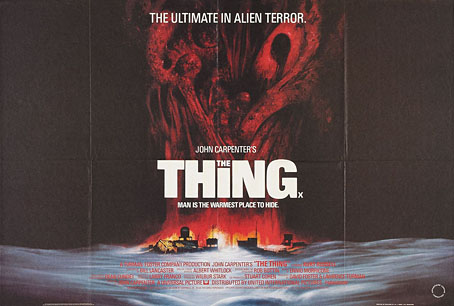
UK poster. Art by Les Edwards.

The story was instructive in several ways, the first being how closely Bill Lancaster’s script for the Carpenter film follows the story’s outline. The paperback collection I was reading has an introduction by James Blish which complains about the Howard Hawks/Christian Nyby production turning the polymorphous alien into another clone of Frankenstein’s monster. That’s true but the Nyby film still scared me to death when I first saw it aged 11 or so, and it has its merits. Lancaster not only stayed closer to the original shape-shifting premise but also kept many of the character names, plus details such as the blood test and the Thing’s attempt at the end to build a machine to escape from the encampment. The unforgettable opening, however, with the lone helicopter pursuing the dog, is all Lancaster’s.

thing03.jpg

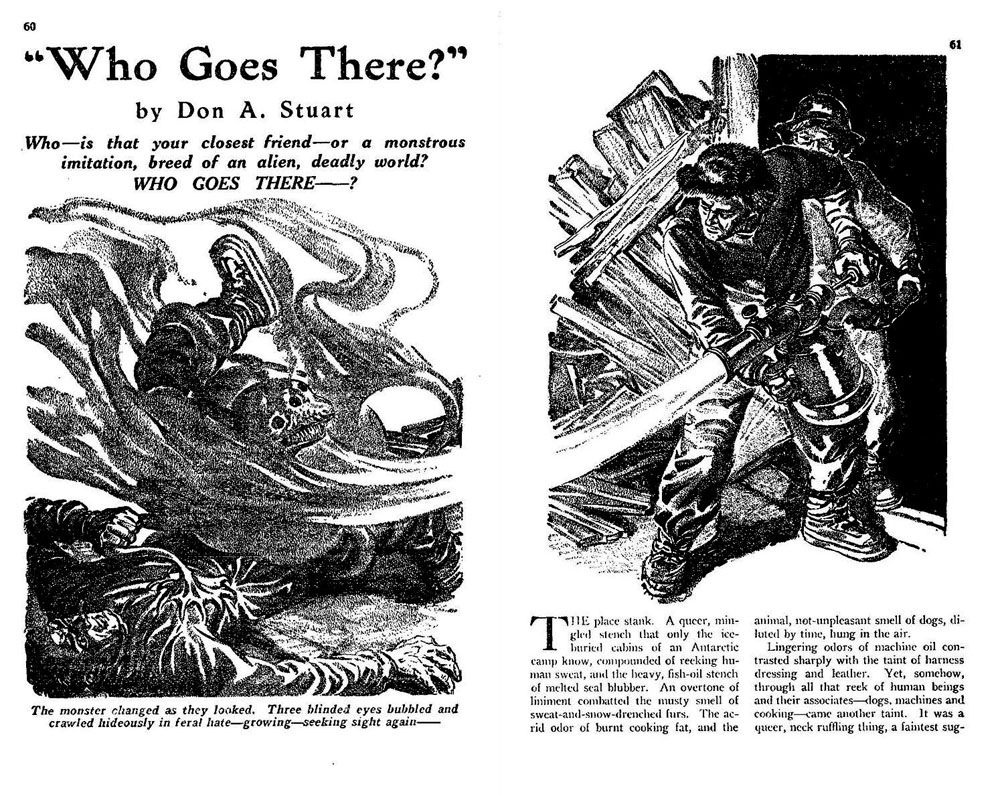
Astounding Science-Fiction, August 1938; artist unknown. “Don A. Stuart” was a pseudonym for John W. Campbell, at that time the newly appointed editor of Astounding. Campbell’s editorship changed the name of the magazine from Astounding Stories to Astounding Science-Fiction.

It was face up there on the plain, greasy planks of the table. The broken haft of the bronze ice-axe was still buried in the queer skull. Three mad, hate-filled eyes blazed up with a living fire, bright as fresh-spilled blood, from a face ringed with a writhing, loathsome nest of worms, blue, mobile worms that crawled where hair should grow—

Campbell’s description of the ice-bound alien is better than some of his writing elsewhere. I’m used to tempering my judgement when visiting stories written for the pulps but Campbell’s writing is really awful, and a reminder of why I never got very far with the early SF writers. Weird Tales magazine had its share of ham-fisted journeymen (and women), but Campbell’s contemporaries such as Clark Ashton Smith and HP Lovecraft read like the most finessed and mandarin prose stylists in comparison. Well, The Thing isn’t the first great film to be based on a poor-quality story so we can at least thank Campbell for his scenario, although how much of it was his own has never been clear. The idea of ancient aliens in Antarctica (some of which are amorphous shape-shifters) had already been explored by HP Lovecraft in At the Mountains of Madness; Lovecraft’s story was published in 1936 by Astounding Stories, the same magazine that published “Who Goes There?” two years later. This lineage, and the possible influence, makes The Thing one of the foremost Lovecraftian films even without all of its tentacled abominations.

thing04.jpg

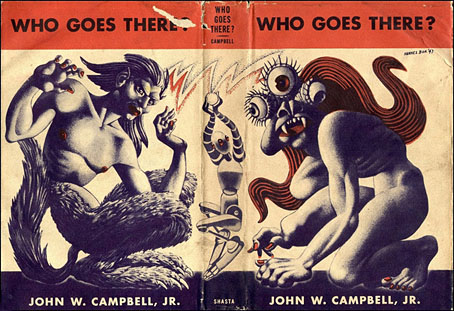
Art by Hannes Bok.

The story provided the title of Campbell’s debut collection of short fiction in 1948. I’ve known the Hannes Bok cover art for many years but hadn’t realised until recently that the three-eyed monster on the front was a Bokian rendering of Campbell’s alien. The figure on the back is presumably a human/husky hybrid, while I’d guess the robot relates to one of the author’s other stories.

Continue reading “Things”

Weekend links 336

okanoue.jpg

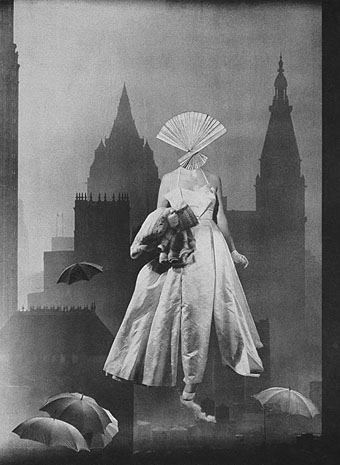
Visit in Night (1951) by Toshiko Okanoue.

• Rhythms of the World: Bombay and All That Jazz; a 60-minute BBC documentary featuring Trilok Gurtu, L. Shankar, Don Cherry, Alice Coltrane, Zakir Hussain and others. The quality of the full-length copy is a little rough so it’s worth noting the six-part version here.

Adam Scovell talks to Leah Moore and John Reppion about adapting the ghost stories of MR James for the comics medium. Related: The Corner of Some Foreign Field, a short piece of folk horror written by Martin Hayes with art by Alfie Gallagher.

Callum James on the overtly gay nature of Films and Filming magazine (1959–1990). Having seen a few copies over the years I’d always suspected this but didn’t realise it was so persistent. Related: The Boy and the Wolf by Callum James.

• At Dangerous Minds: Lucifer Rising live in concert: Bobby Beausoleil and the Freedom Orchestra perform their Kenneth Anger soundtrack, 1978.

Simon Says: A rare cassette tape of instructions by Peter Levenda for using the Simon Necronomicon (1977) as a grimoire.

• Mixes of the week: Fact Mix 577 by Outer Space, and Incantations and Manifestations by Melmoth_The_Wanderer.

• At Dennis Cooper’s: _Black_Acrylic presents … Art Sex Music: A Cosey Fanni Tutti Day.

• Up from the Abyss: Brenda SG Walter on Rammstein, Lovecraft and Sea Zombies.

• Cinematic Alchemy: Christopher Gibbs on designing sets for Performance (1970).

• Magic carpets: the art of Faig Ahmed‘s melted and pixellated rugs.

• Drips, pop and Dollars: the music that made Ennio Morricone.

• At Bibliothèque Gay: Cocteau et quelques autres.

• “Sleepers Awake!” says Moon Wiring Club.

Can your city change your mind?

The Paul Laffoley Archive

The Ambivalent Abyss (2001) by Lustmord | Byss And Abyss (2004) by Espers | Dark Bullet From The Abyss (2010) by Pleq