Weekend links 508

lee-nova.jpg

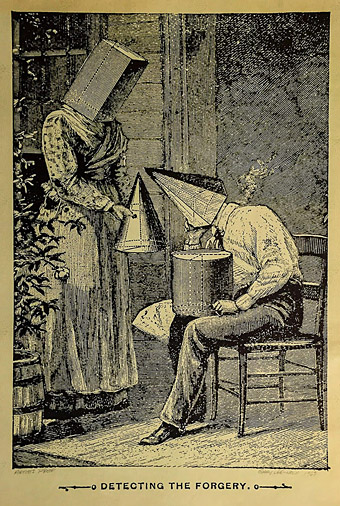
Detecting the Forgery (1967), a collage print by Gary Lee-Nova.

• Nigel Kneale’s adaptation of Susan Hill’s The Woman in Black was given a UK TV screening in 1989, followed by a brief video release after which it was buried for years, and subsequently overshadowed by the later (inferior) big-budget feature film. Network will be releasing the Kneale version on blu-ray in May. I wrote about the TV film a while ago.

• At the BFI: David Parkinson on 10 essential films featuring the late Max von Sydow, a welcome riposte to obituaries that headlined the often mediocre Hollywood fare that Von Sydow elevated with his minor roles. And at the same site, John Berra on where to begin with the martial arts films of King Hu.

• “Enthusiasts Archive, an artistic project by Neil Cummings and Marysia Lewandowska, is the result of extensive research amongst the remnants of amateur film clubs in Poland under socialism. It is a critical archive of amateur films found, restored and made available online.”

Stephen Calloway, co-curator of the Tate Britain Aubrey Beardsley exhibition, and drag performer Holly James Johnston sit down to tea to discuss the “dos and don’ts” of dandyism according to the artist.

• Mutinous Jester: The Collage Novels of Akbar Del Piombo by Gregory Stephenson. Related: Fuzz Against Junk: The Saga of the Narcotics Brigade (1959) by Akbar Del Piombo.

• Michael Richey on chindogu, the useless inventions of Kenji Kawakami.

• From farting to fornication: John Boardley on early print censorship.

Douglas A. Anderson on a case of plagiarism in Weird Tales.

• Mix of the week: mr.K’s Soundstripe vol 3 by radioShirley.

How To Get To Spring is a new album by Jon Brooks.

Rufus Wainwright‘s favourite music.

• At Dennis Cooper’s: Occultists.

Spring Rounds From The Rite Of Spring (1975) by Alice Coltrane | Springlight Rite (1981) by Irmin Schmidt & Bruno Spoerri | Spring Returns (1999) by Isao Tomita

Double weird

weird1.jpg

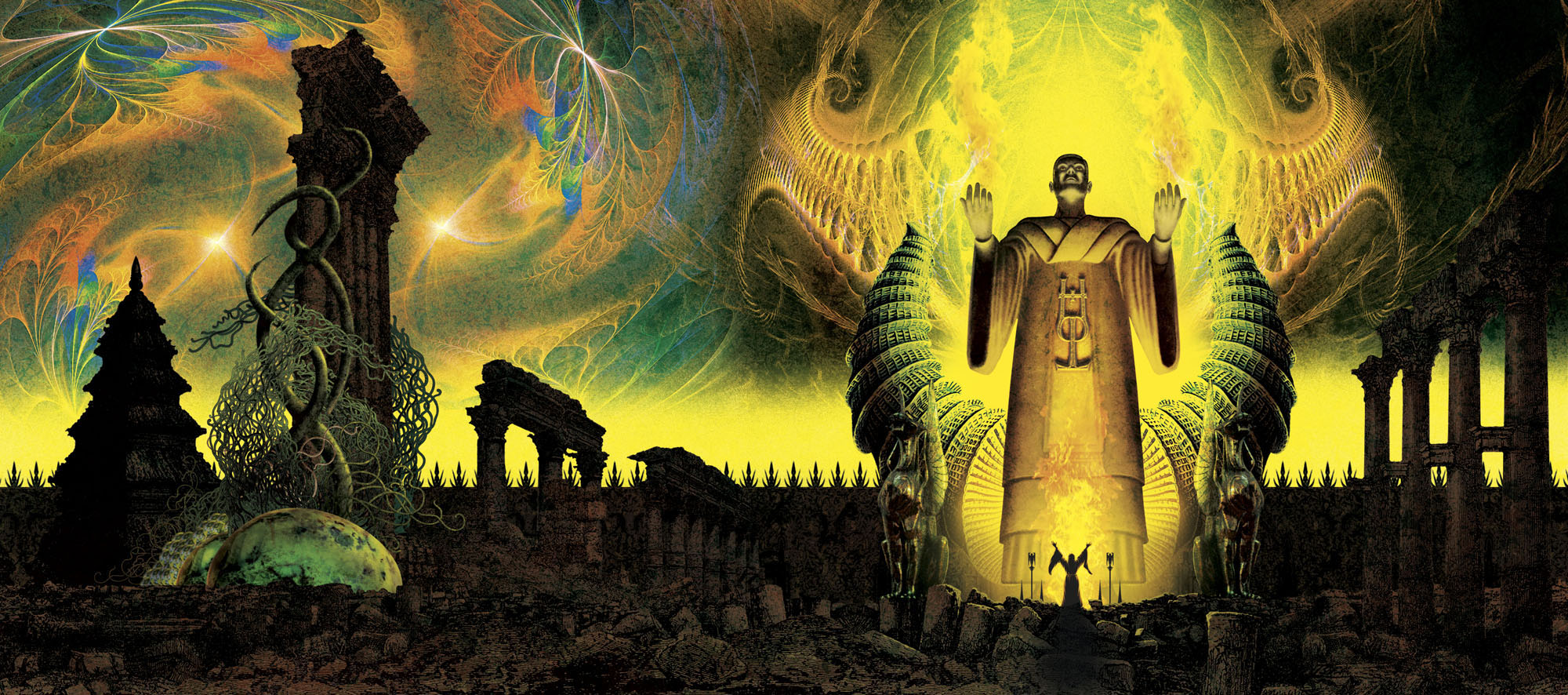
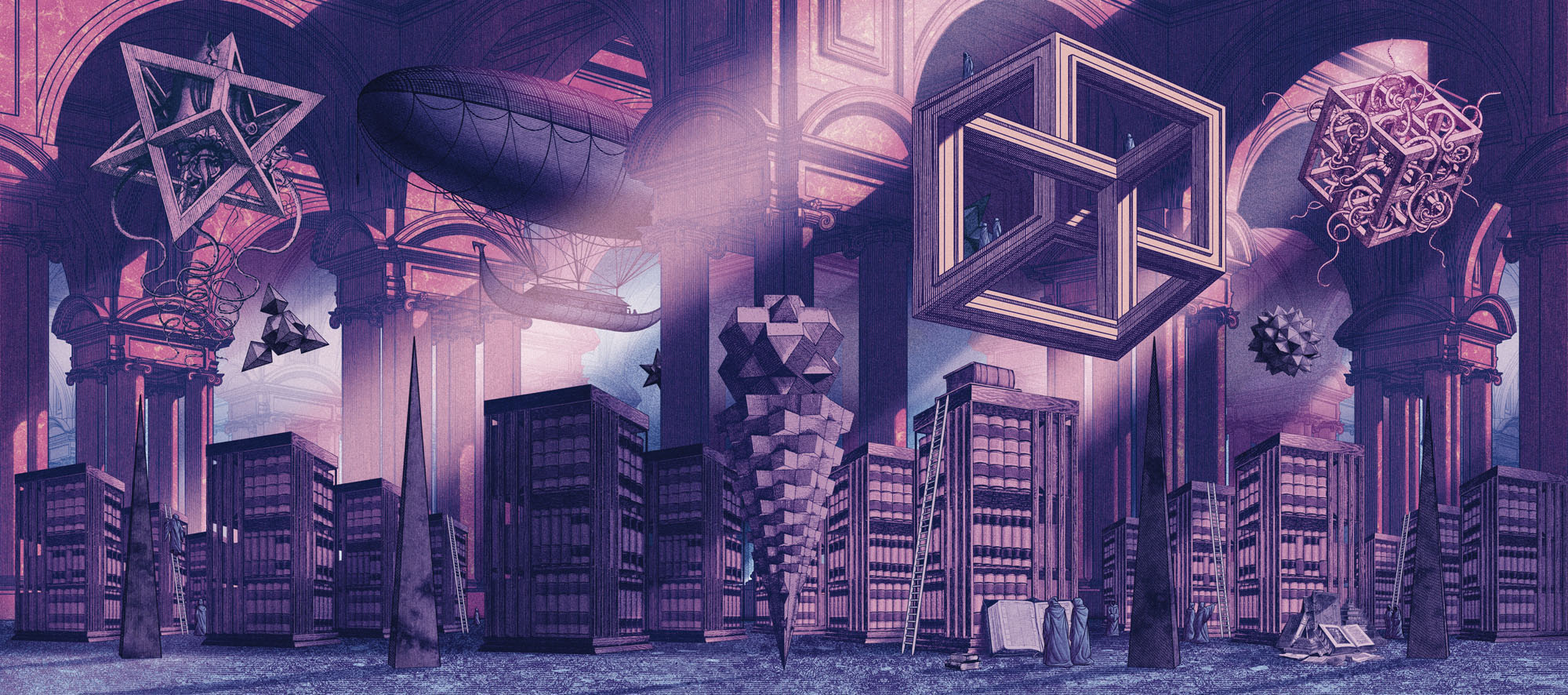
Two of the books whose covers I was working on late last year have been announced so here they are. This is more work for PS Publishing where wraparound covers are the standard, so once again I was able to work in a pictorial, landscape format. (PS also do their design in-house so I only did the art this time. Click on the pictures below for larger views.)

weird2.jpg

Apostles of the Weird is a collection of contemporary weird fiction edited by ST Joshi:

Weird fiction is an incredibly rich and varied genre, running the gamut from supernatural horror to imaginary-world fantasy to psychological terror. This anthology seeks to exhibit the wide range of themes, motifs, and imagery that weird fiction allows, as embodied in the work of some of the leading contemporary writers in the field. (more)

“Weird” is indeed a very broad category so rather than try and create something that represented a single genre I opted for a weird view instead. The idea was to do something like Borges’s Library of Babel in a space that was a hybrid of Piranesi and MC Escher. I was hoping originally to make this more Escher-like, with a number of gravity-defying staircases, but the underlying drawing took so long that I didn’t have time.

weird3.jpg

His Own Most Fantastic Creation: Stories About HP Lovecraft is also edited by ST Joshi:

HP Lovecraft (1890–1937), the pioneering writer of weird fiction, has himself become an icon in popular culture. Stories, novels, and other works featuring the gaunt, lantern-jawed gentleman from Providence, Rhode Island, have proliferated. These works have been triggered by the incredible amount of knowledge we have on the writer—his family, his friends, his idiosyncrasies and eccentricities—as found in his thousands of surviving letters. (more)

This was much easier to achieve since HP Lovecraft is familiar territory. The idea here was to do a portrait of Lovecraft situated in a Lovecraftian zone, a colossal idol of a type that might be found in some of his Cyclopean ruins. Lovecraft and his Weird Tales colleagues had a habit of referring to each other in their stories and letters as though they were ancient priests or sorcerers so portraying Lovecraft in this manner is fitting. The combination of perspective and lighting worked against creating an accurate likeness, however—it doesn’t help that Lovecraft’s features are weird in themselves—so the “HPL” icon is there to affirm the identity.

Both books will be published next month if Great Cthulhu hasn’t risen from the depths by then.

Elsewhere on { feuilleton }
The Lovecraft archive

Previously on { feuilleton }
Something from Below

Weekend links 505

brown.jpg

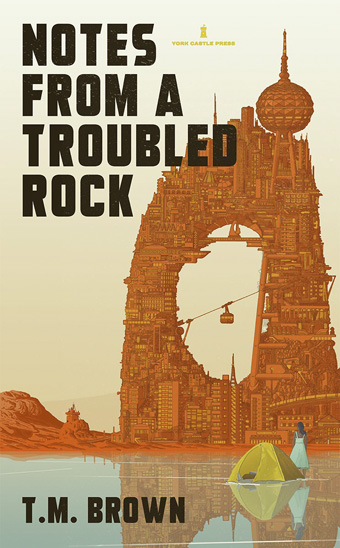
An imaginary book cover by Toby Melville-Brown.

• At the Internet Archive (for a change): Directory 1979, a collection of John Cooper Clarke’s poetry designed by Barney Bubbles; 25 issues of Wrapped in Plastic, the magazine devoted to all things David Lynch; and Cinefantastique, 1970–2002, the magazine about special effects in cinema whose making-of articles were often the first such analyses published anywhere. No contents list for the latter, unfortunately, but the covers shown here give an idea of the main features.

• “Physicist Andreas Schinner recounted a rumor that the Voynich manuscript can be ‘pure poison’ for a scholarly career, because when studying the manuscript there’s ‘always an easy option to make a ridiculous mistake.'” Jillian Foley on the strange quest to decipher the Voynich manuscript.

• At the BFI: Stephen Puddicombe examines six mysterious paintings on film, and Anna Bogutskaya selects ten examples of Lovecraftian cinema. Regarding the latter, I deplore the omission of Huan Vu’s Die Farbe (2011).

• In The Driver’s Seat: Neil Fox on the demented fun of Nicolas Winding Refn’s streaming site for cinematic obscurities, ByNWR.

• “Feed your head”: Akim Reinhardt on the progress of a White Rabbit from Charles Lutwidge Dodgson’s novel to Grace Slick’s song.

• Mixes of the week: Marshland: The Andrew Weatherall Mix, and Music’s Not For Everyone, hours of Weatherall mixes at NTS.

Borderland, an album of music by Fordell Research Unit based on The House on the Borderland by William Hope Hodgson.

• At Dangerous Minds: Thirteen-year-old Mariangela and her adventurous pop album, produced by Vangelis, 1975.

• Heavy Metal, Year One: Kory Grow on the inside story of Black Sabbath’s groundbreaking debut.

• “Theire Soe Admirable Herbe”: How the English Found Cannabis by Benjamin Breen.

Derek Jarman and friends in Dungeness: unseen pictures.

Closing periods at Flickr.

Heavy Rock (1976) by Sound Dimension | Heavy Denim (1994) by Stereolab | Heavy Soul (2002) by The Black Keys

Weekend links 504

maclean.jpg

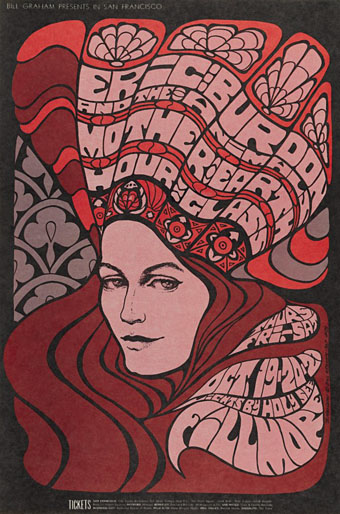
Eric Burdon and the Animals, Mother Earth, Hour Glass; Fillmore Auditorium, October 19-21, 1967 by Bonnie MacLean.

• RIP Bonnie MacLean, another of the original San Francisco poster artists, and the only woman of note in the US psychedelic poster scene. (Not the only woman, however; in Europe we had Marijke Koger.) Related: Bonnie MacLean’s posters at Wolfgang’s. And RIP to illustrator Tom Adams, an artist whose exceptional covers for novels by Agatha Christie are only one part of a long and varied career.

The Litanies Of Satan (1982), the short but uncompromising debut album by Diamanda Galás, is reissued on Galás’s own label later this month. Further albums from her remarkable back catalogue will follow. Related: video of Galás performing The Litanies Of Satan in 1985.

• “Scorsese is amazed that United Artists didn’t touch one frame of Raging Bull, since it’s the first time in his life as a feature director that this has apparently occurred.” In 1981 Derek Malcolm talked to Martin Scorsese about his reasons for making a boxing picture.

“…in a post-AIDS world, its scenes of mass male-on-male decadence evoke a sense of the spiritual: Not to put so blunt a phrase on it, but the majority of the men we see in Cruising‘s bars would likely die within the next decade, victims of a very heterosexual genocide of neglect. These are blurred, melancholic memories locked forever within Cruising‘s celluloid; a phantasmagoria of men whose liberation was not legislatively delivered, but recovered in the privacy of leather bars and cruising joints. The film’s overt sexuality makes it hard to escape a sense of catastrophic loss.”

Jack King on William Friedkin’s Cruising

• The Pet Shop Boys’ eccentric feature film, It Couldn’t Happen Here (1988), is released on blu-ray and DVD in June. The video for You Were Always On My Mind gives an idea of the contents.

• “Orion being one of the brightest constellations makes it a lot of people’s favourites, and he was my favourite as a kid.” Ben Chasny on his history of stargazing.

• “You think the Holy Grail is lost? No. I have it on my piano.” John Boorman talks to Xan Brooks.

• Laura Cumming on the dark and haunting paintings of Belgian Symbolist Léon Spilliaert.

• Mix of the week: XLR8R Podcast 631 by Ondness.

Alistair Ryder chooses 10 great killer plant films.

Howl by John Foxx And The Maths.

• At Dennis Cooper’s: Gleam.

The Litanies Of Satan (1969) by Ruth White | Grail (1971) by Grail | Plants’ Music (1981) by Ippu-Do

Weekend links 503

kausch.jpg

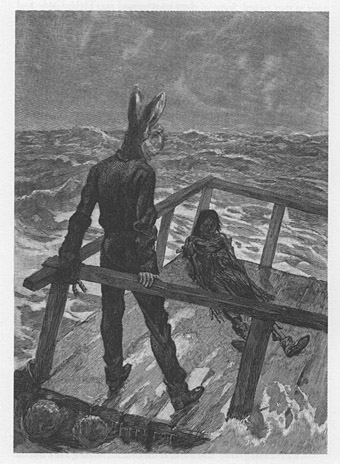
Rabbit Man with Skull Lady (1998) by Allan Kausch.

• “They were the first generation that said, ‘Fuck it, we’re not going to be intimidated.’ They weren’t going to make specifically pro-gay statements, but they were the first generation to really live that out. If you look at the Alternative Miss World, it’s a kind of gender-fuck, it’s almost like the English version of the Cockettes.” Jon Savage speaking in a piece by Alex Petridis about “Them” (Kevin Whitney, Luciana Martinez de la Rosa, Duggie Fields, Derek Jarman, Zandra Rhodes, Andrew Logan et al). Related: Andrew Logan in Andrew’s Adventures in Loganland.

• Sex, Satanism, Manson, Murder, and LSD: Kenneth Anger tells his tale. “Anger rarely if ever veers from the script as he is a man who has carefully controlled his myth and reputation for decades,” says Paul Gallagher.

• “Don’t even think about operating heavy machinery while listening to this mix.” The latest Dave Maier collection of recent ambient drift, drone-works and beatless atmospherics.

It is by no means easy to track or trace relationships between women, past or present. Women’s relationships with other women are often disguised: by well-documented marriages to men, by a cultural refusal to see what is in full view or even to believe such relationships exist. In a world built by and for men and their pursuits, a woman who loves women does not register—and is not registered, i.e., written down. Reasons for this layer one upon the other: A lesbian purposely hides her identity and remains closeted. A lesbian refuses to call herself a lesbian, disidentifying from the term and its associations for reasons personal or political. A woman does not know she is a lesbian—because she does not ever have a relationship with another woman, or because she is not aware that the relationships she engages in could be called lesbian. I didn’t call myself one for several years. Or, as in Carson’s case, her own self-understanding and identification are difficult to determine because of the efforts of those who outlived her and pushed her into the closet.

Jenn Shapland on the closeting of Carson McCullers

• At The Paris Review: The Collages of Max Ernst. Related: Kolaj: A directory of collage books.

Adam Scovell on the deathly hinterlands of Georges Franju’s Eyes without a Face.

• When Dorothy Parker got fired from Vanity Fair, by Jonathan Goldman.

• At Dennis Cooper’s: The Proto-Psychedelic Art of CG Jung’s Red Book.

• The abstract, single-stroke paintings of Daigoro Yonekura.

Adam Gopnik on the seriousness of George Steiner.

Caligula MMXX

The Ballad Of Dorothy Parker (1987) by Prince | Lotus Collage (1979) by Laraaji | Death Collage (1992) by Snakefinger & The Residents