Biblio-hauntology

hauntology.jpg

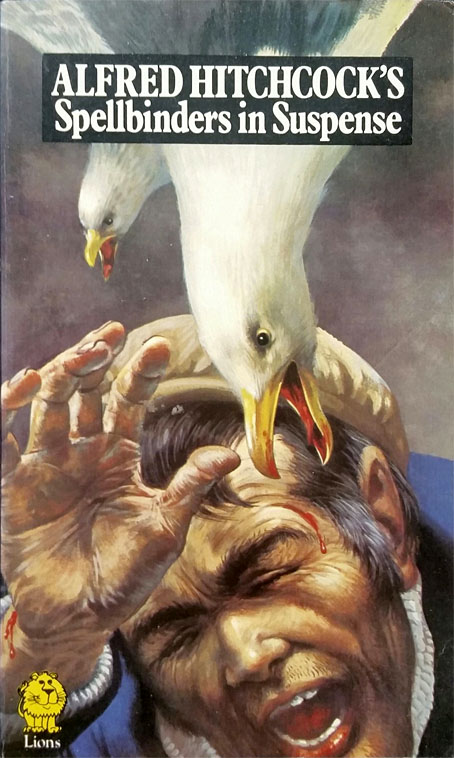
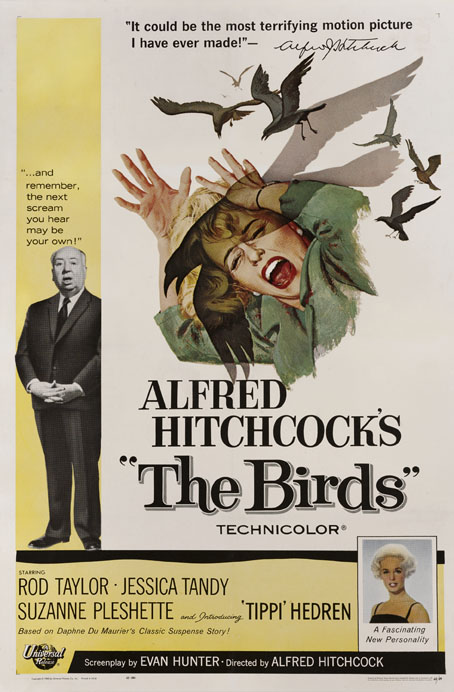
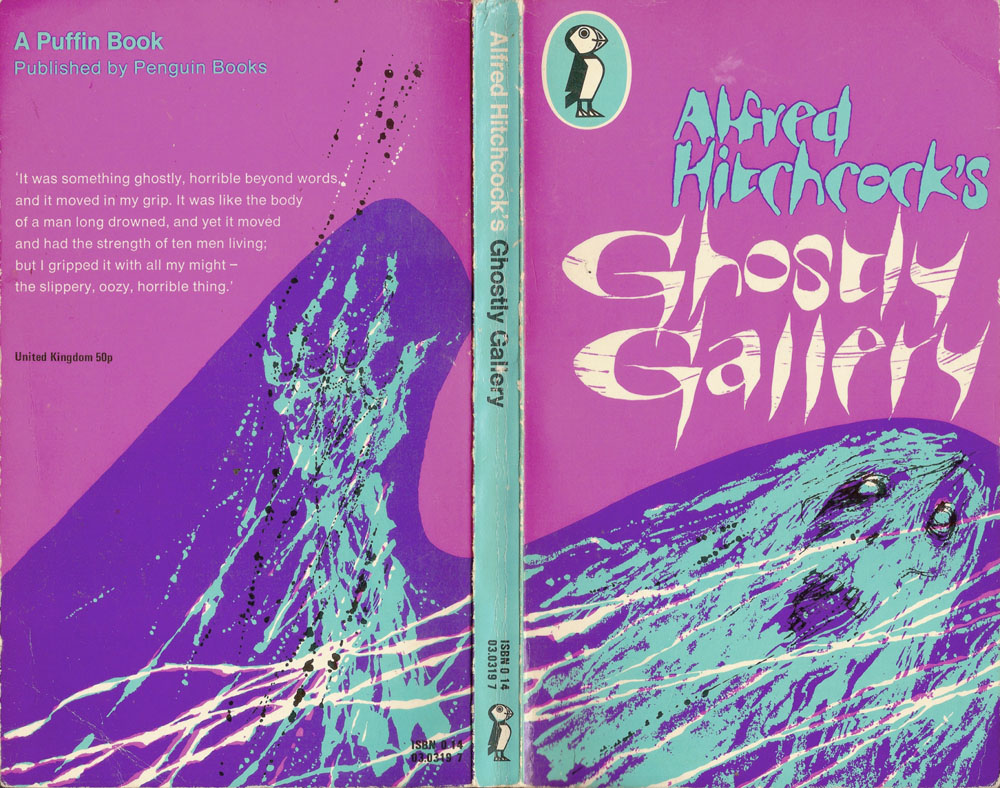
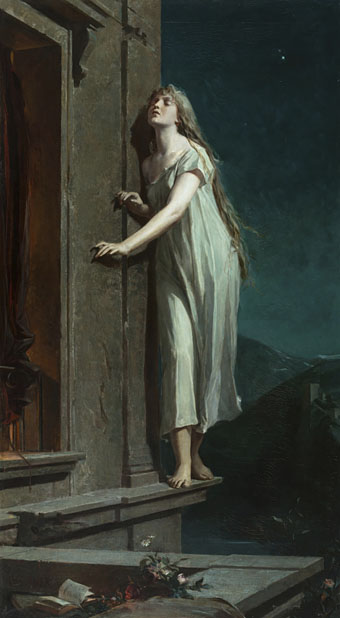
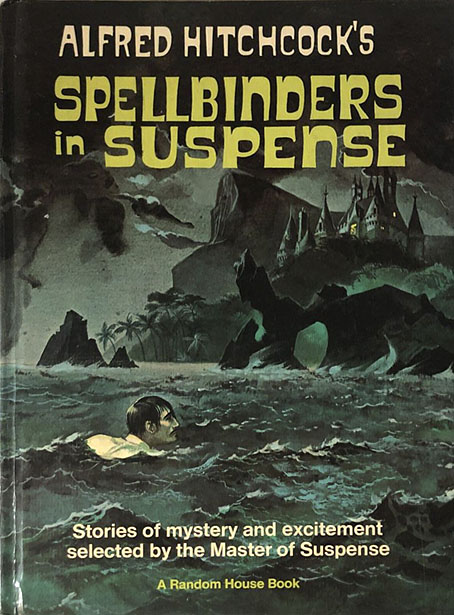
An invented book cover from the latest post at blissblog. Since I like fakes of this nature, especially when they’re carefully done, I had to go in search of the creator. Rachel Laine is the person responsible, and there’s more along these lines at her Flickr pages, together with many similar items from the universe next door. (I know someone who’ll appreciate all those faded magazine covers combining soft-porn photos with headlines for stories about analogue synths.) Another of the book covers is a guide to “Witches and Witch Craft”, a title whose real-life counterparts included books such as the Hamlyn guide to witchcraft and black magic from 1971. As I’m often saying, the 1970s was the witchiest decade of the 20th century.

uncanny.jpg

All of which reminded me of a couple of recent inventions of my own. One of the advantages of writing here is that I can retrieve from obscurity some of the things I’d previously cast into the Malebolge formerly known as Twitter. This impromptu creation is something I threw together after Callum J posted the cover of an old I-Spy book dedicated to “The Unusual”. (If you don’t know what the I-Spy books were—and still are—Wikipedia has the history.) The screen-grab from Whistle and I’ll Come to You is a lazy choice but I wanted to surprise Callum by reworking his cover as quickly as possible.

quatermass-stamps.jpg

A little more considered is this proposal for a set of British postage stamps dedicated to Nigel Kneale and his works. This one came about after a comment from Kim Newman that such a thing was overdue from the Royal Mail. Since I agreed I thought I could at least fake them into existence. They’re still a little incomplete—actual stamps would have a mention of Kneale on each one—but they look plausible. The artwork was swiped from a series of Quatermass book covers created by the prolific Karel Thole for Mondadori in the late 1970s. The images for the first Quatermass and Quatermass and the Pit work very well, I think, the fourth one less so. If I was doing these myself I’d try some combination of a radio telescope and a stone circle. Windows into another world; in the universe next door Quatermass is bigger than Star Wars. But we live here, not there.

Previously on { feuilleton }
Disciples of the Scorpion
Ghost Box and The Infinity Box
Llewellyn occult magazine and book catalogue, 1971
Typefaces of the occult revival
The Book of the Lost
Books Borges never wrote
Forbidden volumes

Phantastische Edelmann

edelmann1.jpg

There’s more to Heinz Edelmann than the designs he created for Yellow Submarine, as Edelmann himself often used to remind people. And there’s more to his work for animated film than the Beatles’ exploits. Der Phantastische Film is a short introductory sequence for a long-running German TV series which has been doing the rounds for a number of years. Brief it may be but a couple of the monstrous details resemble those that Edelmann put into his covers for Tolkien’s books.

edelmann2.jpg

Edelmann had plans to capitalise on the success of Yellow Submarine with more films like this when he set up his own animation company, Trickfilm, but the only other example is The Transformer, a short about steam trains which he designed. (The direction was by Charlie Jenkins, with animation by Alison De Vere and Denis Rich.) Given the persistent popularity of Yellow Submarine I keep hoping someone might revive its style for something new. The first animated feature directed by Marcell Jankovics, Johnny Corncob, comes close but lacks the trippy Surrealism of the Beatles film. The Japanese can certainly do trippy Surrealism (see Mind Game or Paprika) but I’ve yet to see anything that approaches the Edelmann style. Johnny Corncob, incidentally, is now available on Region B blu-ray from Eureka. It’s worth seeing but the main film in the set, Son of the White Mare, is Jankovics’s masterpiece.

edelmann3.jpg

On a slightly related note, until today I hadn’t looked at ISFDB.org for Heinz Edelmann’s genre credits so I hadn’t seen this Lovecraft cover before. Hard to tell if this creature is supposed to be Cthulhu or Wilbur Whateley’s brother when The Dunwich Horror is one of the stories in the collection. Either way, it belongs in the Sea of Monsters. Insel Verlag published this one in 1968, a year before launching their special imprint devoted to fantastic literature, Bibliothek des Hauses Usher.

Previously on { feuilleton }
Return to Pepperland
The groovy look
The Sea of Monsters
Yellow Submarine comic books
Heinz Edelmann

Weekend links 674

moon.jpg

The Far Side of the Moon, as photographed by NASA’s Lunar Reconnaissance Orbiter.

• “It goes against centuries of traditional belief to accept that the moon is barren, that it is indifferent, that it is innocent of any role in monthly spikes in the crime rate or in the cycles of menstrual unreason. When telescopic observation had found nothing on the near side (Roger Boscovich had established by 1753 that it lacks even an atmosphere), the far side still remained a site for the projection of fantasies of a different, neighbouring world.” Justin EH Smith working his way towards a history of the dark side of the moon.

• “It shocks me that movies still lean in so hard to all these outmoded gay narrative tropes: coming out, coming of age; very identity-oriented representations of gay characters. It’s much easier to represent a gay boy who’s repressed in high school and comes out and makes friends. It’s very mainstream, and kind of played out.” Bruce LaBruce on cinematic trends in relation to his new film, a gay-porn take on Pasolini’s Teorema.

• At Cartoon Brew: Pavel Sannikau explains how he developed his own techniques of digital animation in order to create the ever-expanding Floor796.

• There’s always more Poe: Mysterium, Incubus et Terror, Poe-inspired music by a variety of artists, plus illustrations by John D. Chadwick.

• At Smithsonian Magazine: The results of a themed contest in the Close-Up Photographer of the Year Challenge.

• Mixes of the week: In Praise of the Saddest Chord at Ambientblog, and The Funky Eno Pts 2 & 3 by DJ Food.

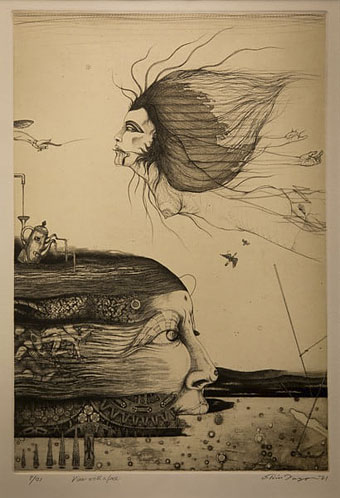
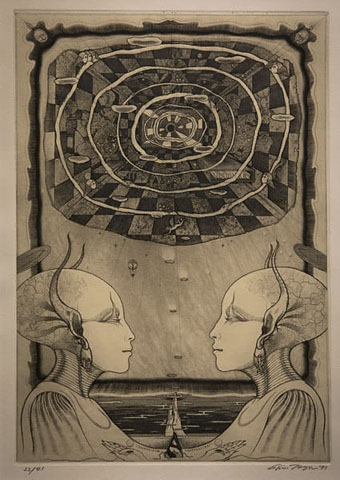
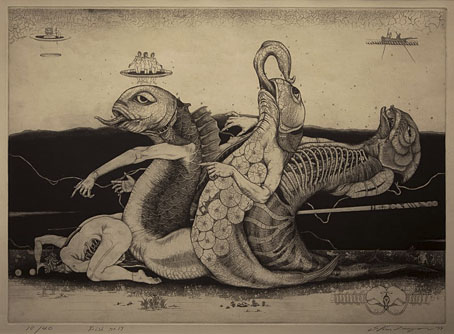
• Steven Heller talks to Hungarian artist István Orosz about his Escher-like drawings.

• At Unquiet Things: Caitlin McCormack’s ghostly chains of knotted memory.

• At Spoon & Tamago: Intricate and organic sculptures by ceramicist Eriko Inazaki.

• New music: Illumina by Call Super with Julia Holter.

Dark Side Of The Mushroom (1967) by The Chocolate Watchband | Dark Side Of The Star (1984) by Haruomi Hosono | On The Dark Side Of The Sun (live) (2003) by Helios Creed

X-ray visions

x1.jpg

Cover art by George Wilson.

Cosmic weirdness isn’t something you expect to find in the tie-in comics published by Gold Key in the 1960s, but this adaptation of Roger Corman’s film contains a few such traces, as does the film itself. Having watched X: The Man with the X-ray Eyes again recently I was curious to know how artist Frank Thorne would manage with the scenes where Dr Xavier’s vision is showing him more of the world than he wants to see. Despite the general sketchiness of the drawing, in some of the panels these visions are more fully realised than they are in the film, it being easier to draw an unusual effect than capture it on celluloid. Roger Corman had a great idea, a talented co-writer in Ray Russell, and an authentically tormented performance from Ray Milland, but the film is hampered by the limitations of AIP’s budgets. When Xavier complains about the oppressive sight of people above him on the floors of his tenement building only the comic shows us what he sees.

x3.jpg

So too with the later scenes, by which time all of Corman’s point-of-view shots are the same combination of a diffracted lens (Spectarama!) and Les Baxter’s wailing theremin. Xavier’s description of a great watching eye “at the centre of the Universe” isn’t conjured so well by Corman’s visuals. The comic gives us an all-too-human eyeball floating in space, but before this there’s a panel of ragged shapes flapping through the interstellar void, as well as something never seen in the film when Xavier looks down into the Earth’s core.

x4.jpg

The comic was written by Paul Newman (not that one), and was evidently adapted from a script rather than a print of the film. None of the characters or scenes resemble their cinematic equivalents, while Xavier’s eyes in the comic hardly change appearance. But the additions to the finale make me wonder whether there was a little more in the script than ended up in the film.

x2.jpg

Corman made The Man with the X-ray Eyes in 1963, immediately after The Haunted Palace—the first film to adapt HP Lovecraft—and a few years before The Trip—the first feature film devoted solely to the psychedelic experience. Xavier’s journey into nightmare is a curious hybrid of Lovecraft and psychedelia: the titles are set against a swirling violet spiral, while the doctor’s Spectarama visions are precursors of the delirium experienced by Peter Fonda’s Paul in The Trip. (Corman’s initial idea for The Man with the X-ray Eyes had a jazz musician taking too many drugs.) At one stage in his LSD trip Paul looks in a mirror and announces that he can see inside his own brain, but in the earlier film we get to see inside Xavier’s brain for ourselves when he takes his eye drops for the first time, after which the camera passes through the back of the doctor’s head until we’re looking out of his eyes. This is so close to a moment in Gaspar Noé’s Enter the Void that I’ve been wondering whether Corman’s film is another of Noé’s cult titles like those you see named at the beginning of Climax.

x5.jpg

As for the Lovecraftian quality, The Man with the X-ray Eyes misses an opportunity to do more with the scope of its central concept. Stephen King famously reported a rumour that the film had a suppressed line of dialogue from the very end, when Xavier tears out his eyes then screams “I can still see!” Corman denied that this was the case but admitted it was a good idea. King mentions this in Danse Macabre, in a description of the film which also interprets the story as being far more Lovecraftian—he uses that word—than it actually is. His suggestion (or mis-remembering) is that all the Spectarama effects are Xavier’s growing perception of the Eye at the centre of the Universe, even though Xavier only mentions this presence in the last few minutes.

x6.jpg

The implications of this remain unexplored but Xavier’s final vision of cosmic horror is still truer to Lovecraft’s Mythos philosophy—a warning that the human race peers into the void at its peril—than almost anything else in cinema, and the revelation is made all the more disturbing by the appearance of Xavier’s eyes which by this point are solid black orbs. As King suggests, there’s another film altogether lurking under the surface of this one, a horror film with a cosmic reach. Hollywood still struggles to do anything substantial with Lovecraft’s fiction, but you know the way things are today we’ll be lucky to get anything weirder than more CGI monsters and lumbering kaiju. I wouldn’t want to suggest that Gaspar Noé remake The Man with the X-ray Eyes but if he ever wanted to create a psychedelic horror story then the cosmic route is the way to go.

Previously on { feuilleton }
Undead visions
Trip texts revisited
More trip texts
Enter the Void

Weekend links 672

heilbronn.jpg

Le Vice Errant (1902) by Vincent Lorant-Heilbronn.

• “So however surreal those cities, the invisible ones that he builds, they have their counterpart in the real. They always have their counterpart in visible cities.” Darran Anderson on Italo Calvino’s Invisible Cities.

• At Wormwoodiana: Mark Valentine on the centenary of The Riddle and Other Stories by Walter de la Mare, with special attention paid to The Vats, a very strange story.

• New music: A Bad Attitude by African Head Charge; Lapsed Gasps by Push For Night + Jon Mueller; Forevervoiceless by Brian Eno.

The strands of medicine, consciousness expansion, intoxication, addiction, and crime were tightly entangled in fin-de-siècle Paris, where ether and chloroform circulated among bohemian demi-mondaines alongside morphine, opium, cocaine, hashish, and wormwood-infused absinthe. These solvents were often carried in small glass vials and medicine bottles by the asthmatic, tubercular, and neurasthenic, added to patent tonics and syrups, and, on occasion, to cocktails: an ether-soaked strawberry floating in champagne produced a heady rush, the fruit preventing the volatile liquid from evaporating too quickly. Literary references to ether abounded, either as a signifier of decadence or as a literary prop to shift a realistic narrative into the landscape of dreams and symbols, where its dissociative qualities became a portal to strange mental states, psychological hauntings, uncanny doublings, and slippages of space and time.

Mike Jay on Jean Lorrain and the ether dreams of fin-de-siècle Paris

• At Aquarium Drunkard: Jim Jarmusch and Carter Logan talk about the recording of Silver Haze, their first album as Sqürl.

James Balmont offers a beginner’s guide to the films of Dario Argento.

• At Unquiet Things: Rachael Bridge’s Luminous, Technicolor Shadows.

• Mix of the week: A mix for The Wire by Erika.

Ether Ships (1978) by Steve Hillage | Ether (1998) by Redshift | Ether (2000) by Coil