Pink Narcissus: James Bidgood and Tuxedomoon

tuxedomoon.jpg

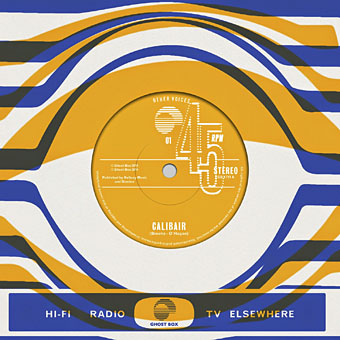
Pink Narcissus (2014) by Tuxedomoon. Design by Flavien Thieurmel.

I’ve never paid much attention to Record Store Day, despite promoting it here on a couple of occasions, and paid even less attention this year now that the event has turned into an opportunity for some of the larger labels to fleece the punters. Consequently, I missed any mention of a new release from Tuxedomoon which Crammed Discs put out as part of this year’s vinyl deluge. I’ve been listening to Tuxedomoon for years so any new release is worthy of attention, especially when their last studio album, Vapour Trails (2007) was a particularly good one, with the added bonus of packaging by Jonathan Barnbrook.

bidgood.jpg

Hanging Off Bed, a still from Pink Narcissus, mid- to late 1960s.

The new album, Pink Narcissus, is a recording of the group’s live soundtrack performance for the film of the same name by James Bidgood, a luscious micro-budget, homoerotic labour-of-love filmed in the 1960s on 8mm in the cramped confines of Bidgood’s New York apartment. The original soundtrack comprises selections of romantic classical music by Mussorgsky and Prokofiev so the replacing of the score isn’t as much of an imposition as it can be when bands co-opt old films. I already liked Bidgood’s film a great deal so Tuxedomoon’s score is like a marriage made in heaven (and they once recorded their own version of In Heaven). Having watched the film synched to the new album I was impressed by how well the group matched the shifting moods. From their earliest releases Tuxedomoon’s music has tended towards the cinematic so you’d expect them to provide a sympathetic treatment; they’ve also recorded a few scores in the past, including one for their own ambitious film/stage performance, Ghost Sonata. But Pink Narcissus matches the scenes much more effectively than the classical selections, the group even work in a pause then a shift to a new style when Bidgood’s star boy, Bobby Kendall, puts a record on his wind-up gramophone. The only drawback in running the music with the film is that the album is 10 minutes short, possibly because of the limitations of the vinyl format. YouTube user bigniouxx has a few brief clips of the live performance at the L’Etrange Festival in Paris.

bidgood2.jpg

Blue Boy, a still from Pink Narcissus, mid- to late 1960s.

If the BFI ever reissues the film I hope they consider using the full Tuxedomoon score as an alternative soundtrack the way they did on the Peter de Rome porn films, some of which are scored by Stephen Thrower. Bidgood’s film is still available on DVD with a detailed booklet and a great interview with the director; the BFI also has it on their video-on-demand service. Despite its age and its campy glamour Pink Narcissus is still pretty pornographic in places, not as much as Peter de Rome’s films (or today’s porn, for that matter) but there’s enough wanking and erections to keep it off many TV networks. The album, housed in a great sleeve designed by Flavien Thieurmel, may be bought direct from Crammed Discs.

James Bidgood’s photography at ClampArt

Previously on { feuilleton }
William E. Jones on Fred Halsted
Flamboyant excess: the art of Steven Arnold
James Bidgood

Weekend links 212

non-format.jpg

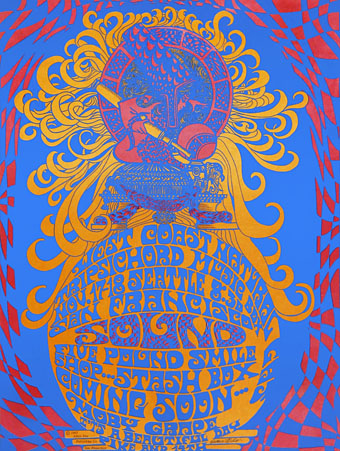
Poster for the recent Ballard-themed Only Connect Festival of Sound in Oslo. Design by Non-Format.

Bulldozer by Laird Barron was my favourite piece in Lovecraft’s Monsters, the recent Tachyon anthology edited by Ellen Datlow that I designed and illustrated. So it’s good to hear that Nic Pizzolato, writer of the justly-acclaimed HBO series True Detective, is among Barron’s readers. True Detective, of course, created a stir for referencing Robert Chambers’ weird fiction in a police procedural. The series is out now on DVD and Blu-ray, and I can’t recommend it too highly.

• Citation-obsessed Wikipedians don’t believe Hauntology is a genuine musical genre, a sentiment which will probably surprise some of its practitioners. Whatever the merits of the argument, I rather like the idea of a musical form that resists strict definition.

• “This year, in order to do things differently, I will make a conscious effort to separate the man from his writing.” Giovanna Calvino, daughter of Italo Calvino, remembers her father.

With ideology masquerading as pragmatism, profit is now the sole yardstick against which all our institutions must be measured, a policy that comes not from experience but from assumptions – false assumptions – about human nature, with greed and self-interest taken to be its only reliable attributes. In pursuit of profit, the state and all that goes with it is sold from under us who are its rightful owners and with a frenzy and dedication that call up memories of an earlier iconoclasm.

Alan Bennett delivers a sermon.

Zarina Rimbaud-Kadirbaks, aka Dutch Girl In London, reviews the Chris Marker exhibition that’s currently running at the Whitechapel Gallery, London.

• Exteriorizing the Inner Realms: Christopher Laursen talks to Phantasmaphile and Abraxas magazine‘s Pam Grossman about occult art, past and present.

• The Beast is back: Erik Davis talks to Gary Lachman about his new book, Aleister Crowley: Magick, Rock and Roll, and the Wickedest Man in the World.

• The body as factory: anatomy of a New Scientist cover image. Rick Poynor on the recurrent use of a familiar visual metaphor.

• Mix of the week without a doubt is FACT Mix 445 by Stephen O’Malley, a three-hour behemoth.

• Jennifer in paradise: Photoshop developer John Knoll on the story of the first Photoshopped image.

• The trailer for Grandfather of Gay Porn, a documentary about Peter de Rome by Ethan Reid.

Giorgio’s Theme is a new piece of electronic music by Giorgio Moroder.

Agender, a series of androgynous photo-portraits by Chloe Aftel.

• RIP Little Jimmy Scott

Evil Spirits

Chase (1978) by Giorgio Moroder | Call Me (1980) by Blondie | The Apartment (1980) by Giorgio Moroder

Weekend links 211

shau.jpg

Secret Bloom (2014) by Natalie Shau.

Bloomsday approachs. “Reading Ulysses changed everything I thought about language, and everything I understood about what a book could do,” says Eimear McBride whose debut novel, A Girl Is a Half-formed Thing, recently won the first Bailey’s women’s prize for fiction. McBride was interviewed by Susanna Rustin last month, shortly before the award was announced, and her novel has now become one of those minor causes célèbres for being rejected so often it was eventually published by a new imprint set up by a bookseller. “If the publishing industry doesn’t take a risk then who will?” asks Henry Layte, the bookseller in question.

Speaking of risk, David Hebblethwaite coincidentally wrote a post earlier this week asking where the formal challenge has gone in science-fiction writing. (He mentions McBride in passing.) Nina Allen followed up with a post of her own. I suspect the books are still being written but they’re no longer being accepted by editors and publishers who want even more adventure stories, “sympathetic” characters, and easy reads. Novels that only aspire to be written equivalents of action films or computer games are doomed to be less exciting than their more kinetic competitors. The struggle between the values of art and the values of entertainment is an old one but it shouldn’t be an either/or proposition. “Difficulty is subjective,” says Eimear McBride, “the demands a writer makes on a reader can be perceived as a compliment.”

Related: the following from Geoffrey Hill on “difficulty”:

We are difficult. Human beings are difficult. We’re difficult to ourselves, we’re difficult to each other. And we are mysteries to ourselves, we are mysteries to each other. One encounters in any ordinary day far more real difficulty than one confronts in the most “intellectual” piece of work.

• The Quietus pulled out all the stops this week, interviewing Annette Peacock, Iain Sinclair (again), Alan Moore (again), and asking Peter Strickland, the director of Berberian Sound Studio, for a list of his favourite albums. Given the above, it’s worth noting that all those people have produced challenging work of their own in different media.

• “The Satyrs Motorcycle Club was founded in 1954 with seven members, but little did anyone know it would become the oldest running LGBT organization (and oldest gay motorcycle club) in the world.”

Trunk TV posted another great selection of television title sequences. The previous selection has been taken down for the usual tiresome copyright reasons so watch this one while you can.

• “Detroit techno and black metal have so much in common,” say Wolves In The Throne Room whose new album, Celestite, is predominantly a product of synthesizer technology.

• “Houghton Library’s copy of Arsène Houssaye’s Des destinées de l’ame (FC8.H8177.879dc) is without a doubt bound in human skin.”

• The secret of Nabokov’s sexual style: David Lodge reviews Nabokov’s Eros and the Poetics of Desire by Maurice Couturier.

• How long can you hold your breath? 2 models, 7 divers in an underwater shipwreck by photographer Von Wong.

• At Dangerous Minds: Paul Gallagher on The fantastic world of Sharmanka Kinetic Theatre.

• Wizards of the Coast: Benjamin Breen on John Dee and the occult in California.

• More photography: Peter Guenzel captures strange lights in forests.

• Mix of the week: Bleep podcast 121 presented by Margot Didsbury.

I’m The One (1972) by Annette Peacock | Eros Arriving (1982) by Bill Nelson | The Dire And Ever Circling Wolves (2005) by Earth

Tom of Finland redesigned

tof2.jpg

Tom of Smurfland by Alessio Slonimsky.

Rest assured this is about the only time anything Smurf-related will be allowed on these pages, the blue wretches having been partially redeemed for artist writer Dale Lazarov’s pin-up challenge for the month of May. Lazarov regularly proposes homoerotic redesign challenges on his Tumblr pages, something I wasn’t aware of until reading about this recent one. The challenge was to reimagine the artist’s beefcake clones in different comics or cartooning styles but some contributors took things a little further, as with the Wyeth and Beardsley pastiches below. This month there’s the Gay Propaganda Poster Pin-Up Challenge, entries for which have been posted here. I wouldn’t mind offering something to one of these challenges myself if I can find a spare moment.

Find out more about Dale Lazarov’s “smart, wholesome gay comics smut” at his website.

tof1.jpg

Wyeth of Finland by KnottyBits.

tof3.jpg

Twinks of Finland by Alexander.

tof4.jpg

Tom’s Man drawn in the style of Aubrey Beardsley by Choklit Daddy.

Elsewhere on { feuilleton }
The gay artists archive

Previously on { feuilleton }
Tom of Finland postage stamps

Weekend links 210

usaoov.jpg

Crashing Diseases And Incurable Airplanes (2014) by USA Out Of Vietnam. Artwork by Amy Torok.

Amy Torok’s cover art for the debut album by Canadian band USA Out Of Vietnam is pleasingly reminiscent of the surreal and psychedelic collages of Wilfried Sätty. The music within has been described as “a cross between ELO and Sunn O)))” which it is up to a point, although to these ears the group are more in the Sunn O))) camp than the post-Beatles pop of Jeff Lynne and co. The sound is big whatever label you apply, and promises much for the future.

Mysterious creatures of Monterey Bay Aquarium’s ‘Tentacles’. The Aquarium bought one of my drawings last year for this exhibition which juxtaposes tentacular artwork with live creatures. The show runs until 2016.

• Jon Hassell’s 1990 album, City: Works Of Fiction, has been reissued in an expanded edition including a live concert collaboration with Brian Eno, and a collection of remixes/alternate takes.

• Photographer Jonathan Keys uses antique camera equipment to give his views of contemporary Britain a patina of the past.

Roman Polanski and the man who invented masochism. Nicholas Blincoe on Leopold von Sacher-Masoch and Venus in Fur (sic).

• Mixes of the week are by James Pianta, E.M.M.A. (whose Blue Gardens album I helped design), and Balduin.

• Sweet Jane unearths another great article about psychedelic London: The Fool and Apple Boutique, 1968.

• “Did Chris Marker think history to be not only an infinite book but a sacred one?” asks Barry Schwabsky.

• Front Free Endpaper on the story behind the cover photo of A Boy’s Own Story by Edmund White.

Mapping the Viennese Alien Event Site. Christina Scholz explores another Zone.

Moondog: The Viking of 6th Avenue. The first and only movie about Moondog.

Rick Poynor on rediscovering the lost art of the typewriter.

• At BLDGBLOG: 100 Views of a Drowning World.

Miguel Chevalier’s magic carpets

Venus In Furs (1967) by The Velvet Underground | Sex Voodoo Venus (1985) by Helios Creed | Venus As A Boy (1993) by Björk