Tuxedomoon: some queer connections

roques18.jpg

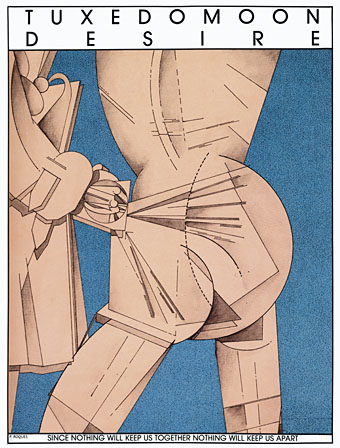
UK poster insert by Patrick Roques for Desire (1981).

Yes, more Tuxedomoon: there’s a lot to explore. It’s always a pleasure when something that you enjoy one medium connects to things that interest you elsewhere. From the outset Tuxedomoon have had more than their share of connections to gay culture—to writers especially—but it’s more of an ongoing conversation than any kind of proselytising concern. This post teases out those connections some of which I hadn’t spotted myself until I started delving deeper.

The Angels of Light: Not the Michael Gira group but an earlier band of musicians and performers in San Francisco in the early 1970s. The Angels of Light formed out of performance troupe The Cockettes following a split between those who wanted to charge admission for their shows, and those who wanted to keep things free to all. Among the troupe there was Steven Brown, soon to be a founding member of Tuxedomoon:

The group began as an offshoot of The Angels of Light, ‘a “family” of dedicated artists who sang, danced, painted and sewed for the Free Theater’, says Steve Brown. ‘I was lucky to be part of the Angels—I fell for a bearded transvestite in the show and moved in with him at the Angels’ commune. Gay or bi men and women who were themselves works of art, extravagant in dress and behaviour, disciples of Artaud and Wilde and Julian Beck [of the Living Theater] … we lived together in a big Victorian house … pooled all our disability cheques each month, ate communally … and used the rest of the funds to produce lavish theatrical productions—never charging a dime to the public. This is what theatre was meant to be: a Dionysian rite of lights and music and chaos and Eros.’

Rip it Up and Start Again: Postpunk 1978-1984 by Simon Reynolds

(Special Treatment For The) Family Man (1979): A sombre commentary from the Scream With A View EP on the trial of Dan White, the assassin of Harvey Milk and George Moscone. White’s “special treatment” in court led to a conviction for manslaughter which in turn resulted in San Francisco’s White Night riots in May, 1979.

James Whale (1980): An instrumental on the first Tuxedomoon album, Half-Mute, all sinister electronics and tolling bells as befits a piece named after a director of horror films. Whale’s Bride of Frankenstein (1935) is not only the best of the Universal horror series, it’s also commonly regarded as a subversive examination of marriage and the creation of life from a gay perspective. (Whale’s friends and partner disagreed, however.)
joeboysf.jpg

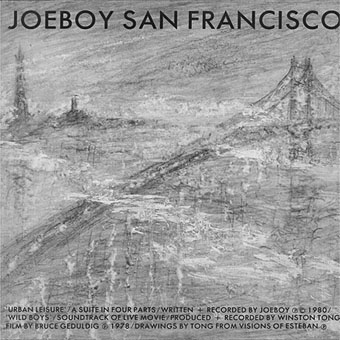
Cover art by Winston Tong.

Joeboy San Francisco (1981): The Joeboy name was lifted from a piece of San Francisco graffiti to become a name for Tuxedomoon’s DIY philosophy. It’s also a record label name, the name of an early single, and a side project of the group which in 1981 produced Joeboy In Rotterdam / Joeboy San Francisco. The SF side features a collage piece by Winston Tong based on The Wild Boys by William Burroughs, a key inspiration for the band which first surfaces here.

In one piece, the band cites its influences as: “burroughs, bowie, camus, cage, eno, moroder”. Can you say what you admired or drew on vis-à-vis these artists?

William S. Burroughs — ideas concerning use of media — tapes, projections, his radical anti-control politic in general as well as his outspoken gayness. Early on we duplicated on stage one of his early experiments projecting films of faces onto faces.
Simon Reynolds interview with Steven Brown

Continue reading “Tuxedomoon: some queer connections”

Fast Friends

lazarov1.jpg

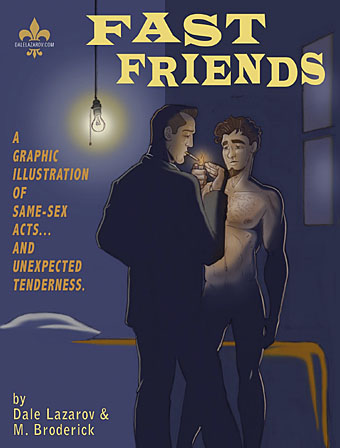
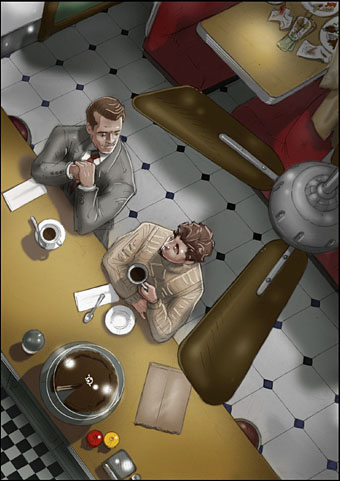
My thanks to writer Dale Lazarov for letting me see an advance copy of his new comic, Fast Friends. Despite writing about gay art often enough I don’t see many gay comics but this one had the immediate attraction of being a 62-page wordless story, wordless comics being a minor tradition that I’ve always enjoyed. When description and dialogue are removed, the artist needs to take greater care over the storytelling, even in an uncomplicated story such as this chance meeting between two spurned lovers. That’s not to say wordless comics aren’t still written at the outset: someone has to imagine the characters, create the story, describe the action, and so on. Michael Broderick is responsible for the artwork, and he proves himself adept at dealing with the technical challenges; he’s equally adept at making the erotic encounter into a stimulating, sexy read. Fast Friends is a touching story, and, in the recurring comic books that act as a commentary on the action, not unaware of the romance comic tradition.

lazarov2.jpg

Elsewhere on { feuilleton }
The gay artists archive

Weekend links 216

heathen.jpg

Why Do The Heathen Rage? (2014) by The Soft Pink Truth. Cover art by Mavado Charon.

Drew Daniel’s latest release as The Soft Pink Truth is Why Do The Heathen Rage?, a witty electronic riposte to the often reactionary attitudes of black metal music and the people who create it. (The album is dedicated to Magne Andreassen, a gay man stabbed to death by the drummer from Emperor.) Dorian Lynskey talked to Daniel about queering the metal world, as did Angus Finlayson at FACT. Daniel’s project has been receiving press everywhere but you wouldn’t know it to read US/UK gay news sites where the music coverage is relentlessly narrow and insular. To date, only BUTT magazine has mentioned Why Do The Heathen Rage? but then BUTT have always stood apart from their parochial contemporaries. Never mind, here’s another fucking article about “petite pop princess” Kylie Minogue.

• “By the letter of the law, Ulysses was obscene. Obviously, gratuitously, relentlessly obscene.” Josh Cook on censorship and dangerous books. One of my own dangerous publications, the fifth issue of the Lord Horror comics series, Hard Core Horror (declared obscene in a UK court in 1995), received a very belated review at The Comics Journal. More censorship: Judy Bloom on the perennial panics in US school libraries. Lest we feel superior to American prudery, Leena McCall’s painting of a semi-naked woman caused some consternation in a London gallery last week.

• “Over and over, we’re told that nobody buys [compact discs] anymore.” Steven Hyden on the latest obituaries being written for a music format. Ten years ago the death of vinyl was being confidently predicted: “The physical presence of the popular song is gone,” Paul Morley declared. Related: The death of mp3s.

There is nothing quite like Maryanne Amacher’s third ear music. It is alarming. Some of her fellow artists never quite believed that their ears were not being damaged. Third ear music invades you, wraps inside your body, your head, your eyes — just like she says. You can’t be sure, after a while, if the sounds you hear are those created by your ears or Maryanne Amacher.

Stefany Anne Golberg on the music of Maryanne Amacher

• At Dangerous Minds: Nothing Lasts Forever (1984), Bill Murray in a “lost sci-fi comedy set in a totalitarian New York City”.

• More Joyce (there’s always more Joyce): Humument Images to Accompany James Joyce’s Ulysses by Tom Phillips.

• Another celebration of Penda’s Fen by David Rudkin, and another reminder that it’s still not available on DVD.

• Stairway to Heaven: Atlas Obscura on the Gustave Moreau Museum, an essential stop if you visit Paris.

• Mix of the week: Secret Thirteen Mix 121 by Higher Intelligence Agency.

• MetaFilter has a wealth of links to pulp magazine archives.

Yan Nascimbene’s illustrations for Italo Calvino’s stories.

• Rebecca Litchfield’s Orphans of Time and Soviet Ghosts.

• RIP Charlie Haden

Going Home (1972) by Alice Coltrane (Charlie Haden, bass) | Earth (1974) by Joe Henderson Featuring Alice Coltrane (Charlie Haden, bass) | Malkauns (1975) by Don Cherry (Charlie Haden, bass)

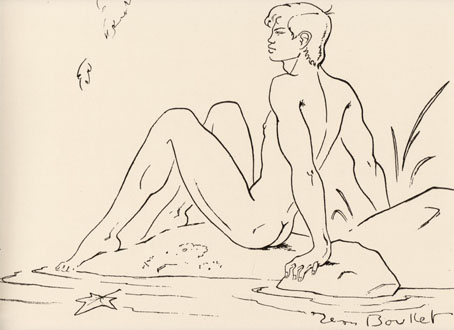
The art of Jean Boullet, 1921–1970

boullet3.jpg

From Antinous (1954).

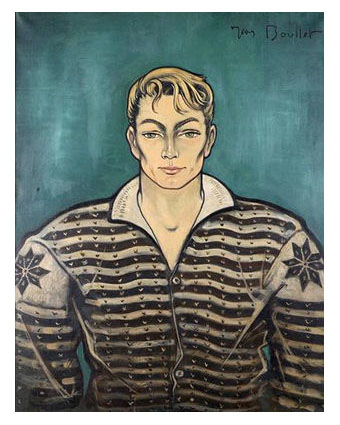
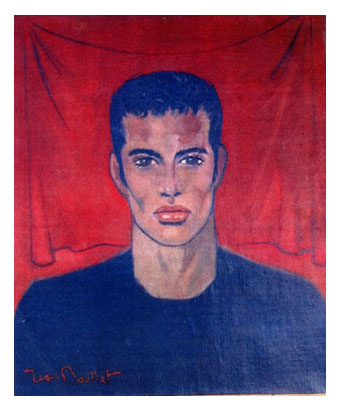
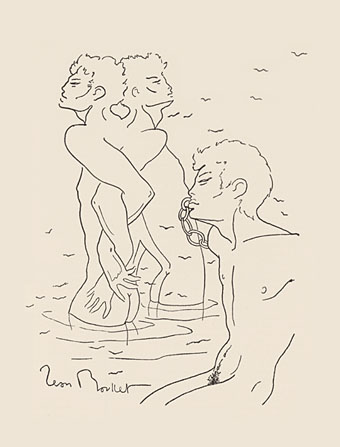
A few drawings and paintings by Jean Boullet, a prolific French illustrator who was also a writer—passionate about “sexology, conjuring, magic, demonology, and mythology”, says Wikipédia—and a film critic. His illustrations range from books by Raymond Radiguet, Boris Vian and Edgar Allan Poe to unabashed homoerotic collections of his own, one of which, Tapis volant (1945), has an introduction by Jean Cocteau. Boullet’s figures are very Cocteau-like, especially those depicting the sailors which Cocteau also liked to draw and fantasise about. The Au Bonheur du Jour gallery has many pages of Boullet’s drawings and publications, while Bibliothèque Gay has several posts showing complete sets of drawings from some of his books. Many of the artist’s drawings circulating without credit on the web seem to originate there. Don’t miss Metamorphoses (1950).

• See also: The Male Universe of Subversive Genius Jean Boullet by Julien Beyle.

boullet1.jpg

Portrait of Jean Marais.

boullet2.jpg

Portrait of Kenneth Anger.

boullet4.jpg

Continue reading “The art of Jean Boullet, 1921–1970”

Weekend links 215

calibair.jpg

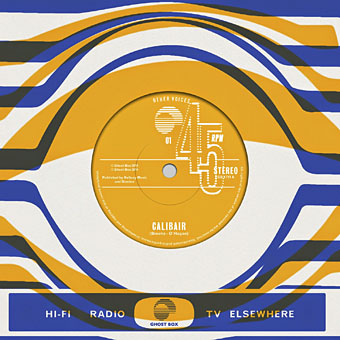
Julian House artwork for Other Voices, a new singles series on the Ghost Box label. Other Voices 01 is a collaboration between Sean O’Hagan of the High Llamas and Jon Brooks of The Advisory Circle.

Last week I linked to a copy Zadie Smith’s new introduction for Crash by JG Ballard. That piece could only be read in full by NYRB subscribers but this week the Guardian has the full text:

I was in college when the Daily Mail went to war with [David Cronenberg’s] movie, and found myself unpleasantly aligned with the censors, my own faux-feminism existing in a Venn diagram with their righteous indignation. We were both wrong: Crash is not about humiliating the disabled or debasing women, and in fact the Mail‘s campaign is a chilling lesson in how a superficial manipulation of liberal identity politics can be used to silence a genuinely protesting voice, one that is trying to speak for us all.

Related: Thomas Jones in 2008 reviewing Miracles of Life:

Despite all the bodily fluids spurted and smeared onto wrecked dashboards, the problem isn’t that it’s too pornographic but that it isn’t pornographic enough: the novel is too conscious of the deeper meaning of the sex and violence for the sex and violence to work as elements in themselves.

The fetishisation of Ballard’s novel (and Ballard’s fetishes) show no signs of abating: B-Movie (Ballardian Video Neuronica), is a short film by John Foxx, Karborn and Jonathan Barnbrook.

• Last Thursday I was watching a live performance by Pye Corner Audio and Not Waving, so it’s good to find this mix by the pair surfacing in the same week. Kudos to the latter for choosing something by Chrome. More mixes: FACT mix 468 by Throwing Snow, and Secret Thirteen mix 120 by Drøp.

• Ellen Datlow’s horror anthology, Lovecraft’s Monsters, continues to gather plaudits. Among recent reviews there’s Matt Barone at Complex who included the book in his Year’s Best Genre Fiction Books (So Far) list, and also praised my illustrations.

In recent years, many of the people on book covers have been women without faces. So prevalent is this visual cliché that the publishing industry has cycled through at least two well-documented iterations. The first, the Headless Woman, features some poor thing cut off above the neck, like the swimsuit-clad beachgoer on Alice Munro’s story collection “The View from Castle Rock.” The website Goodreads’s Headless Women page has 416 entries. Last year, the Headless Woman was supplanted by the Sexy Back, in which a woman is shown from behind, often gazing out over a vista.

Eugenia Williamson on the packaging of books for a female readership.

• The latest Taschen volume from Dian Hanson, editor of (among other titles) The Big Penis Book, is My Buddy. World War II Laid Bare, featuring photos from the archives of Michael Stokes. World of Wonder has pages from the interior.

I Have Walked This Body by Jenny Hval and Susanna is a track from a forthcoming album inspired by Maya Deren and Alexander Hammid’s Meshes of the Afternoon. It sounds fantastic so I’m looking forward to hearing more.

• If you have a spare half-million dollars, and don’t mind the possibility of possession by murderous supernatural entities, the Palmer house from Twin Peaks is for sale.

• Read an extract from Season of the Witch: How the Occult Saved Rock and Roll by Peter Bebergal.

The Stars and Their Courses: over six hours of the Nevada night sky in 4k definition.

Lee Siegel on the fraught friendship of TS Eliot and Groucho Marx.

Harmony Korine talked to Kenneth Anger for Interview Magazine.

New Scientist: How magic mushrooms induce a dream-like state.

• 3D-print your own Marcel Duchamp chess set.

Scott O)))

Crash (1980) by Tuxedomoon | Burning Car (1980) by John Foxx | A Crash At Every Speed (1994) by Disco Inferno | Burning Car (Dubterror Remix, 2008) by John Foxx